Why Do Hybrid Vehicles Struggle with Exhaust Emissions?
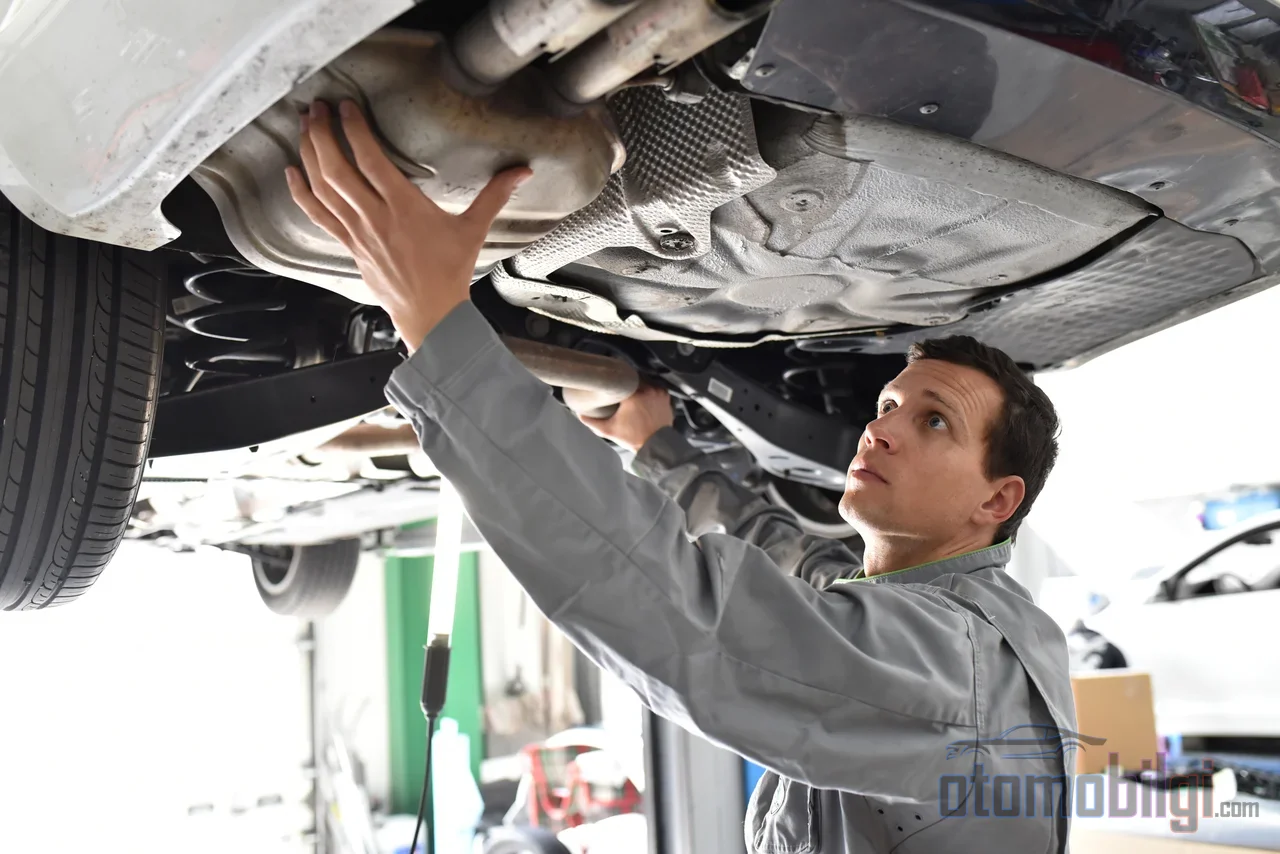
Imagine a hybrid vehicle that glides silently through the city on its electric motor and surprises everyone with its fuel consumption figures. That same vehicle can unexpectedly fail the emissions inspection. Not a paradox, but an engineering reality: exhaust aftertreatment systems need the internal combustion engine to warm up, and the hybrid's engine is designed precisely to avoid doing that. In this article, we explain step by step, from the catalytic converter and particulate filter perspective, why hybrid vehicles struggle with exhaust emissions.
Why Does the Hybrid's Low-Emission Promise Backfire on the Exhaust Side?
The operating logic of a hybrid powertrain is simple: the electric motor kicks in at low speeds and stop-and-go traffic, and the internal combustion engine runs only when needed. In terms of fuel economy, this is a perfect equation. On the exhaust side, however, the equation is reversed. Emission control components work with heat, and heat is directly proportional to how long the engine runs. The less the engine runs, the less the exhaust system heats up.
This is the hybrid's real, intricate problem: the entire system is optimized to shorten engine run time, but the exhaust aftertreatment systems are adversely affected by exactly that shortness. Vehicles that comfortably pass Euro 6 limits in laboratory test cycles may fail to complete filter regeneration in real-world use due to short trips and frequent engine shutdowns, and may produce surprising results at inspection.
Highlights
- A catalytic converter can climb from ambient temperature to approximately 427 °C (800 °F) in about 30 seconds - but only if the engine runs uninterrupted.
- DPF and GPF cannot complete the regeneration cycle without reaching a certain temperature.
- Euro 6 mandates the DPF for diesel vehicles and the GPF for some gasoline vehicles; the particle number limit is 6 x 10^11 #/km.
- Euro 7 will enter into force for new cars on November 29, 2026 and will tighten durability requirements.
Why Does the Catalytic Converter Have a Heat Problem?
The catalytic converter is a chemical reactor that converts carbon monoxide, hydrocarbons and nitrogen oxides in the exhaust gas into harmless compounds. For these chemical reactions to take place, the substrate - the ceramic or metal honeycomb structure inside it - must reach a certain temperature. When the engine runs uninterrupted, the converter can climb from ambient temperature to 800 °F, or about 427 °C, in roughly 30 seconds. In a hybrid, however, those 30 seconds are frequently interrupted: when the engine starts to warm up, the system shuts it off, the converter begins to cool down, and when the engine restarts, the process starts over from the beginning.
The problem is not limited to the warm-up phase. When the engine runs before reaching its optimum temperature, engine management operates with a rich mixture; at low coolant temperatures - for example, during cruising below 75 °C - the converter's efficiency and lifespan can be adversely affected. The main factors that damage the converter itself are also well known: overheating and substrate melting caused by misfires, coolant leaking into the combustion chamber coating the substrate, excessive oil vapor, and contaminants from silicone sealants.
In plug-in hybrids, the picture becomes even more complex. In these vehicles, catalyst temperature management is a well-known engineering problem that requires a highly sophisticated powertrain controller, since fuel economy and tailpipe emissions must be optimized simultaneously. Another lesser-known effect: because the engine frequently sits idle, combustion chamber temperatures fluctuate, and in some hybrids the oil can be diluted with fuel or condensation - this affects combustion quality and therefore emissions.
DPF and GPF: How Do Short Trips Prevent Regeneration?
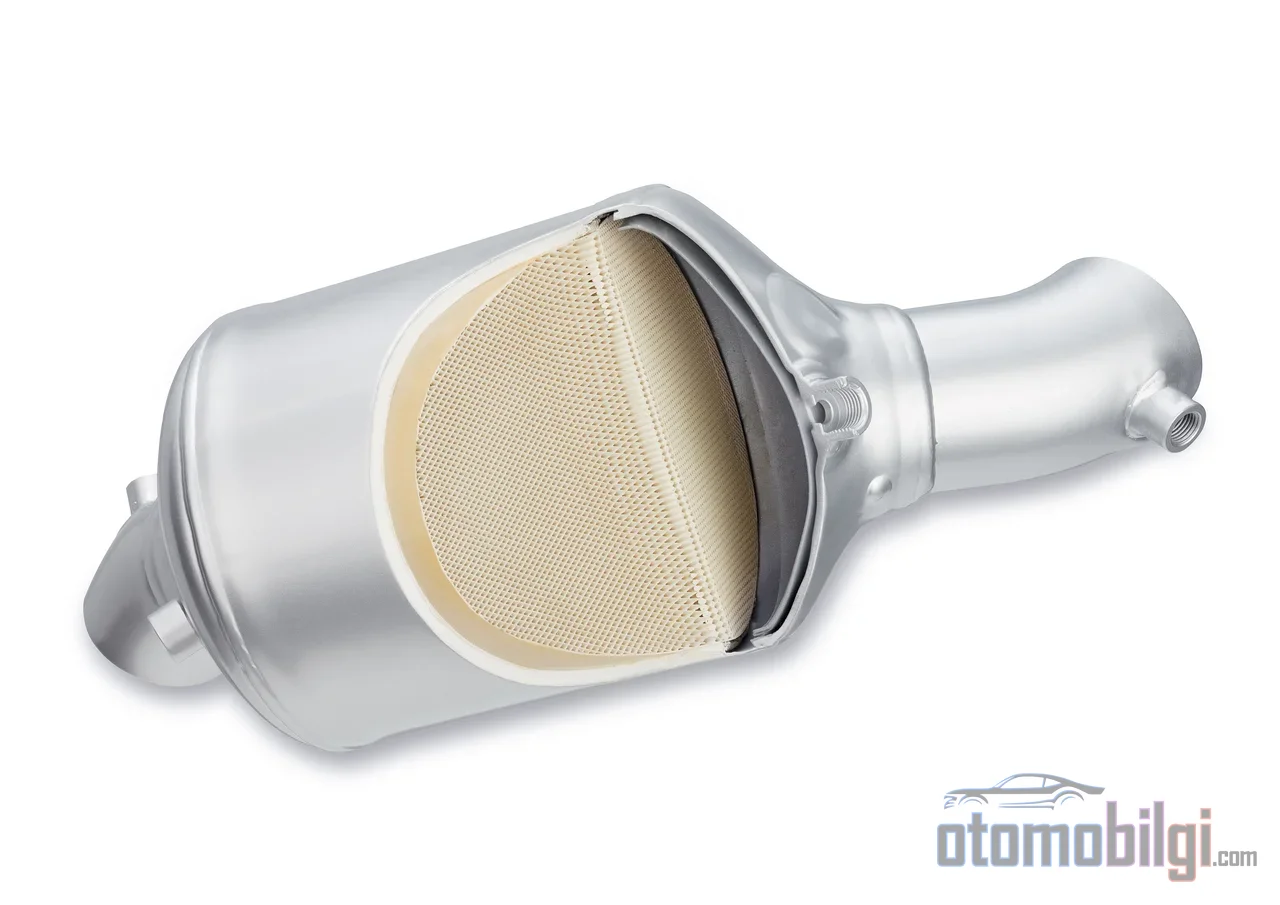
A hybrid exhaust system broadly resembles a conventional gasoline one: it carries the exhaust gas from the engine to the exhaust pipe, and the three-way catalyst reduces emissions at the engine outlet. The difference emerges in the type of filter. In gasoline engines with direct injection (GDI), a GPF - gasoline particulate filter, referred to as OPF or PPF in some sources - is used to trap fine soot and particles; on the diesel side, its counterpart battling a much heavier soot load is the DPF. Euro 6 standards have effectively made the DPF mandatory in diesel vehicles, and the GPF in some gasoline vehicles.
The common weak point of both filters is their temperature requirement. The diesel particulate filter cannot complete the regeneration cycle, which burns off accumulated soot, until a certain temperature is reached. Short trips where the engine never reaches its optimal temperature - trips under 5 km are the classic example - lead to DPF clogging over time. In city driving, the inability to reach high speeds can also cause regeneration to stall halfway. On the GPF side, the picture is somewhat milder: the GPF is mostly cleaned through passive regeneration, that is, by the exhaust gas's own heat. However, low-temperature driving cycles make active regeneration support necessary to prevent filter clogging - and active regeneration, in turn, requires the engine to run for extended periods, which conflicts with the hybrid's natural usage profile.
In hybrids, the filter configuration varies from model to model. Some hybrid models may not have a DPF or GPF at all; in others, the GPF can become clogged in ways that trigger fault codes. This variety makes it important for the owner to know which filter their vehicle has and with which driving profile regeneration can be completed.
How Does Euro 6 Treat Hybrids and What Does Euro 7 Change?
Euro 6 is a framework that mandates advanced emission control technologies and achieves significant reductions in gaseous pollutant emissions. The solid particle number limit of 6 × 10¹¹ #/km for particles larger than 23 nm has been in force across all diesel categories since the Euro 5b/6 stage. In countries that have adopted the standards, reductions in pollutant emissions of up to 99% are possible. The Euro 6d rules, in particular, set an important threshold on the NOx side.
Can hybrids meet these standards? Yes, at least in the homologation cycle. In a 2022 study, a modern Euro 6d diesel plug-in hybrid met the Euro 6 limits in the WLTP cycle, with CO emissions remaining lower than a conventional reference vehicle. However, under real-world road conditions, plug-in hybrid performance is a separate subject of examination; it is debated that there may be a difference between the homologation cycle and daily use, especially in vehicles used predominantly in electric mode, where the engine rarely fully warms up.
Next up is Euro 7. The standard, which will enter into force on 29 November 2026 for newly launched passenger cars and light commercial vehicles, is dated May 2028 for heavy commercial vehicles. Euro 7's most significant innovation on the exhaust side is not the limits, but the durability requirements: the aim is for the vehicle to maintain its emission performance over a much longer life cycle. In addition, limits are being introduced on non-exhaust emissions such as brake particle and tire wear, as well as on battery durability. For hybrid owners, the meaning is clear: the exhaust system will need to maintain its effectiveness for years, despite numerous warm-up and cool-down cycles.
Do Hybrid Vehicles Have to Pass the Emission Inspection, and Why Do They Fail?
The short answer: as long as they use gasoline, hybrid vehicles are subject to emission inspections in most jurisdictions; although there are exemptions in some regions, this is the rule. And the situations in which hybrids struggle at inspection are genuinely documented cases. Most of these failures stem not from the vehicle being dirty, but from the test method not matching the hybrid's operating logic.
- Older inspection equipment could produce an incomplete test result on hybrids that do not idle.
- In systems that read engine control unit data via OBD2 rather than the tailpipe, hybrids whose engines never ran could be rejected.
- Illumination of the engine malfunction light (check engine) during inspection means direct failure in many regions.
- Lightly used vehicles may fail the emission test because learned parameters are not ready.
The causes behind the malfunction light are no different in hybrids: a faulty oxygen sensor, a rich mixture, a cracked exhaust manifold, a faulty air injection system, or a loose or improperly sealed fuel tank cap are the leading causes of inspection failure. Oxygen sensor failure is an item that deserves particular attention; when the sensor degrades, the malfunction light comes on and the vehicle may fail the test. The catalytic converter failing to do its job is also among the most common causes of failure - and the warm-up problem we described above, by gradually reducing the converter's efficiency, feeds this picture in hybrids.
Exhaust and Maintenance Checklist for Hybrid Owners
Once the technical picture is laid out, what needs to be done also becomes clear. The goal is to provide the temperature and operating time that exhaust aftertreatment systems need, at regular intervals. In practice, the following points stand out:
- Periodic long drives: Schedule drives where the engine reaches full temperature and the filter regeneration cycle can be completed from start to finish.
- Don't ignore the warning light: A check engine light that is on during the inspection is by itself grounds for failure; oxygen sensor failures are common and relatively inexpensive repairs.
- Monitor the cooling system: The engine's failure to reach optimum temperature directly affects the catalytic converter's efficiency and lifespan.
- Maintain oil and air filter discipline: Oil changes at intervals of roughly every 5,000-7,500 miles and regular air filter replacement support combustion quality and, consequently, emissions.
- Don't skip periodic checks of the high-voltage battery and regenerative braking systems: The hybrid's operating strategy depends on the condition of these components; if the strategy degrades, the engine's operating profile and exhaust load degrade as well.
The common denominator of this list is simple: a hybrid's exhaust system doesn't like a driving habit that never puts any load on the engine. What diesel owners have been doing for years for the DPF is becoming increasingly relevant for hybrid owners when it comes to the GPF and catalytic converter.
Conclusion: The Low Emission Promise Becomes Reality With Correct Use
Why do hybrid vehicles struggle with exhaust emissions? Because the catalytic converter and particulate filters, the backbone of emission control, work with heat; and the hybrid's engine is designed precisely to run as little as possible. The engine's frequent stopping and starting makes it difficult for the converter to reach its ideal temperature, leaves regeneration cycles half-finished, and can set the stage for inspection failure. This is not a flaw of hybrid technology, but the result of the tension between the usage profile and exhaust physics. With regular long drives, prompt response to warning lights, and disciplined maintenance of the cooling and fuel systems, Euro 6 hybrids can truly deliver the promised low emissions - and the tightened durability requirements that Euro 7 will introduce from November 2026 target exactly this continuity.
Sources
- EU: Cars and Light Trucks - Emission Standards (DieselNet)
- Gasoline Particulate Filters (DieselNet)
- A technical summary of Euro 6/VI vehicle emission standards (ICCT)
- Vehicle emissions and battery durability (Euro 7) (EUR-Lex)
- Emissions from a Modern Euro 6d Diesel Plug-In Hybrid (MDPI Atmosphere)
- Euro 7 emissions standard: What is it and when does it start? (RAC)
- How Do Hybrid Electric Cars Work? (AFDC, U.S. Department of Energy)
- Tackling catalytic converter issues (Fender Bender)
- The DPF Saga - Tips & Advice on avoiding DPF issues (Team-BHP)
- GPF Regeneration – Diagnose, Test, and Repair (Snap-on)
- Optimal catalyst temperature management of Plug-in Hybrid Electric Vehicles (ResearchGate)
- Failed emissions test, a bad sign? (PriusChat)