What Are the Symptoms of a Faulty Catalytic Converter?
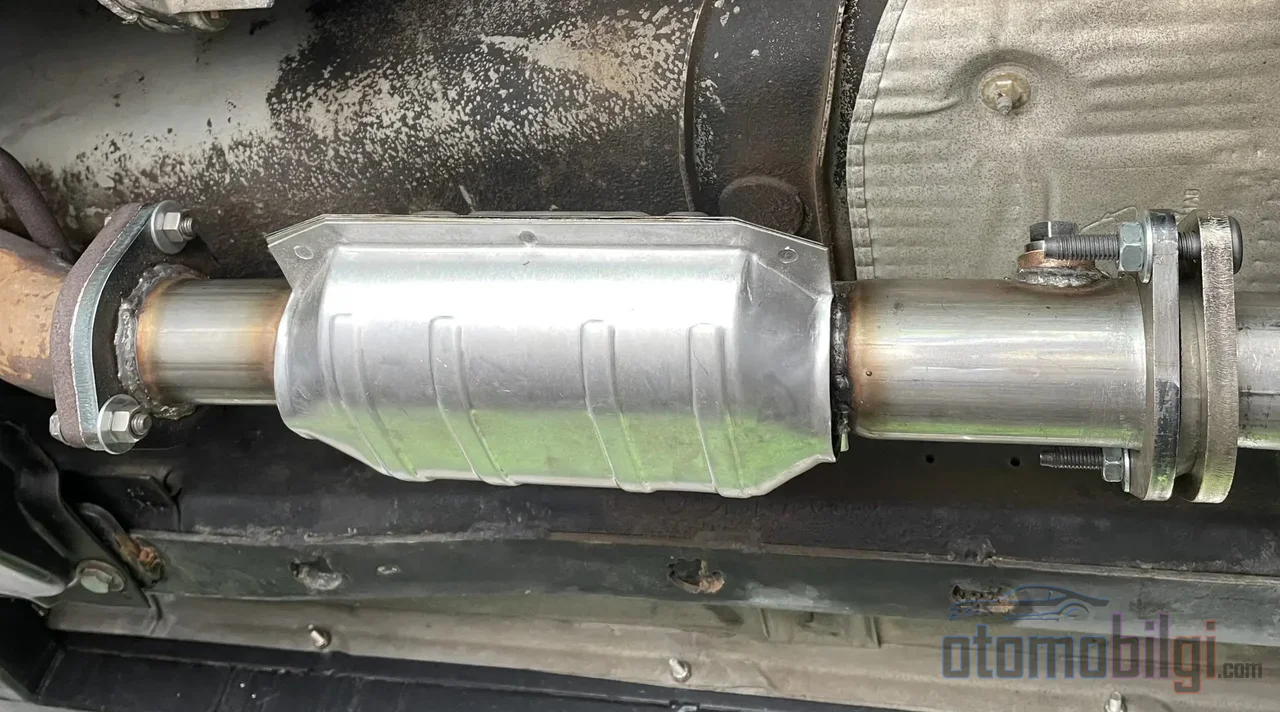
On a hill the car struggles as if it's towing a trailer, a faint rotten-egg smell comes from the exhaust, and the check engine light on the dashboard seems to have appeared out of nowhere. This trio is the harbinger of one of the most common scenarios seen in workshops: a catalytic converter that is clogged or has lost its ability to convert. But which symptom truly comes from the converter, which one is the shadow of another fault, and which test is needed to confirm the diagnosis?
Key Takeaways
- The main symptom of a clogged converter is power loss under load; the engine revs freely but the car does not accelerate.
- The classic check engine light codes P0420 (bank 1) and P0430 indicate catalyst efficiency loss.
- Converter life is typically around 10 years or 100,000 miles.
- Replacement cost is roughly $1,000-3,500 nationwide; a code alone is not a diagnosis.
- Oxygen sensor replacement falls in the $150-525 range - which is why replacing without testing is an expensive guess.
What Are the Symptoms of a Faulty Catalytic Converter?
It starts with asking the right question, because two different faults are called by the same name in everyday conversation. A clogged converter physically restricts exhaust flow; the engine cannot breathe. A faulty converter, on the other hand, lets gas pass through, but the conversion layer inside it does not do its job; the exhaust exits without being cleaned. Both can occur at the same time, and their symptoms overlap. The table below shows which type of fault triggers the signs a driver might notice.
| Symptom | Clogging | Conversion loss |
|---|---|---|
| Power loss under load | Noticeable | Usually absent |
| Rotten egg smell | Rare | Typical |
| P0420 / P0430 code | Possible | Typical |
| Rough idle, stumbling | Typical | Usually absent |
| Failing the emissions inspection | Possible | Typical |
| Rattling sound from underneath | With a broken substrate | With a broken substrate |
Power Loss and Sluggish Acceleration: The First Harbingers of Clogging
The clearest symptom of a clogged converter is power loss under load. The problem worsens on hills or ramps; a driver who notices nothing on flat ground sees the engine rev freely but the car fail to accelerate when flooring the throttle on a ramp. From an engineering standpoint, the chain of logic is simple: if the exhaust cannot escape, less fresh air enters the next intake stroke, the engine works against itself under back pressure, and per-cylinder efficiency drops. In everyday language, this means a car that feels like it is "towing a trailer."
The same cause pushes fuel consumption up as well. Because the engine struggles against the restricted exhaust, it burns more fuel with every demand for power. An unexplained increase in fuel consumption, while not diagnostic on its own, is an important data point to add to the picture.
As the clogging progresses, the situation gets worse: the idle shakes, the car stumbles, and reaching highway speeds becomes difficult. In the most severe cases, hard running and stalling at idle can even be seen - but these are rare, and in no-start problems the culprit is usually the fuel system, ignition, or battery, not the converter.
Smell, Sound and Heat: Diagnosing with Your Senses
Where does the rotten egg smell come from?
The sulfur compounds in the exhaust are normally converted into odorless substances by the catalyst. When the conversion fails, hydrogen sulfide (H₂S) escapes from the exhaust and produces the classic rotten egg smell. But be careful: this smell doesn't always come from the converter. A rich mixture, a faulty fuel system component, or sulfur impurities in the fuel can also produce the same smell. The smell is a clue, not a verdict on its own.
What does a rattling sound from underneath mean?
A rattling or squeaking sound heard especially when pulling away or at idle indicates that the internal honeycomb structure is breaking apart. This is a different type of failure than clogging, but the broken-off pieces can also block the flow. There can be a more innocent source of a similar sound: a loose heat shield. A second physical clue that comes with the sound is heat - an overheating converter heats the ground enough to be felt under the vehicle and in the cabin floor.
Check Engine Light and P0420 / P0430 Codes
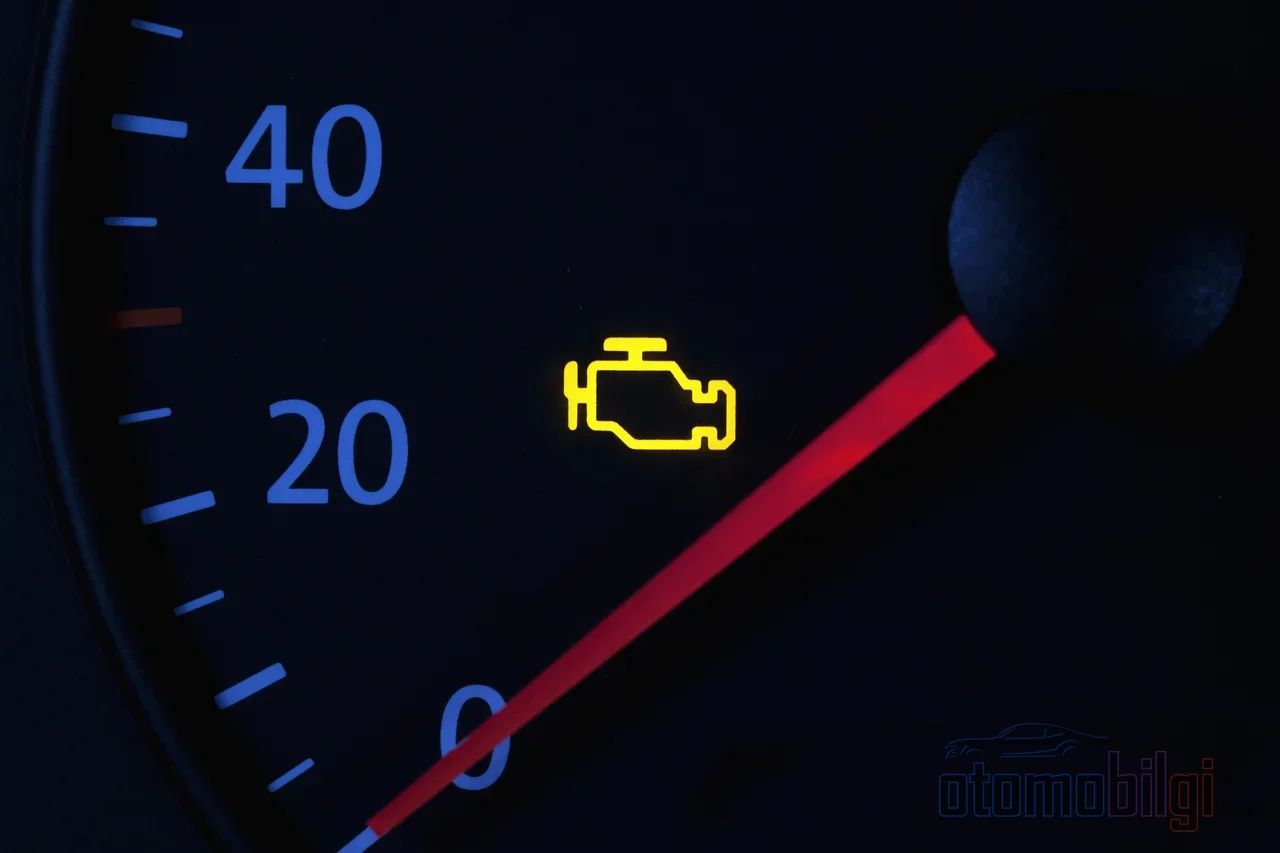
Most drivers are alerted by the engine control unit before they feel the fault. The classic codes are P0420 and P0430: the first indicates that the catalyst system in bank 1 is operating below the efficiency threshold, and the second indicates the same fault in bank 2. The ECU does this by comparing the readings of the lambda sensors before and after the converter; if the two sensors give values very similar to each other, the converter isn't converting anything.
The most common mistake here is to treat the code directly as a "bad converter" diagnosis. A faulty oxygen sensor, a cylinder misfire acting as a source of knocking in the ignition system, an exhaust leak, or a fuel pressure problem can also trigger P0420 in a healthy converter. The code is the entry point of the diagnostic process, not the endpoint.
How Is the Diagnosis Verified: Four Measurable Tests
Replacing the converter without testing means removing the most expensive part for the cheapest possibility. Talk about your measurements, not your luck:
- Lambda sensor live data: One of the best ways to assess the condition. Fast oscillations of the upstream sensor are normal; the downstream sensor is expected to give a constant voltage. If the downstream sensor oscillates as fast as the upstream one, the converter is not storing oxygen, meaning it is working inefficiently.
- Temperature test: The inlet and outlet are measured with an infrared thermometer. In a healthy converter, the outlet should be hotter than the inlet; if the outlet is cooler, that's a red flag. In newer-generation converters, this difference can be small at idle, so it makes sense to repeat the measurement under load.
- Back pressure test: A manometer is attached to the upstream O2 sensor port and read at idle and at approximately 2,500 rpm. Thresholds in reference values vary by the vehicle's manufacturer: one approach considers pressure near zero at idle and not exceeding 1.25 psi at 2,500 rpm normal, while 8-10 psi indicates a major restriction. When a high reading is obtained, the converter is not always the culprit; a collapsed pipe or muffler can produce the same result.
- Vacuum test: Normal idle vacuum is in the 18-22 inHg range. A reading about 10 percent below this value, or a reading that steadily drops, points to a restricted exhaust; at sudden throttle closure, a drop of at least 5 inHg followed by slow recovery is a signal in the same direction.
A road test is added to these four: if the engine, lively at free revving, cannot accelerate under load while gasping for breath, the possibility of exhaust restriction is taken seriously. Behind a failed converter there usually stands another culprit - the next section covers this.
The Converter Is Usually the Victim: The Real Causes of the Blockage
A converter rarely fails on its own; even if it reaches the end of its natural life, behind premature deaths there is almost always another fault:
- Misfires and unburned fuel: Even a single faulty spark plug can push unburned hydrocarbons above 2,500 ppm; raw fuel burns inside the converter and overheats it.
- Oil burning: A worn valve guide, seal, or piston ring carries phosphorus-rich oil into the exhaust; phosphorus damages the catalyst. The clue is blue smoke from the exhaust.
- Coolant leak: A head gasket or cracked combustion chamber carries silicates into the exhaust and as far as the catalyst. White smoke is the clue.
- Rich mixture: A faulty O2 sensor or a leaking injector constantly overheats the converter; in severe cases, the substrate can collapse.
- Short-trip driving: The exhaust does not get hot enough, and deposits leave residue.
The practical meaning of this list is this: if you replace the converter without fixing the underlying cause, the new one will meet the same fate. Before deciding on replacement, the root cause must be resolved.
Repairable, or Must It Be Replaced? The Cost Logic
The decision depends on the nature of the damage. If the substrate has melted or collapsed, the cleaners on the market will not work; the safe solution is replacement. With a mild restriction, however, the job can be much cheaper: repairing early the misfire, sensor fault, or oil leak that triggered the blockage can be enough to save the converter. Another reason for early intervention is protection - driving with a clogged converter feeds the misfire and engine damage.
When it comes to replacement, the figures cover a wide band. As of 2026, the national average range is approximately USD 1,000-3,500; on hybrid and luxury vehicles this amount can climb up to USD 4,500. The bill at an average repair shop is around USD 2,280-2,480; the labor share is in the USD 236-347 band. The reason the price is so high is the precious metals inside the part; the same reason explains the thefts. For someone doing the replacement themselves, a directly compatible part ranges from 300-2,500 USD, and with labor excluded, the total can drop to around 400 USD. A check engine diagnosis, meanwhile, costs 100-200 USD nationwide.
The comparison makes the economic value of testing clear: checking the oxygen sensor before replacing, assuming a faulty converter, saves thousands of dollars with a solution in the 150-525 USD range if the sensor is the true source of the code. The most expensive mistake in a workshop is not skipping the diagnostic step, but reversing the order.
Conclusion: Read the Symptom, Then Measure
A clogged converter announces itself with power loss, sluggish acceleration, increased fuel consumption, a rough idle, and in severe cases, stumbling caused by exhaust back pressure; a converter that has lost its conversion ability announces itself with a rotten egg smell, failing the emissions inspection, and a P0420/P0430 code. Whichever it is, the diagnosis is completed not by reading the code but by verifying it: a chain of lambda sensor live data, temperature, back pressure, and vacuum tests. You can drive briefly with a clogged converter, but this is not a recommendation - heat and back pressure strain the engine and carry the risk of leaving you stranded on the road at the very moment you need power the most. The correct order is simple: notice the symptom, find the cause, then repair. Your wallet and your engine will want you to stick to this order.
Sources
- Clogged Catalytic Converter Symptoms and How to Test
- Signs of a Bad Catalytic Converter
- P0420: Catalyst System Efficiency Below Threshold (Bank 1)
- Catalytic Converter Replacement Cost Estimate
- Catalytic Converter Replacement Cost in 2026
- How Much Does a Catalytic Converter Replacement Cost?
- Why Does My Car Smell Like Rotten Eggs?
- Troubleshooting Oxygen Sensors
- How Do I Test an O2 Sensor
- Why Are Catalytic Converters So Expensive?