Why Does AdBlue Crystallization Damage the System?
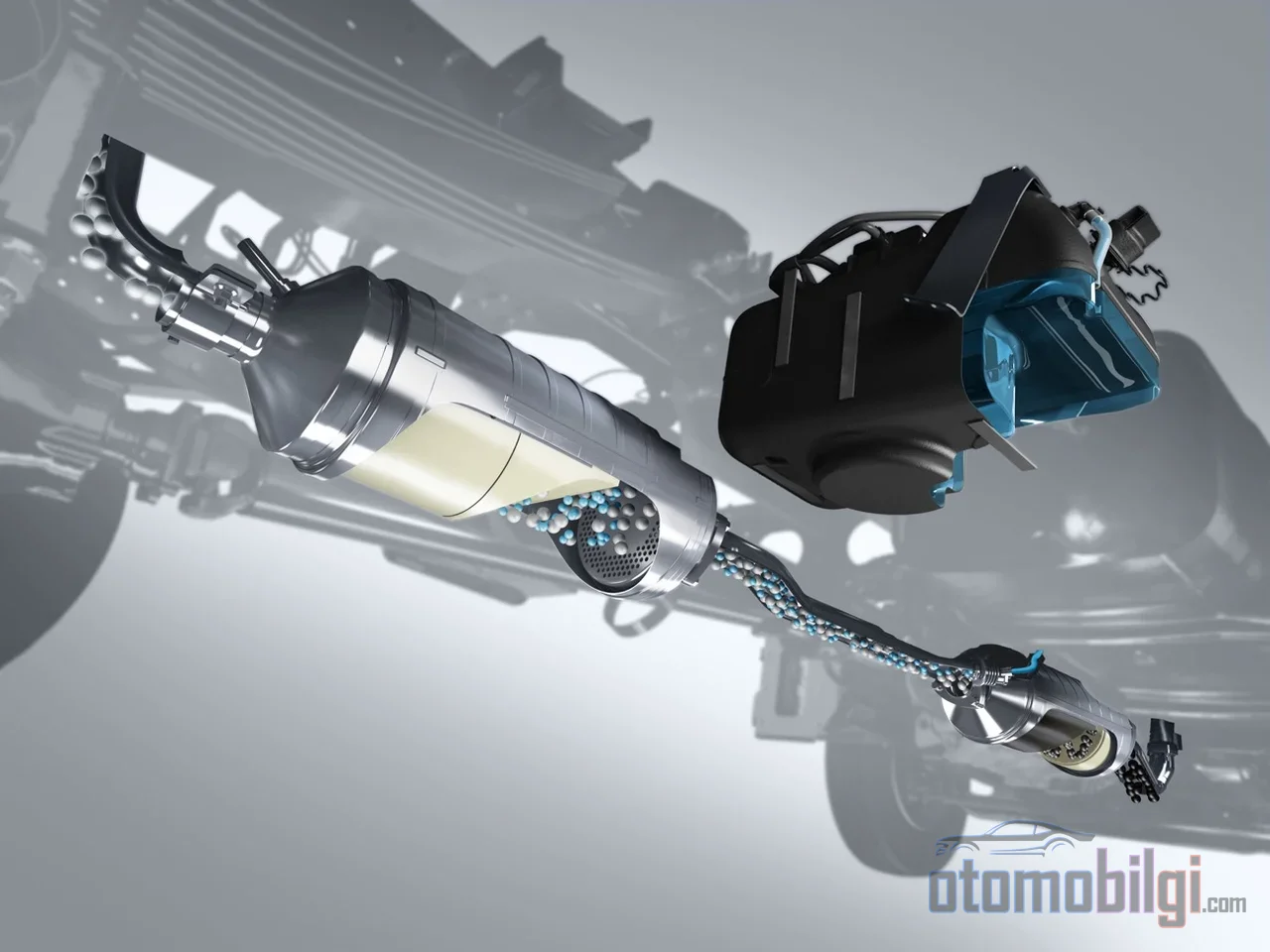
When a flashing SCR warning on the dash progressively cuts the vehicle's power, the first question that comes to most drivers' minds is the software. Yet the real culprit under the hood is often something visible to the eye: a white, rock-salt-looking hard layer. AdBlue, when working properly, is an ordinary fluid that converts nitrogen oxides in the exhaust into nitrogen and water; under the wrong conditions, it is a chemical that turns itself to stone inside the system's veins. So why does this solution crystallize, and in exactly what sequence does the blockage progress?
What Is AdBlue and How Does Crystallization Begin?
AdBlue, also known as diesel exhaust fluid (DEF), is a transparent solution consisting of 32.5% urea and 67.5% deionized water. It smells faintly of ammonia. When sprayed into the exhaust gas, it first decomposes into ammonia and carbon dioxide; the actual reaction takes place in the SCR catalyst, where NOx is converted into harmless nitrogen and water. In other words, the fluid's entire function depends on reaching the catalyst in the right dose, at the right time, and at the right temperature. When any link in this chain breaks, crystallization opens the door.
The basic mechanism of crystallization is simple: if the water evaporates, urea is left behind. A few drops remaining at the injector tip, fluid evaporating from a jug left with its cap open, or an overdosage that cannot fully decompose in the exhaust leaves behind a white residue that hardens and crystallizes over time. Once this residue has formed, it is not so easy to dissolve; even after freezing and thawing, the crystal particles may not dissolve completely.
Highlights
- AdBlue is a mixture of 32.5% urea + 67.5% deionized water and must meet the ISO 22241 standard.
- When the exhaust temperature drops below 300°C, urea crystals form instead of ammonia.
- Around -10°C the solution begins to freeze; above 70°C its corrosiveness increases.
- Two common causes of overdosage: a stuck-open injector and a faulty DEF pump.
- Crystallized fluid should never be reused; dirty AdBlue can permanently poison the SCR catalyst.
Six Causes That Trigger Crystallization
There are different paths leading to the same result, and distinguishing between them is important for predicting where the fault will originate.
Temperature and exhaust conditions
In hot climates, AdBlue remaining at the injector tip evaporates quickly and accelerates crystallization; in extreme cold, freezing does the same job. A lesser-known but critical threshold lies inside the exhaust: if the exhaust gas temperature is below 300°C, the gases do not react fully with the AdBlue and urea crystals form instead of ammonia. This is exactly the scenario experienced by diesels running short urban distances at low load. The effect of the temperature drop is measurable: in one exhaust pipe test, a drop in ambient temperature from 36°C to 26°C was able to increase urea deposits by 95%. Prolonged SCR operation in the 150-200°C range leads to the formation of solid deposits.
Exposure to air and improper storage
When AdBlue is left in the open air, its water evaporates rapidly, the remaining urea concentrates and hardens. Non-sealed containers and excessively hot or cold environments greatly accelerate this process. Therefore, storage conditions are just as decisive as the vehicle's own condition in terms of crystallization risk.
Low-quality or contaminated fluid
Products that do not meet the ISO 22241 standard may contain metals, minerals, and other chemicals. Contact with fuel, oil, dust, or acid-base substances directly promotes crystal formation. Even more dangerous is that impurities such as heavy metals rapidly weaken the activity of the SCR catalyst, even poisoning it and rendering it ineffective; this damage cannot be corrected by cleaning.
Overdosing and system failures
Excess AdBlue cannot fully decompose in the exhaust and leaves deposits on the injector tips and in the exhaust. There are two common sources of this: a DEF injector that does not close and a faulty DEF pump. A faulty dosing module enlarges the problem further with irregular spray patterns. Even if the system components do not fail individually, a control unit with faulty calibration produces the same result.
Temperature Thresholds: Tolerance Table in Numbers
Although crystallization may seem like an abstract threat, its formation conditions are tied to fairly clear temperature ranges. From an engineering standpoint, the system's operating window is narrower than one would think.
| Temperature | What Happens? |
|---|---|
| -11°C / -10°C | The solution begins to freeze; lines and the pump can become clogged, and fluid flow stops. |
| 150–200°C | Prolonged SCR operation at low temperature creates solid urea deposits. |
| Exhaust gas below 300°C | The reaction is not completed; urea crystals form instead of ammonia. |
| 70°C and above | The solution's corrosiveness increases, and components are stressed. |
This table also explains why the problem in winter is experienced differently from how it appears: while freezing is sudden and obvious, the deposit created by low exhaust temperature progresses silently over months.
Clogging Step by Step: How Do Crystals Damage the System?
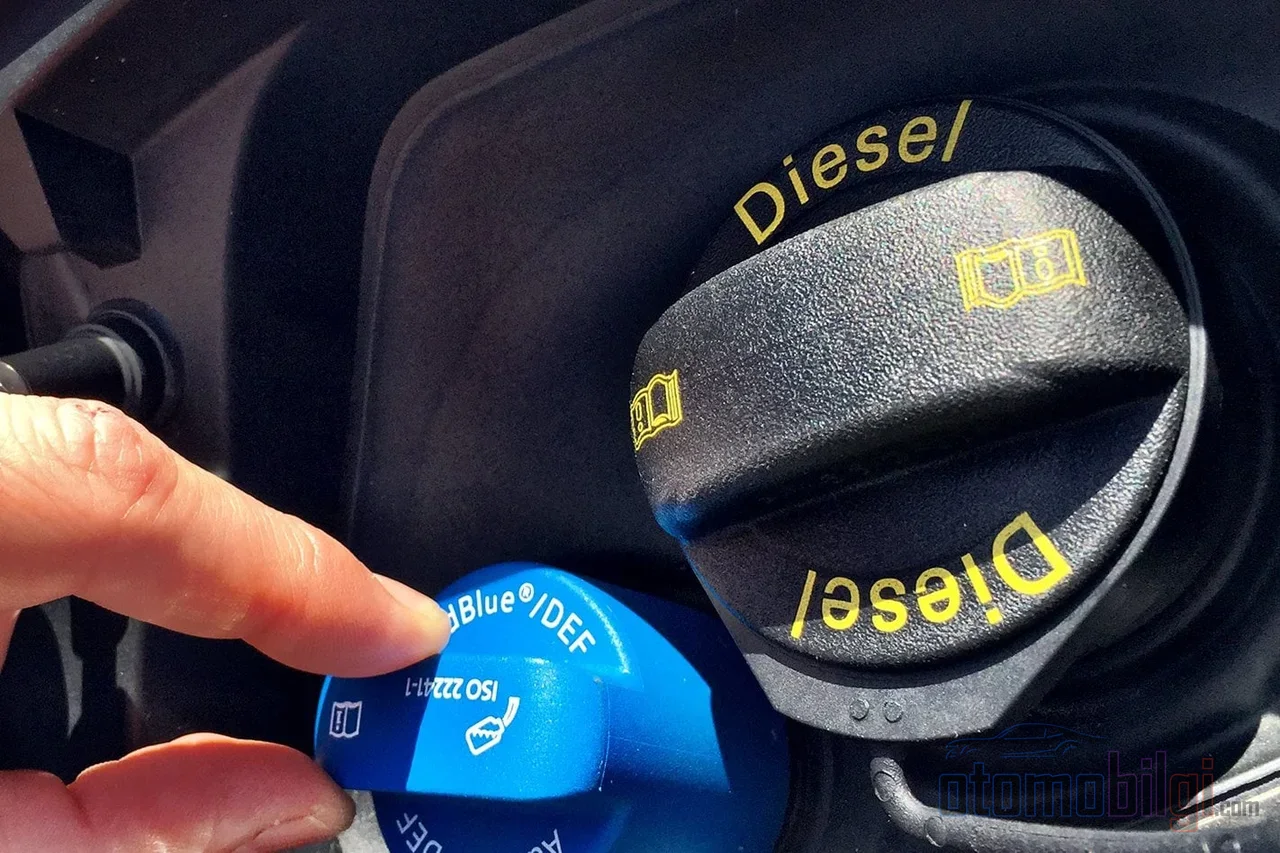
The mechanical chain of the failure usually follows the same sequence, and each link prepares the next.
- Nucleation: A small amount of fluid remaining at the injector tip, at connection points, or inside the exhaust evaporates, leaving a urea residue behind, and this residue hardens and turns into a crystal.
- Injector clogging: Crystals first narrow the injector's spray holes, then close them completely. Dosing is cut off or the pattern is disrupted.
- Line and pump effect: The clogging is not limited to the injector; it also coats the pipes and pump, disrupting the entire flow to the catalyst.
- Dosing drift: The fluid cannot reach the catalyst in the required amount and at the required time; NOx conversion drops. Noticing the reduced flow, the system in some cases responds with overdosing, which in turn produces new deposits.
- Electronic response: When SCR efficiency exceeds the threshold, the vehicle records fault codes, warning lights come on, and at a later stage it progressively cuts power (derate).
- Catalyst risk: If the impurities carried by the contaminated fluid have reached the catalyst surface, the damage now requires part replacement rather than cleaning.
At the end of the chain, the situation shifts entirely from mechanical to financial: repairing injector, pump, sensor and SCR failures is expensive, and crystallization inside the exhaust becomes the most challenging scenario when you have to clean the inside of a pipe with a degraded surface.
Symptoms: How to Catch the Problem Early
Crystallization gives physical signs before it shows up on the dashboard. Early detection is what separates an expensive repair from a simple cleaning.
- White crystalline deposits on the injector tip and connection points - the most reliable early sign.
- Unexplained changes in AdBlue consumption: both abnormal increases and decreases can point to the same problem.
- Fault codes related to SCR efficiency or NOx conversion.
- Check engine and DEF warning lights.
- At advanced stages, increased emissions, failure in emission testing, reduced performance and fuel efficiency.
- Noticeable power loss and reduced traction in a completely clogged system.
Much content focuses on the warning lamp at this point, but the lamp is already an alert that lights up toward the end of the chain. Opening the hood and checking the injector connection provides information weeks before the dashboard warning.
Cleaning and Repair: What to Do, What Not to Do?
For early-stage crystallization, the method is simple: loose, dry deposits are carefully removed, remaining crystals are dissolved with warm water and wiped with a clean cloth. A clogged injector can be removed and its holes cleaned, and it must not be reinstalled without a spray test. With severe blockage, removing the injector is often unavoidable.
The absolute rule is this: spilled or crystallized AdBlue must never be reused. Contaminated fluid causes expensive damage to the SCR system; in particular, heavy metal impurities can permanently disable the catalyst. For the same reason, a container that previously held diesel or oil should not be reused.
There are also additives on the market against crystallization; some are added to the solution in certain ratios with the aim of preventing new crystal formation and preserving SCR efficiency. As an example, a product dosed at 25 ml per 10 liters of AdBlue can be used preventively at a 1:400 ratio. However, the effectiveness and necessity of these additives are debated; almost all of them are prevention products, not repair products, and the unquestionably most effective solution is a quality fluid and proper storage.
Prevention: Storage and Filling Rules
Crystallization is a largely preventable fault, and prevention comes down to a few applicable rules:
- Store AdBlue in a cool, dry and shaded place, between -11°C and 30°C; keep the cap fully closed when not in use.
- Buy only from reliable suppliers, with ISO 22241 certified products.
- Thaw frozen AdBlue at room temperature; never heat it.
- Keep the tank as full as possible: the saturated liquid self-insulates and resists freezing; store the vehicle in an enclosed space during winter.
- Do not use containers that previously held other liquids, and never mix any liquid into AdBlue.
- Clean the filling pump and line regularly.
Summary: Why Does AdBlue Crystallize and What Should You Do?
AdBlue crystallizes because the water in the solution evaporates or freezes, or because the liquid is injected in an environment too cold for it to fully decompose in the exhaust; the urea left behind hardens into crystals that clog the injector, dosing line, and exhaust. Low-quality fluid, exposure to air, dirty containers, and overdosing trigger this process. The solution has two pillars: removing the blockage at an early stage with warm water and a cleaned injector, and preventing it from forming again with ISO 22241 certified fluid, sealed containers, correct storage temperature, and regular line maintenance. Crystallized fluid must never be returned to the system under any circumstances.
Sources
- AdBlue Crystallisation: What is it and How to Stop it | Wynn's Europe
- How to prevent AdBlue crystallisation | Ace Plant
- Why Does AdBlue Crystallise in Exhaust Systems? Causes and Effects | BlueDiesel
- Why Does AdBlue Crystallize? Causes, Prevention And Storage | EverBlue Solution
- Urea Dosing and Injection Systems | DieselNet
- Influence of Exhaust Pipe Structure on Urea-Related Deposits in Diesel Engine SCR System | ResearchGate
- DEF Injector Clogged? How to Clean, Test or Replace It | NUDEF
- DEF Injector Failure: Symptoms, Cleaning, and Replacement | FleetRabbit
- How to Remove AdBlue Crystals: A Complete Guide | Blue Removal
- How to avoid AdBlue crystallisation | Tuffa