The Real Cost of Removing DPF and EGR
Share This Page
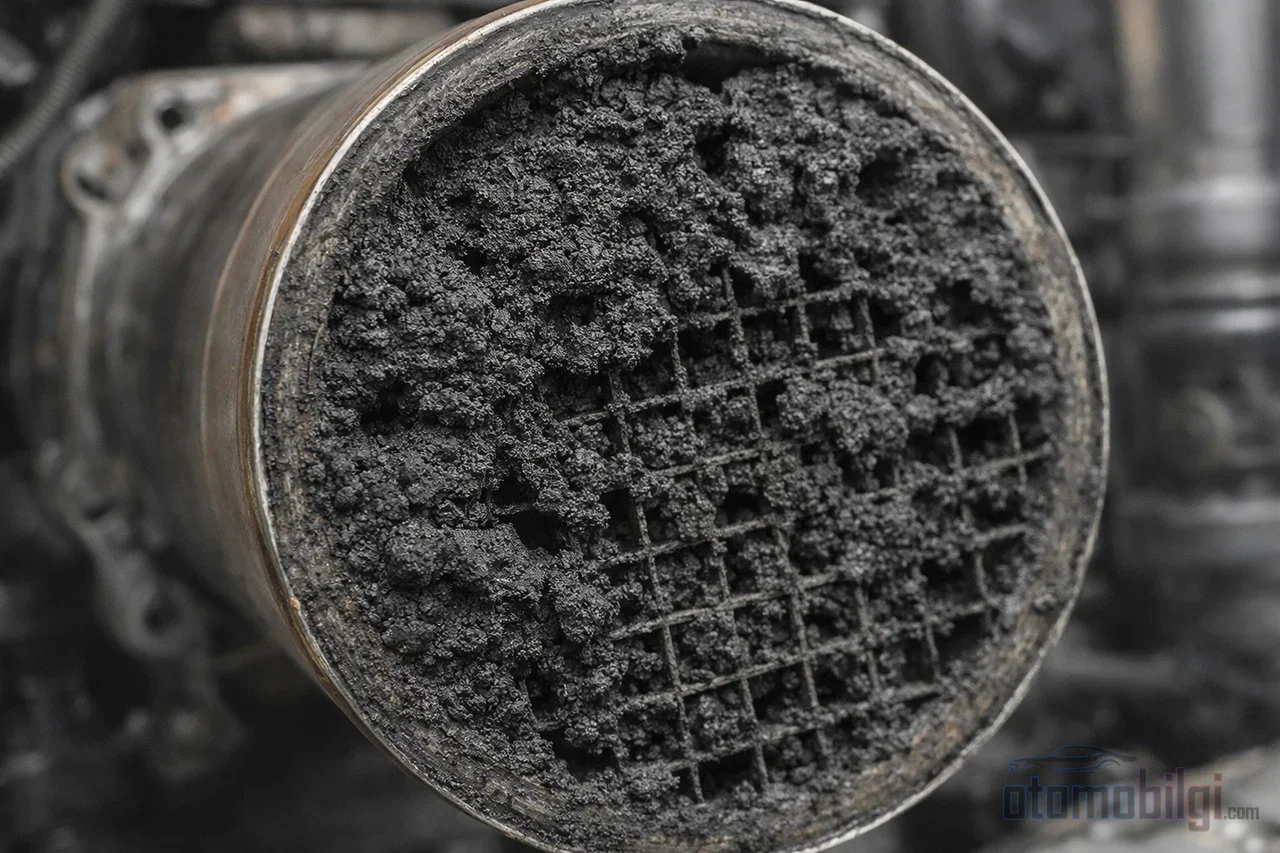
Canceling the DPF, EGR, or AdBlue/SCR system (colloquially known as a "delete") silences the warning light, but in return it leaves permanent traces in the engine computer, risk of detection at the periodic technical inspection, loss of warranty and insurance, and a serious loss of value on the used market. The promise of "better fuel economy" is a gamble that depends on calibration and does not materialize in every vehicle. This page lays out the technical and economic bill of the delete decision, complete with figures.
Highlights
- EPA-verified DPFs reduce particulate matter by more than 90% compared to uncontrolled diesel exhaust.
- Under the U.S. tampering prohibition, an individual vehicle owner faces a civil penalty of $5,911, and manufacturers/dealers face penalties of up to $59,114 per vehicle .
- A DPF removed without a tune triggers an emergency power-restriction mode with P2002 and P244A/B fault codes.
- The parts cost of returning a deleted truck to stock ranges from $3,000-10,000+ depending on the platform.
- The DOJ has stopped criminal prosecution of vehicle owners; however, civil penalties and state inspections continue.
How closely does the "better fuel economy" belief align with technical reality?
The most common motivation for delete jobs is the expectation of lower fuel consumption. It cannot be said that this expectation is entirely unfounded: there are owners reporting gains of 2-4 MPG in mixed driving and 3-5 MPG on the highway with a well-written delete tune, and 6.7 Powerstroke owners speak of 2-5 MPG increases. Experimental studies also show that while EGR reduces NOx, it increases diesel consumption; in other words, EGR deletion can lower consumption. But there is a critical technical nuance here: modern engines run on an integrated system with coordinated calibration covering EGR flows, SCR/DEF dosing, regeneration logic, VGT turbo maps, and injection timing. Disrupting this calibration does not guarantee the fuel economy gains; it causes the engine to move away from its designed operating points.
The picture on the power side is even clearer. The claimed horsepower and fuel economy gains on new-generation trucks are largely invalidated; for example, on platforms like the L5P Duramax, the DPF does not actually restrict horsepower. The promise of "10% more power and lower consumption" may be meaningful on older and already crudely calibrated platforms; on a current engine, it most often produces nothing but risk. No one guarantees the fuel economy increase; this means the decision is not an investment but a gamble.
The myth that "EGR deletion causes the engine to overheat"
On the other hand, another widespread belief is also wrong: deleting the EGR does not cause the engine to overheat. EGR suppresses NOx formation by lowering peak combustion temperature; at full throttle, the EGR valve is already inactive. Therefore, the delete operation does not directly affect engine temperature at high speeds. The real risk lies elsewhere: when the EGR is deleted, peak combustion temperature, cylinder pressure, and NOx output increase; and with poorly prepared tunes, high exhaust gas temperatures (EGT) produce a chain of failures that can extend from piston, valve, and turbo damage to turbo surge and injector coking.
Traces left in the engine computer: Can a delete stay hidden?
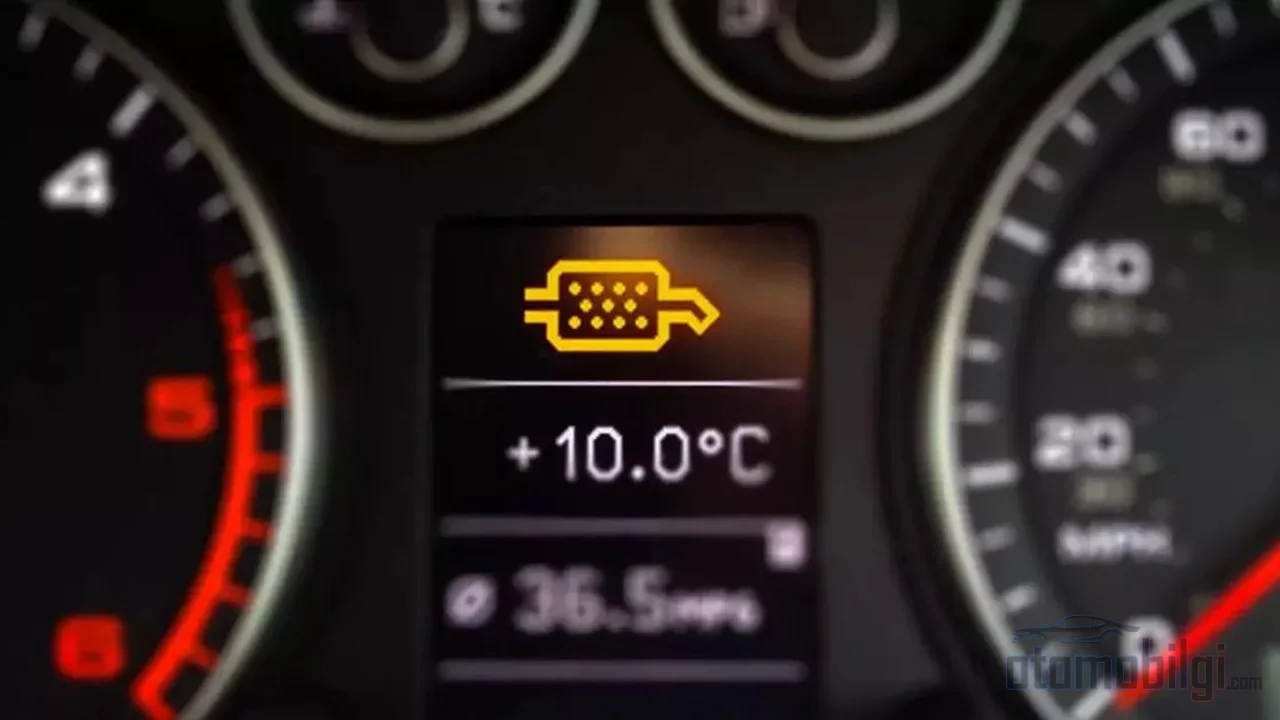
A delete is not just cutting a piece out of the exhaust; it is as much a legal procedure as it is a software one. After a physical delete, the ECU must be reprogrammed to ignore missing components and sensor data: DPF soot load maps are altered, regeneration logic is disabled, and pressure and temperature sensor readings are bypassed. Without a tune, the ECU keeps monitoring differential pressure and exhaust temperature data and almost instantly P2002 (DPF clogging/inefficiency) and P244A/B codes are thrown, and on most diesel platforms it goes into limp mode.
What if the filter is left physically in place and monitoring is only stopped via software? This "ECU-only delete" method leaves no visible sign from the outside; however, traces remain in the software. Experienced tuners and knowledgeable second-hand buyers can detect whether the ECU has been mapped for a delete. The assumption that a delete is a permanent secret contradicts the permanent records that cannot be erased in the ECU.
How real is the risk of detection during an emissions inspection?
The answer depends on the inspection system in your region. The MOT in the UK currently measures only smoke opacity, not NOx; an AdBlue delete done via the ECU does not cause a smoke test failure if there is no visible sign. MOT testers cannot connect to the ECU and scan AdBlue or EGR status; the criteria can be summarized as "no fault light + no excessive smoke." However, this is not a guarantee: When emission control equipment is disabled, the vehicle becomes non-compliant with type approval, and if this is detected, an automatic inspection failure is triggered. It is stated that an AdBlue delete affects type approval and results in inspection failure.
In regions with OBD-based inspections, the picture is harsher. A deleted truck cannot pass the readiness monitor check and its registration cannot be renewed. In California, CARB's heavy-duty vehicle inspection program specifically targets deleted trucks with remote sensing and roadside checks; a failed inspection directly means a registration renewal block. Detection has also become easier for second-hand buyers: A 6-point checklist done via OBD2 can reveal the traces of a delete.
The legal picture: How high are the penalties and what changed in 2026?
In the US, the Clean Air Act's tampering prohibition (42 U.S.C. § 7522(a)(3)) prohibits anyone from removing or disabling an emission control device; selling and installing is also prohibited. The "my state doesn't do inspections" defense is invalid because federal law applies everywhere. Penalty amounts vary greatly depending on the nature of the violation:
| Violator | Penalty range |
|---|---|
| Individual vehicle owner | Civil penalty of over $5,911 per vehicle |
| Manufacturer / dealer / installer | Penalty that can exceed $59,114 per vehicle |
| Device seller / installer | Over $5,000 per device |
| Per-vehicle and per-day violations | Civil fine of up to $45,000 per day |
The reason the figures vary is that the penalty can be calculated based on different provisions and units of measurement (vehicle, device, day). Canada also enforces similar tampering prohibitions under CEPA (SOR/2003-2). The notable development in 2026 is that the U.S. Department of Justice has halted criminal prosecution of vehicle owners, but civil penalties and state inspections continue unchanged. This is not legalization, merely a softening in the enforcement of criminal prosecution. Moreover, deleting on leased vehicles also constitutes a breach of contract.
Warranty and insurance bill: What do you lose, and when?
DPF deletion almost guarantees the denial of emissions warranty claims and puts the powertrain warranty at serious risk. The powertrain coverage includes the engine, transmission, transfer case and axles; meaning every critical component touched by the deletion process now becomes disputable. It is important to know the nuance of the Magnuson-Moss Act: A manufacturer cannot void the entire vehicle warranty with a single modification; but it can deny any claim that can be reasonably linked to the tampering. With a deleted DPF, that means "nearly every powertrain claim." In contrast, failures unrelated to the exhaust, such as a brake caliper, may theoretically remain covered; the dealer must prove that the deletion affected the failed part.
Two more details are worth knowing: Federal law prevents the outright cancellation of the factory warranty in most cases, but extended warranties do not carry the same protections. The insurance side is even stricter: Most policies exclude illegal modifications or illegal use of the vehicle; if the deletion is discovered after an accident, coverage can be denied and liability shifts to the individual. Additionally, dealers and reputable independent shops are increasingly refusing to perform engine and electronics work on deleted trucks to protect themselves from EPA liability; it can even become difficult to get a diagnosis done without converting the vehicle back to stock.
The mechanical cost: What disappears when fault codes are silenced?
The least discussed but most tangible cost of deletion is the early warning system lost when fault codes are suppressed. Monitors related to the DPF, SCR and DEF sometimes also catch early warnings that seem unrelated; when these monitors are silenced, small problems go unnoticed until they turn into major failures. Poorly prepared tunes lead to high EGTs, turbo surge and late boost. The increased soot in an exhaust without a DPF accelerates oil degradation, fouls turbo blades and shortens oil change intervals. The claim that "deletion reduces maintenance costs" is also weak in terms of reliability; in the short term, regeneration-related wear may decrease, but long-term reliability and the uncertainty around emissions compliance remove that saving from the equation.
Can a deleted vehicle be sold? Second-hand impact and the cost of converting back to stock
Dealers, auctions, and knowledgeable buyers detect deleted vehicles. Many OEM dealers require a return-to-stock condition before accepting a deleted truck as a trade-in, meaning all emission equipment must be restored to its original state. Knowledgeable private buyers demand steep discounts or walk away entirely. Selling a deleted vehicle to anyone living in regions that currently have or may have emission equipment inspections is practically impossible. The parts cost of a return-to-stock varies by platform $3,000-$10,000+ and that does not include labor or ECM reflashing.
The reverse side must also be considered: when a vehicle like a 2014 Ram 2500 Cummins is worth roughly $20,000 in 2026, a $5,000 DPF replacement is 25% of the vehicle's value. This economics is the real driving force behind delete requests. On the other hand, the value of the original filter should not be dismissed either: new DPF take-off parts start at values from $3,000; selling the filter rather than scrapping it is a factor that changes the total cost of the decision.
A solution instead of deletion: the root cause of the blockage is often not the filter
Before evaluating the deletion scenario, one point needs clarifying: most "DPF problems" are not filter design flaws. Behind the blockage lie deferred maintenance, stuck EGR valves, short-trip driving that does not allow regeneration to complete, or high-ash oil that accelerates DPF clogging. Using low-ash oil, adhering to regeneration procedures, and periodic DPF cleaning significantly extend filter life. Also, remembering that the SCR system reduces NOx (a gas), not smoke, and that SCR cannot reduce NOx without a reactant, debunks common misconceptions like "AdBlue reduces smoke." Deletion is not a solution to a maintenance problem; it is the act of turning it into a permanent and costly legal problem.
Conclusion: things to factor in before making the decision
Delete jobs set off a chain of consequences that goes far beyond silencing the fault light: permanent traces in the ECU, a genuine risk of detection at periodic inspection that varies by region, loss of emissions and largely powertrain warranty, disputes over insurance coverage after an accident, workshop refusal, and the obligation to convert the vehicle back to stock when selling. The gain in fuel economy, meanwhile, is an expectation with no guarantee, depending on the platform and tune quality. In most scenarios, the answer to the question "does the value increase once it is deleted" is no; a knowledgeable buyer demands a discount, and the dealer refuses the trade-in. The real question at the moment of decision is not the fault codes, but the cost of this entire bill.
Sources
- What Are the Negatives of DPF Delete? 2026 - The Diesel Dudes
- Tampering and Aftermarket Defeat Devices - EPA Clean Air Northeast
- Diesel delete kits get a DOJ reprieve, not a green light - Landline
- Diesel Emissions Deletes: The Legal and Insurance Risk - MarqueeIG
- What happens if you get caught with a deleted truck? - Bulletproof Diesel
- Is It Legal to Delete a Diesel Now? 2026 Guide - Suncent Auto
- AdBlue Delete Cost, Legality & MOT Rules 2026 - AdBlue Specialist
- Can You Pass an MOT After an AdBlue Delete? - iFixAdBlue
- AdBlue Delete & SCR Removal: 2026 Technical Guide - Chip Motorsports
- DPF Delete Detection on a Used Diesel: 6-Check OBD2 - Skanyx
- DPF Delete: The Myths, Realities, and Ramifications - Rep.Direct
- 5 Reasons Why You Shouldn't Delete Your L5P Duramax's DPF - DuramaxTuner
- Experimental Study on NOx Reduction of Diesel Engine by EGR - PMC (Zhang, 2024)
- The Pros and Cons of an EGR System Delete - Highway and Heavy Parts
- What Voids a Car Warranty or Claim - NerdWallet
- DPF Delete Kits: Rising Demand Driving Global Diesel Trends - Focus2Move
- Why Jay Malone Ford Doesn't Delete Your Power Stroke's Emissions Equipment