DPF and Catalytic Converter Guide
Share This Page
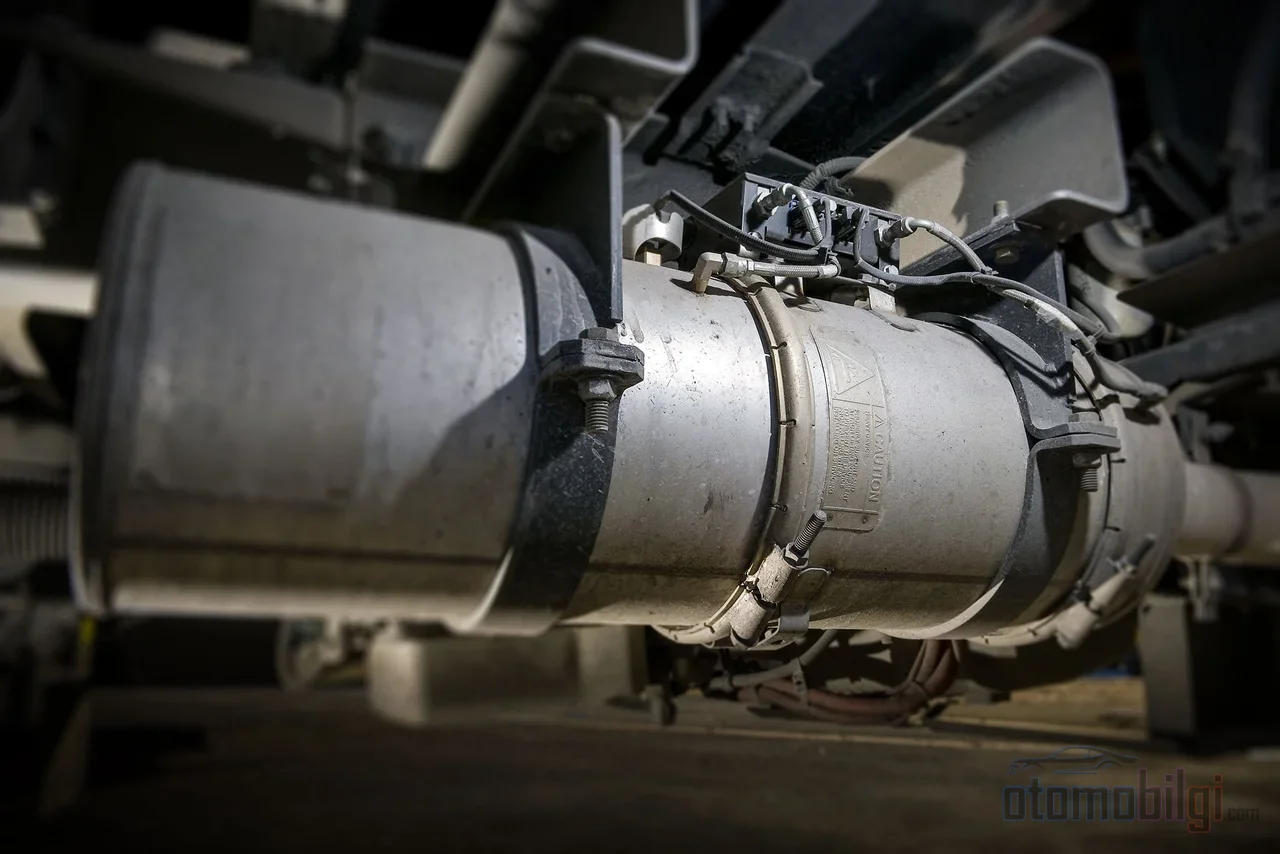
The diesel particulate filter (DPF) is a filter that physically traps soot and particulate matter in the exhaust gas; the catalytic converter, on the other hand, converts carbon monoxide, hydrocarbons and nitrogen oxides into harmless gases through chemical reactions. Both operate in the exhaust line but their jobs are completely different: one traps particles, the other converts gases. The DPF's ability to sustain this function depends on a self-cleaning cycle called regular regeneration, and the failure of this cycle is the main cause of filter clogging.
Highlights
- Wall-flow DPFs trap soot at over 85%, and in good conditions at rates approaching 100% .
- In active regeneration, the filter temperature rises above 550°C , in some cases reaching up to 800°C.
- Replacing a new DPF 3,000-10,000 USD can cost between.
- In the EU, Euro 5 made DPFs mandatory for diesel cars; Euro 7 came into force in 2026.
- A clean DPF can improve fuel economy by 3-5% thanks to reduced back pressure.
How a DPF Works: Filtration Inside a Honeycomb Structure
The soot formed in the diesel engine's combustion chamber is expelled along with the exhaust gas. To prevent these particles from mixing into the atmosphere, the DPF is placed in the exhaust line; it is a ceramic body with a honeycomb structure containing thousands of tiny channels. The critical detail is this: the channels are alternately blocked. Exhaust gas cannot stop at the end of a channel; it is forced through the porous ceramic wall into the adjacent channel. The particles, however, cannot pass through the wall and are trapped in the filter wall.
This is called a wall-flow filter, and it passes the entire exhaust through fine porous ceramic. That is why filtration efficiency is high: wall-flow DPFs typically remove more than 85% of soot , approaching 100% under suitable conditions. The capture rate of a new filter can range from 30% to 95%+ depending on conditions; efficiency increases as the filter matures. The inner surface is usually coated with a catalyst layer containing precious metals such as platinum or palladium - this also provides chemical support to the filter.
Historically, the widespread adoption of this component is the result of emissions legislation. PSA Peugeot Citroën was the first manufacturer to make DPFs standard in cars in 2000. In the EU, the Euro 5 standard entered into full force in January 2011, making DPFs mandatory for diesel cars; on the US side, engine manufacturers EPA 2007 switched to DPFs to meet the standards.
What Does a Catalytic Converter Do, and How Is It Different from a DPF?
The catalytic converter chemically converts harmful components in the exhaust gas. Carbon monoxide (CO) and hydrocarbons are oxidized on the surface of precious metals into carbon dioxide and water, while nitrogen oxides (NOx) are reduced into less harmful components. This is not filtration but molecular transformation: the gas is not trapped in a filter, it changes its identity.
The DPF, on the other hand, is a physical device. It separates and traps the solid soot particles produced by combustion from the gas. In other words, it solves a gas problem with chemistry, and a solid problem with physics. Diesel vehicles usually have both together; the two-way (oxidation) catalytic converter first turns CO and hydrocarbons into CO2 and water, and the DPF downstream captures the solid particulates. In short: the catalytic converter targets gases, while the DPF targets soot.
How Regeneration Works: Passive, Active and Parked Mode
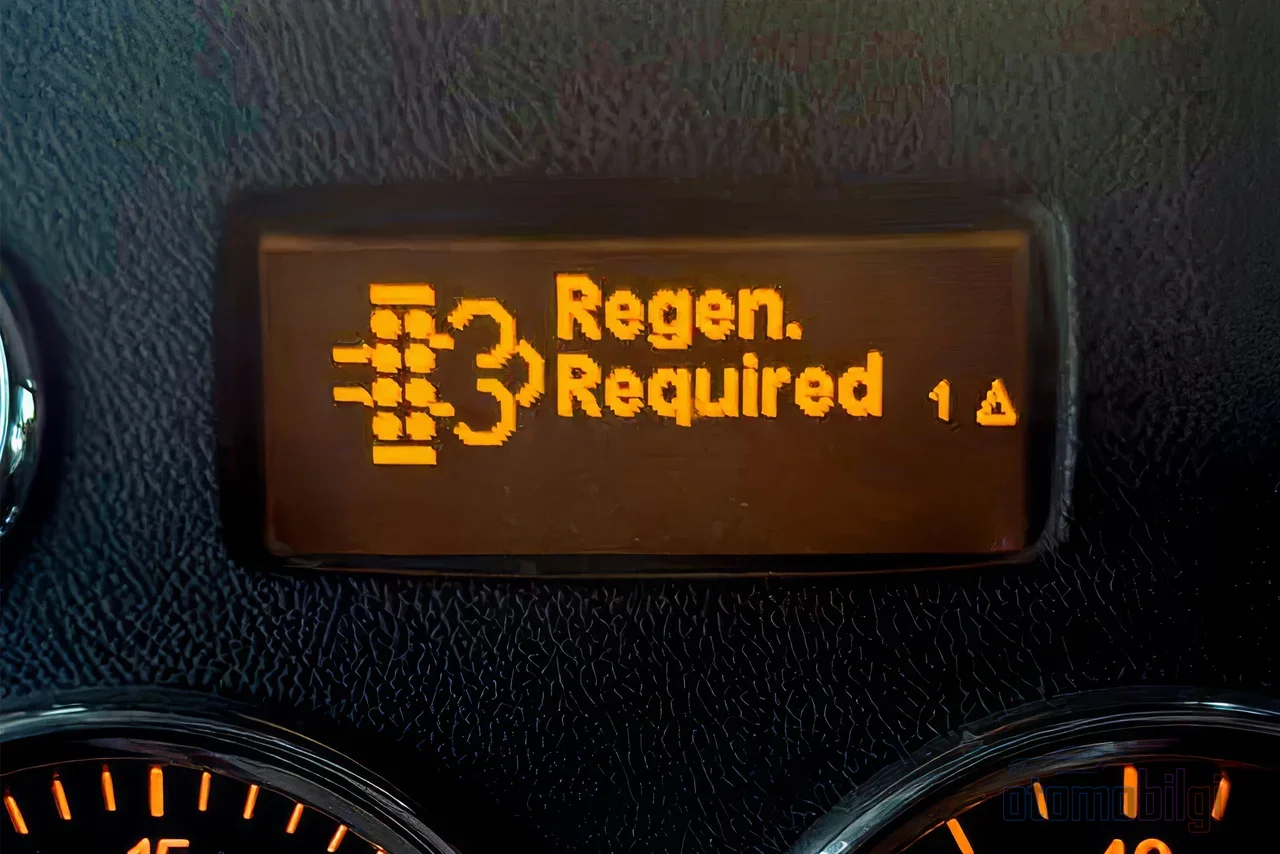
If the trapped soot continues to accumulate, the filter becomes clogged. To prevent this, the DPF periodically burns off the soot it traps - this process is called regeneration and occurs in three forms.
Passive regeneration
In normal, extended driving when exhaust temperature reaches the 300-400°C range, the soot combines with the oxygen in the exhaust, turns into carbon dioxide, and passes through the filter as gas. The driver notices nothing; the system cleans itself. In some systems this process is even more elegant: in the oxidation catalyst, NO is converted to NO2, and the NO2 continuously burns the soot inside the filter. This continuous regeneration approach requires no extra energy.
Active regeneration
If the engine does not produce enough heat, the electronic control unit (ECU) takes over. When the soot level in the filter reaches a threshold, the ECU injects fuel into the exhaust flow; this fuel burns in the oxidation catalyst and raises the DPF temperature above 550°C, in some systems up to 800°C.At this heat the soot burns and the filter's flow is restored.
Parked regeneration
This is a form of regeneration initiated by the operator from a panel while the vehicle is stationary, and it can last from 20 minutes to 1 hour. Some new diesel engines perform this process by raising engine speed to approximately 1,400 RPMwhile parked. An important safety note: very hot gas exits the exhaust during regeneration, so the exhaust must be kept away from flammable materials.
Why Do Short Trips Clog the DPF?
The common requirement of all forms of regeneration is heat. Soot cannot be burned without the engine reaching its optimum operating temperature and the exhaust reaching the required temperature. Short, low-speed trips prevent exactly this: the engine runs cold, and regeneration either never starts or is interrupted halfway. More soot enters the filter than is burned, and the balance is upset.
One thing should be made clear: a single short trip does not ruin the DPF. The problem is frequent repetition - especially use of only a few kilometers that does not allow the engine to fully warm up on most days of the week. Three or four short trips a week is usually tolerable, but if regular, long, and fast drives are not added to this usage pattern, the filter becomes saturated over time. When the light comes on, the filter is most likely clogged; at that moment driving at a speed above 60 km/h helps regeneration. If speed is neglected and one waits, regeneration may not complete properly, and the filter may fail completely and need to be replaced.
Driving style is not the sole culprit behind clogging. Injection timing problems and worn injectors can produce excessive soot from an incorrect fuel-air ratio and fill the filter quickly. Poor maintenance, low-quality fuel, and running on a low fuel level are also among the factors that accelerate clogging.
The Ash Problem: Deposits That Heat Cannot Solve
Regeneration burns off soot, but it does not burn everything. Metallic compounds originating from engine oil turn into ash as a result of combustion, and ash cannot be converted by heat. Over time it accumulates inside the filter and permanently reduces its capacity. The solution is to remove the filter and clean it with compressed air in a professional machine. In diesel vehicles, professional cleaning is typically required every 150,000-250,000 miles or 5,000 hours of operation; in some heavy-duty engines this interval extends to 400,000-600,000 miles.
The most effective way to slow ash accumulation is to use the right materials. When the manufacturer-recommended low-ash engine oil and ultra-low-sulfur diesel (ULSD) are not used, both soot and ash quantities increase; oil with high ash content significantly shortens DPF life. Other common mistakes can also be added to the list: ignoring the warning light, skipping periodic cleaning, unqualified DIY cleaning attempts, and interrupting regeneration cycles halfway.
The Cost of Clogging: Consumption, Performance, and Replacement Bills
A clogged DPF creates back pressure in the exhaust. The engine tries to push the throttle against this resistance; the result is noticeably increased fuel consumption and reduced performance. Considering that a clean filter can improve fuel economy by up to 3-5% with reduced back pressure, the hidden cost of clogging starts being paid at every fill-up. As the fault progresses, regenerations become more frequent, and fuel is wasted on heating the filter to no avail.
The real bill comes when the filter can no longer be saved: a new DPF replacement can cost between 3,000-10,000 USD and in older vehicles this amount can exceed the vehicle's value. These figures show that cleaning is far cheaper than replacement - regular professional cleaning is the insurance that covers the most expensive option. There is also a trend in the opposite direction: completely removing and discarding the filter ("DPF delete") is suggested in some circles as a way to avoid an expensive replacement; however, this renders the filter unusable and breaks the vehicle's compliance with emissions regulations, meaning it is neither legal nor a long-term solution.
Euro 6 and Euro 7: How Are Strict Particulate Limits Changing These Components?
The fate of exhaust aftertreatment components depends directly on emissions standards. Under Euro 6, cars and vans were tested with durability targets expected to stay within the limits for 100,000 km or 5 years . Euro 7, meanwhile, was adopted in 2024 and entered into force in 2026; for the first time, it also covers non-exhaust emissions such as tire and brake particles.
For cars, Euro 7 largely preserves the Euro 6 exhaust limits; the tightening is aimed mostly at truck and bus categories. Still, there is a significant change on the measurement side: the particle number limit now covers particles above 10 nm as well - meaning smaller particles are counted. Euro 7 also tightens the evaporative emissions limit for gasoline vehicles from 2.0 g/test down to 1.5 g/testand introduces stricter real driving emissions (RDE) monitoring in November 2026.
All these ultra-low particle limits put the filter at the center: the DPF for diesels and the GPF (gasoline particulate filter) for gasoline engines are positioned as the main particulate solutions of the Euro 7 era. Diesel has one extra layer: SCR (selective catalytic reduction) systems convert NOx into harmless nitrogen and water using AdBlue injected into the exhaust gas. AdBlue, a urea solution of 32.5% purity, and SCR can reduce NOx emissions by up to 90%. A modern diesel's exhaust line is therefore no longer a single pipe: it is a chain made up of an oxidation catalyst, DPF, SCR, and an AdBlue injection system.
Practical Takeaway: Golden Rules for a Long Filter Life
It is true that the DPF is designed as a self-cleaning component; but that does not mean it will work without maintenance. The habits that extend its life are technically simple:
- Regularly drive at least above 60 km/h, at speeds that let the engine fully warm up; allow passive and active regeneration to complete.
- Never ignore the regeneration warning light when it comes on; speed and duration are the conditions for regeneration.
- Use the manufacturer's recommended low-ash engine oil and high-quality, ultra-low-sulfur diesel.
- Do not neglect the maintenance of the injectors and fuel system; worn injectors fill the filter quickly.
- When the filter reaches the end of its life, opt for timely professional cleaning instead of replacement - the difference is worth thousands of dollars.
In summary engineering terms: the DPF is not a consumable item, but part of a system that provides long service life when operated correctly. The only things the system needs are sufficient heat and the right materials; a vehicle owner who provides both greatly eliminates both the risk of clogging and the replacement bill.
Sources
- Diesel particulate filter - Wikipedia
- How does a Diesel Particulate Filter work? - mtu
- Diesel Particulate Filters: A Beginner's Guide - UTI
- Understanding and Diagnosing DPF Systems - Snap-on
- Vehicle emissions and battery durability (Euro 7) - EUR-Lex
- What is AdBlue? - Yara
- What Is DPF Clogging? Causes, Symptoms, and Fixes - Fuel Ox
- How Clean DPFs Improve Fuel Economy - DPF Guys
- Diesel DPF Short Trips & Regen Problems - Spelab
- Euro 1 to Euro 7: complete guide - Geotab