What You Need to Know About AdBlue and SCR Systems
Share This Page
AdBlue is an aqueous solution consisting of 32.5% urea and 67.5% demineralized water, injected into the SCR (selective catalytic reduction) system to reduce nitrogen oxides (NOx) in diesel exhaust. Using the ammonia produced by the decomposition of this liquid, the SCR catalyst converts NOx into nitrogen, a natural component of air, and water; this enables modern diesels to meet strict emission standards such as Euro 6 without seriously compromising fuel economy.
Highlights
- AdBlue 32.5% urea and 67.5% demineralized water consists of.
- SCR can reduce NOx emissions by up to 90% .
- Typical consumption: in a passenger car, approximately 1.5 liters per 1,000 km.
- AdBlue freezes at approximately -11 °C ; freezing does not damage the liquid.
- If the tank is completely empty, the vehicle first reduces its power, then the starter system locks.
How Does the SCR System Work?
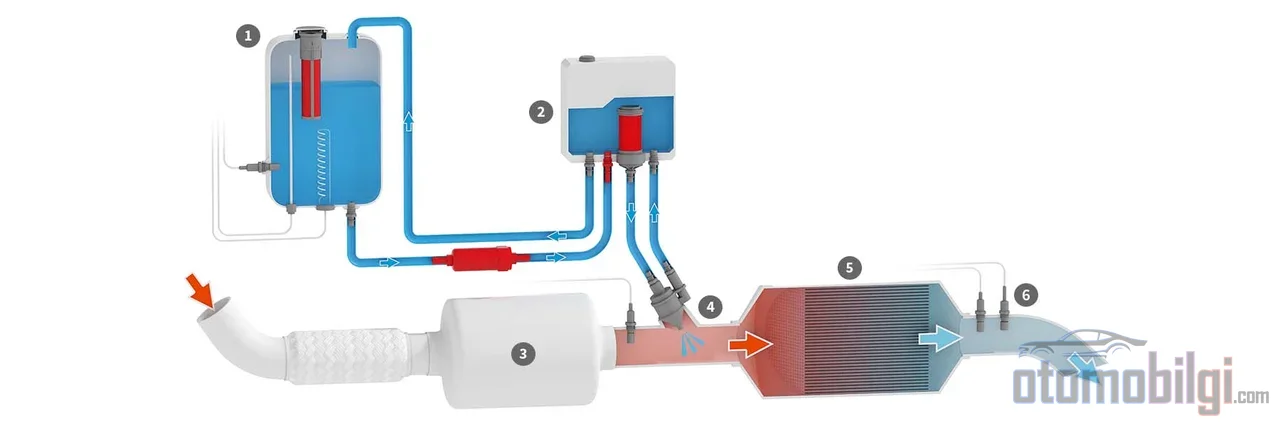
SCR stands for "selective catalytic reduction," and the name literally describes its job: it uses ammonia as a reducing agent to reduce NOx, that is, subjecting it to a chemical "reduction" reaction. The system's main components consist of three parts: the DEF injector/dosing module that sprays liquid into the exhaust, the AdBlue tank located in a separate compartment in the vehicle, and the SCR catalyst in the later part of the exhaust line.
The chain works like this: using real-time data taken from the engine crankshaft, the dosing module sprays exactly the right amount of AdBlue according to the temperature and flow rate of the exhaust gas. In the hot exhaust, the solution first decomposes into ammonia (NH3) and CO2; then, in the SCR catalyst, the ammonia reacts with NOx molecules, producing nitrogen (N2), water (H2O), and a very small amount of CO2 as output. In other words, the substances exiting the exhaust are already natural components of the air we breathe.
The critical word here is "active" system. SCR does not touch the gases by itself; it continuously injects liquid into the exhaust and adjusts the dose according to the engine's current operating conditions. This is the fundamental difference from the passive catalytic converter logic we are familiar with in gasoline vehicles, and the same difference explains why the system requires periodic fluid replenishment.
Why Is AdBlue Consumed and When Should It Be Refilled?
The reason for consumption is a simple matter of ratio: the system consumes fluid in sync with fuel usage in order to neutralize as much NOx as it burns. In practice, in a passenger car, this approximately 1.5 liters per 1,000 km means; consumption increases as the vehicle gets bigger. As a rough engineering rule of thumb, approximately 3% of diesel fuel consumption is used as AdBlue - a vehicle burning 100 units of fuel consumes around 3 units of DEF.
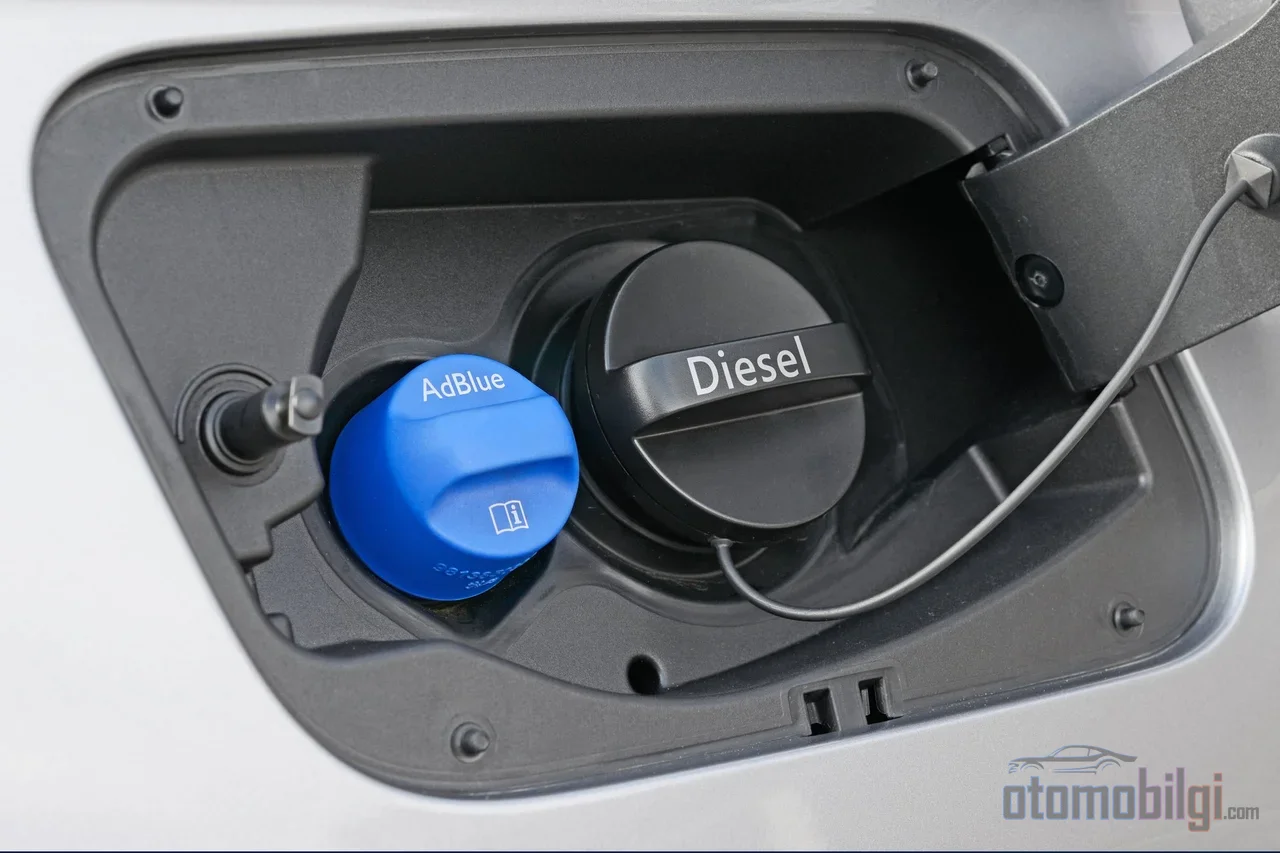
There is no exact calendar for refilling intervals; since the rate at which the fluid runs out follows fuel consumption, distance and vehicle type are determining factors. In passenger cars, most tanks 12-24 liters in capacity, and the practical refill interval is approximately 5,000-10,000 km corresponds to. In light commercial vehicles, top-ups usually coincide with the oil change interval, which offers a natural addition point to the maintenance routine. It is easy to distinguish it from the diesel fuel tank: the AdBlue tank has a blue cap, and vehicles give plenty of warnings when the level drops.
SCR, DPF and Catalytic Converter: Different Stages of the Same Chain
These three components are not rivals, but stages working in sequence. The clearest way to summarize the division of labor between them is with a table:
| Component | Targeted pollutant | Operating principle |
|---|---|---|
| Catalytic converter | CO, HC and general harmful gases | Passive; gases are converted over the catalyst as they pass through the exhaust |
| DPF (particulate filter) | Soot and smoke (particulate matter) | Physical trapping; collects large particles on the filter surface |
| SCR | Nitrogen oxides (NOx) | Active; performs chemical reduction by injecting fluid into the exhaust |
This division of labor explains why the two are described as "a perfect pair": the DPF targets solid particulates, the SCR targets gaseous pollutants. In a modern diesel's exhaust line, the DPF, SCR and EGR are not independent parts but stages of the same aftertreatment chain; the exhaust gas passes through the particulate filter at one point of the system and through the SCR catalyst at another. SCR's measured reduction performance is also consistent with this architecture: Up to 90% NOx, 50-90% HC and CO, and 30-50% particulate matter reduction.
Why Did AdBlue Become Mandatory in Post-Euro 6 Diesels?
The nature of the diesel engine is the source of the problem: diesel must run with more oxygen than theoretically required - that is, "lean". This is good for efficiency, bad for NOx; because the excess oxygen and high temperature inside the cylinder make the oxidation of nitrogen inevitable. No matter what is done on the engine side to solve this problem, the tightening limits at some point made an active solution on the exhaust side mandatory, and at that point SCR with AdBlue became standard equipment.
The practical results are measurable. Since SCR could meet NOx limits without major compromises on fuel economy, engine calibration could be tuned toward efficiency; heavy commercial fleet operators have exceeding 4% fuel economy gains reported. Since 2011 all heavy commercial diesel truck engines in the USA have used SCR to comply with emission standards. The system is not limited to road vehicles either: SCR is preferred in construction, agriculture, marine, rail systems and power generation equipment to meet similar emission requirements. While regulatory efforts to further tighten the standards continue, improvements such as dosing strategies and catalyst placement are being evaluated.
What Happens If AdBlue Runs Out?
The system's behavior is predictable and strict. When the level in the tank drops, a gauge warning appears; then visual and audible warnings follow. If you continue to ignore these warnings, the vehicle activates a protection (derate) that gradually reduces engine power and imposes a speed limit. Finally, the starting system is locked: the vehicle will not run without filling the tank. This staged structure is designed not to punish the driver, but to make it impossible for the emissions system to go without working.
The majority of faults are also not dramatic; they arise from simple causes: a low or empty tank, contaminated fluid, and simple neglect. Dosing module, pump, and pressure issues are the most common fault group on the mechanical side. Crystallization deserves a separate heading: AdBlue can dry out and leave crystals, which is a known source of SCR failures ranging from injector clogging to sensor errors. Low-quality, non-standard (non-ISO compliant) AdBlue is cited as the most common cause of failures in the exhaust aftertreatment system; using a certified product here is not a luxury, but cost-of-ownership management.
Wrong Fluid Risk and Freezing: Practical Usage Questions
What happens if AdBlue is put into the diesel tank?
Serious engine damage and an expensive downtime. That is why manufacturers have taken precautions through design: the AdBlue tank's opening fits only the DEF pump's nozzle; a standard diesel pump does not fit. The accident in the reverse direction - filling the AdBlue tank with diesel - damages the system; filling it with other fluids such as windshield washer fluid is also among known user errors. Simple rule: the blue cap is only for DEF/AdBlue; any water or alternative fluid damages the SCR system and blocks emission reduction.
Does AdBlue freeze in winter?
Yes; it freezes at about -11 °C . However, freezing does not spoil the fluid: when thawed, it returns to its normal chemical state with no loss of performance. The vehicle side is also designed for this; heated tank and hoses keep the system working even in cold climates. On the storage side, two limits should be known: below -11 °C carries a freezing risk, and above 30 °C can reduce the solution's urea content. In other words, proper temperature storage is the essential condition for preserving the fluid's quality.
Assessment: What SCR Gains and What It Costs
To close the discussion with numbers: SCR delivers high NOx reduction (up to -90%), 50-90% lower HC and CO as byproducts, 30-50% lower particulates, and fuel economy gains with correct calibration. With proper maintenance, it is designed to work throughout the vehicle's lifetime. The cost, however, is clear: the initial installation cost, the continuous operating expense for the fluid, and the need for periodic maintenance. The fact that the overwhelming majority of system failures stem from user-related causes such as low-level, poor-quality fluid, and neglect is also the best maintenance advice in summary: use certified AdBlue, don't ignore the warnings, and never put anything other than AdBlue in the blue cap.
Sources
- Selective Catalytic Reduction (SCR)
- BSIV Selective Catalytic Reduction (SCR)
- The Ultimate Selective Catalytic Reduction (SCR) System Guide
- Diesel Exhaust Fluid - AdBlue
- Diesel Exhaust Fluid
- AdBlue Explained
- The Dos and Don'ts of Using AdBlue
- What is AdBlue? Why Does Your Car Need It?
- AdBlue Freezing in Winter
- A Technical Summary of Euro 6/VI
- AdBlue: Everything You Need to Know