What Does the Euro 6 Emission Standard Actually Require from Your Car?
Share This Page
Euro 6 is the standard that defines the exhaust emissions of new passenger cars and light commercial vehicles sold in the EU and the United Kingdom since 2014, setting a nitrogen oxide (NOx) limit of 80 mg/km for diesel vehicles and 60 mg/km for petrol vehicles. In other words, the amount of pollution allowed to come out of your car's exhaust is legally defined by these numbers. On this page, we explain step by step what these limit values mean, the difference between laboratory testing and real-world driving, and why your vehicle carries systems such as the catalytic converter, DPF and SCR.
Highlights
- Euro 6 NOx limit: diesel 0.080 g/km, petrol 0.060 g/km
- Particulate matter limit for both fuels is 0.0045 g/km; particulate number limit is 6x10¹¹ particles/km
- All Euro 6 sub-versions (6b, 6c, 6d-TEMP, 6d, 6e) have the same limit values; the only thing that changes is the test method
- In the RDE test, from 2017 onwards, NOx was granted a tolerance of up to 2.1 times the laboratory limit; this factor dropped to 1.5 in 2021
- Euro 7 only covers newly manufactured vehicles; it does not apply to vehicles already on the road
What Exactly Does the Euro 6 Standard Require?
Euro standards regulate the exhaust, brake dust and tyre-derived pollution of new land vehicles sold in EU and EEA member countries and the United Kingdom. The rule is simple: a vehicle producing emissions above the limit cannot receive type approval and cannot be sold on the EU market. However, a common reading mistake needs to be corrected here - these standards do not apply to vehicles already on the road. Euro 6 sets the design target for new vehicles released for sale after it came into force in 2014; it does not retroactively affect the vehicle you own.
To summarise in numbers what Euro 6 demands from a vehicle, the table looks like this. The values are expressed as mass per kilometre, and the same figures do not apply to petrol and diesel. While diesels are subject to a stricter carbon monoxide (CO) limit, they are granted a higher NOx allowance; petrol vehicles, on the other hand, were even exempt from the particulate standard until the Euro 4 era. This asymmetry is no coincidence, but the natural result of two combustion philosophies: because diesel fuel is compressed and ignited in an oxygen-rich environment, it is prone to producing NOx, while petrol engines were historically cleaner in terms of particulates.
| Pollutant | Diesel (g/km) | Petrol (g/km) |
|---|---|---|
| Nitrogen oxides (NOx) | 0.080 | 0.060 |
| Carbon monoxide (CO) | 0.50 | 1.0 |
| Particulate matter (PM) | 0.0045 | 0.0045 |
| Particulate number (PN) | 6x10¹¹ particles/km | 6x10¹¹ particles/km |
A comparison is useful to grasp the scale: in the Euro 5a era, the NOx amount a diesel passenger car was allowed to emit was 0.180 g/km, and in Euro 4 it was 0.250 g/km . Euro 6 cut this figure by more than half, bringing it down to 0.080. The particulate number limit, meanwhile, came onto the agenda for petrol vehicles with Euro 6, i.e. in 2014 - especially with the spread of direct-injection engines; for diesels, the same limit had been in force since 2011 with Euro 5b.
What Is the Difference Between Euro 6b, 6c, 6d-TEMP, 6d and 6e?
The answer to this question is simpler than most people expect: all Euro 6 variants have the same emission limit values; the only thing that changes is which test procedure these values are verified with. The sub-versions are a chronological record of the test method becoming more realistic over time.
- Euro 6b: dated September 2014 for type approval and September 2015 for first registration; vehicles were still being tested with the theoretical NEDC cycle.
- Euro 6c: the test cycle was replaced with the more realistic WLTP; it covers vehicles registered from September 2018 onwards.
- Euro 6d-TEMP: in addition to the Euro 6c requirements, it makes the "temporary" real-world driving emissions (RDE) type approval test mandatory from 2017 onwards.
- Euro 6d: it introduces the full RDE requirement with January 2020 type approval and January 2021 registration.
- Euro 6e: dated September 2023 for type approval and September 2024 for registration.
In practice, this chronology can also be used to classify the vehicle in your hands: a vehicle registered between 2015-2018 is most likely Euro 6b or 6c, a vehicle between 2019-2020 is 6d-TEMP, and a vehicle after 2021 falls into the 6d category. Which version your vehicle is subject to can be determined from the date stated in the vehicle's type approval document or records.
Why Was the Gap Between the Laboratory and the Real Road So Large?
Half of the story of Euro 6 is actually the story of the test method. The NEDC cycle used until 2017 was based on a theoretical driving scenario: constant accelerations, predictable transitions, controlled temperature. Manufacturers were able to optimize their engines for this cycle, and the result was a picture that was perfect on paper but completely different on the road. In an independent study from 2014, the real-world NOx emissions of 15 Euro 6 diesel passenger cars averaged around 7 times the Euro 6 limit - the same study also found that some vehicles could produce values near or even below the limit. In other words, the technology could work; the problem was that the test did not force it.
The most sensational example of this gap was the 2015 scandal: vehicles equipped with software that detected test conditions were emitting up to 40 times more NOx in real use compared to the legal limit. Independent reports revealed that around 90% of diesel vehicles in Europe violated emission rules during the same period, and that the use of such "defeat devices" was already clearly prohibited under EU law.
How Do WLTP and RDE Provide a Solution?
The answer came in two parts. The first is WLTP: this cycle, which has replaced the NEDC since 2017, offers a more realistic fuel consumption and emissions table. The second, and the truly critical one, is RDE, the Real Driving Emissions test. RDE does not replace the WLTP laboratory test; it complements it and verifies that the vehicle produces low emissions in real traffic. The test is carried out on normal roads using portable emissions measurement systems (PEMS) fitted to the vehicle.
The pragmatic compromise introduced by RDE is called the "conformity factor". In the RDE1 period, this factor was 2.1 was set - meaning NOx measured on the real road could reach up to 2.1 times the Euro 6 laboratory limit (80 mg/km), approximately 168 mg per kilometer. From 2021 onwards, the coefficient dropped to 1.5, meaning a 50% tolerance over the limit remained. The adequacy of this compromise was debatable: environmental organizations clearly found the 2.1 coefficient insufficient, while industry representatives argued that it would be technically very difficult for manufacturers to reach a much stricter number in a short time. In addition, measurements have shown that some Euro 6 vehicles could still exceed the limits due to the reduced performance of catalytic converters and SCR systems in cold weather conditions - which shows that the temperature range the system operates in is critical.
Why Does Your Vehicle Carry a Catalytic Converter, DPF, and SCR?
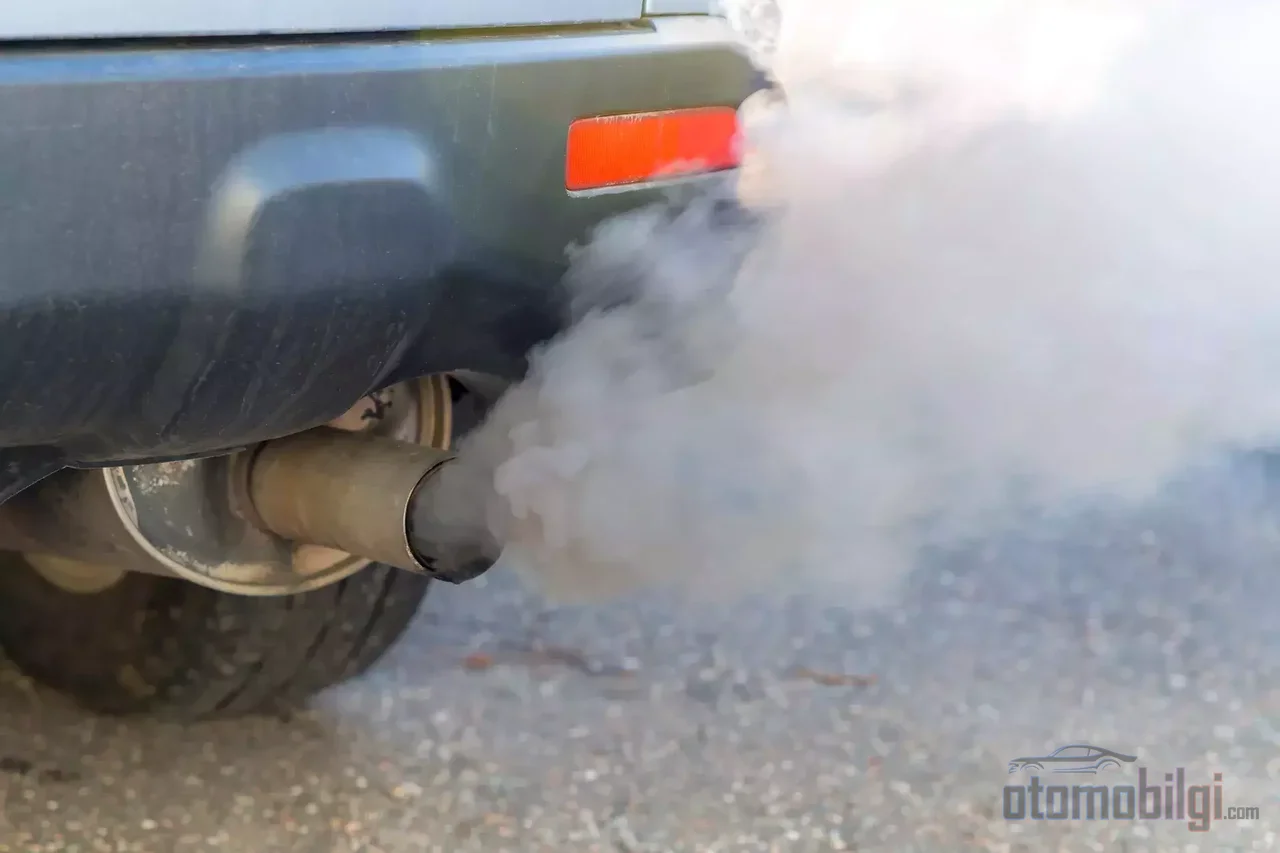
The numbers of Euro 6 are the justification for the technologies placed in the exhaust line. Each system corresponds to a pollutant in the table and can be explained by following the chain of logic.
The Gasoline Side: Three-Way Catalytic Converter
The backbone of gasoline vehicles is the three-way catalytic converter; its name comes from the fact that it reduces three pollutants at once: CO, hydrocarbons (HC), and NOx. When the Euro 6 limit for gasoline vehicles was lowered to 60 mg/km, some manufacturers began talking about "four-way" catalytic converter systems that go beyond these three functions and help meet Euro 6. With directly injected gasoline engines also being subject to the particle number limit, the fact that these vehicles now feature particulate filters similar to those in diesels is a result of the same reason.
The Diesel Side: The DPF and SCR/AdBlue Duo
A diesel vehicle has two separate problems requiring two separate solutions. The particulate (soot) problem is solved by the diesel particulate filter, or DPF: it physically traps the soot and particulate matter in the exhaust gas. The NOx problem is handled by the SCR system (selective catalytic reduction). SCR injects a urea-based liquid known as AdBlue into the exhaust gas; when heated, the liquid decomposes into ammonia and reacts with NOx, converting it into harmless nitrogen and water. This mechanism can reduce NOx emissions by up to 90% and as the injected AdBlue dosage increases, NOx conversion efficiency rises.
What is striking from an engineering perspective is this: a 2012 real-world study had shown that a Euro 6 diesel vehicle equipped with SCR was technically capable of limiting NOx in real-road driving, yet all the tested vehicles exceeded the limit outside the laboratory. In other words, the systems existed and could work; the problem was that the calibration was done solely according to the test cycle. This is precisely what RDE brought: you now have to prove the technology in the exhaust line on the road as well.
Why Does the DPF Get Clogged?
The most common user complaint about the DPF is clogging, and behind it usually lies not a single cause but a combination of conditions:
- Short-distance, low-speed urban use - the filter needs high exhaust temperatures to burn off accumulated soot and cannot reach this temperature on short journeys
- Excessive soot formation and ash accumulated over time
- Use of low-quality fuel or incorrect engine oil with a high ash content
A clogged DPF typically manifests itself with power loss and increased fuel consumption; if left unaddressed, it can lead to costly repairs. In short, Euro 6 technology expects a driving style that allows the vehicle to "clean itself" with regular and sufficiently long drives - this is not so much a flaw as the operating principle of the system.
What Are the Concrete Effects of This Standard on the Driver?
The cost side of Euro 6 is twofold. On the one hand, the purchase price of compliant vehicles is higher, and the cost of service, maintenance and consumables such as AdBlue is added to operation. On the other hand, it is noted that the advanced emission technologies in Euro 6 vehicles are designed to result in generally fewer breakdowns and lower maintenance costs - the two do not contradict each other: the additional systems require initial cost and attention, and in return they offer a cleaner and more efficient exhaust line.
The second concrete effect is city entry restrictions. Low Emission Zones (LEZ) are independent schemes based on the Euro standard; to give an example from the United Kingdom, as of September 7, 2020, a daily £12.50 payment is required for diesels that do not meet the Euro 6 standard in London. This is a result not of the standard itself, but of the access rules that municipalities establish by referencing the standard - and even if your vehicle is Euro 6, you need to check the specific set of rules of the city you are entering.
Will Your Vehicle Be Affected When Euro 7 Arrives?
Short answer: no. Euro 7 was approved by EU countries in April 2024 and came into force in 2026; however, just like Euro 6, it applies only to newly produced vehicles. Existing vehicles continue to remain on the road. Moreover, Euro 7 keeps the main tailpipe limits (NOx, PM, CO, HC) at the same values as Euro 6; its real innovations lie elsewhere. It covers, for the first time, non-exhaust emissions such as tire and brake particles - it sets a PM₁₀ limit of 0.007 g per kilometer for diesel and gasoline M1 vehicles regarding brake particles - and it lowers the evaporative emission limit for gasoline vehicles from 2.0 grams per test to 1.5 grams . It also includes battery health requirements that concern electric vehicles as well; in this sense, it is not a simple extension of Euro 6, but a new framework with an expanded scope.
The timeline works as follows: from November 2026, new type approvals, and from November 2027, all new vehicles on sale must meet Euro 7; models that do not comply will be withdrawn from sale. On the cost side, it was predicted that raising the durability of aftertreatment systems to 1.3 million km would increase system costs by approximately €1,000 . It should also be noted that as of 2024, all new vehicles sold in the EU are already subject to the latest implementation of Euro 6d - the transition to Euro 7 is largely proceeding from a well-prepared ground.
In Summary: Your Vehicle's Systems Are the Price of These Numbers
To summarize Euro 6 in a single sentence: the 80 mg (diesel) and 60 mg (gasoline) per kilometer NOx limit is the technical requirement that places the catalytic converter, DPF and SCR in your vehicle's exhaust line; RDE made it mandatory for these numbers to be measured on the road as well. The AdBlue tank your vehicle carries, the occasionally running regeneration cycle, and the particulate filter are not freely released engineering choices - they are the means of reaching specific numbers. Euro 7 expands this picture for new vehicles but does not change the limit values; in other words, the framework binding the millions of Euro 6 vehicles on the road will remain valid in the years to come.
Sources
- European emission standards
- Europe: Cars and Light Trucks - Emission Standards
- Euro 1 to Euro 7 - Vehicle Emissions Standards
- A technical summary of Euro 6/VI vehicle emission standards
- Real Driving Emissions Test
- Euro emissions standards
- Will Euro 6 reduce the NOx emissions of new diesel cars?
- Euro 1 to 7 Standards: Table and Swiss Rules
- The difference between Euro 6, Euro 6d-TEMP and Euro 6d?
- RDE: What is the real driving emissions test?
- Impact of cold temperature on Euro 6 passenger car emissions
- Everything You Should Know About Diesel Particulate Filters
- Diesel particulate filters: guide to DPFs
- Diesel Particulate Filters: A Beginner's Guide
- Four ways to a clean gasoline engine
- Feature Article - MECA
- SCR Emission Control Systems
- Experimental Study on NOx Reduction of Diesel Engine by SCR
- Euro 6 standard for heavy goods vehicles
- Euro 6 Compliance | Ownership
- Estimated cost of diesel emissions control technology
- Vehicle emissions and battery durability (Euro 7)
- How have Euro 7 emission standards changed?
- Euro 7 Standards
- Euro 6 Emissions Standards Guide