After the Diesel Scandal: How Are RDE Tests Conducted?
Share This Page
The RDE test is a procedure that measures a vehicle's exhaust emissions not on a laboratory bench, but in real traffic and real road conditions, using portable measurement devices (PEMS) mounted on the vehicle. This test, a mandatory part of type approval after Euro 6, was designed to close the gap between laboratory values and real-world use following the diesel NOx scandals.
Key Highlights
- RDE test 90-120 minutes lasts; the route consists of urban, rural and motorway sections, and each section must be at least 16 km long.
- Measurement is carried out with PEMS devices mounted on the exhaust line; while the first generations weighed 200 kg, today it has dropped to around 70 kg.
- For diesel vehicles, the real-driving NOx limit has been set at 120 mg/km , above the Euro 6 limit of 80 mg/km.
- The maximum test speed is 145 km/h; 160 km/h is allowed for only 3% of the motorway section.
- A test that goes beyond boundary conditions such as temperature, altitude and load is considered completely invalid .
What Is the RDE Test and What Equipment Is Attached to the Vehicle to Perform It?
The classic type approval test is performed on a chassis dynamometer: the vehicle is placed on a fixed test bench, the wheels rotate on rollers, and exhaust samples are measured with calibrated laboratory analyzers. RDE completely reverses this setup. The vehicle, carrying the measurement equipment, goes out onto public roads and is driven in real traffic and real weather conditions. Everything coming out of the exhaust pipe is measured and recorded instantaneously.
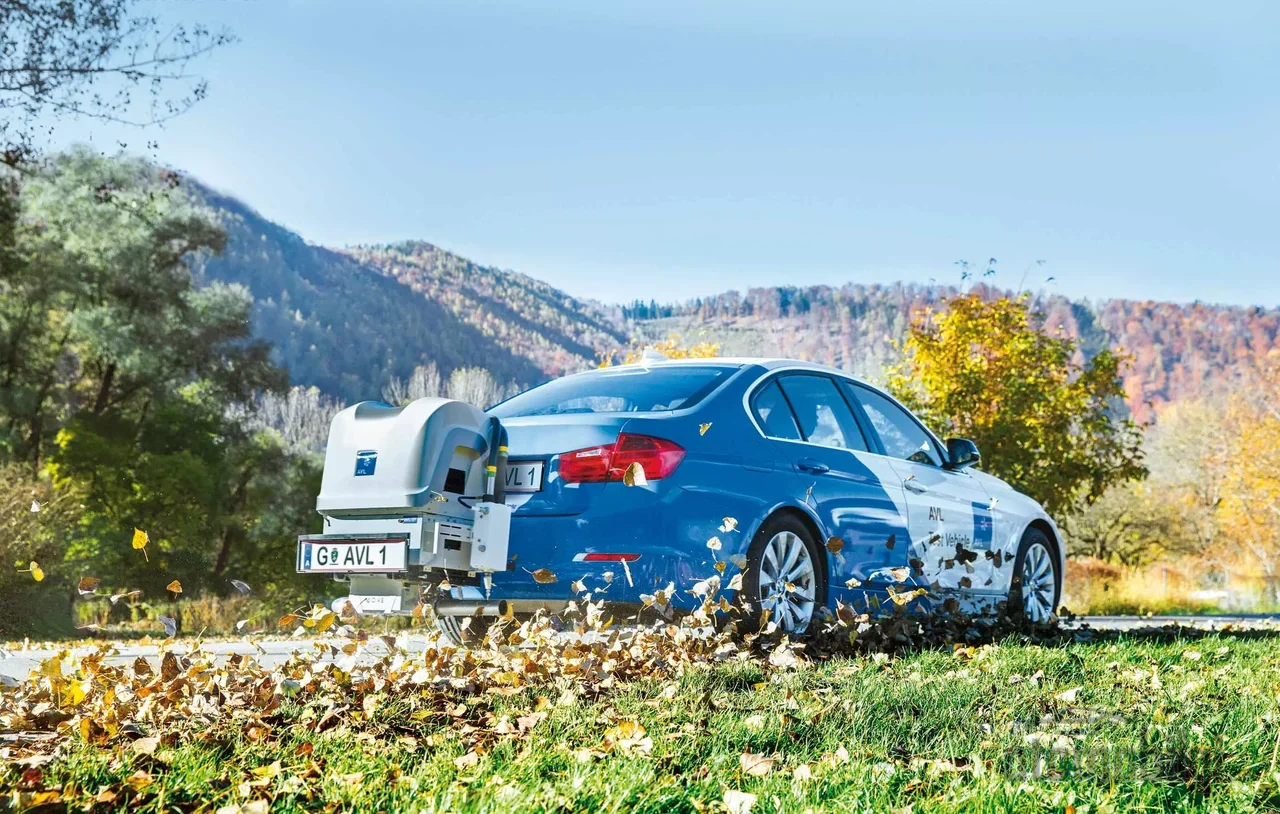
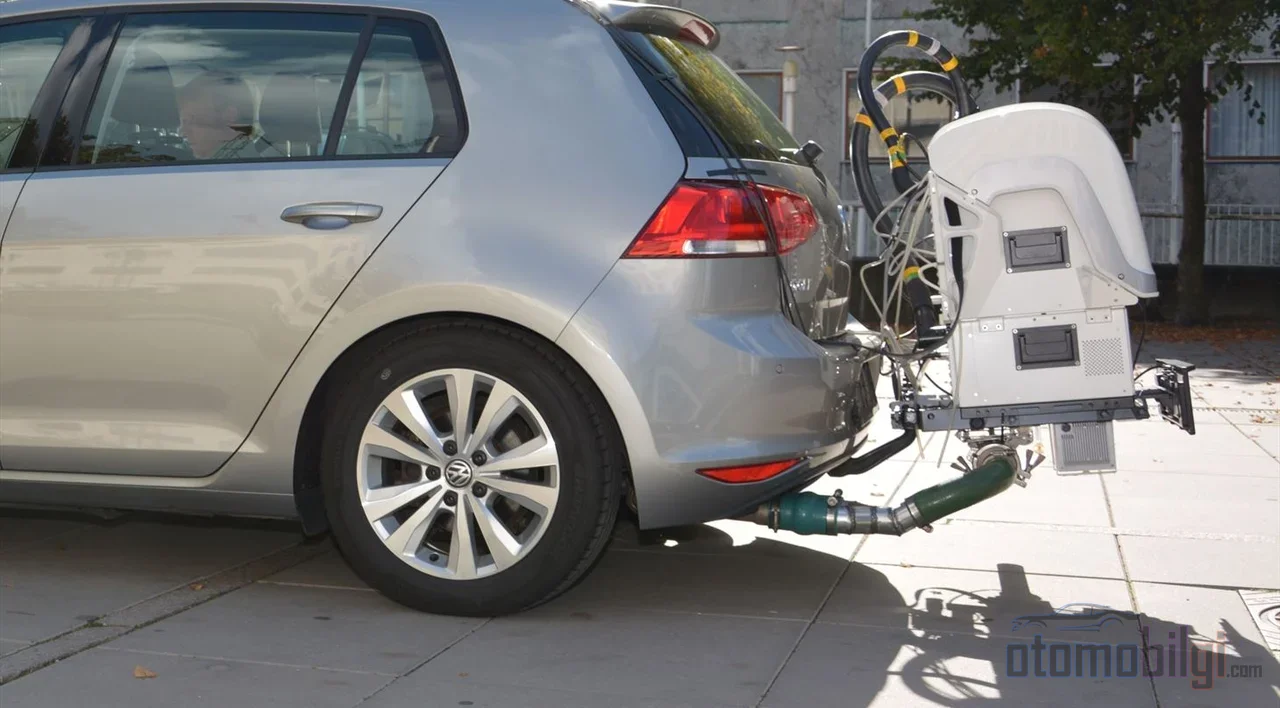
The equipment that makes this possible is called PEMS (Portable Emissions Measurement Systems). A typical PEMS set consists of advanced gas analyzers, exhaust mass flow meters, a weather station and GPS. For example, compact PEMS modules that measure NO/NO2 and CO/CO2 concentrations in the exhaust pipe of diesel and gasoline vehicles are produced to operate at temperatures between -10 °C and +45 °C and at altitudes up to 3,000 m
. The measurement device is usually mounted on the tow bar of the vehicle. The history of PEMS is long: it was first used in heavy-duty vehicle testing in the USA, and then became central to the Euro VI (heavy-duty) and Euro 6 (light-duty) requirements. Today's devices have dropped in weight to about 70 kg; the first generations were around 200 kg. The weight difference is not a trivial detail: every kilogram added to the vehicle affects the very emissions the test is measuring.
Why Did RDE Become Mandatory?
The EU had been using a laboratory cycle called NEDC since the 1990s. The technical profile of this cycle looked innocent at first glance: average speed of 33 km/h, maximum acceleration of 1.2 m/s², and the vehicle was completely stationary for about 25% of the cycle. The result was a driving profile in which modern vehicles used only a small fraction of their available engine power, rarely encountered in real life. Cars that looked clean in the test behaved completely differently on the motorway or when loaded.
The turning point came in 2011 occurred. The EU Joint Research Centre (JRC) detected a large and growing gap between laboratory-measured and on-road emissions - especially in the NOx values of diesel vehicles. This finding triggered the legislative process. The first two RDE packages were adopted in 2015 and published in the Official Journal in 2016 (EU 2016/427 and EU 2016/646). The test came into force gradually from 2017; for all new cars the beginning of 2021, and for all new light commercial vehicles the beginning of 2022 it became mandatory.
The completion of the second package is also significant: Following the disclosure of Volkswagen's violations in the USA, transparency measures such as the declaration of emissions control strategies to the authorities and extended documentation were added to the legislation. In other words, RDE is not merely a technical correction but also a regulation aimed at restoring trust.
How Should the Test Route Be? Driving Profile and Boundary Conditions
In RDE, the road itself is also subject to standards. The test route consists of three parts: the urban section where the speed stays between 0-60 km/h, the rural section in the 60-90 km/h range, and the motorway section where speeds above 90 km/h occur. Each section must be at least 16 km long. The total duration is 90-120 minutes and the distribution of distance is also defined: urban 29-44%, rural 23-43%, motorway 23-43%. The average speed in urban areas should remain between 15-40 km/h, and in the motorway section the vehicle must be driven above 100 km/h for at least 5 minutes .
| Parameter | Range / Rule |
|---|---|
| Total test duration | 90-120 minutes |
| Section lengths | Urban, rural, motorway - each at least 16 km |
| Maximum speed | 145 km/h; 160 km/h for 3% of motorway time |
| Temperature (moderate) | 0-30 °C |
| Temperature (extended) | -7 °C...0 °C and 30-35 °C |
| Altitude | 0-700 m (moderate), 700-1300 m (extended) |
| Vehicle load | Must not exceed 90% of maximum weight |
| Stop ratio (urban) | 6-30% of the duration |
Temperature and altitude conditions are called "boundary conditions" and they directly determine the validity of the test. The altitude difference between the start and end points may be at most 100 m, and the cumulative elevation gain at most 1200 m/100 km . Under extended conditions - that is, in cold weather or at high altitude - the measured emissions are normalized by dividing by 1.6. Data obtained entirely outside the boundary conditions invalidates the entire test, even if it is a single measurement point. Exceeding the local speed limit, however, does not invalidate the test; the rule here concerns the reproducibility of physical conditions, not traffic fines.
How is the test invalidated?
Not only environmental conditions but also the character of the driving is audited. The data is analyzed with two independent evaluation tools: the JRC's moving average window (EMROAD) method and Graz University of Technology's power binning (CLEAR) method. These tools check whether the driving is "normal" using metrics such as the product of speed and acceleration (v·a) and RPA. Both an overly smooth drive, as if the steering wheel were fixed on the highway, and an aggressive drive that constantly floors the throttle are rejected. To be considered valid, at least 50% of the urban, rural and motorway windows of the route must comply with the tolerances. As an additional facilitator, vehicles with the same powertrain, engine block type, number and arrangement of cylinders, and emission control system are counted as a single "test family"; thus a separate test is not required for each variant.
Conformity Factor: Why Is the Real-Driving Limit Above the Euro 6 Limit?
In RDE, the limit is calculated by applying a multiplier on top of the laboratory limit: the NTE limit = Euro 6 limit × conformity factor (CF). There is a practical reason for the existence of this multiplier: the measurement uncertainty of a PEMS device operating on the street is higher than that of calibrated laboratory equipment. In the transitional stage (Euro 6d-TEMP), the CF for NOx was set at 2.1 ; in the final stage (Euro 6d) it dropped to 1.5. Within this value of 1.5, there is a 0.5% margin for PEMS measurement uncertainty. An interesting detail: the JRC had calculated PEMS uncertainty at 30% for NOx; the member states raised this margin to 50% after policy discussions.
Let's make it concrete. For a diesel vehicle, the Euro 6 laboratory limit is 80 mg/km NOx. In the transitional RDE stage, tolerance up to 168 mg/km in real driving was observed; in the final stage this dropped to 120 mg/km. For petrol vehicles, the Euro 6 NOx limit is already 60 mg/km. In addition, the conformity factor must be provided both as a value covering the entire route and separately for the urban section - the aim here is clearly to pull down urban emissions including cold starts. On the particulate side, in Euro 6d the particle number (PN) must remain below 9.0 × 10¹¹ #/km with a CF = 1.5; the PN limit became binding with the third RDE package (December 2016), and adaptations for hybrid vehicles and regeneration events were included in this package. CO2 is measured and recorded, but not systematically analyzed; the binding pollutants are NOx and particle number.
What Is the Difference Between RDE and WLTP?
These two tests are often compared, but in fact they do not perform the same task. WLTP is a laboratory procedure that replaced the NEDC: with a higher average and maximum speed, a wider range of driving conditions and a longer cycle, it is noticeably closer to real driving than the NEDC. However, it is still performed on a chassis dynamometer, in a controlled environment. RDE, on the other hand, completely abandons the laboratory and measures NOx, HC, CO, CO2 and particulates on the road.
Therefore, the two are not alternatives to each other but complements: every new vehicle must comply with exhaust limits in both WLTP and RDE tests. In the RDE test, higher driving dynamics are observed compared to the laboratory, and far more data must be monitored and checked in real time. From an engineering standpoint, this means a significant increase in the evaluation burden; instead of following a cycle profile, you must build an emission strategy that stays within the limit no matter what happens in traffic.
How Euro 7 Tightens RDE and What Are the System's Shortcomings?
RDE legislation was not a stationary target. With the Euro 6e amendment, manufacturers are now required to support PEMS in the vehicle so that independent actors can perform in-service conformity (ISC) RDE tests - meaning the measurement infrastructure is now part of the vehicle's own digital architecture. The Euro 7 regulation, on the other hand, also sets requirements regarding brake systems and tires in addition to type approval, and PEMS technology is expected to play a larger role in future real-world verification requirements. Assessments that Euro 7 significantly tightened the limits are widespread; however, detailed impact figures on this matter still need to be confirmed with the primary legislative text.
The criticized aspects of the system are also concrete. The current RDE test is applied only to pre-production vehicles provided by the manufacturer; cold weather and high altitude conditions - which can produce disproportionately high NOx - can only be included to the extent of "extended" boundary conditions. A single RDE test can yield different results in the same vehicle, which limits repeatability. In addition, manufacturers can perform up to 50% of RDE type approval tests themselves under technical service supervision; the need for independent retesting and market surveillance is therefore frequently voiced. Another technical reality: meeting RDE limits requires highly efficient DeNOx systems - namely SCR and AdBlue - across the vehicle's entire operating range. The 32.5% urea solution is injected into the SCR catalyst in the exhaust, decomposing into ammonia at high temperature and converting NOx into nitrogen and water; together with the DPF, this combination is the foundation of real-world driving limits being physically achievable.
Where Can You View Your Vehicle's Real-World Emission Data?
RDE is no longer just a matter of test laboratories; it also opens doors to consumers. Manufacturers are required to prepare the technical reports of RDE tests and make some of them public through their own websites; more detailed reports are provided free of charge to those requesting them who have a "legitimate interest." In the EU, real-world CO2 and fuel consumption data are collected in the EEA data hub ("Real world emissions from cars and vans"), and the Commission publishes real-world CO2 reports using data from fuel consumption monitoring devices installed in vehicles.
Options also exist outside the EU: In the US, consumers can access vehicle-specific emission data via Fueleconomy.gov, and independent rating platforms such as AIR Index also provide real-world emission and fuel economy values. So it is technically possible today to question not just the catalogue values of a vehicle you are considering buying, but its behavior as measured on the road.
Conclusion: What Does the RDE Test Offer the Buyer?
The essence of RDE can be summarized in one sentence: transforming the emissions declaration from an independent laboratory result into a measurement verified in real traffic. The system has its shortcomings -narrow boundary conditions, its application to pre-production vehicles, repeatability limits- and the criticisms are well-founded. But the direction is clear: with every new regulation, the measurement moves closer to more realistic conditions and tighter tolerances. Being able to see what comes out of the exhaust pipe on a day when the road, temperature, and traffic are entirely beyond your own will is the most tangible progress in emissions legislation over the past decade.
Sources
- Real-driving emissions test procedure for exhaust gas pollutant emissions of cars and light commercial vehicles in Europe - ICCT
- Cars and Light Trucks: RDE Testing - DieselNet
- EU: Light-duty: Real-Driving Emissions (RDE) - TransportPolicy.net
- Real Driving Emissions Testing (RDE) & PEMS Solutions - HORIBA
- The Industry Standard to measure Real Driving Emissions (RDE) - AVL
- Euro 6e: Changes to the European Union light-duty vehicle type-approval procedure - ICCT
- Euro 7: The new emission standard for light-duty vehicles - ICCT
- WLTP and RDE - EUR-Lex summary
- On-road vehicle emissions beyond RDE conditions - JRC
- Real Driving Emissions - AECC
- Real world emissions from cars and vans - EEA Datahub
- Real-world Emissions - AIR Index