The Implementation of Euro 7 and New Rules
Share This Page
Euro 7 is the European Union's new-generation vehicle emissions standard: It largely maintains Euro 6-level exhaust gas limit values, while adding brake and tire wear particle emissions, tighter evaporative emission limits, a particle number measurement threshold lowered to 10 nm, and a durability requirement of up to 200,000 km / 10 years to the rulebook for the first time. It will apply to new light vehicle models from November 29, 2026, and will cover all new registrations from November 2027.
Highlights
- Exhaust limit values are the same as Euro 6 for light vehicles: diesel NOx 0.080 g/km, gasoline 0.060 g/km.
- A limit is coming for brake particles for the first time: 7 mg/km PM10 for passenger cars, 3 mg/km for electric vehicles.
- The particle number measurement threshold is dropping from 23 nm to 10 nm.
- The evaporative emission limit for gasoline vehicles is dropping from 2.0 g/test to 1.5 g/test.
- Type approval timeline: November 2026, all new registrations: November 2027.
How Different Is Euro 7 Really from Euro 6?
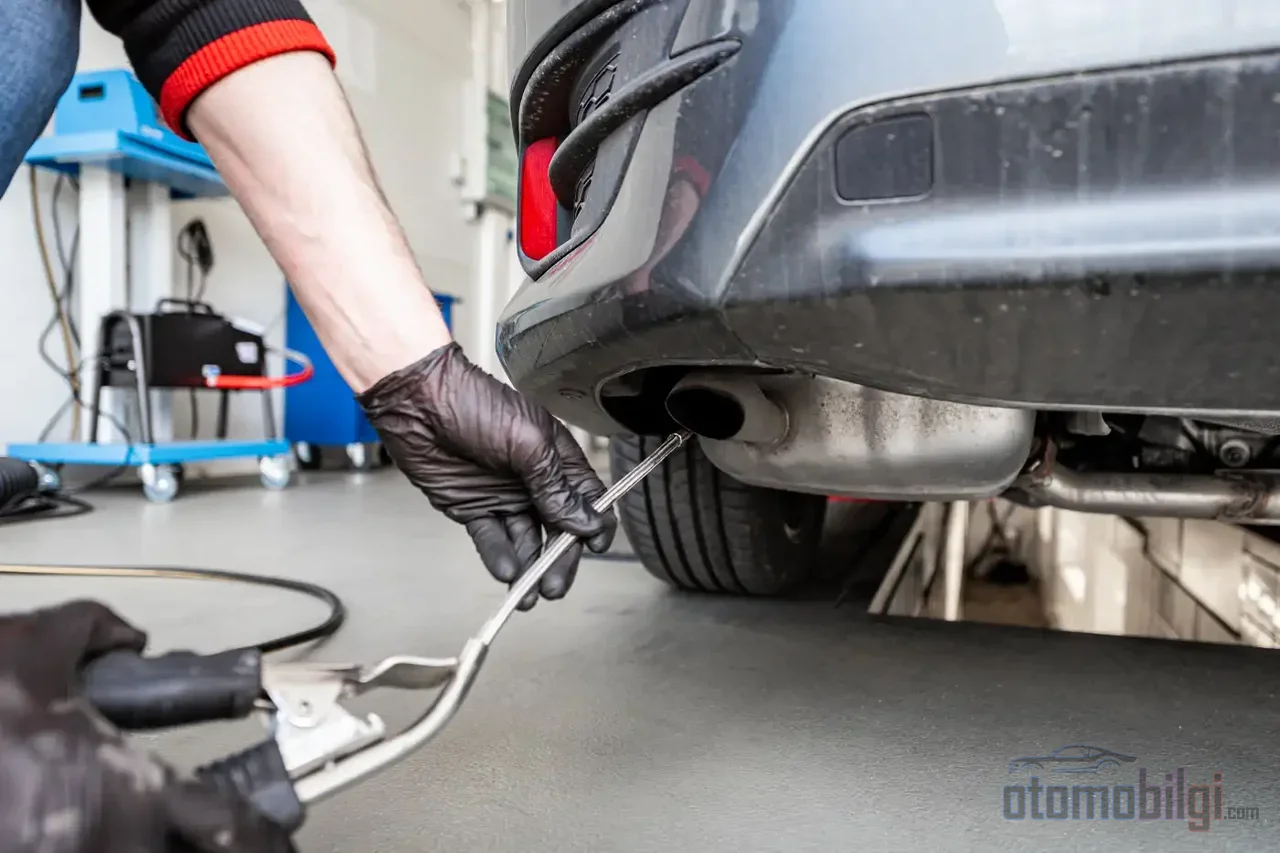
The most accurate answer to this question is: very little at the tailpipe, quite a lot in the rest of the vehicle. According to the assessment of independent analysis organization ICCT, Euro 7 keeps the exhaust limit values for light vehicles the same as Euro 6. The NOx limit continues as 0.080 g/km for diesel and 0.060 g/km for gasoline; the particle mass limit remains at 0.0045 g/km for both fuel types, while the particle number limit stays at the 10^11 particles/km level.
The real change is happening in areas Euro 6 never touched. Brake wear is being tied to a PM10 limit for the first time, a preparation period is beginning for tire wear, the fuel evaporation limit for gasoline vehicles is tightening to 1.5 g/test, and particle measurement will now also count particles with a diameter of 10 nm instead of 23 nm. In addition, RDE - that is, on-road tests conducted in real traffic with portable measurement systems - is becoming mandatory for all motor vehicle categories.
The engineering-wise correct way to read this picture is: Euro 7 is a transition to a standard that measures a vehicle's environmental impact not through a single exhaust pipe, but through every trace it leaves on the road. On the exhaust side, the technology has matured; the difference focuses on sources that remain damp and invisible.
Why Were the Exhaust Limits Frozen?
There is a good reason for this: The gap between Euro 6's limits on paper and real-world road performance showed that the problem needed to be solved in the testing method, not in the limit value. A 2014 independent study revealed that the real-driving NOx emissions of 15 Euro 6 diesel vehicles averaged approximately 7 times the limit. In the 2015 Volkswagen scandal, meanwhile, vehicles that passed in the laboratory were emitting up to 40 times the legal NOx limit on the real road.
The lesson was learned and the process changed: In 2017, the laboratory cycle was switched from NEDC to WLTP, and RDE tests were introduced the same year. The conformity factor for NOx was initially 110% (2.1 times the laboratory limit) and was tightened to 50% (1.5 times) in 2021. So the real tightening did not happen in the limit value table, but in aligning the measurement with reality. Euro 7 makes this approach permanent: RDE is mandatory for all vehicle categories, and the vehicle must remain compliant up to 200,000 km or 10 years.
Brake and Tire Particles: The Heart of the New Scope
Not all particulate matter from vehicles comes from the exhaust. The wear of brake pads and discs, and the tire's contact with asphalt, release microparticles every time - and as vehicles become electrified, the share of these sources in the total is growing. Euro 7 makes these pollution sources subject to legal limits for the first time. The global standard adopted by UNECE makes it possible to measure brake particulate emissions and limit them in milligrams per kilometer rather than milliliters, in terms of PM10.
The numbers show an interesting distinction: for gasoline and diesel M1 passenger cars, the brake limit is 7 mg/km PM10, while for electric vehicles it is a stricter 3 mg/km. The physics behind heavier vehicles measurably causing more brake wear is simple: a larger moment of inertia means more energy per braking event. The rule grants a relatively looser tier for fossil-fueled vehicles until 2030; heavy vehicle brake limits, on the other hand, will only apply from 2030 onward, independent of the Euro 7 timeline.
On the tire side, things are still in the preparation stage: Euro 7 lays the groundwork for stricter standards on tire wear, and manufacturers are working toward compliance by 2026, but the maximum tire particulate limit has not yet been finalized. There is clarity on the measurement side - all vehicles require 10 nm particle counting for brake emissions, total particle count, and PM2.5 and PM10 measurements.
What the Tests and Durability Requirement Actually Sell to the Driver
What is the visible face of Euro 7 for the average driver? On the exhaust side, the concrete difference is not the limit, but consistency. New-generation vehicles must produce emissions close to laboratory performance in real traffic as well; this requires the engine and after-exhaust systems to be longer-lasting and better calibrated. These systems lined up one after another are already familiar: the catalytic converter, the particulate filter (DPF) in diesels, and the SCR system that uses urea solution for NOx reduction. In Euro 7, keeping this architecture functional over longer distances becomes a compliance requirement.
The 200,000 km / 10 year durability requirement in practice means this: Euro 7 vehicles circulating in the used car market will be designed to maintain emissions compliance even at high mileages. This is an important message for the technical community concerned with the lifespan of DPF and SCR components - compliance is now a feature of the vehicle's lifetime, not just its first year.
| Parameter | Euro 6(d) | Euro 7 |
|---|---|---|
| Diesel NOx | 0.080 g/km | 0.080 g/km |
| Gasoline NOx | 0.060 g/km | 0.060 g/km |
| Particulate mass (PM) | 0.0045 g/km | 0.0045 g/km |
| PN measurement threshold | 23 nm | 10 nm |
| Brake PM10 limit (M1) | None | 7 mg/km (EV: 3 mg/km) |
| Evaporative emissions (petrol) | 2.0 g/test | 1.5 g/test |
| RDE coverage | Selected categories | All vehicle categories |
| Durability requirement | Limited | 200,000 km / up to 10 years |
Manufacturer Costs and Impact on Car Prices
The cost debate is the most contentious part of Euro 7. Industry representative ACEA published a study claiming that the regulation's direct costs came out 4 to 10 times higher than European Commission estimates. On the opposing side is a reading of limited impact: some assessments estimate that the diluted form of the final rule set will add extra costs on the order of €200-500 to a typical vehicle. The note that the original 2022 proposal could have made internal combustion vehicles a few percentage points more expensive had it contained far more aggressive limits adds honesty to the picture - in fact, the final rule already ruled out the most expensive scenario by freezing exhaust limits.
The political process clearly reflects this outcome as well: following pressure from automakers, the European Parliament adopted a version that significantly weakened the original proposal. For petrol vehicles and light commercial vehicles, the current status of NOx and CO limits was preserved. Another structural innovation should not be forgotten: Euro 7 is the first standard to bring all light and heavy road vehicles under a single legal regulation. This simplifies the compliance infrastructure but increases the measurement burden.
Electric Vehicles and the Position of Internal Combustion Engines After 2030
Let's be clear: Euro 7 is not a petrol/diesel ban. It does not ban internal combustion engines in 2026, and it imposes no retroactive burden on vehicles already on the road. The new rules will apply only to new type-approved and newly registered vehicles; Euro 6 vehicles retain their current status.
For electric vehicles, the picture is reversed: these vehicles, which have no exhaust limits, are for the first time subject to brake particulate limits under Euro 7 - and interestingly, to a stricter value than fossil-fuel vehicles - 3 mg/km. In addition, the regulation brings the technical requirements for electric vehicle battery durability under the same roof. The relatively lenient tier granted to fossil-fuel vehicles for brakes until 2030 seems to write the internal combustion engine's final decade-long transition window into the language of legislation. Euro 7 is expected to remain in place as a standard for several years; this also summarizes the uncertainty manufacturers face in platform decisions - investments are now shifting away from exhaust technology toward lifetime compliance and control of particulate sources.
A Practical Reading for the Buyer
For someone buying a new vehicle, the meaning of Euro 7 can be summarized under three headings. First is price: although market estimates vary widely, the impact of the final rule set was kept limited; how much of the Commission's estimates will materialize remains to be seen. Second purpose: the evaporative emissions requirement and longer durability mean higher design quality in fuel system sealing and the lifespan of after-exhaust components. Third, future value: since the rules do not apply to existing vehicles, Euro 6 cars can stay on the road; but local measures such as low-emission zones will continue to determine which standard class can go where.
To give a technical summary: Euro 7 is a framework that retains the mature limits of the exhaust era while anchoring measurement to real-world conditions, and at the same time brings brake and tire particles within the vehicle's total environmental footprint. The November 2026 type approval date, the November 2027 registration threshold and the 200,000 km durability requirement are the skeleton of this framework written in numbers.
Sources
- European emission standards
- Euro 7: The new emission standard for light-duty vehicles (ICCT)
- Vehicle emissions and battery durability (Euro 7) - EUR-Lex
- Europe: Cars and Light Trucks - Emission Standards (DieselNet)
- UN adopts global standard to measure and limit brake particle emissions (UNECE)
- Euro 7 FAQ (Horiba)
- Euro 7: Direct costs 4 to 10 times higher (ACEA)
- Updating the minimum emission standard for new road vehicles - GOV.UK
- Regulation of brake particle emissions by Euro 7 (Springer)
- Euro 1 to Euro 7 – Vehicle Emissions Standards (RAC)