What Causes Ammonia Leakage in SCR Systems?
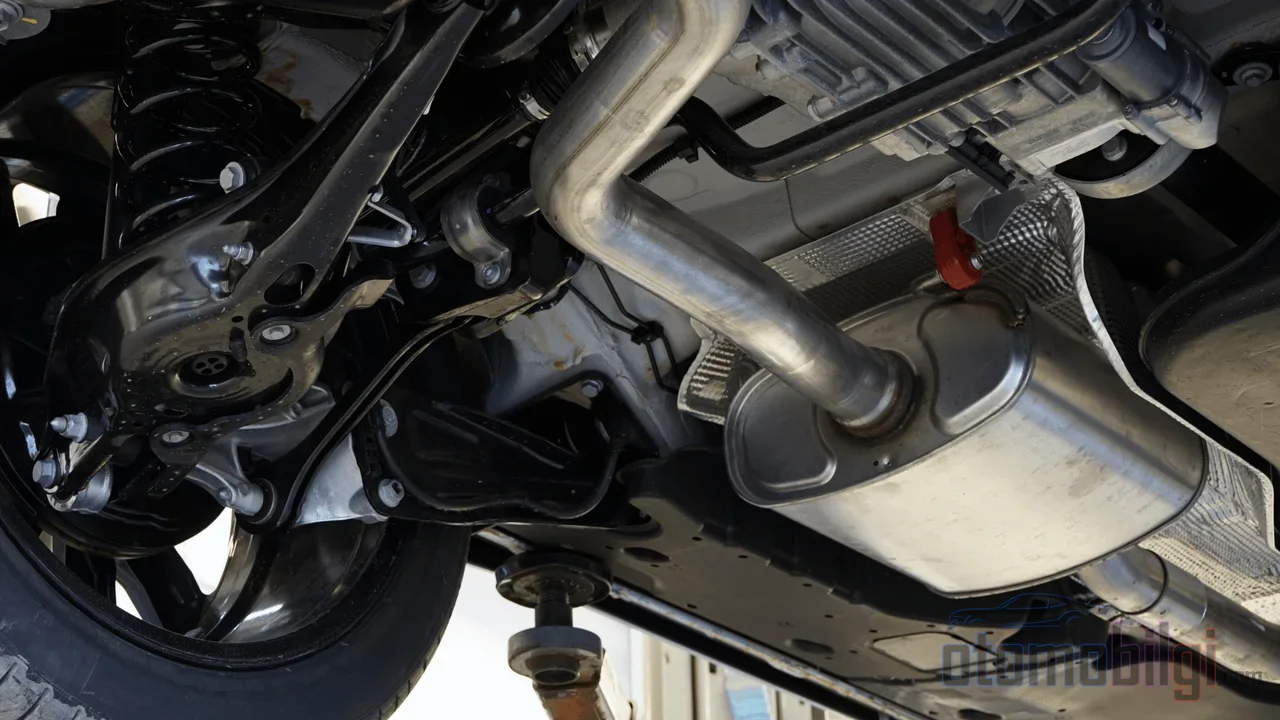
A sharp, eye-stinging ammonia smell coming from the exhaust of a diesel with an SCR system usually makes most drivers think first of an AdBlue leak or a tank problem. Yet the smell is usually a sign of a much more specific failure scenario: an ammonia leak, known in the literature as ammonia slip. The system is a chemical balancing machine that must produce ammonia in just the right amount, at just the right time, and deliver it to the catalyst in order to reduce NOx; when this balance is upset, the ammonia passes through the catalyst without reacting and is released into the atmosphere through the exhaust. On this page, we take a step-by-step look at the mechanism of the leak, its four main causes, its consequences for sensors and emissions testing, and the ammonia leak catalyst (ASC) that kicks in as a last resort.
How Does the SCR System Work and Where Does the Ammonia Come From?
The purpose of the Selective Catalytic Reduction (SCR) system is to convert the NOx gases in a diesel engine's exhaust into nitrogen (N2) and water vapor. The fuel required for this conversion is ammonia; since ammonia is not carried directly in vehicles, a urea solution called AdBlue is injected into the exhaust line and decomposes into ammonia through hydrolysis. The ammonia then reacts with NOx on the surface of the SCR catalyst. The reaction occurs efficiently, usually at catalyst temperatures between 200°C and 400°C.
The critical point is this: the catalyst temporarily stores ammonia in the washcoat layer on its surface. The more ammonia is stored, the higher the NOx conversion rate rises. But this storage capacity has a limit, and when the limit is exceeded, or when ammonia is sent to a catalyst too cold for the reaction to take place, the excess leaves the system as gas. This release is what ammonia slip is. When the catalyst temperature rises rapidly, for example during sudden load increases and hard acceleration, the desorption of previously stored ammonia can also lead to significant amounts of slip.
Key Highlights
- Ammonia slip is ammonia in the SCR that goes unreacted and is released into the atmosphere through the exhaust.
- Practical slip limits are on the order of 10 ppm on average and 30 ppm maximum; in Euro 6/VI heavy-duty diesels the limit is 10 ppm.
- NOx sensors are cross-sensitive to ammonia; a leak can make a healthy system appear faulty.
- With a 100 ppm ammonia leak, particulate mass emissions can increase by 129% and particulate number by 67%.
- The ASC (ammonia slip catalyst) oxidizes escaping ammonia into nitrogen before it is released into the atmosphere.
The Four Main Causes of Ammonia Slip
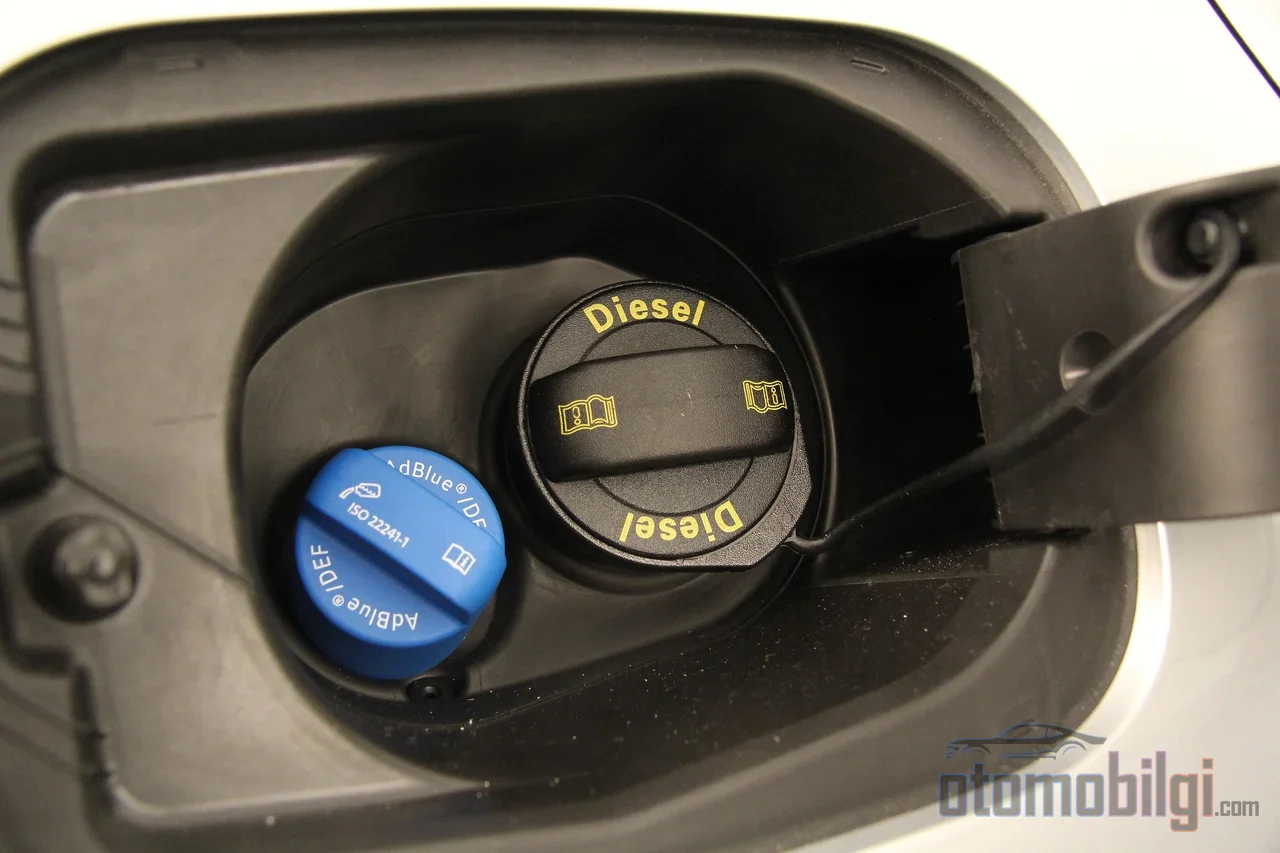
The origin of the slip can be grouped into four main categories. Although each works through a different mechanism, their common denominator is the same: the ammonia reaching the catalyst exceeds what can react with NOx and be stored.
Excessive AdBlue Dosing and Faulty NOx Sensor Feedback
The dosing quantity is adjusted by the engine management based on feedback from the NOx sensors. If the upstream sensor makes an incorrect measurement or the signal drifts, the control unit may inject more urea than necessary. Excess ammonia saturates the catalyst's storage capacity and passes through. There are also fault codes that directly describe this scenario; the P2B82 code indicates that more reductant was injected than the catalyst can consume, and that the difference turned into ammonia slip. Another point that confuses the system is sensor cross-sensitivity; we will touch on its details below.
Low Catalyst Temperature
When the engine is cold or idling for a long time, the catalyst cannot reach the temperature at which ammonia can react. For this reason, the low-temperature cut-off point for urea in production systems is typically defined in the range of 200-250°C; in well-designed systems, injection is possible down to 180°C. While this threshold is sufficient to pass regulatory test cycles, in non-standard scenarios such as low-speed city driving, designers are forced to inject at even lower temperatures; this tension increases susceptibility to slip and deposits.
Aged Catalyst
The catalyst undergoes hydrothermal aging throughout its lifetime. In modern catalysts such as Cu-SSZ-13, this aging particularly degrades low-temperature SCR activity and disrupts the balance between ammonia storage and reaction. In a degraded catalyst, part of the ammonia passes through without reacting. Catalyst poisoning is another degradation path that produces the same result.
Mixing and Distribution Problems
Increasing the ammonia to NOx ratio (NH3/NOx, ANR, or alpha ratio) directly increases slip. However, even if the average ratio is correct, problems can arise if the distribution in the exhaust gas is not homogeneous: while NOx conversion weakens in catalyst channels that receive insufficient ammonia, channels that receive excess ammonia become the source of the slip. A clogged AdBlue injector prevents the urea from mixing properly with the exhaust gas, creating the same distribution defect.
What Does the Ammonia Smell Mean and How Is It Diagnosed?
The most typical and earliest sign of the slip is the sharp ammonia smell coming from the exhaust; drivers describe this smell as similar to cat urine or a strong cleaning agent. The smell is most noticeable at the tailpipe especially after heavy dosing phases. But there is an important warning here: the smell does not always mean an ammonia slip. Unreacted AdBlue residues accumulated in the exhaust after an engine pushed at high rpm can also produce a similar smell.
For this reason, diagnosis should be done not by guessing but by reading live data. The first items to check are the dosing quantity and temperature sensors. Manufacturers have developed diagnostic methods that determine possible slip by measuring NOx and ammonia concentrations; modern fault diagnostic tools directly support these calculations.
Ammonia Slip Deceiving the Sensors
The most insidious detail that makes diagnosis difficult is this: common NOx sensors are cross-sensitive to ammonia. When NH3 slip in the exhaust increases, the signal of the upstream NOx sensor starts to rise again; the sensor actually sees ammonia, not NOx, but reports it as NOx. The result produces two erroneous conclusions in exactly opposite directions: a properly functioning SCR system appears faulty, and technical service unnecessarily replaces the dosing module or sensor, which is not the source of the problem. When an ammonia smell appears, especially together with NOx sensor fault warnings emerging after intense dosing, it is not the sensor itself but the slip the sensor measures that should be questioned.
ASC: Ammonia Oxidation Three-Way Catalyst
The last line of defense of SCR systems is the ammonia slip catalyst (ASC). Placed immediately after the SCR catalyst, this stage oxidizes unreacted ammonia into nitrogen (N2) before it is released into the atmosphere. A typical design features a platinum-based ammonia oxidation layer; advanced ASCs convert almost all escaping ammonia into nitrogen without turning it into NOx, and also take on CO conversion.
The engineering value of the ASC is not limited to burning ammonia alone. A two-layer ASC carrying platinum in the lower layer, following a Cu-zeolite SCR catalyst, extends the safe range of the alpha ratio from 1.05 up to 1.4-1.8 without ammonia slip occurring. This allows the dosing to be tuned more aggressively and thus enables higher NOx conversion; the ASC also acts as a safety valve against dosing errors caused by faulty feedback from the NOx sensor. A side effect worth knowing is that a portion of the ammonia can be re-oxidized back into NO on the ASC, reducing effective NOx conversion.
Emission Testing of Slip and Its Environmental Consequences
Ammonia slip is a parameter limited by regulations. Practical slip limits are generally on the order of an average of 10 ppm and a maximum of 30 ppm; in the Euro 6/VI context, the ammonia limit for heavy-duty diesel engines has been set at 10 ppm over the WHSC and WHTC cycles. In stationary industrial SCR applications, the typical permitted slip range is 2-10 ppmv.
Slip also has secondary consequences that directly affect test results. Excess ammonia causes fine particulate formation downstream of the SCR, consisting mainly of ammonium salts. In measurements, at 100 ppm ammonia slip, an increase of 129% (range of 80-193 percent) in particulate mass emissions and an increase of 67% (range of 26-136 percent) in particulate number have been directly attributed to ammonia. In addition, low-temperature ammonia injection can lead to accumulations of ammonium bisulfate and ammonium sulfate that block the catalyst's active sites; these deposits make the catalyst increasingly inefficient over time. Escaped ammonia also contributes to the formation of secondary pollutants, ammonium nitrate and ammonium sulfate, and can cause corrosion in downstream equipment.
Is Sensor Tampering an Unexpected Source of Slip?
Yes, and this finding is instructive in terms of repair culture. Tampering with the NOx sensor leads to a noticeable ammonia slip despite a relatively modest increase in NOx, and particulate number emissions can increase 3-4 fold, reaching levels of 6-10×10^12. In other words, any malicious or careless interference with the emission control system brings unexpected costs on the scale of ammonia and particulates.
What Causes Ammonia Slip and How Is It Prevented? Summary Answer
Short and clear answer: ammonia slip occurs when the amount of ammonia sent to the SCR catalyst exceeds the quantity that can be stored by reacting with NOx. Its four main causes are excessive AdBlue dosing (usually due to faulty NOx sensor feedback), a catalyst below the reaction temperature of ammonia, a catalyst surface that has aged and lost its storage balance, and non-uniform ammonia distribution in the exhaust gas.
Prevention follows the same chain of logic: correct calibration of the injection quantity, proper operation of low-temperature cutoff thresholds, verification of temperature and NOx sensors with live data, maintenance or replacement of the aging catalyst, and the presence of a functional ASC in the system. Cleaning clogged AdBlue injectors solves the distribution problem at its source. Although ammonia-sensor-equipped high-efficiency SCR configurations in modern systems achieve NOx conversion above 90 percent, the commercial use of ammonia sensors has remained limited, and the ASC continues to be indispensable in most production systems.
The practical takeaway for the driver is this: the sharp ammonia smell from the exhaust is not an invitation to guess-based part replacement, but to a systematic diagnosis performed with live sensor data. The odor is most often the first audible signal of the aging of the sensor, the dosing, or the catalyst; early and accurate diagnosis prevents both unnecessary part expenses and the increase in particulate emissions at the same time.
Sources
- Urea Dosing and Injection Systems
- Urea Dosing Control
- The Role of Ammonia Injection in SCR Systems
- Controlling Ammonia Slip in SCR Installations
- Selective catalytic reduction: Adding an ammonia slip catalyst mitigates dosing errors
- Modeling and Optimization of Multi-functional Ammonia Slip Catalysts
- Effect of SCR downsizing and ammonia slip catalyst coating on emissions
- AdBlue ammonia smell - what it means