Does the Start-Stop System Really Reduce Emissions?
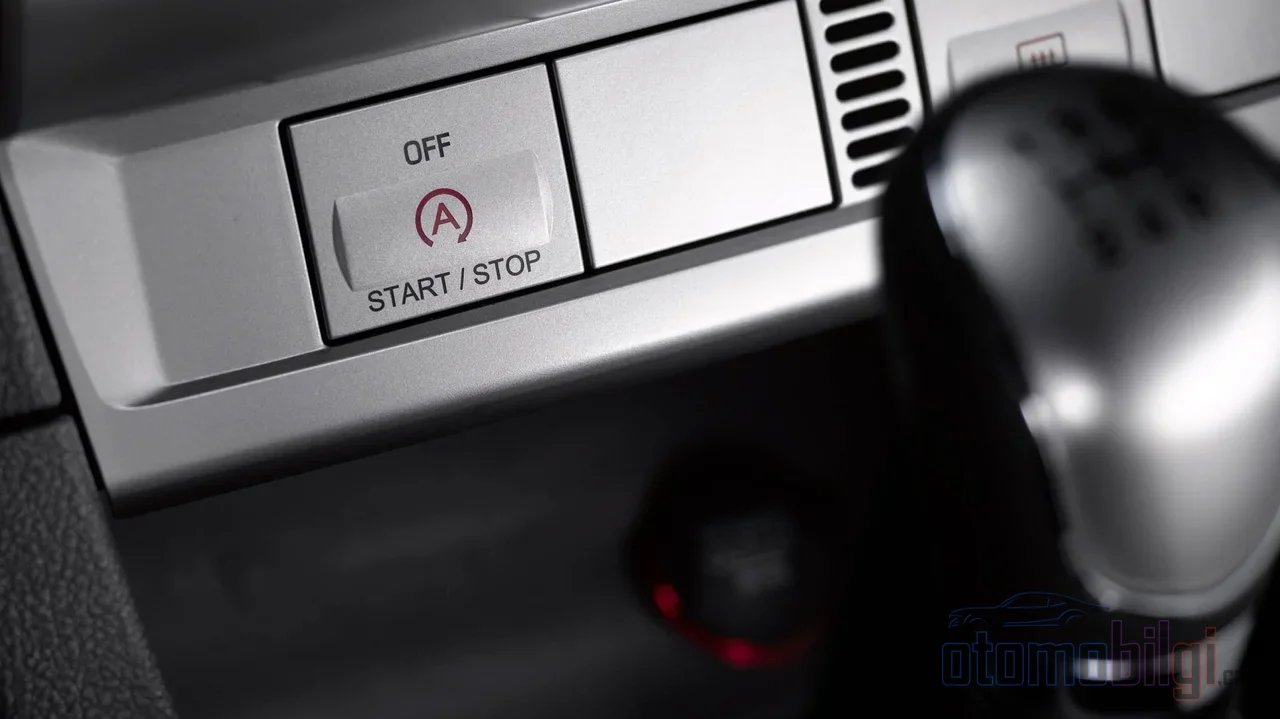
The system that quietly shuts off the engine at a traffic light and restarts it in a fraction of a second when the light turns green has become the most visible and most debated fuel economy technology of the last decade. Some drivers see it as an unnecessary delay, while others see it as a tangible saving. The real question is this: does the start-stop system genuinely reduce emissions, or does it only pay off on paper? The answer varies depending on how much pollution idling itself causes, how the test cycle is set up, and what range the outside temperature falls in. In other words, it is a measurable engineering question, and its answer can be given with numbers.
How Much Fuel Does an Engine Burn and How Much CO2 Does It Produce at Idle?
The starting point of the start-stop debate is idle consumption. A passenger car's engine consumes fuel as long as it runs, even if it never moves the vehicle. As a typical figure, idle consumption is around 1.8 liters/hour. This means that a driver who idles for just three minutes a day burns about 33 liters of fuel per year with no kilometers to show for it. When you scale this up, the picture becomes even more striking: in the United States alone, idling is blamed for wasting more than 23 billion liters of fuel annually.
The CO2 side is directly proportional. Since every liter of gasoline burned produces roughly 2.3 kg of CO2, one hour of idling corresponds to approximately 5 kg of CO2 emissions. Personal vehicle idling in the US is estimated to produce about 30 million tons of CO2 per year. The carbon coming out of the exhaust of an engine waiting in traffic is no less than that of a moving one; in fact, vehicles in stop-and-go traffic emit more carbon per kilometer compared to steady cruising at 50-70 km/h.
This is precisely the simple equation on which the entire logic of the start-stop system rests: teaching the engine not to burn fuel during the time it is not moving the vehicle. So how well does this work?
Key Takeaways
- Idle consumption is around 1.8 liters/hour; one hour of idling means roughly 5 kg of CO2.
- In city driving, start-stop typically reduces fuel consumption and CO2 output by 3-10%.
- With the switch to WLTP, the system's saving efficiency in the test cycle dropped by about half.
- The advantage of the system, which achieves 3-4% savings in hot weather, diminishes in cold conditions; particulate emissions may increase.
- A standard battery cannot be used in start-stop vehicles: an AGM or EFB battery is mandatory.
How Does the Start-Stop System Work and Why Is It Designed for the City?

The system's operating logic is simple: when the vehicle slows down and its speed drops below about 8 km/h, the engine shuts off automatically, and it restarts instantly when the driver releases the brake. In vehicles with manual transmission, it typically engages when the gear is shifted to neutral and the clutch is released; in vehicles with automatic transmission, the engine shuts off the moment the brake pedal is pressed at a complete stop. The critical point is timing: modern systems complete the restart in a very short time; for example, in Mazda's approach using the i-ELOOP and i-Stop combination, the restart that takes advantage of the combustion chamber's stop position is completed in 0.35 seconds.
The history of this technique is older than one might think. The first automatic shut-off and restart application was made in 1974 on the six-cylinder Toyota Crown, with a claimed 10 percent fuel saving in traffic. In the 1980s, the Fiat Regata ES and VW Polo Formel E, and in the 1990s the Golf Ecomatic and the VW Lupo and Audi A2, which targeted 3-liter consumption, used similar systems. However, the widespread adoption of the technology accelerated with the Euro 5 emission standard; because shortening idle time was a method that directly reduced laboratory CO2 measurements.
The reason the system was designed for city traffic is the distribution of the idle share. While approximately 25% of Europe's old NEDC test cycle was spent idling, in the US EPA test this rate was only around 11%. For this reason, the technology was first adopted in Europe: it is inevitable that the system's return is high in usage scenarios where the idle share is high. On the highway, on the other hand, the engine almost never stops, and the system's contribution is negligible.
The Difference Between the Test Cycle and Real City Traffic

The system's saving rate changes significantly depending on which cycle it is measured in. While the average improvement in the old NEDC city cycle was approximately 4%, it rose to 10% in the UDDS cycle, which has a higher idle share. With the transition to WLTP, however, the situation reversed: in the new procedure, the fuel and CO2 saving effectiveness of start-stop in the examined vehicles dropped to almost half. The reason for this is that WLTP has a more dynamic and realistic speed profile, and therefore a lower idle share. The less idling in the cycle, the smaller the benefit of the technology that eliminates idling.
Real-world road tests give more concrete figures. In a real-world measurement, a vehicle that consumed 3.1 gallons of fuel with the system off completed it with 2.8 gallons with the system on; this means the calculated consumption rose from 26.2 mpg to 28.7 mpg, that is, approximately 9.5% saving. Broad assessment reports, on the other hand, report improvements in the range of 4-10% in city driving, over 7% in some scenarios, and up to 26% in individual stop-and-go tests. The experts' common consensus converges in the range of 3-10% in city/stop-and-go driving; in some measurements, it goes up to 12%. Let us compile the numbers in a table:
| Scenario | Saving / effect | |
|---|---|---|
| City driving (general consensus) | 3-10% fuel and CO2 reduction | |
| Real road test (single vehicle) | 9.5% saving (from 26.2 to 28.7 mpg) | |
| NEDC city cycle average | Approximately 4% improvement | |
| UDDS cycle (high idle share) | Approximately 10% improvement | |
| After the transition to WLTP | Saving effectiveness dropped to approximately half | |
| 5 °C cold environment | The advantage decreases noticeably |
Warm Engine, Cold Air and the Particle Problem
The system's first rule is this: it does not engage when the engine is cold. Since most engine wear occurs during cold starts, the system waits until the coolant reaches its target temperature. The catalytic converter also needs to reach a certain light-off temperature before it starts working; shutting the engine off while the converter is cold can lead to weak exhaust cleanup upon restarting.
There is a critical emission detail here: compared to a cold-start, a hot restart's NOx and THC (total hydrocarbon) output is at least an order of magnitude lower. In measurements where a cold start emitted 878 mg THC and 552 mg NOx, these figures dropped to 191 mg and 228 mg respectively during a hot restart; the CO difference is even more striking: 31,290 mg on a cold start versus 2,970 mg on a restart. In other words, start-stop on a warm engine works without making a difference - on the contrary, it preserves exhaust cleanliness.
However, the picture is not entirely rosy. A study on direct-injection gasoline vehicles, tested with the WLTC cycle in environments between 28 °C and 5 °C, revealed that while the system provides 3.1-4.3% fuel savings in warm conditions, it also shows a tendency to increase particulate emissions. With every restart, the fuel film reaching the cylinder wall feeds particulate production; and the advantage shrinks in cold environments. While the system works in favor of CO2 and fuel, it can come at a cost in terms of particulates. This is the clearest indication that the emissions debate is not one-dimensional.
Additional Load on the Battery and Starter Motor
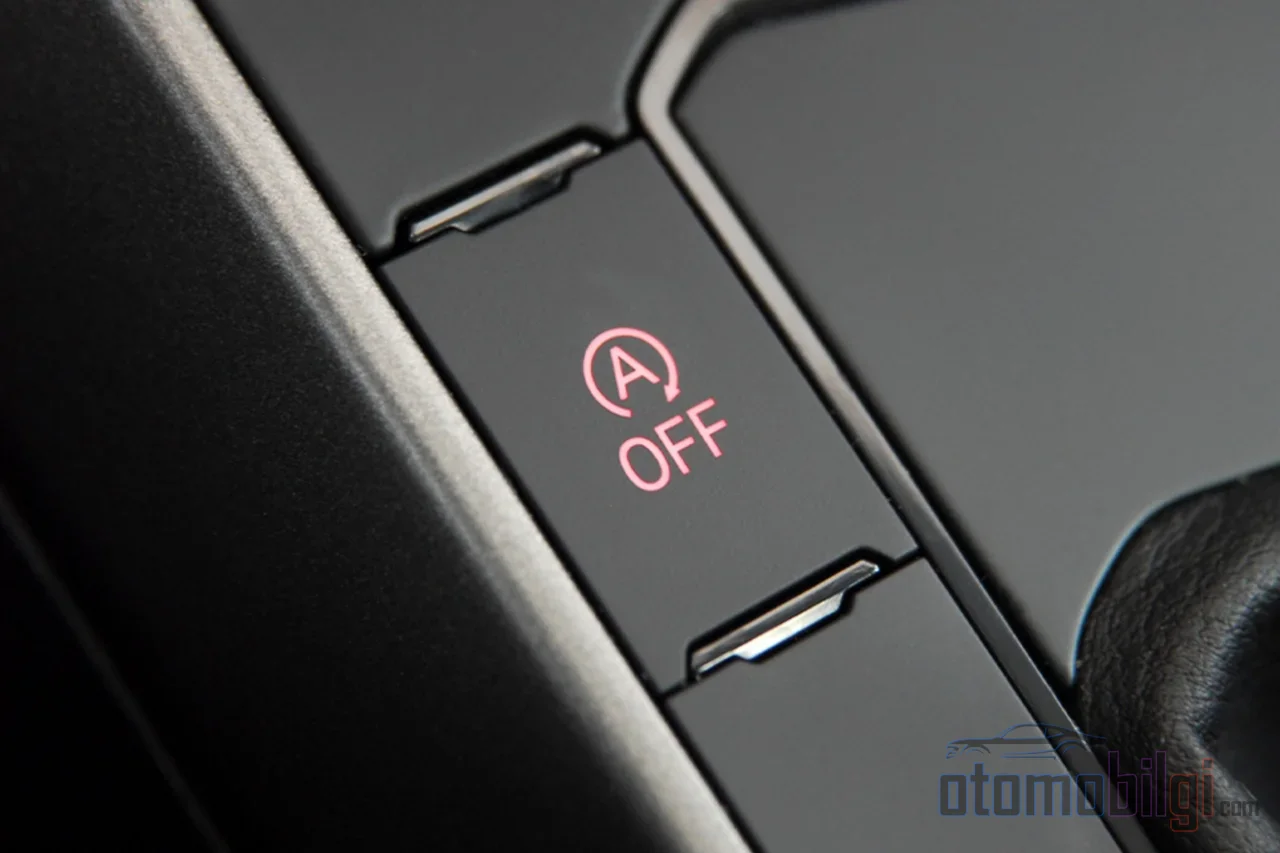
Start-stop actually asks a standard starting system to do a job it was not designed for: dozens of restarts per day, thousands per year. For this reason, the hardware is specially reinforced. The starter motor is designed to withstand continuous use, crankshaft main bearings are protected with dry-lubricated polymer coatings (such as polyamide), and an electric water pump with an independent cooling circuit can be added for turbo lubrication and cabin heating while the engine is off. Some manufacturers combine the starter motor and alternator into a single integrated starter-generator (ISG) unit; brands like BMW use AGM batteries and regenerative braking, often disabling the alternator and powering the electrical system from the battery. Mazda, on the other hand, uses a supercapacitor with its i-ELOOP system to power accessories while the engine is off.
The most critical component is the battery. A standard liquid-electrolyte battery cannot be used in start-stop vehicles; an AGM (absorbent glass mat) or EFB (enhanced flooded battery) battery is mandatory. These batteries are built to withstand an increased number of charge cycles and deep discharge loads. Installing a standard battery leads to short battery life, unreliable system operation, and charging problems. Selecting the correct technology during battery replacement is a prerequisite for the system's longevity.
Why Does the System Sometimes Deactivate Itself?
The most common complaint from drivers is that the system stops working without any warning. But this is not a fault - it is by design. The system suspends itself under all conditions where it cannot guarantee a reliable restart:
- Insufficient battery charge: This is the most common cause; when the battery fails to meet the strict charge threshold required for a restart, the system does not engage. In winter, this threshold is usually only reached after 10-20 minutes of driving.
- Extreme battery temperature: A battery that is too cold (below about 4 °C) or too hot (above about 60 °C) may not deliver sufficient cranking current; the system does not take that risk. Operation is restricted at outside temperatures below -7 °C.
- Cold engine: When coolant temperature is low, the engine is kept running for emission and wear reasons.
- Cabin heating or cooling under load: When the engine shuts off, the A/C compressor stops; if the cabin temperature would drift from the target, the system stays disabled. In vehicles with an electric compressor, however, the air conditioning continues to work fully while stopped.
- Safety and comfort conditions: In some vehicles, the system does not activate if the seatbelt is not fastened or a door is open.
All of these conditions come together around a single purpose: to let the system operate only when the engine is warm, the battery is strong, and cabin comfort is not at risk. In other words, the system staying disabled is often proof that it is working correctly.
The Controversial Side: How Real Is the Cumulative Effect?
Although the system's benefit at the level of an individual vehicle has been measured, the debate over its collective impact continues. According to the battery industry's calculation, start-stop technology eliminates approximately 6.7 million tons of greenhouse gas emissions per year in the United States alone. On the other side, there are criticisms that reducing idling at the city scale may have an exaggerated effect on total emissions, and that the system's net gain cannot be fully assessed without the production of AGM/EFB batteries and electronic waste being included in the lifecycle calculation. In 2026, the US Environmental Protection Agency's decision to end the CO2 credits granted to start-stop systems also brought this debate onto an official footing; with the decision, the system's evaluation will now be based far more on its performance in real city use than on test cycle scores.
Conclusion: Does It Really Reduce Emissions?
The short and measurable answer is this: the start-stop system genuinely reduces fuel consumption and CO2 emissions by 3-10% during dense city driving with a warm engine; on the highway and in cold environments, its effect drops to a negligible level. Its return is directly proportional to the idling share in your driving profile: every minute spent at traffic lights and in stop-and-go traffic is the system's working territory. It is true, from an engineering standpoint, that the system does not harm the engine in modern vehicles equipped with a reinforced starter motor and an AGM/EFB battery; the only blemishes are the tendency toward increased particulate emissions in direct-injection gasoline engines and the loss of effectiveness in cold weather. If you want to benefit from the system as a whole as a driver, three conditions stand out: the right battery technology, keeping the battery at its charge threshold through regular and sufficiently long drives, and adjusting expectations according to city traffic. Eliminating idling is not a solution in itself; but it is a small, measurable, and honest gain.
Sources
- Idle stop-start technology - Natural Resources Canada
- Start-stop system - Wikipedia
- Idling Action Research - TRL
- Effects of a start-stop system for gasoline direct injection vehicles on fuel consumption and particulate emissions in hot and cold environments
- Does Auto Start-Stop Cause Damage to Modern Car Engines?
- Auto-stop-start analysis (OSTI)
- Stop-start engines and idling - common myths revealed - RAC
- The effectiveness of stop-start and thermal management measures - ScienceDirect