Can E-Fuel Save the Internal Combustion Engine?
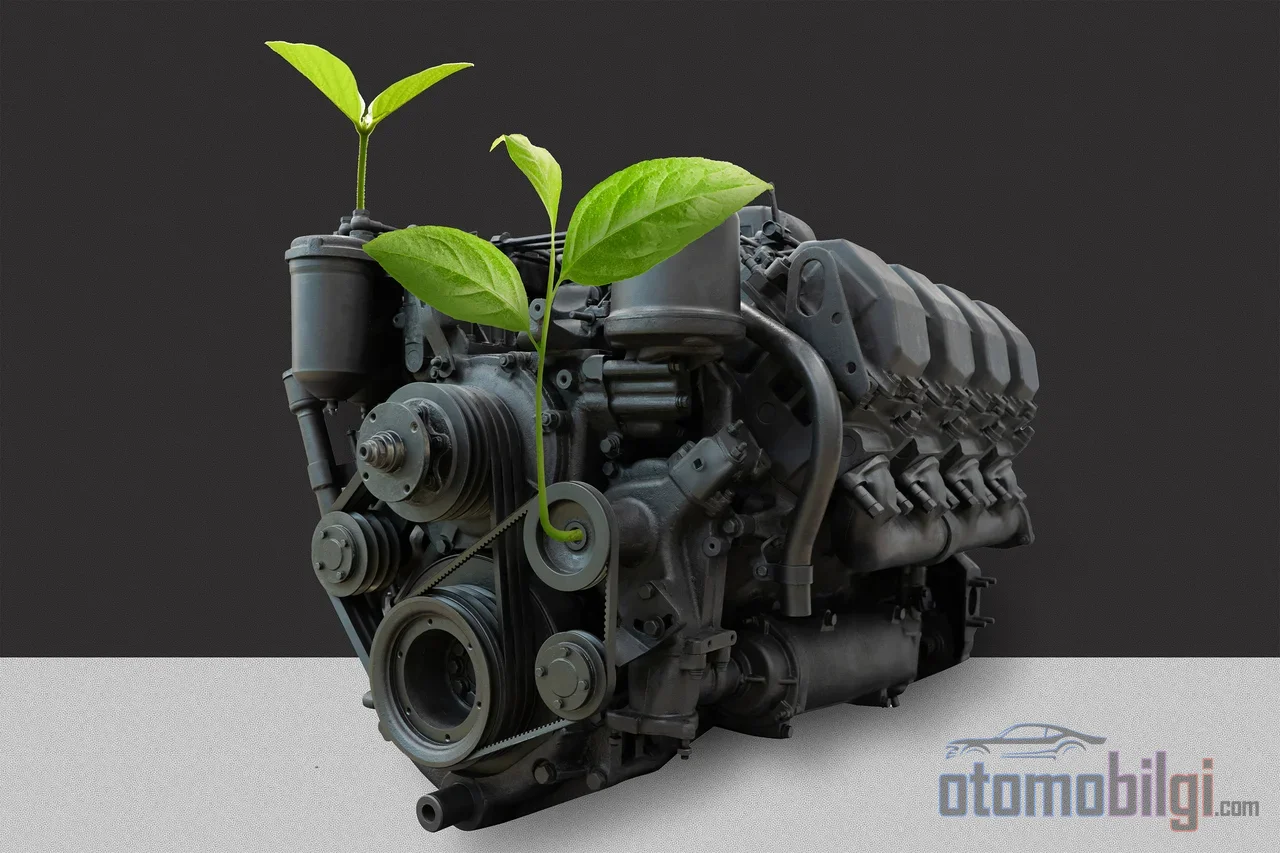
2035 is the year by which the sale of new internal combustion engine cars is projected to end in the European Union. But within this story lies a gap that most drivers haven't noticed: According to the draft plan prepared in Brussels, after 2035 the sale of new internal combustion vehicles may be permitted if they run exclusively on climate-neutral synthetic fuel. In other words, the fate of the engine may be determined not by the exhaust pipe, but by the fuel tank. Can these synthetic fuels, known as e-fuels, really save the internal combustion engine, or are they just an expensive consolation? The answer to that question lies at the intersection of chemistry, thermodynamics, and economic balance.
On this page, we examine what e-fuel is, why it can be considered carbon neutral, its compatibility with existing engines, its place within the Euro 7 framework, and its efficiency-cost balance compared to electric drivetrains, through an engineer's lens and with numbers. But first, let's clarify the three facts that form the core of the question: the efficiency chain, compatibility, and regulation.
What Is E-Fuel and How Is It Produced?
E-fuel, in shortened form, means electro-fuel; it is the general name for synthetic fuels produced from renewable electricity. The production chain can be summarized in three steps. In the first step, water is electrolyzed with renewable electricity to obtain green hydrogen. In the second step, carbon dioxide is captured; for this, direct air capture (DAC) methods, industrial sources, or biogenic sources are used. In the third step, hydrogen and CO2 are converted into hydrocarbons with the help of metal catalysts under high pressure and temperature.
Chemically, the result is a product almost identical to fossil gasoline and diesel. That is why e-fuels are called "drop-in," meaning direct replacement fuels: They can be transported, stored, and used with all existing infrastructure, including pipelines, tankers, depots, and gas stations. The common synthesis method is Fischer-Tropsch synthesis; this process operates at temperatures of 150-300 °C and pressures ranging from one to tens of atmospheres. The product range is broad: e-methanol, e-diesel, and e-kerosene are the main targets, while gas derivatives such as e-methane and e-ammonia form the power-to-gas pathway.
Why Is E-Fuel Considered Carbon Neutral?
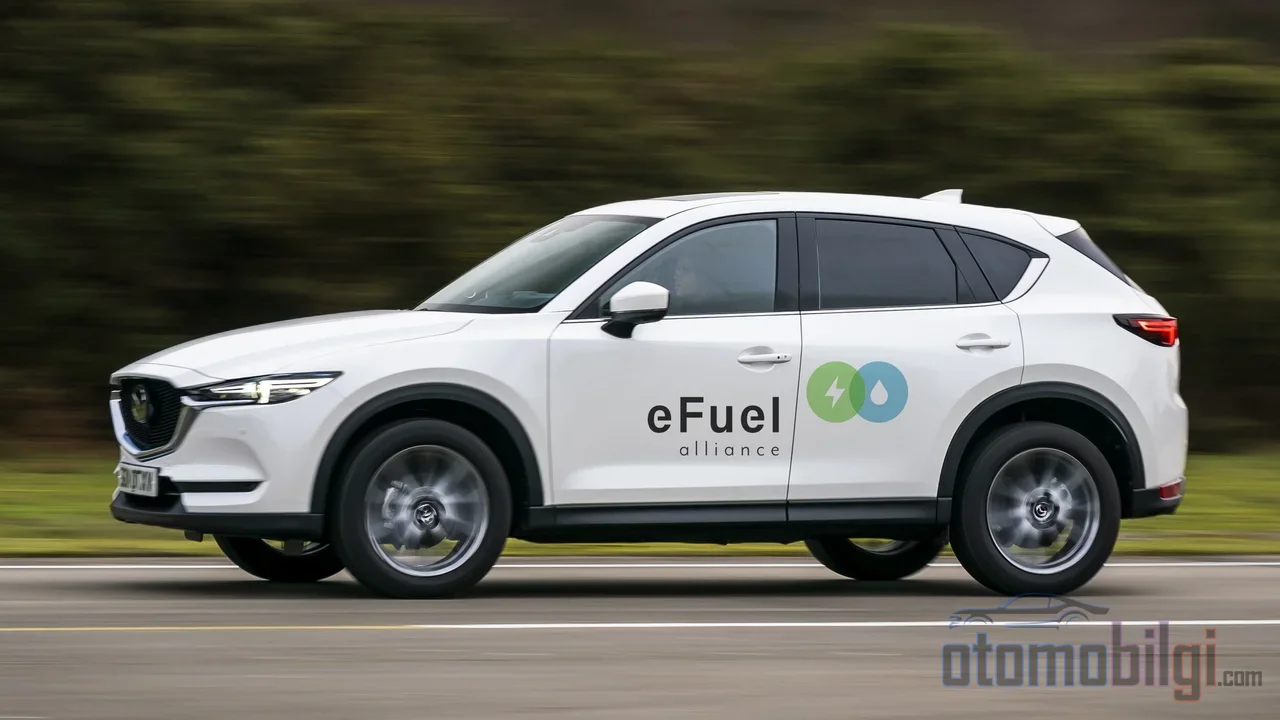
The logic of the matter is based on a closed carbon cycle. When e-fuel is burned, CO2 is released from the exhaust; but this carbon is carbon that was captured from the atmosphere or industrial sources during the production stage. In other words, the fuel borrows carbon to carry energy and returns it; no new, fossil-origin CO2 is added to the atmosphere. The holistic perspective is the well-to-wheel assessment: For the neutrality claim to be valid, production must be carried out with renewable electricity from start to finish.
Here we must make a critical distinction for readers who love engineering: Carbon neutrality does not mean cleanliness of local pollutant emissions. NOx and similar pollutants released from the exhaust originate from the physiology of the internal combustion engine, and the fuel being synthetic does not fundamentally change this profile. This distinction will come up again later under the Euro 7 heading.
Highlights
- Producing 1 liter of e-fuel requires approximately 25 kWh of electricity under ideal conditions; the fuel itself contains only 10 kWh of energy.
- According to the Aramco-Stellantis study, the 24 engine families in post-2014 Euro 6 vehicles were found to be compatible with e-fuel.
- The EU draft provides an exemption after 2035 only for internal combustion vehicles running on climate-neutral e-fuel.
- Per-liter price estimates range from 1.22-2.17 EUR for 2025 to 1.45-2.50 EUR for 2050.
- According to the ICCT assessment, e-fuel loses about 70% of the energy in the fuel in internal combustion.
Can Existing Engines Run on E-Fuel?
E-fuel's strongest card is compatibility. The joint study announced by Aramco and Stellantis in September 2023 revealed that the 24 engine families in European vehicles produced after 2014 are compatible with the expected e-fuel variants. This means that the vast majority of the hundreds of millions of Euro 6 vehicles on Europe's roads can use this fuel without major changes to the engine or fuel system. Since its chemical structure is identical to its fossil counterpart, it is a direct substitute in terms of the catalytic converter, fuel pump, injectors, and storage system.
The strategic importance of this point is significant: Electrification cannot decarbonize the existing vehicle fleet; it requires buying new vehicles. E-fuel, on the other hand, carries the potential to transform the fleet as it is. The problem is whether this potential aligns with energy economics - or not.
The Energy and Cost Reality of E-Fuel
This is where the technical core of the debate lies. Under an ideal, maximum-efficiency production setup, about 25 kWh of electricity is needed for 1 liter of e-fuel; yet that liter of fuel contains only 10 kWh of energy. Losses already occur along the production chain: Around 30% of the energy is lost at the green hydrogen production stage alone. On the vehicle side, the internal combustion engine wastes most of the energy in the tank as heat; according to assessments, about 70% of the energy in the fuel is lost in internal combustion. If the same electricity had gone into a battery, a much larger share would have reached the wheels.
The cost table reflects this efficiency table. For 2025, price estimates are 1.22-2.17 EUR per liter; for 2050, projections are in the 1.45-2.50 EUR range. Competitive pricing requires facilities operating at least 3,000-4,000 full-load hours per year and cheap renewable electricity; it has been projected that solar power plants in North Africa and the Middle East could bring the price down to about 0.96 EUR per liter by 2030. Broad-scope projections point to a cost range of 0.70-1.30 EUR per liter via the Fischer-Tropsch route in 2050. Today's reality is harsher: Synthetic fuel prices are roughly 3-5 times higher than conventional fuel; in calculations made for the shipping sector, e-methane's unit energy price is expected to be 5 times that of low-sulfur fuel oil in 2026.
| Indicator | Value |
|---|---|
| Electric input for 1 liter of e-fuel | ~25 kWh (under ideal conditions) |
| Fuel energy in 1 liter | ~10 kWh |
| Energy loss in internal combustion | ~70% |
| Price estimate per liter (2025) | 1.22-2.17 EUR |
| Price estimate per liter (2050) | 1.45-2.50 EUR |
| Price compared to conventional fuel | Approximately 3-5 times |
Here is a summary of these figures: Unless electricity is at least 60% cheaper than fossil fuel for equivalent energy, no mass market can emerge; yet in most countries, grid electricity costs at least twice as much as fuel oil. So why are manufacturers investing money in this technology despite all these obstacles?
Porsche and Manufacturers' Test Work
The most concrete front in this matter is Porsche. To date, the company has invested more than 100 million dollars in e-fuel development and production; 75 million dollars of that has gone to HIF Global. In December 2022, Porsche and its partners officially opened a pilot facility called Haru Oni in the city of Punta Arenas, Chile. Using the strong wind energy of Patagonia, the facility produces fuel from hydrogen and CO2; its output offers nearly CO2-neutral operation in internal combustion engines. The synthetic fuels Porsche is testing are produced with renewable energy exactly in line with this recipe.
There is a notable subtlety in Porsche's approach: From the very beginning, the company has positioned e-fuel not as a competing technology to electric vehicles, but as a way of keeping classic cars on the road in particular. The manufacturer is also conducting research on hydrogen combustion engines; one of the interesting aims of this work is to alleviate the cold-start emission problem of the internal combustion engine by bringing the catalytic converter to its optimum operating temperature more quickly. A modified 4.4-liter V8 engine was used in the virtual tests. In Germany, meanwhile, P2X Europe, a joint venture established by refinery and energy companies, has planned the production of e-fuel and petrochemical products at a facility in Hamburg since September 2022.
Its Relation to Euro 7 and the 2035 Regulation
The regulatory side has two layers. The first layer is the EU's post-2035 plan: The Council supported ending the sale of new internal combustion engine vehicles by 2035; however, the draft prepared by the Commission foresees an exception allowing the sale of new internal combustion vehicles running on climate-neutral e-fuel after 2035. This is not the end of the engine, regardless of technology type; it is the end of fossil fuel, at least on paper.
The second layer is Euro 7. Euro 7, which entered into force as EU Regulation 2024/1257, is a technology-neutral framework: It brings gasoline and diesel vehicles together in a single regulation, and also introduces a battery specification for fully electric vehicles. It foresees tightened NOx and CO limits and includes special provisions for internal combustion vehicles equipped with geofencing, that is, geographic restriction hardware. The critical point of debate is this: The exclusion of E-fuel-powered vehicles from the Euro 7 scope has come up, while some circles have argued that synthetic fuel vehicles should also be subject to the same emission limits.
The technical basis for this claim is clear: E-fuel can close the carbon cycle but does not reduce local pollutant emissions such as NOx. Independent assessments emphasize that the nitrogen oxide emissions of synthetic fuel vehicles remain at levels comparable to fossil-fueled engines, and therefore e-fuel will not solve the air pollution problem. Since the primary purpose of Euro 7 is precisely these local pollutants, engines running on e-fuel will also be subject to the same rules.
Compared to Electrification: An Impartial Assessment
The most frequently voiced realistic argument in defense of e-fuel is this: Different markets require different solutions. In markets where charging infrastructure is weak but electricity is cheap, and in hard-to-decarbonize sectors with high energy density fuel requirements such as aviation and shipping, e-fuel can be a genuine solution. When the production cycle is built on renewable or nuclear energy from start to finish, nearly net-zero emissions are possible; in aviation, e-kerosene is expected to meet 40% of energy demand by 2070. The market is also growing: Projections show that the e-fuel market could grow from 174.4 billion dollars in 2025 to a trillion-dollar scale by 2050 - though different reports differ in scope and definitions, a forecast taking a narrow view of the synthetic fuel market predicts a rise from 9.65 billion dollars in 2026 to 34.57 billion dollars in 2033.
The counterargument, however, comes from the efficiency chain and it is devastating: While 70% of the energy in the fuel is lost in internal combustion, sending the same renewable electricity to a battery produces far more kilometers. When the fact that synthetic fuel vehicles emit as much NOx as fossil-fueled ones is added on top, the environmental case for e-fuel in the automobile weakens. Moreover, scaling up is not easy: Cost, technology, raw material, energy and financing barriers stand in the way of growth; as in the Chile example, when the production location is far from consumer markets, shipping itself becomes a project-level challenge.
Conclusion: Can the Fuel Save the Engine?
The short and honest answer is this: E-fuel is a technology with a low chance of collectively saving the internal combustion engine in the automobile; but a technology with a high chance of keeping it alive in certain roles. Compatibility with the current Euro 6 fleet, its chemical equivalence to its fossil counterpart, and the exception in the EU's post-2035 draft open up a real breathing space for the engine. However, when the efficiency chain - which yields 10 kWh of fuel energy for every 25 kWh of electrical input per liter - is combined with the 70% internal combustion loss, and the price is 3-5 times that of conventional fuel, the efficiency gap against battery-electric propulsion seems impossible to close.
That is why the reasonable scenario is for e-fuel to be a niche solution in the automobile, not everyone's fuel: Classic vehicles, markets where charging infrastructure has not developed, and especially aviation and shipping. The future of the internal combustion engine most likely lies not in being rescued or completely eliminated; it will be defined in a narrowed but permanent role powered by synthetic fuel. Euro 7's technology-neutral framework also limits this role, subjecting it to the same standards as fossil-fueled engines in terms of local pollutants.
Sources
- eFuels pilot plant in Chile officially opened - Porsche Newsroom
- Aramco and Stellantis Collaboration Indicates eFuel Compatibility with European Engine Families - Stellantis
- Regulation (EU) 2024/1257 (Euro 7) - EUR-Lex
- EU drafts plan to allow e-fuel combustion engine cars - Reuters
- What are e-fuels and synthetic fuels? - Horse Powertrain
- E-fuels won't save the internal combustion engine - ICCT
- Why e-fuels are not the solution for cars - Transport & Environment
- What are eFuels? - Liquid Wind
- E-fuels - TÜV Nord
- Review Article Liquid e-fuels for a sustainable future - ScienceDirect