From London to Paris: Low Emission Zones Entering Cities
Share This Page
Low emission zones in Europe's major cities are areas that ban or charge entry for vehicles below a certain Euro emission class. Whether your vehicle can enter depends less on its model year than on the Euro standard it meets; in London, the threshold is Euro 4 for petrol and Euro 6 for diesel. This page explains how the system works, the badge and penalty mechanisms, and the rules in force as of 2026 in a coherent manner.
Highlights
- In Europe there are 703 low and zero emission zone schemes in 26 countries (February 2024 data).
- In London's ULEZ, the daily charge for a non-compliant vehicle is £12.50; the fine for non-payment is £180.
- In France, the Crit'Air badge costs €3.81; the fine for entering without a badge is €68.
- In Brussels, since January 1, 2026, Euro 5 diesel and Euro 2 petrol vehicles are banned.
- The Euro 7 standard entered into force in 2026; it also covers tire and brake particles.
What Is a Low Emission Zone and How Does It Work?
A low emission zone (LEZ) is a regulation that bans or charges vehicles falling below an identified Euro emission class in a specific area, such as a city center. The logic is simple: air quality is improved by reducing the traffic of the most polluting vehicles. A zero emission zone (ZEZ) goes one step further and accepts only battery electric and hydrogen fuel cell vehicles. In short, an LEZ is a filter, while a ZEZ is a wall.
Each country implements this idea under its own name and with its own rules. In Germany the zone is called Umweltzone, in France ZFE, in Spain ZBE, and in England Clean Air Zone ; London's own scheme is known as ULEZ. In Sweden and Denmark, miljözon/miljøzone, in Portugal ZER, and in Poland strefa czystego transportu are the names used. There is no uniform badge or validity system covering the entire European Union; a badge obtained in one country is not valid in another.
Enforcement is mostly carried out with license plate recognition cameras. This means there is no such thing as stopping at a gate to show documents: when a non-compliant vehicle enters the zone, the camera reads the plate and the fine or daily charge is processed automatically. Since each city sets its own rules, even two cities within the same country can have different conditions.
Which Vehicles Can Enter? The Link with Euro Standards
The key that opens or closes the zones' door is the Euro emission standard under which the vehicle was type-approved. The Euro standard is European Union legislation that limits the amounts of nitrogen oxides (NOx), particulate matter (PM), carbon monoxide, and hydrocarbons permitted to exit the vehicle's exhaust. Each new tier introduces lower limit values than the previous one. In other words, the phrase "Euro 6 diesel" means that the vehicle is certified to stay within the Euro 6 limits during its certification stage; zones also assess compliance based on this certification according to the vehicle's declaration.
Cities can apply different thresholds for petrol and diesel; a zone may accept only "Euro 4 and above" vehicles, or it may set a looser threshold for petrol and a stricter one for diesel. The London ULEZ clearly illustrates this distinction:
| Rule | London ULEZ | Paris ZFE |
|---|---|---|
| Minimum petrol requirement | Euro 4 (NOx), mostly vehicles registered after 2006 | Crit'Air 1 and above (green, purple, yellow badges allowed) |
| Minimum diesel requirement | Euro 6 (NOx and PM), vehicles registered after September 2016 | Crit'Air 3, 4 and 5 banned (including the A86 motorway) |
| Enforcement hours | In effect all day | Weekdays 08:00–20:00 |
| Fee for non-compliant vehicles | £12.50 per day | €68 fine for entering without a badge |
Euro 6 is today the de facto minimum requirement for diesel vehicles in many clean air zones. This affects diesel owners earlier than petrol owners: while most petrol vehicles registered after 2006 are considered compliant in London, on the diesel side a registration date after September 2016 has become a practical benchmark.
What Does Euro 7 Change?
Euro 7 was decided in 2024 and came into force in 2026. It stands out in two respects. First, its broader scope: the standard now also includes particulate emissions from tyre and brake wear; since these do not come out of the exhaust, they are classified as "non-exhaust emissions". Second, durability: while exhaust limit values remain the same as Euro 6 for light vehicles, Euro 7 expanded the requirements for maintaining these values throughout the vehicle's lifetime. The tightening of evaporative emissions is also concretely measurable: in Euro 6 the limit was 2.0 g/test while in Euro 7 it dropped to 1.5 g/test.
In terms of zones, this means: as Euro standards advance, zone authorities gain the option of raising thresholds. Whether the entry into force of Euro 7 will also make older vehicles that are currently considered compliant non-compliant is a matter of debate; this is still a speculative discussion, but it is a natural extension of the logic of gradual tightening.
Badge Systems: Crit'Air in France and Umweltplakette in Germany
In some countries, entry into a zone is documented with a colour badge stuck to the vehicle's windscreen. The best-known example is France's Crit'Air system: vehicles are divided into six categories from 0 to 5; 0 indicates electric vehicles, and 5 the dirtiest group. Vehicles registered before 1997 cannot apply to the system at all, meaning these vehicles simply cannot enter the zone. The badge is purchased for €3.81; a vehicle caught in the zone without a badge results in a €68 fine.
Paris illustrates well how this system is phased. Since 1 January 2023, Crit'Air 5 and badge-less vehicles have been restricted; from 1 January 2025, vehicles with green, purple (1) and yellow (2) badges remain free, while Crit'Air 3, 4 and 5 cannot circulate in Greater Paris, including the A86 motorway. Between 08:00 and 20:00 on weekdays, generally only Crit'Air 0–2 vehicles are allowed inside the Périphérique. France has ZFEs in 42 cities, but the phasing works differently from city to city.
In Germany, the Umweltplakette green badge is a prerequisite for entering Umweltzone areas. The Euro 6 requirement effectively demanded here for diesels affects almost the entire diesel fleet by its scope. As of 2026, 35 zones remain in Germany; 23 zones removed the rule, with Mainz being the latest to join them on 1 October 2025. The single exception to the rule that a badge is valid in only one country is also known: Spain recognizes the French Crit'Air badge.
Fees and Fines: What Is Paid, City by City?
The cost of entering a zone with a non-compliant vehicle varies significantly from city to city. London's ULEZ has been charging £12.50 per day for non-compliant vehicles since September 2021; an unpaid fee £180 turns into a penalty. The separate LEZ penalty for heavy vehicles ranges from £250 to £2,000. Brussels has opted for a controlled access model instead of a ban: non-compliant vehicles can obtain a daily pass for €35, but may use this right a maximum of 24 times per year.
Some cities impose additional requirements on foreign-plated vehicles. In Barcelona, vehicles entering the zone must register in advance; the scheme, valid on weekdays between 07:00 and 20:00, grants foreign vehicles limited access for a €7 fee and only 24 days per year. Across Spain, ZBE schemes have been in place in 149 cities since 2023; according to the ministry map, the number reaches 169, of which 58 are actually in force.
In Eastern and Southeastern Europe, a fine-focused model is widespread: in Warsaw and Kraków the fine is 500 zł (approximately €117), in Sofia at least 50 lev (approximately €25). In Dubrovnik the fine is €260; with a rental car, this amount can be passed on to the renter for a total of up to €1,580, because the rental company adds administrative costs to the bill as well.
The 2026 Outlook: Tighteners and Retreaters
The story of low emission zones is not one-way tightening; 2026 has become a year of two-way movement. In Brussels, with the Constitutional Court annulling the postponement decree, the tightening came into force on 1 January 2026: Euro 5 diesel and Euro 2 petrol vehicles are banned, with fines taking effect from 1 March 2026. In contrast, Belgium's Flanders region withdrew all planned tightenings.
In France, the picture is even more tangled. The National Assembly removed the ZFE mechanism with an additional clause; however, on 21 May 2026 the Constitutional Council annulled this provision on the grounds that it was a "rider" unrelated to the subject of the law. The framework legislation stands, but implementation is loose from city to city: from 1 July 2026, Lyon will fine Crit'Air 3 vehicles €68; Grenoble is issuing only warnings until mid-2027; while Paris will not impose fines before 2027.
Regional divergence in Italy is striking: Piedmont withdrew from the Euro 5 diesel ban that will take effect on October 1, 2026 (around 307,000 vehicles are expected to be affected); Lombardy is pressing ahead, while a draft repeal is being prepared in Veneto. In Emilia-Romagna, winter zones are active between October 1 and March 31, and since October 1, 2025 Euro 5 diesels have been restricted in municipalities with more than 30,000 inhabitants. Stockholm's zero-emission zone was struck down by a court in May 2026 and is under appeal. Poland, on the other hand, is moving in the opposite direction: after Warsaw and Kraków, the Szczecin (April 17, 2026) and Katowice (June 29, 2026) zones have opened. Denmark has been applying extended rules to diesel cars in cities such as Copenhagen since January 1, 2026, making particulate filters mandatory. The Netherlands has built the most advanced ZEZ network in continental Europe: 19 municipalities and Schiphol airport are operating with a zero-emission requirement applied only to delivery vans and trucks.
The Rollback Debate: Have the Zones Done Their Job?
In Germany, some regions are lifting the rules on the grounds that air quality targets have been achieved. However, the Stuttgart example turns this decision into an engineering question: the state government warned that lifting the ban could lead to renewed exceedances of NOx limit values (January 2025). In other words, whether the measured improvement is permanent continues to be tested even after the rule is removed. A similar effect was seen in the United Kingdom: the postponement of the new petrol and diesel car sales ban from 2030 to 2035 slowed the zone-tightening climate. There is also a gap on the legal infrastructure side: Annex III of Directive (EU) 2023/2661, which provides for the disclosure of zone data, has limited effect because it only covers new or updated data and the relevant implementing regulations are not yet in place.
Finding This Technology in Your Vehicle: DPF and SCR/AdBlue
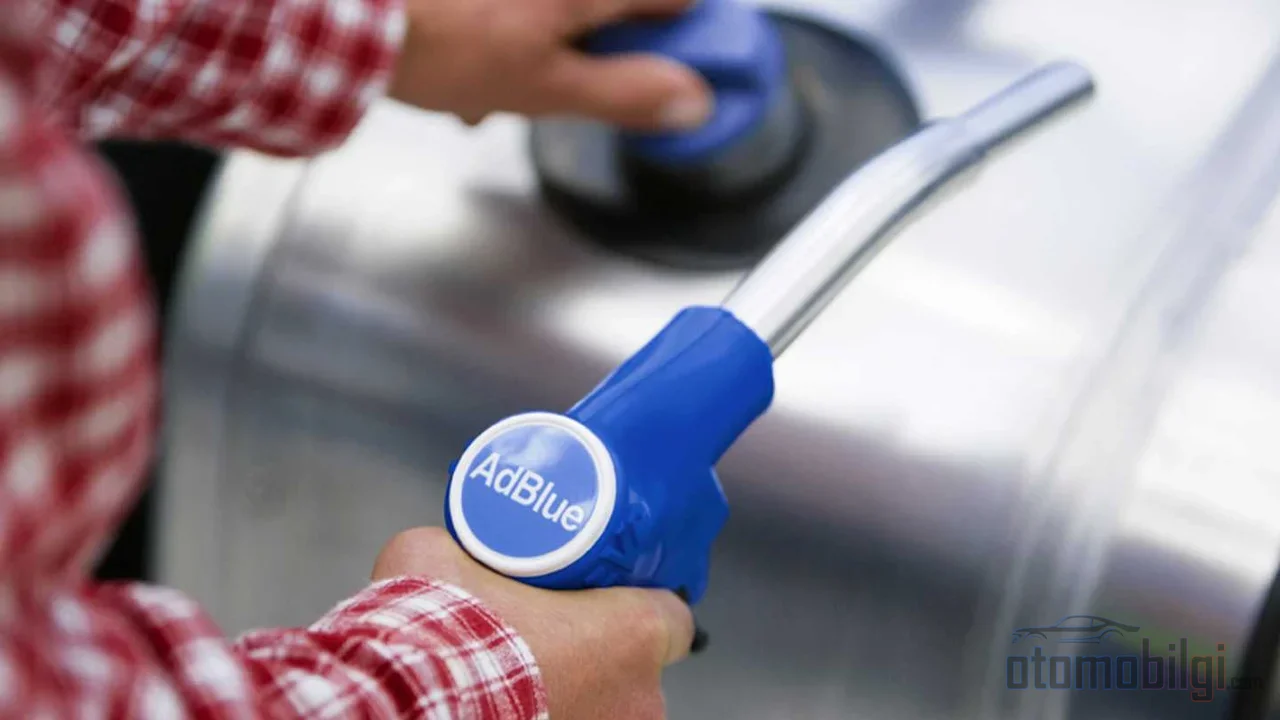
What determines which Euro standard a vehicle can meet is the emission control technologies in the exhaust line. On the diesel side, two components are critical. The diesel particulate filter (DPF)is the filter that traps almost all soot (particulate matter) particles in the exhaust gas; meeting the particulate limit that zones impose on diesels is impossible without this filter. Denmark's move to make particulate filters mandatory in diesels from 2026 onward is part of the same logic.
On the NOx side, the SCR (selective catalytic reduction) system comes into play. A 32.5% high-purity urea solution (AdBlue) injected into the exhaust line decomposes into ammonia when heated and reacts with NOx in the SCR catalyst, converting it into harmless nitrogen and water. This system can reduce NOx by 80-90%or more; it provides an additional reduction of 50-90% for hydrocarbons and carbon monoxide, and 30-50% for particulate matter. SCR and DPF work together in a multi-stage emission control chain. The catalytic converter, on the other hand, is a classic component mainly found in gasoline vehicles that reduces pollutants such as CO. The combined effect of these technologies is measurable: countries that adopt Euro 6/VI standards can achieve reductions in pollutant emissions of up to 99%.
Can My Vehicle Enter? A Practical Check Guide
The answer to the question becomes clear in three steps. First, determine your vehicle's Euro standard: this can usually be shown by the registration certificate and model year; in London, the Euro 4 threshold for gasoline and Euro 6 for diesel is assessed according to this declaration. Then, look at the zone map of the city you are traveling to; there is a central resource compiling all the schemes in Europe. The final and most binding step is to confirm the rules from the city's own official website: the only legally binding source is the city itself.
- In countries with mandatory stickers (France, Germany), order the sticker before your trip; in France, vehicles from before 1997 cannot apply to the system.
- Stickers do not cross country borders; as a rare exception, Spain recognizes the French Crit'Air sticker.
- Remember that ULEZ is applied based on Euro class, not fuel economy: a powerful but new gasoline vehicle may be exempt, while an old small diesel may be subject to the charge.
- Forgetting the fine in a rental car can come back to you multiplied by administrative costs, as seen in the Dubrovnik example.
Those considering buying a Euro 5 diesel vehicle need to pay particular attention to the table: in Brussels, this class is now banned, in Lombardy it is within restrictions, and in Germany the de facto Euro 6 requirement for diesel covers almost the entire diesel fleet. On the diesel side, thresholds are rising faster; for gasoline, the Euro 4 threshold is still sufficient for most areas. The future of the internal combustion vehicle owner is therefore determined as much by the city's rule set for that year as by the vehicle's age and fuel type. The rules are variable but the mechanism is transparent: know your Euro standard, prepare your sticker, and verify from the city's own page before you go.
Sources
- LEZ And ZEZ In Europe 2026: Every Zone Mapped Out, Country By Country
- Urban Access Regulations in Europe
- Environmental zones in Europe
- Cars - London (TfL)
- Low Emission Zones (LEZ) - European Union
- European emission standards
- Euro 7: The new emission standard for light-duty vehicles (ICCT)
- The Crit'Air anti-pollution vehicle sticker
- Free ULEZ Checker: Check Your Vehicle Compliance
- Euro 1 to Euro 7 – Vehicle Emissions Standards (RAC)
- Europe: Cars and Light Trucks - Emission Standards
- World Gasoline Phaseouts (Coltura)
- A technical summary of Euro 6/VI
- How does a Diesel Particulate Filter work?
- SCR Catalyst – NOx Reduction with AdBlue
- Low emission and clean air zones