Why Did the 2035 Zero-Emission Target Drop to 90 Percent?

The number that triggered the harshest engineering transformation in the automotive world over the last fifteen years is 95: grams of CO2, a fleet-wide target measured per kilometer. This target does not measure what comes out of a single vehicle's exhaust; it measures the average of all new vehicles a manufacturer sells in a year, and it means a fine of 95 euros per g/km for every vehicle exceeding the limit. This is the main driving force behind shrinking engines, the spread of hybrids, and the rapid retreat from diesel. So how exactly does this system work, and why does it address a completely different problem from the Euro 6 and Euro 7 rules that confuse most drivers?
What Is the Fleet-Based CO2 Target and How Is It Calculated?
The European Union, determining that passenger cars account for approximately 16% of total CO2 emissions and light commercial vehicles for approximately 3%, tied these two segments to separate standards. The legal framework is established by Regulation (EU) 2019/631; it was updated in 2023 with Regulation (EU) 2023/851, adding a target of 100% emission reduction, that is, zero exhaust emissions, from 2035 onward.
The critical point is the calculation logic. The EU does not impose guide values on individual vehicles. Instead, each manufacturer's annual specific emission target is derived using the EU-wide fleet target and the average mass of the new vehicles the manufacturer has registered. Thanks to the mass-based curve, manufacturers selling heavier, larger vehicles are granted a higher individual target; in practice, manufacturer targets are distributed in the range of 92 to 130 g CO2/km. What determines a manufacturer's actual fate is whether the average of every vehicle it sells stays below this individual target.
Historical Timeline: From 130 to 95 Grams, and From There to Zero
With Regulation (EC) No 443/2009, a mandatory target of 130 g CO2/km was set for 2015. The 95 g/km target, to apply from 2020, was finalized in 2013 by a vote of the European Parliament's Environment Committee. This target was applied in the 2020/2021 period as 95 g/km for cars and 147 g/km for light commercial vehicles.
Key Highlights
- The fleet target is calculated from the average of every vehicle sold; if the target is exceeded, a fine of 95 euros per g/km is applied.
- Targets for cars: 95 g/km (2020), 93.6 g/km (2025-2029), 49.5 g/km (2030-2034) and 0 g/km (2035+).
- In 2020, the first 13 manufacturers were estimated to face a fine risk of over 14.5 billion euros.
- Real-world PHEV emissions average 145 g CO2/km; the official test value is 24 g/km.
- The December 2025 package lowered the 2035 target from 100% to 90% reduction, opening a door for the internal combustion engine.
Penalty Mechanism and Flexibility Tools
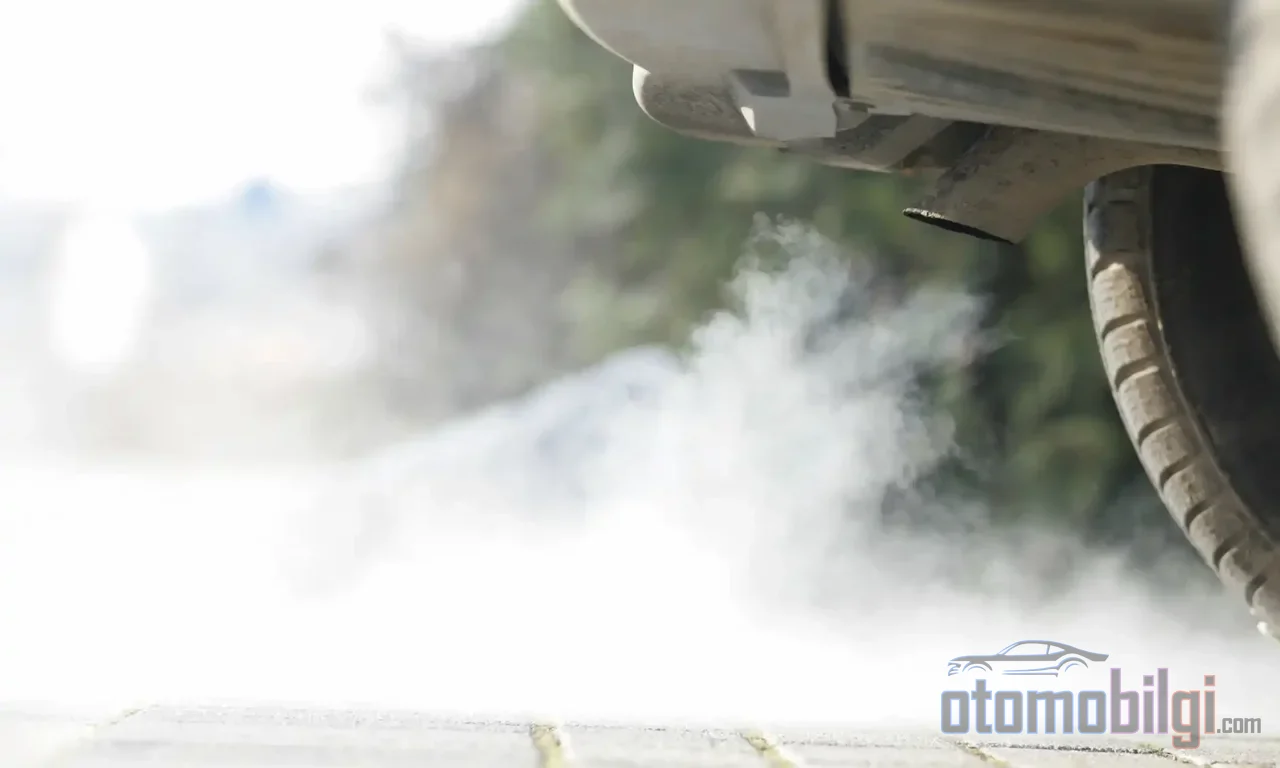
For current cars, the target is dropping to 93.6 g CO2/km in the 2025-2029 period and to 49.5 g CO2/km in the 2030-2034 period; this means reductions of 15% and 55% respectively compared to the 2021 baseline. For light commercial vehicles, while the 2025-2029 target was 153.9 g/km, the 2030 target had been set at 90.6 g/km (50% reduction), and the December 2025 proposal package lowered this to a 40% reduction.
The penalty is harsh: a manufacturer whose fleet average exceeds the target pays a 95 euro excess emissions premium for every new vehicle it registered that year, for every g/km exceeded. The scale is impressive; in 2020, the first 13 manufacturers were estimated to face penalty risks exceeding 14.5 billion euros, and the industry association was speaking of an expected penalty of around 16 billion euros across the sector for 2025.
Super Credits and the ZLEV System
The system is not merely a penalty; it also carries mechanisms that reward low-emission vehicles. In the 2020-2023 period, vehicles with a CO2 value below 50 g/km were counted with a 1.5 multiplier; this super credit, capped at 2.5 g/km per manufacturer per year, raised the effective target to 97.5 g/km when fully used. In 2020, ten manufacturers out of eight pooling groups filled their super credit caps, and these credits lowered the fleet average by roughly 7 g/km on an NEDC basis.
For 2025-2029, the process transformed into a ZLEV (vehicles emitting 0-50 g CO2/km) credit system. If the ZLEV share exceeds the set threshold (25% for passenger cars, 17% for light commercial vehicles), each percentage point of excess loosens the target by 1%; the total relaxation is capped at 5%. In addition, eco-innovation credits are worth 7 g/km per manufacturer until 2024, 6 g/km in 2025-2029, and 4 g/km in 2030-2034, and from 2025 onwards, air conditioning efficiency improvements were also included in this scope.
Pooling and Exemptions
Article 6 of Regulation (EU) 2019/631 allows manufacturers to comply within their own corporate groups or through partnerships outside the group; passenger car and light commercial vehicle manufacturers cannot pool together. In practice, this opens the door for manufacturers with high electric vehicle shares to sell credits: Ford pooled with Volvo due to delays in its plug-in hybrid models; Renault opened its own pool to outsiders in 2020. There are also separate rules for small-volume manufacturers: while manufacturers registering fewer than 1,000 vehicles per year are exempt, those below 10,000 passenger cars or 22,000 light commercial vehicles can propose their own targets; manufacturers between 10,000 and 300,000 can request a derogation until 2028.
The Difference from Euro 6 and Euro 7: Two Different Questions, Two Different Answers
This is the most commonly confused point of the subject. Euro standards (from Euro 1 to Euro 7) regulate pollutant emissions from individual vehicles, i.e. air quality parameters such as NOx and particulate matter. The fleet-based CO2 target, on the other hand, answers an entirely different question: climate change. CO2 is not a poison but a greenhouse gas; therefore, no per-vehicle upper limit is set; instead, the fleet average is considered.
Euro 7 was adopted in 2024 and entered into force in 2026; it also regulates non-exhaust emissions, covering tire and brake particles, for the first time. The evaporative emission limit was lowered from Euro 6's 2.0 g/test value to 1.5 g/test. In short, Euro rules govern the chemistry of the exhaust, while the CO2 standard audits the mathematics of the sales list. A vehicle can be fully compliant with Euro 6 and still drag its manufacturer into penalties.
The Role of Hybrids in the Calculation and the Real-World Truth
Hybrids play a dual role in this system. On one hand, thanks to ZLEV credits they can relax the fleet average by up to 5%; on the other hand, the gap between official test values and real-world use is the system's most sensitive point. According to independent data, real-world PHEV emissions average 145 g CO2/km while the official test value is 24 g/km; roughly a sixfold difference. Another analysis puts real fuel consumption at 4.0-4.4 l/100 km, equivalent to 90-105 g CO2/km; a 2026 academic study finds an average real-world value of 138 g/km versus a test cycle value of 46 g/km. Since current legislation grants credits based on electric range and battery capacity, this gap grows among users with low charging habits.
To close this gap, the EU also turned to the vehicles themselves: for vehicles registered from 2021 onwards, on-board fuel consumption data is collected via OBFCM devices, and the deviation between type-approval values and real-world use is monitored. In a broader context, the finding that the real CO2 emissions of new cars are about 20% higher than test values was one of the factors that accelerated the introduction of WLTP from 2017 onwards.
The Forces Pushing Manufacturers Toward Downsizing and Away from Diesel
The engineering consequences of the 95 g/km target are tangible. For years, manufacturers met CO2 targets by shrinking engine displacement and adding turbochargers, i.e. downsizing and small supercharged/turbocharged engines; in the new emissions period, a return to larger engines was observed. Because small-displacement boosted engines produce higher consumption than test values in real-world use, relentlessly pushing up the fleet average.
The picture on the diesel side is more striking. In EU-15 countries, diesel's share of new vehicles fell from 50.2% in the first half of 2017 to 46.3%. Although diesel produces lower CO2 per litre, the cost of NOx and particulate management, the hardware mandates after Euro 6, and the loss of demand pushed manufacturers to withdraw from diesel development. Interestingly, this decline did not worsen every manufacturer's CO2 average in the same way; at some major manufacturers, the reduction in diesel share did not negatively affect fleet CO2 performance, contrary to expectations.
How Did the Rules Change in 2025-2026?
During these years the system was significantly stretched. In April 2025, the Commission proposed that the 2025-2027 targets be met on a three-year average rather than an annual basis; this was adopted on 17 June 2025 as Regulation (EU) 2025/1214. Thus, a manufacturer exceeding the target in one year can compensate with surplus compliance in another year.
The real turning point was the December 2025 Automotive Package. The Commission proposed a 90% tailpipe emission reduction from 2035 instead of 100%; the remaining 10% could be offset through the use of EU-made low-carbon steel, e-fuels or biofuels. This allows plug-in hybrids, range extenders, mild hybrids and internal combustion vehicles to remain on sale after 2035. The package also includes a super credit for small affordable EU-made electric cars before 2035, and banking and borrowing flexibility for 2030-2032. In October 2026, the EU parliament and governments reached a compromise that weakens the 2030 and 2035 targets; the process of agreeing on a joint text is ongoing.
How Does This Pressure Shape the Future of the Internal Combustion Engine?
The debate is caught between two poles. Industry representatives argue that the 2030 and 2035 targets are no longer achievable at the current pace of electric growth, and emphasize that the 16 billion euro fine projected for 2025 could instead be invested in production and employment. On the other side, environmental organizations point out that lowering the 2035 target from 100% to 90% would reduce the electric vehicle share by 15% according to their estimates, that if the revised standards are adopted manufacturers could continue selling internal combustion vehicles indefinitely instead of transitioning to zero emissions, and that this would have health impacts. Some analyses hold that loosening the CO2 standards will not save the EU automotive industry, because diesel and gasoline vehicle sales are already declining.
The short answer is this: The EU's 95 g/km target and its successor limits form a system that determines the fate of the internal combustion engine not through the performance of a single vehicle, but through the average of all vehicles sold. Because this system became standard, manufacturers turned toward small and light vehicles, hybrids and electrification; the penalty risk became an accelerator of the retreat from diesel. The flexibilities introduced as of late 2025 leave a role for the internal combustion engine beyond 2035 through e-fuels and biofuels. However, the target continues to track the fleet average mathematically; meaning that no matter what the engine technology is, the penalty pressure does not disappear unless the average gram value in the sales list falls.
Sources
- Cars and vans - Climate Action - European Commission
- EU vote on cars CO2: 95 g/km in 2020, 68-78 g/km in 2025
- Policy briefing: EU CO2 emission performance standards
- Impact of EU CO2 Non-Compliance Fines on Manufacturers
- New EU Car Fleet Emissions Performance in Line with Targets
- EU CO2 emissions targets - Automotive Glossary
- Europe: Cars GHG - Emission Standards
- The EU regulations on reducing CO2 emissions from road vehicles
- CO2 emissions from heavy-duty vehicles