Tire and Brake Pad Dust: What Is Non-Exhaust Emission?
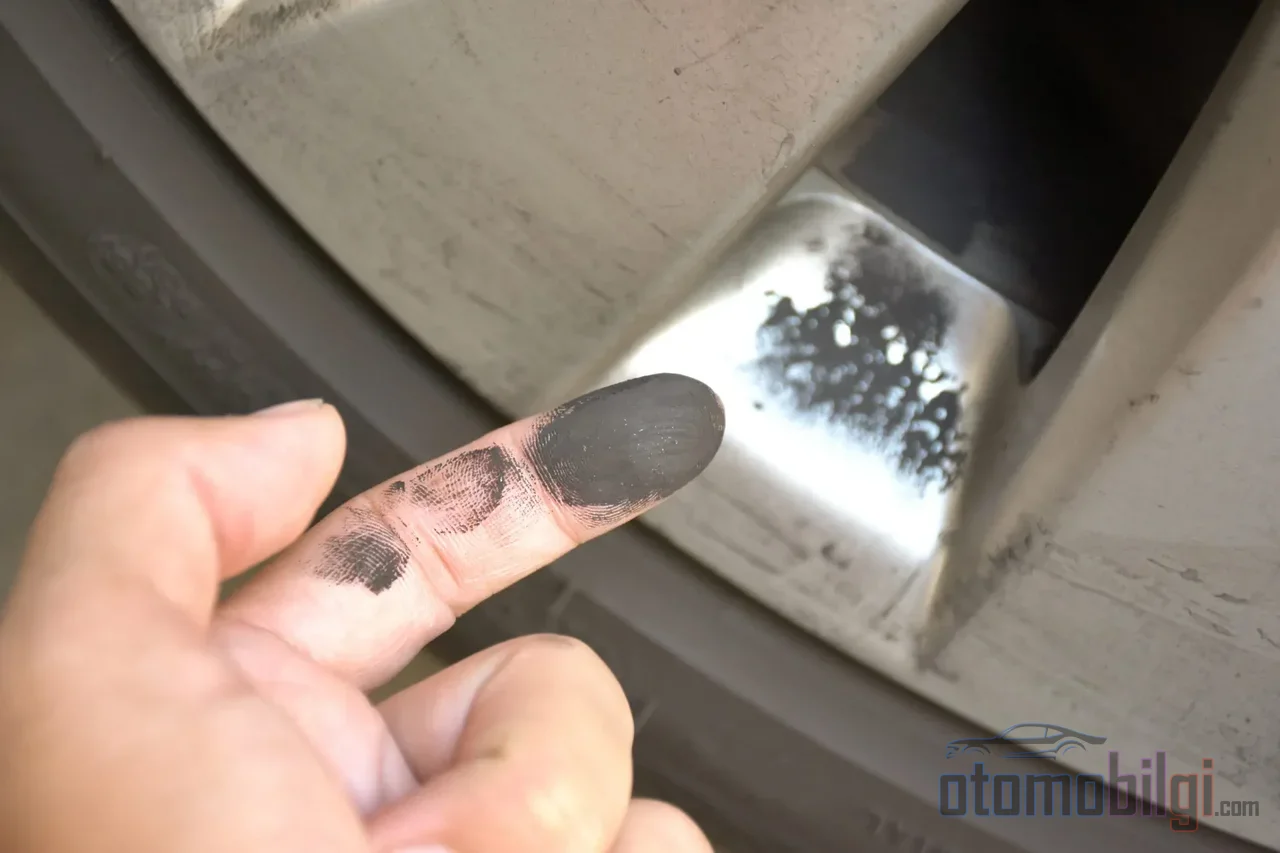
For over a decade after the diesel exhaust scandal, the automotive world's eyes were fixed on the tip of the tailpipe: particulate filters were tightened, NOx limits were lowered, and test cycles were brought closer to real road conditions. However, while the exhaust was being cleaned, an invisible emission source kept growing, and today it dominates the non-exhaust portion of traffic-related air pollution. This source is not in the vehicle itself, but in its contact with the road: brake pads, tire treads, and road surfaces wear down gram by gram with every kilometer, releasing particles into the air. So what exactly are non-exhaust emissions, how large a share do they have, and how will Euro 7 change this picture?
What Are Non-Exhaust Emissions?
Non-exhaust emissions, abbreviated as NEE, is a concept encompassing all particles released into the air from road traffic that do not come out of the exhaust pipe. It has four main sources: brake wear, tire wear, road surface wear, and the re-suspension of road dust that had once settled back into the air.
The logic behind this classification is simple but important: exhaust emissions arise from the combustion of fuel and can be controlled by intervening in the engine and exhaust system. Non-exhaust particles, on the other hand, arise from the vehicle's physical contact with the ground; without combustion, they are inevitably produced in every vehicle - gasoline, diesel, electric, hybrid. For this reason, they remained outside regulation for a long time: they were difficult to measure, their source could not be reduced to a single component, and they were not as visible as the exhaust. As exhaust standards tightened, the weight of these sources in total particulate matter (PM) naturally increased; as the exhaust shrank, the share of the remaining pie changed.
Key Takeaways
- Non-exhaust sources have reached the point of accounting for 90% of PM10 and 85% of PM2.5 from traffic-related pollution.
- Brake wear emissions are measured in the range of 3.3 - 13.6 mg/mile per vehicle.
- Euro 7 introduces a brake particulate limit for the first time in its history: 3 - 7 mg/km PM10 for passenger cars.
- Tire wear particles exceed 6 million tons per year and account for an estimated half of microplastics in land and water systems.
- Particulate capture systems fitted to brakes can reduce the number of released particles by 15% - 50%.
How Does Brake Dust Form and Get Into the Air?
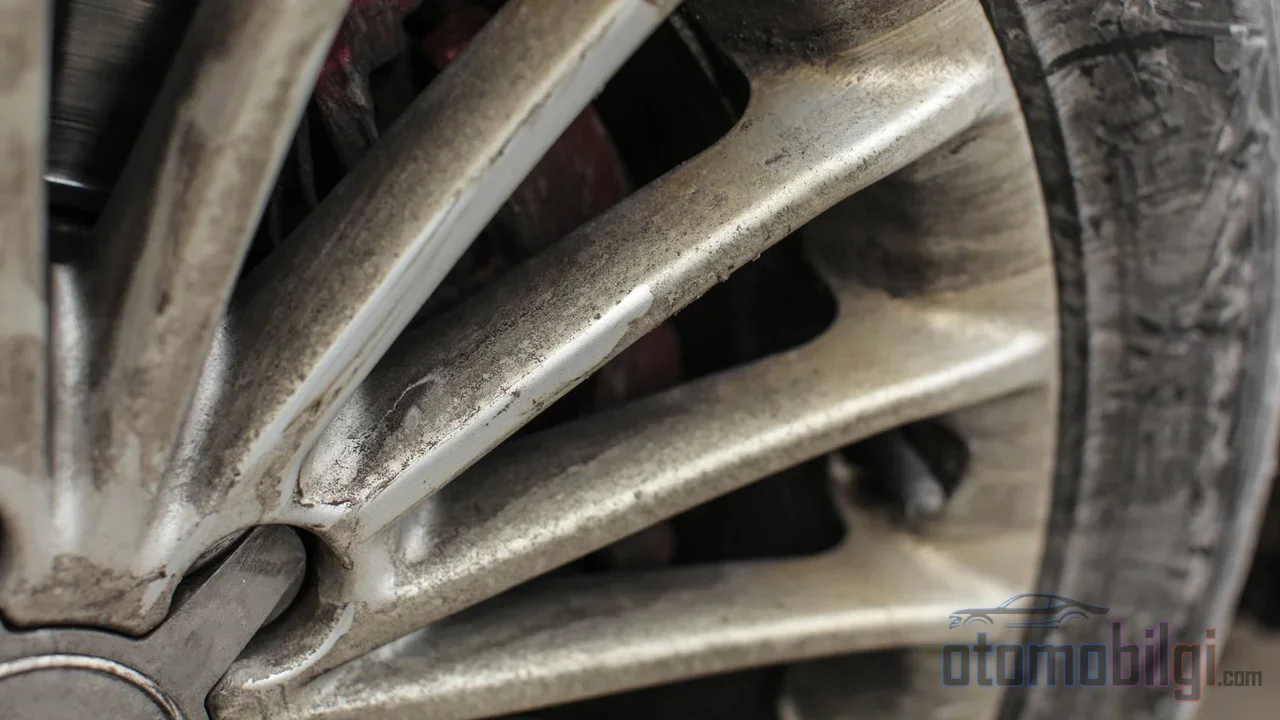
When the brake pad presses against the disc, it converts kinetic energy into heat through friction, and in this process both the pad and the disc surface wear down at a microscopic level. Roughly half of the resulting particles go directly into the air; in terms of mass contribution, the pad and the disc contribute roughly equal shares. Measurements reveal that brake wear particles show a bimodal size distribution, meaning their peaks are concentrated around approximately 200 nanometers and 1000 nanometers.
Brake dynamometer tests show that the emission rate per vehicle varies between 3.3 and 13.6 mg/mile. Material selection is decisive here: metallic brake pad materials release both larger particles and more mass. This also explains why the redesign of brake pad chemistry will come onto the agenda in the future to comply with Euro 7 limits.
On the composition side, the picture is even more interesting: brake pad dust contains heavy metals such as copper, iron, zinc and antimony, and these metals can contaminate soil and water resources. It has been shown that brake wear particles applied to cultured human lung cells in a laboratory setting create oxidative stress. A finding based on a university hospital announcement published in 2025 is striking: non-asbestos organic (NAO) brake pad particles showed a more toxic effect on lung cells than diesel exhaust particles; ceramic pads ranked second. It should be added that these findings are limited by some inconsistencies in the literature and the potential toxicity of brake pad particles has not yet become clear - but the direction is surprisingly clear.
Tire Wear: What Is TRWP and How Much Does It Account for in PM?
When talking about tire wear, the key concept in the literature is TRWP, meaning tire and road wear particle. TRWP is born from the friction between the tire tread and the road surface, and it is a mixture of roughly half tire and half road surface material. These particles, with a density of around 1.8 g/cm³, have an elongated, sausage-like shape - the natural result of the tire material rolling and tearing off at the moment of friction.
There is a critical measurement distinction here: only about 2.5% of the tire's total wear mass becomes airborne in the PM10 size fraction; PM2.5 is roughly 40% of that fraction. So the tire loses a great deal of material, but its breathable airborne portion is relatively small. In urban measurements, the average share of TRWP in PM10 has been determined to be 1.9% (in the range of 0.45% to 2.48%); industry-supported research puts this share below 1% on average. Mass-based upper-bound estimates can reach up to 11%. This wide range stems from differences in measurement methods and ambient conditions; reducing it to a single number would be misleading.
However, the main burden of tire wear is not in the air, but in the environment: more than 6 million tons of tire wear particles are released annually, and estimates indicate that these particles make up about 45% of all microplastics in land and water systems. The amount of tire and brake wear particles transported through the air directly into the ocean is calculated at 140,000 tons per year. Although there is no global consensus on whether TRWP should be classified as microplastic, the scientific community frequently treats these particles in the microplastic category. So reading tire pollution only from the PM2.5 chart means missing the biggest part of the picture.
How Are Electric Vehicles Changing This Picture?
Because electric vehicles eliminate the exhaust pipe entirely, they automatically enlarge the share of non-exhaust sources in total particulate matter; the share concept also inflates as the denominator shrinks. The numbers are striking: non-exhaust sources are calculated to account for 90% of traffic PM10 and 85% of PM2.5. Since electric vehicles are roughly 24% heavier than their conventional counterparts, they add an extra burden on the tire and road wear side; with the effect of their larger batteries, long-range models emit slightly more non-exhaust PM2.5.
On the braking side, the balance turns completely around. Since regenerative braking provides most of the deceleration through the motor, brake pad usage and therefore brake particulate emissions drop noticeably. In heavy traffic conditions, electric vehicles produce fewer total non-exhaust emissions; when roads empty out, the weight difference can increase tire wear. The synthesis of an independent urban mobility report dated 2025 states: the increase in tire and road wear from electric vehicles is offset by the decrease in brake wear and the complete elimination of exhaust.
The projections put forward also point in this direction: total tire wear particulate emissions from electric vehicles are expected to increase 17-fold over 20 years, and by 2044 these vehicles are expected to contribute a significant portion of tire wear particulates. This is not an argument against electric vehicles; it does not substitute for the elimination of exhaust emissions. But it clarifies one thing: once the exhaust problem is solved, the remaining particulate problem becomes an engineering agenda awaiting a solution, independent of vehicle technology.
The First Brake Particulate Limits Arriving with Euro 7
Euro 7 marks a first in automotive history: an emissions standard goes beyond the exhaust pipe for the first time, covering brake wear particulates and tire wear. Underpinning this step is the adoption, within the framework of the United Nations economic commission (UNECE), of a global standard that measures and limits brake particulate emissions. From now on, brake pads will be evaluated not only for stopping performance but also for the amount of particulates they release.
| Topic | Euro 6 | Euro 7 |
|---|---|---|
| Non-exhaust emissions | Out of scope | Brake and tire wear regulated |
| Brake particulate limit (passenger cars) | None | 3 - 7 mg/km PM10 |
| Brake particulate limit (light commercial vehicles) | None | 5 - 11 mg/km PM10 |
| Limit durability | 100,000 km / 5 years | Extended period |
| PN counting threshold | >23 nm | >10 nm |
The target on the brake side is ambitious: according to industry calculations, brake wear must be reduced by up to 80%. Euro 7 also extends the PM/PN rules to all gasoline engines and lowers the particulate counting threshold from 23 nanometers to 10 nanometers, making smaller particles visible as well. For brake pad manufacturers, this means a redesign of the composition; in particular, the mass released by formulas with metallic content will be the main determinant of the limits.
Brake Dust Filters and Other Solutions
On the technology side, the answer is partly familiar: filtration. Particle capture panels made of metal fiber fabric, mounted on the brake caliper, have been developed; two major OEM suppliers have already turned this concept into a product as a brake dust particulate filter. These passive systems can capture the dust from the brake caliper at its source, reducing the number of released particles by 15-50% and lowering emission mass.
Regulatory bodies, meanwhile, are building the measurement infrastructure: brake dynamometer test cycles and standard PM measurement methods are being defined, and emission models are being updated with real test data. On the tire side, reduction measures are being compiled - through tire composition affecting wear, vehicle weight, and driving behavior; however, a rule for tire wear expressed per kilometer, similar to the brake limit, has not yet been implemented.
The measurement challenge comes into play here again: developing control methods is difficult without fully understanding the physical and compositional properties of non-exhaust particles, because separating brake, tire, road, and resuspended dust sources within the same PM10 measurement is an analytically demanding task.
Summary: What Is Non-Exhaust Emission in Brief?
Non-exhaust emission refers to traffic particles that do not come out of the exhaust pipe, originating from brake pad, tire, and road surface wear as well as road dust resuspended into the air. As exhaust standards have tightened, its share has grown, and with the spread of electric vehicles, zeroing out the exhaust has further increased its weight within total particles; Euro 7 is regulating this source for the first time in its history with brake particle limits.
The equation to keep in mind while reading is this: as the exhaust is cleaned, the composition of the remaining pollution changes, it does not decrease. Although the share of non-exhaust particles in the air is relatively small today (around 1% on average in cities on the tire side), the effect of brake dust on lung cells and the microplastic load of over 6 million tons per year from tires make this source a problem independent of the exhaust. The emissions agenda of the coming decade will, to a large extent, be written beneath the vehicle and on its wheels.
Sources
- Brake & Tire Wear Emissions - California Air Resources Board
- Non-Exhaust Particle Emissions - DieselNet
- Tire Industry Project - Tire and Road Wear Particles - Glossary
- A Review of Road Traffic-Derived Non-Exhaust Particles - PMC
- Non-exhaust traffic related emissions. Brake and tyre wear PM - JRC
- New Study on Non-Tailpipe Emissions in Southern California - DRI
- A comprehensive review of tyre wear particles - ScienceDirect
- Impacts of Tire Wear Emissions Compared to the Impacts of Exhaust Emissions - ACS EST Letters