What Is the EVAP System and How Does It Work
When you forget to tighten the cap after storing your car at a gas station and a yellow engine icon lights up on the dashboard within a few days, most drivers' first reaction is to suspect an engine failure. Yet in most cases the problem is not in the engine itself, but in vapor escaping from the tank and the warning of the monitoring system that follows it. This is where the EVAP system comes into play - it remains in the shadow of the smoke from the exhaust pipe, yet it is one of the most critical components of modern emissions legislation: because a significant portion of the hydrocarbons a gasoline vehicle releases into the atmosphere escapes not through the exhaust, but as vapor from the fuel tank.
On this page we will cover how the EVAP system works, how the activated carbon canister captures vapor, how the purge valve returns this vapor to the engine, and fault symptoms along with diagnostic methods.
What is the EVAP system and why must it trap fuel vapor?
EVAP is an abbreviation of the English concept Evaporative Emission Control, that is, evaporative emission control. The system's task can be summarized in a single sentence: to prevent the hydrocarbons resulting from gasoline's natural evaporation from mixing with the atmosphere. This is a separate category from exhaust emissions; European Union legislation defines evaporative emissions as hydrocarbon vapors released from a vehicle's fuel system, excluding those from the exhaust. In other words, even if a vehicle passes its exhaust inspection spotlessly clean, a fuel system with compromised sealing can release vapor into the environment more easily than it escapes through the exhaust.
Gasoline is volatile, and evaporation accelerates as temperature rises. Fuel heated during the day in the tank of a parked car condenses as it cools at night; this daily heating-cooling cycle means constant vapor production. Instead of releasing this vapor into the atmosphere, the EVAP system keeps it in a completely closed circuit, and also prevents excessive pressure or low pressure from forming in the tank. The logic chain is simple: vapor will be produced, but it will not be able to escape anywhere; for this, the tank, hoses, and canister will form a sealed chain.
Key Highlights
- The activated carbon canister can hold fuel vapor equal to approximately 1/3 of its own weight.
- Euro 7 set the evaporative emission limit at 1.5 g/test (approximately 0.75 g/day) on the basis of the SHED test.
- The P0440 code most often originates simply from a loose fuel cap.
- A regular clicking sound from the engine bay is usually the purge valve operating normally.
- Shops typically charge 75-150 USD for an EVAP smoke test.
How fuel vapor is captured: the system's four stages
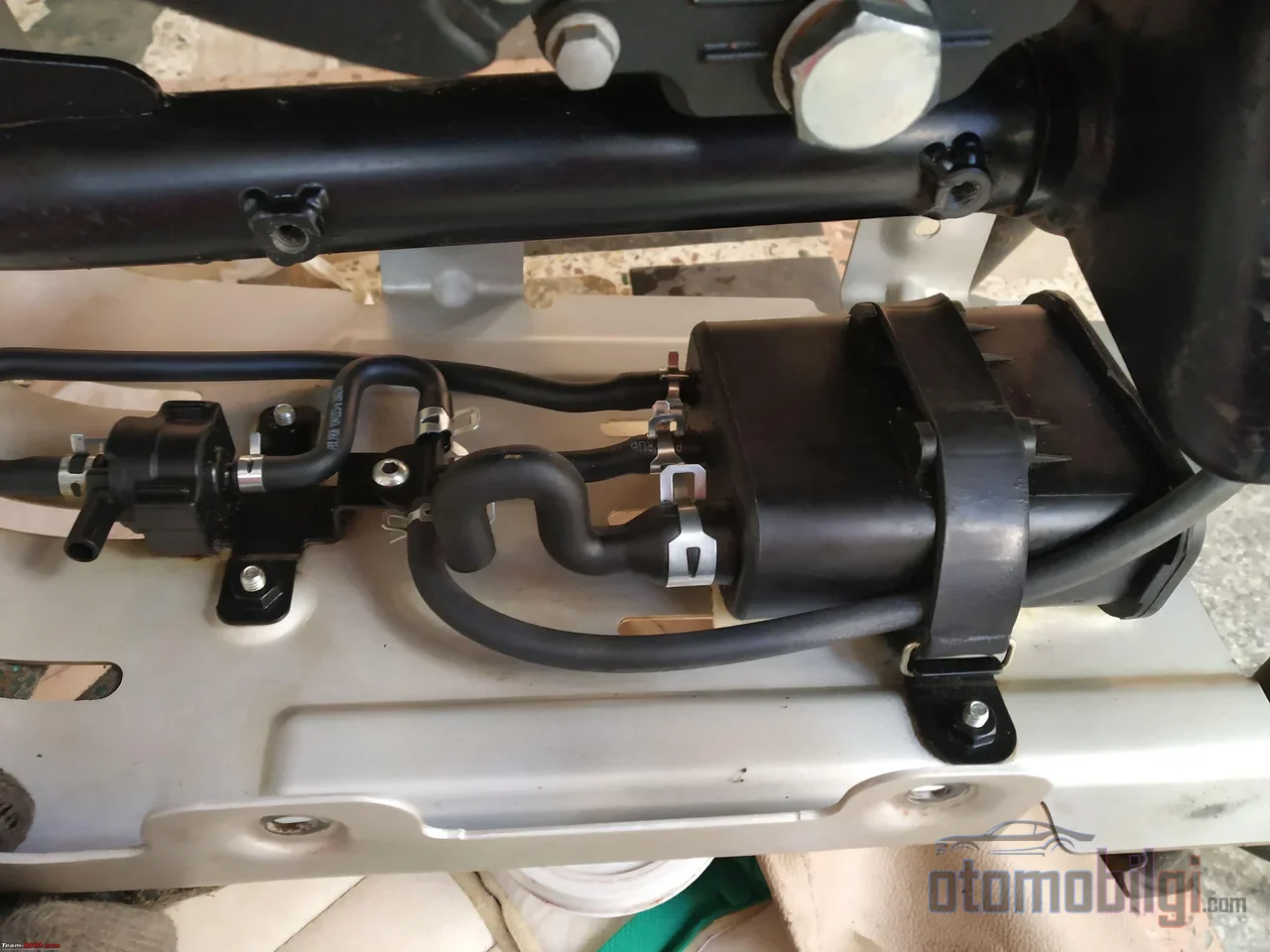
The EVAP system's operation is based on a four-step cycle, and each step is the result of the previous one. The process begins with the evaporation of the fuel in the tank. Vapor is produced even while the tank is being filled; therefore, during filling, a valve at the top of the tank directs vapor to the canister. The vapor travels through hoses and, in the system's second stage, is taken into the activated carbon canister. The charcoal inside the canister works through its ability to adhere to hydrocarbon molecules (adsorption) and can hold about one third of its own weight in vapor. In the third stage, once the engine reaches suitable operating conditions, the purge process comes into play: the stored vapor is sent to the intake manifold. In the fourth and final stage, this mixture is burned in the cylinders and rendered harmless. Thus the vapor is processed inside the engine's combustion chamber without ever being released into the atmosphere.
The canister and its two doors: the purge valve and the vent valve
The heart of the system is the canister, and its brain is the two valves. It helps to think of these two as two doors in a row: the purge valve is the front door, and the vent valve is the back door. In normal operation the back door, that is the vent valve, is open; this allows fresh air to circulate through the system. The front door, that is the purge valve, waits closed. When the engine reaches operating temperature, the ECU opens the purge valve, and intake vacuum draws in the fresh air entering through the vent, carrying the vapor held in the canister to the intake manifold. Thus the canister renews itself and becomes ready to hold vapor again.
In modern systems the purge valve works far more precisely: in most vehicles it is driven by a PWM signal, that is pulse-width modulation, and the vapor flow is metered with millisecond precision. This follows a logic similar to the fuel injectors; the canister contents are delivered to the engine gradually without disturbing the engine's current air-fuel balance. In advanced systems, the canister may also contain electrical components.
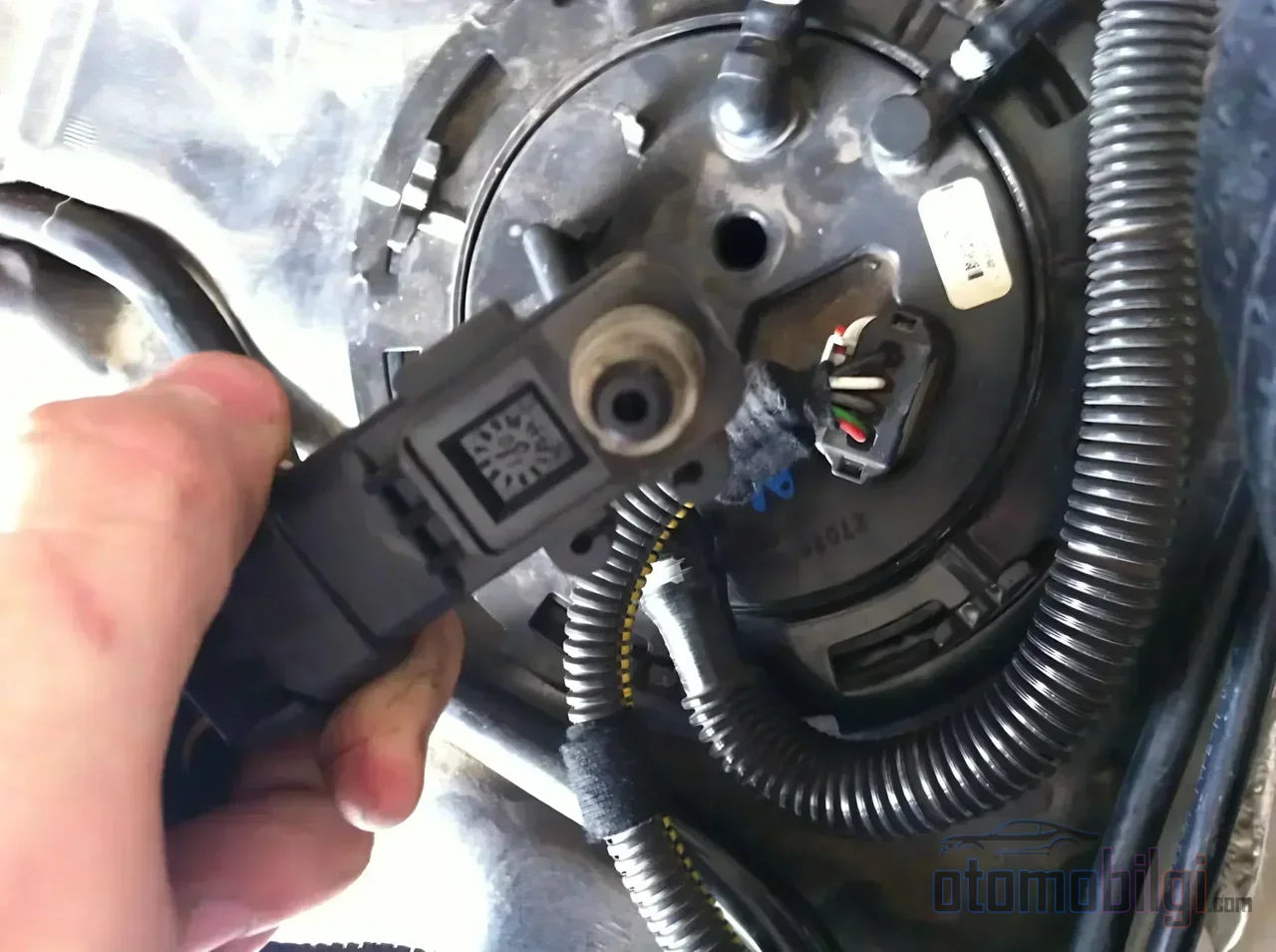
There is one more link in the chain: the fuel tank pressure sensor. Typically a three-wire sensor (5V reference, signal and ground lines), it continuously monitors the tank's internal pressure and provides the critical data for leak detection. Some manufacturers have automated this task: vacuum- and pressure-based leak detection modules such as NVLD, ESIM or DMTL test the system's leak-tightness on their own. For example, the pump in the DMTL module used in some BMW models compares the current it draws while operating against reference values, and derives the presence and even the size of the leak from this difference.
Fault symptoms: from a loose fuel cap to a collapsed tank
The most common symptom of EVAP faults is the Check Engine light, but on its own it says very little. Breaking the symptoms down by component makes diagnosis easier.
Symptoms of purge valve failure
- Rough idling and fluctuating engine speed
- Hard starting, especially after refueling; a valve left stuck open can cause the engine to flood during a cold start
- Reduced fuel efficiency and overall performance loss
- When the valve stays open, vapors become trapped, and the air-fuel mixture becomes too lean or richer than it should be
A purge valve left partially open can mimic a small leak; therefore the valve itself should also be checked during diagnosis. Vent valve faults, on the other hand, tend to create vacuum leaks or a lean mixture. Another concrete sign is in the fuel tank: when ventilation fails, the vacuum forming inside the tank can progress to the point of physically collapsing it. A hissing sound when opening the fuel cap also indicates that unexpected pressure or vacuum has built up inside the system.
A clicking sound from the engine bay: fault or normal?
Many drivers are suspicious of the repeated clicking sound from the engine bay in a warmed-up vehicle and first attribute it to the injectors. In most cases the source of the sound is the purge control solenoid and it is completely normal: the valve's rapid opening and closing produces this sound. The sound may increase as load increases and is heard during the moments when the purge process is active. However, in some complaint cases on forums, a similar sound has been attributed to a stuck vent solenoid or a clogged vent hose; in other words, a clicking sound alone does not prove the system is healthy or faulty, and it should be evaluated together with other symptoms.
Among the most common causes of failure are a loose or worn fuel cap, an open purge valve, a faulty vent valve, a cracked hose and a damaged canister. Leaks most often originate from deteriorated gaskets or dried-out O-rings; since the vent valve is located under the vehicle, it is exposed to dust, moisture and road salt, which makes it more prone to failure. In regions with OBD inspections, an EVAP-related fault code can be enough for a vehicle to fail its emissions test.
What the fault codes say: from P0440 to P0456
| Code | Meaning | Typical cause |
|---|---|---|
| P0440 | EVAP general failure | Loose fuel cap, system leak |
| P0441 | Incorrect purge flow | Purge valve, leaking canister, damaged hose |
| P0442 | Small leak | Deteriorated gasket or O-ring |
| P0455 | Large leak | Broken or loose hose |
| P0456 | Very small leak | Hairline crack, micro leak |
| P0443 | Purge solenoid electrical fault | Circuit or supply problem |
| P0446 | Vent control electrical fault | Circuit or supply problem |
There is a critical distinction here: not every EVAP code means a leak. P0442, P0455 and P0456 are genuine leak classifications; P0443 and P0446, on the other hand, are not leaks but electrical circuit faults. Misinterpreting these two leads to hours spent unnecessarily searching for hoses and gaskets. P0440 is the famous fuel cap code: the easiest first step is to check whether the cap is loose; a loose cap can leak vapors and trigger this code. P0441 reports incorrect purge flow, and alongside a faulty purge valve, leaking canister, damaged hose or loose cap, a stuck PCV valve or a short circuit in the purge solenoid's supply circuit can also produce the same code.
Diagnosis: smoke test, commanded tests and pressure monitoring
The most common and fastest method of EVAP diagnosis is the smoke test. Smoke is introduced into the system in a controlled manner; cracked hoses, faulty fittings and clogged lines become visible where the smoke escapes. A UV light can also be used to pinpoint the leak location. The test procedure is typically completed by checking for smoke output, selecting the correct connection point, closing the vent solenoid, and monitoring fuel tank pressure. Most services charge in the range of 75-150 USD for this procedure. Smoke testing has one limitation: since smoke can be a weak visual indicator, small leaks may go unnoticed; therefore, the test should be regarded as a quick screening method rather than an absolute accuracy tool.
The electrical side is resolved with a diagnostic device: the purge and vent valves are actuated via commands from the device, and the system's sealing is verified in this way. Some diagnostic tools offer purge valve leak tests that hold the valve in the selected position for 30 seconds. In practice, the two most common failures are leaking purge valves and contaminated vent valves; a blockage on the vent side does not always require a canister replacement - cleaning the valve or the lines is often sufficient.
How do Euro standards limit vapor?
Behind the continuous development of EVAP systems lies regulatory pressure. Euro 7 was defined by Regulation 2024/1257 and updated the evaporative emission limit to 1.5 g/test, i.e. approximately 0.75 g/day; these values are measured with the sealed chamber test called SHED (Sealed Housing for Evaporative Determination). The Commission's initial proposal discussed two alternative limits of 0.50 g and 0.70 g for vehicles under 2650 kg based on the worst-case day and hot soak evaporation after parking, plus a refueling emission limit of 0.05 g/L of fuel; the finalized regulation set a SHED-based limit of 1.5 g/test. The implementation details of the legislation were regulated by Implementing Regulation 2025/1706 under 2025/1257 and entered into force on 25 September 2025. The evaporative emission (Type 4) test applies only to gasoline vehicles. Engineering measures manufacturers apply to comply with these limits include increased canister capacity, high-flow purge valves, and low-permeability fuel tanks.
Summary: The EVAP system traps vapor in three steps
The clear answer to the question is this: The EVAP system carries the vapor generated in the fuel tank through hoses to the active carbon canister; the carbon adsorbs vapor up to about one third of its own weight, and when the engine warms up, the purge valve opens and sends this accumulated vapor to the intake manifold and from there to the combustion chambers. The vapor never escapes into the atmosphere; it is recovered as fuel. That is why the system is both an environmental necessity and a small contribution to fuel economy. The practical takeaways to keep in mind as a driver are these: When the Check Engine light comes on, first check the fuel cap; do not assume electrical codes like P0443 and P0446 indicate a leak; the clicking sound in the engine bay is mostly the normal operation of the purge valve; and a persistent EVAP code may appear as a vehicle issue during the OBD inspection. Driving with a faulty purge valve is generally possible but performance and consumption are affected; getting it diagnosed without delay is the right approach.
Sources
- EVAP System Operation and Testing
- What Is an EVAP System?
- Signs of a Bad Purge Valve
- Canister Purge Valve Solenoid: Symptoms
- P0441: Evaporative Emission System Incorrect Purge Flow
- P0440: Evaporative Emission Control System Malfunction
- Finding Leaks Using Generative Diagnostic Logic
- GRPE-92-08r1e - UNECE
- Commission Implementing Regulation (EU) 2025/1706
- COM(2022) 586 Annex - European Commission