Why Is the Nissan GT-R Being Converted to RWD for Drifting?
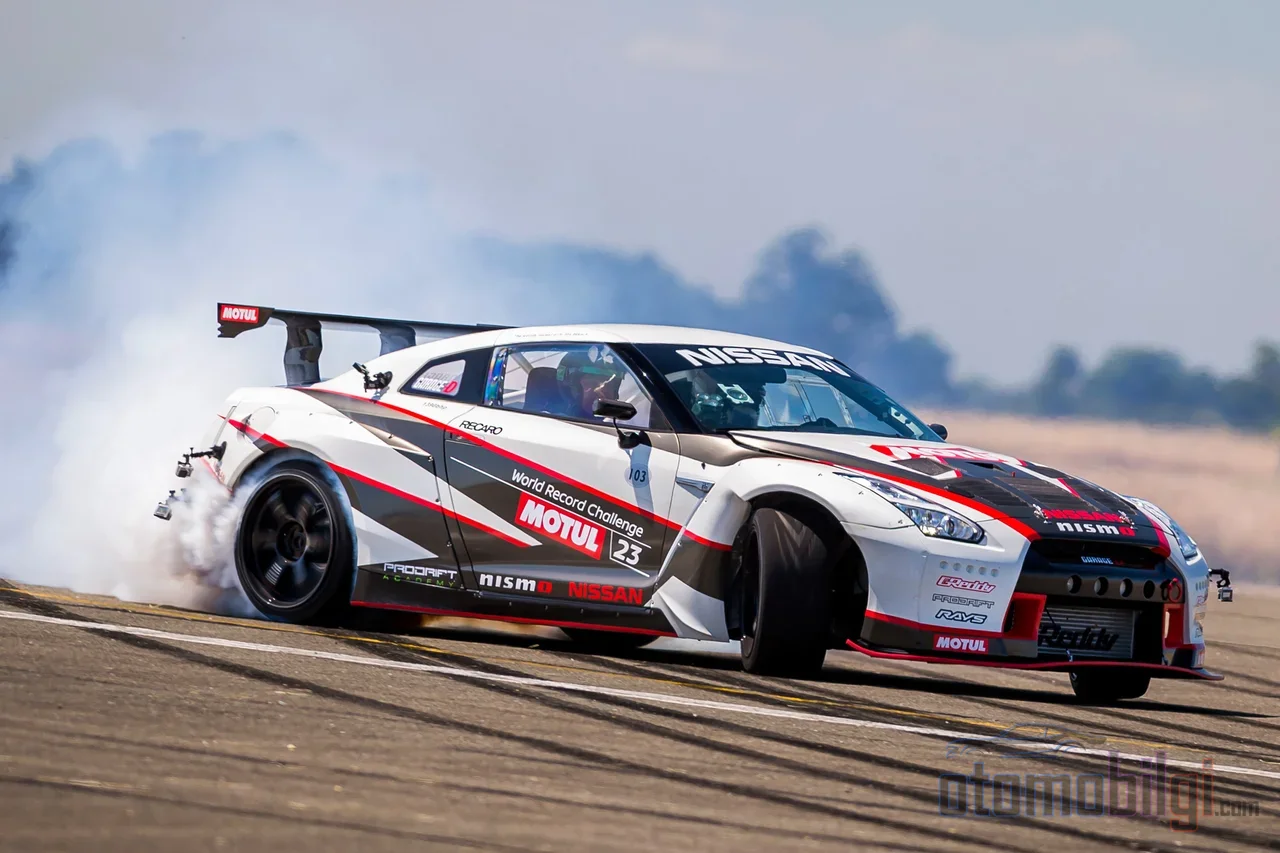
Just imagine: You take a four-wheel-drive monster like the Nissan GT-R, then deliberately cut the power going to the front wheels. Yes, you tear out that legendary AWD system everyone knows. Does it sound like madness? Yet in the drift world there is a steadily growing subculture doing exactly this, and the GT-R is the most challenging yet most flamboyant representative of this transformation. So why would anyone abandon a four-wheel-drive system that a manufacturer spent years engineering? The answer is an interesting story stretching from the rulebook to the drivetrain architecture.
On this page we will cover the culture of converting AWD cars into RWD, that is, rear-wheel drive, for drifting: from the Subaru WRX to the Lancer Evolution, from the BMW M4 to the Dodge Charger, we will discuss the technical logic, cost, and place in the car scene of these conversions. But first let's start with the rules, because that's where everything begins.
Why Is AWD Banned in Professional Drifting?
Historically, drifting has been the sport of rear-wheel-drive cars. This discipline, born from the touge, the mountain-pass street races of 1960s and 70s Japan, gradually evolved into professional series like D1 Grand Prix and Formula Drift, and in these series the standard became completely clear: competition cars must be rear-wheel drive. In the early period, some competitions accepted AWD cars unconditionally, while the rules generally allowed only a certain percentage of the power to be transferred. Over time this debate was settled and full RWD became the standard.
Today the situation is much clearer. You look at Formula Drift's 2026 PRO technical regulations: cars must be considered production vehicles, there must be at least 600 production units for each model year; body type can be coupe, sedan, convertible, or wagon, but trucks and SUVs are banned. The portion of the original steel unibody between the front and rear suspension mounting points must be preserved. The most striking electronic detail is this: there is not a single professional drift series that allows AWD. The rules reinforce this with suspension, drivetrain, and handbrake requirements; for example, the e-brake must operate only on the rear wheels, while the main braking system must hydraulically actuate all four wheels.
So if a GT-R owner wants to compete in professional drifting, there is only one road ahead: converting the car to rear-wheel drive. But this job is far more complicated than you think, and this is exactly where the GT-R's engineering comes into play.
Highlights
- No professional drift series allows AWD; the standard is entirely RWD.
- The GT-R was the first AWD car to use a rear-mounted independent transaxle; that's why the conversion is especially difficult.
- Among conversion examples there are RWD GT-R projects reaching 700, 1200, and even 1390 horsepower.
- Formula Drift 2026 rules require a production chassis, a minimum of 600 production units, and an e-brake operating on the rear wheels.
- BMW M xDrive offers a software-based RWD transition instead of a physical conversion.
Why Is Converting the GT-R to RWD So Difficult?
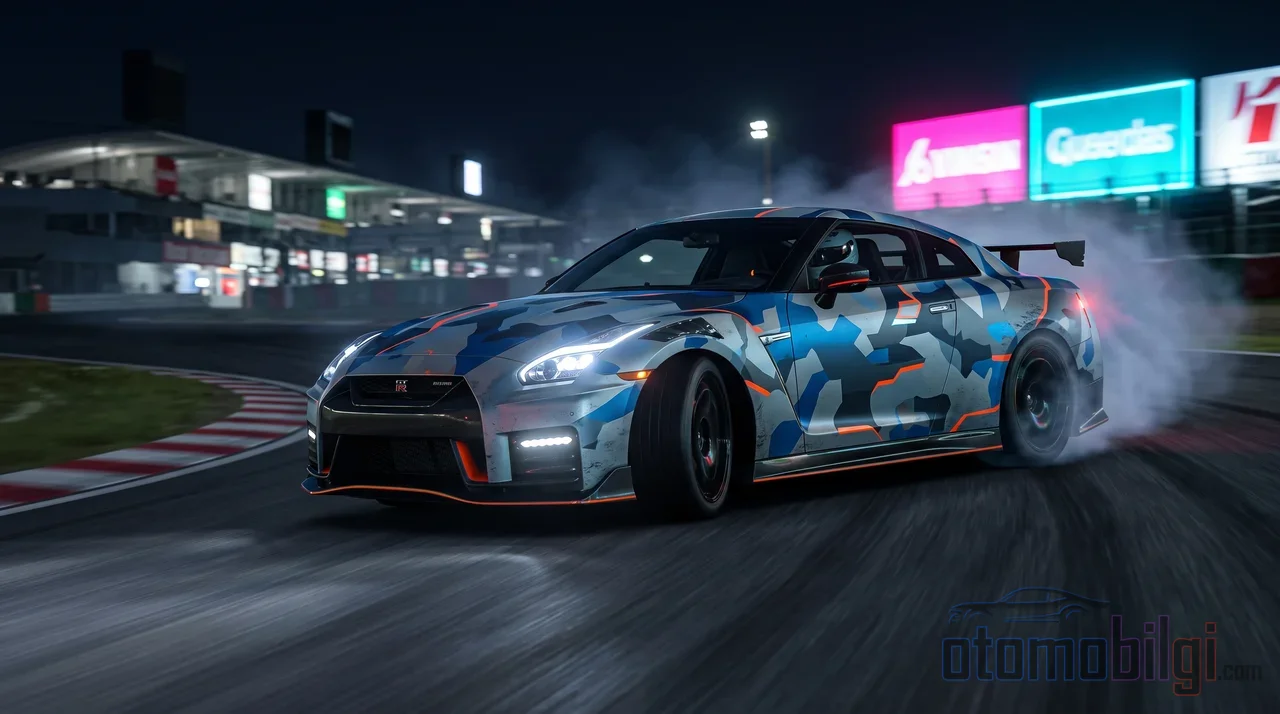
The technical heart of the matter beats here. Most AWD vehicles have a classic recipe for the conversion: you unbolt the transfer case, disconnect the front axle linkage, and you are done. But the GT-R offers no such shortcut, because Nissan chose a mind-boggling architecture for this car.
The GT-R is the first AWD vehicle to use a rear-mounted independent transaxle. Inside this transaxle structure, the transmission, clutches, central differential and rear differential all work together, integrated at the rear. In other words, since the AWD system is integrated at the rear, a simple unbolt-and-remove operation on the transmission is not possible. The person performing the conversion has to disassemble this integrated structure and build a new layout that routes power to the rear only. That is why the GT-R conversion is a project undertaken by few people, requiring both serious money and serious knowledge. In the drift community it is often said that the GT-R is not a natural drift car and that an RWD conversion is essential for it to slide properly; let us add that with its big power, it is a much happier car at the drag strip.
Is a Long and Heavy Chassis Actually an Advantage?
Here is the interesting part: The R35's long and heavy chassis creates an incredibly stable drift platform when converted to RWD. So once you handle the conversion, everything else works in your favor. In user experiences and forum discussions, the weight advantage for track use is also mentioned. But on the other side of the coin there are cost and risk: in one forum discussion, it is told how a GT-R project ironically started as an AWD drift car and was later converted to RWD. So there are even those who set out with an AWD drift attempt and ended up settling on the conversion.
Other Players in the Conversion Scene: WRX, Evo, M4 and Charger
The GT-R may be the peak of this culture, but it is not its only representative. The AWD conversion scene actually spans a much wider range, and each model brings its own story.
Subaru WRX and STI: The Most Popular Conversion Platform
On the Subaru front, the job is far more accessible than on the GT-R. All of the AWD components that drive the front wheels can be removed; this way, the car is converted to RWD and also loses weight. The common methods in the community are these: welding the central differential locked, or using a Toyota transmission or BRZ/86 drivetrain components. There are also ready-made solutions on the market: manufacturers sell RWD conversion gear sets for Subaru; optional ratios, wider and stronger gears, and the ability to convert the car back to AWD are offered. In fact, drift mode sets that send one hundred percent of the torque to the rear axle have even gone on sale for the STI. A WRX owner with 290 horsepower seeking help on forums about an RWD conversion after a transmission failure shows just how common a topic this conversion is.
Mitsubishi Lancer Evolution: A Lesson in Weight Distribution
On the Mitsubishi Lancer Evolution side, there are early examples of the conversion culture: A 2008 Evo III RS RWD drift project is one of the pioneering works of this scene. But the real lesson in the Evo conversion comes from weight distribution. According to one Evo owner's calculation, it took adding between 270-320 kg, or 600-700 pounds, to the rear to bring the car to a 50/50 weight distribution at approximately 1329 kg, or 2925 pounds. A conversion is not just about removing parts; it means rebuilding the car's balance. Since AWD vehicles are front-heavy, rebalancing after the conversion becomes critical.
BMW M4: The Exception That Needs No Physical Conversion
Here things turn upside down. The stock G80 M4 Competition is already a perfect drift platform with its powerful engine and rear-wheel-drive layout. But what about M4s with the M xDrive system? BMW offers an industrial shortcut here: a mode that requires no physical conversion and lets the driver temporarily switch from AWD to RWD. Since 2017, BMW has officially offered the ability to turn the AWD of the M5 and M8 Competition into a drift car at the press of a single button. In other words, the Bavarian manufacturer handles a garage conversion that would take months with software. The claim that the world's first AWD/RWD BMW F82 M4 was built is also circulating in videos; the community always pushes the boundaries.
On the professional side of the drift scene, the Red Bull Driftbrothers team extensively modified two BMW M4 Competition cars for the Drift Masters European Championship to adapt them to drift's special demands, and each produces 1035 horsepower. Projects like the top-exit-exhaust M4 drift car also make up the visual spectacle of this scene.
Dodge Charger: A Drift Car From the Factory
Perhaps the most fun example came from Dodge: Two SIXPACK-powered Charger Scat Packs were transformed into 750-horsepower professional drift cars for Roadkill Nights. These rear-wheel-drive Chargers fitted with manual transmissions are proof that conversion culture also finds recognition at the corporate level. So the switch from AWD to RWD sometimes comes from within the community, and sometimes straight from the manufacturer itself.
RWD GT-R Projects: Real-Life Examples
So who is actually doing this conversion? The numbers are small, but the projects are just as ambitious. Reportedly, a 1200-horsepower GT-R converted to RWD found wide coverage in videos. The 1390-horsepower GT-R drift car signed by Smokey Nagata set a high-speed drift world record on a flat and very wide track in Dubai. BMX champion Coco Zurita, alongside his story of arriving in the US with 800 dollars, added a 700whp GT-R converted to RWD - 700 horsepower at the wheel measurement - and uses it in the burnout arena.
The common point of these projects is clear: each is work that requires serious engineering, serious budget, and serious courage to overcome the GT-R's AWD architecture. And each one proves how impressive the results of the decision to make a car that once distributed power to four wheels slide only on its rear can look.
Is AWD Drift Real Drift? The Community's Debate
We cannot move on without asking this question: Can AWD vehicles drift? The answer is absolutely yes; rally, rallycross and Ken Block are the brightest proof of it. But a portion of the drift community doesn't consider an AWD slide real drifting. Even game console forums circulate the same debate: why are drift cars RWD when AWD vehicles are more powerful and have more grip, they ask. This is as much a philosophical choice as a technical fact.
On the technical side, RWD's advantages are clearly listed: easier initiation of slides, better control during the slide, and more precision in transitions. That's why RWD vehicles continue to be the kings of drifting. AWD gives you the chance to correct the car with traction support from the front wheels; drifting, on the contrary, is the art of maintaining controlled instability. Professional scoring systems reflect this philosophy too; D1 Grand Prix has already developed a prototype of an electronic scoring system based on special sensors for evaluation. Judges and sensors measure the car's angle, driving line and style; a car staying upright with the help of front-wheel traction doesn't score according to these criteria.
The Real Cost of the Conversion: Money, Effort and Determination
Let's get to the most practical side of the matter: how much does this business cost? Of course there is no fixed price list for extreme examples like the GT-R, but community experience gives us a range. Ready-made AWD-to-RWD solutions are listed in the 2150-2350 dollar plus shipping band for various platforms. If you dare to do it yourself, the cost can drop to figures like 100-300 dollars, but this time machining labor and technical knowledge come into play. For comparison: the repair of a 2006 BMW X3 with a broken transfer case naturally exceeds 3000 dollars; so for some, conversion becomes a more sensible path than repair.
There is also a critical technical warning here: software-based settings like X-delete, common among xDrive owners, unlock the center clutch and send power only to the rear; this is a practical solution but not a permanent conversion. Because the transmission output shaft directly drives the transfer case; just removing parts is not enough. For a permanent and proper conversion, a subframe swap is seen as the only way. In other words, solutions that look cheap on the market are often only the gateway to real engineering work.
So, Is It Worth Converting the GT-R to RWD? The Clear Answer
Let's give the clear answer we promised: The GT-R is converted to RWD for drifting because none of the professional drift series allow AWD, and the nature of drifting is built on the control and style that only rear-powered vehicles offer. The GT-R's integrated transaxle architecture at the rear makes this conversion one of the most technically challenging examples; but once overcome, the long and heavy chassis offers an extremely stable drift platform.
The answer to whether it's worth it depends on your intention. For drag racing, leave the GT-R as AWD; at launch, all four wheels are your best friend. But on a drift track, especially for professional purposes, RWD is the only way. And it is precisely this challenge - the fact that few dare to take it on - that makes the RWD GT-R a symbol of a prestigious subculture within drift culture. Deliberately reducing an all-wheel-drive icon to a single axle means defying engineering; and the drift community embraces exactly that spirit. Perhaps the most radical expression today of a legacy stretching from the touge mountain roads to D1 Grand Prix is this: knowing the rules and the physics, and rebuilding your car from scratch.
Sources
- Formula Drift PRO Technical Regulations 2026 V1.1
- Drifting (motorsport) - Wikipedia
- Nissan GT-R - Wikipedia
- How to prep a Nissan GT-R (R35) for track, drift & drag days - Nightdrive
- Red Bull Driftbrothers x BMW M4 Competition - BMW M
- These BMW M4 Competition drift cars have 1035bhp each - TopGear
- Dodge Charger Drift Cars Debut at Roadkill Nights - Dodge
- Subaru Impreza WRX STI RWD Conversion Benefits - AutoEvolution
- Rear Wheel Drive Conversion Kit - KAPS Transmissions
- What's this 1390bhp Nissan GT-R drift car like to drive? Smokey! - Daily Motion