How Vaughn Gittin Jr. Beat the Japanese at Their Own Game
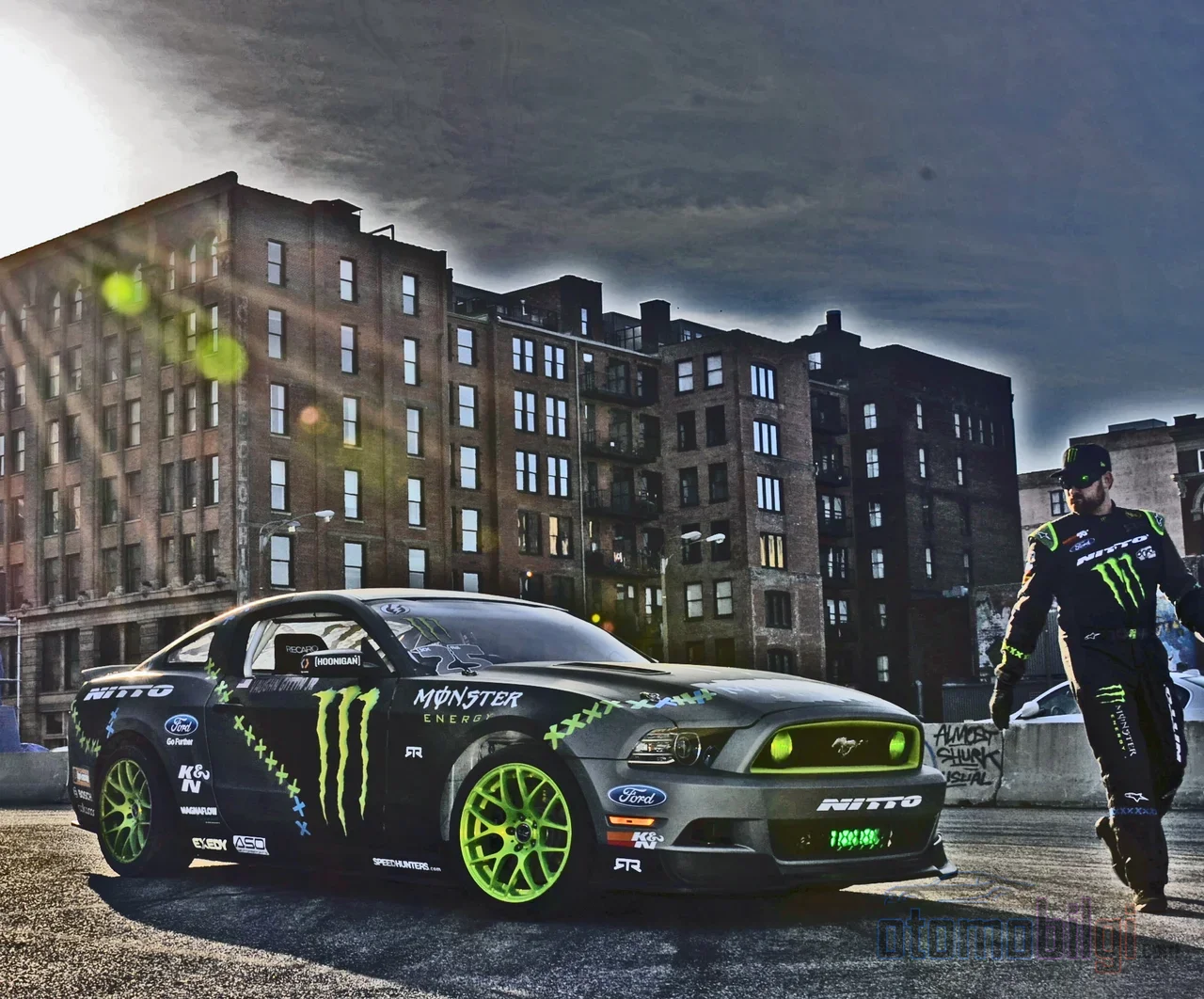
Imagine a Ford Mustang emerging from tire smoke in a parking lot. Now imagine that Mustang producing 900 horsepower, with a NASCAR-style dog-box gearbox howling behind it, and being a two-time champion in a drift series dominated by Japanese chassis. Sounds ridiculous? I think so too! But Vaughn Gittin Jr. did exactly that. So how did an American muscle car fit drifting so perfectly? Let me tell you the story, because it's a genuinely fun one.
From Nissan to Mustang: How Were the First Steps Taken?
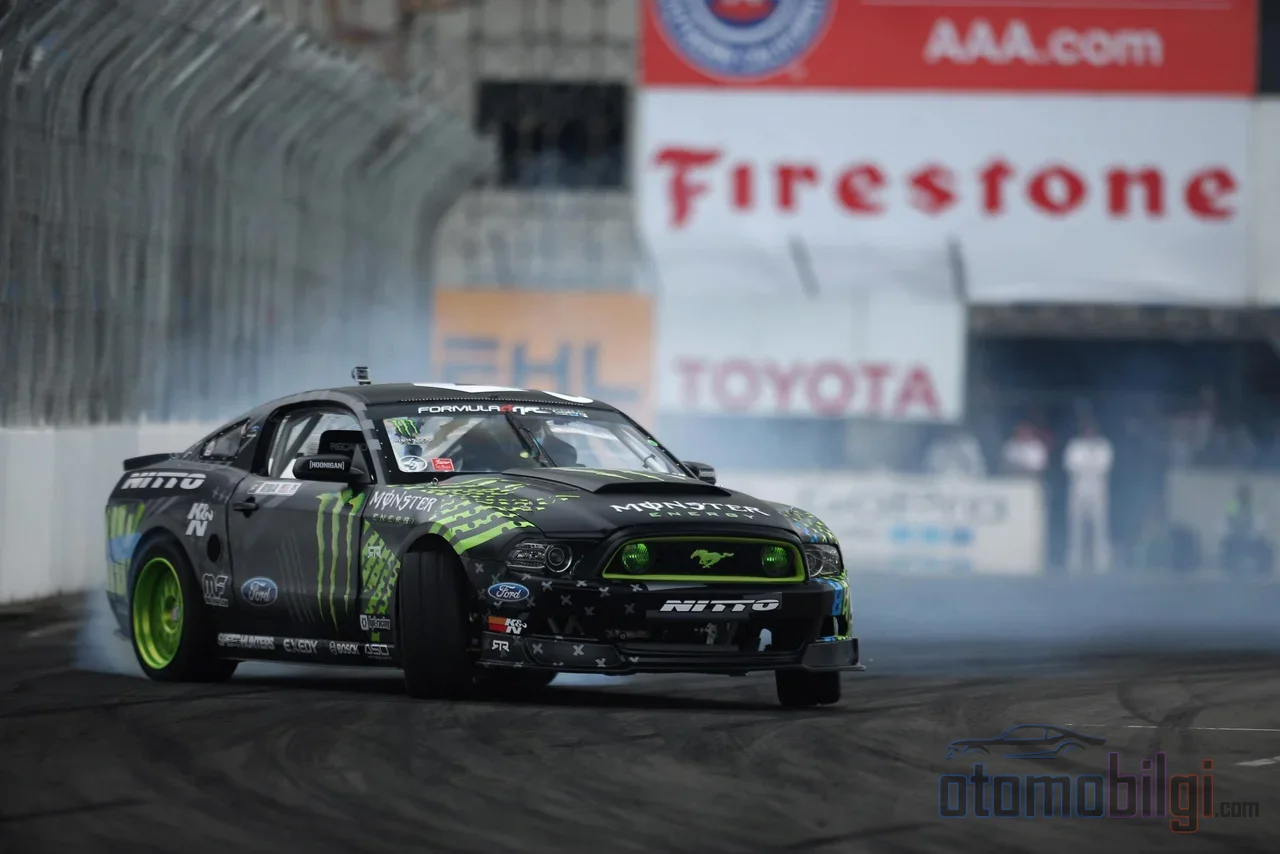
Here's the funny part: Gittin Jr. didn't actually start with the Mustang! Born on September 20, 1980, this American driver entered Formula Drift in 2004 with a hand-built Nissan 240SX (S13), under Falken Tire sponsorship. So yes, a classic drift origin story: Japanese chassis, handmade setup, wrenching until dawn. At the time, Gittin Jr. had an information technology job, but he decided to jump in and become a full-time drift driver. Courage or madness? Judging by the results, I'd say it was something in between.
Then 2005 came, and everything changed. He took the wheel of the Ford Mustang GT (S197) for Team Falken. Just think about it: in those years, the drift scene consisted almost entirely of turbocharged Japanese cars. Silvias, 240SXs, Supras... Bringing out a huge American car with a V8 engine was like being the only metalhead kid who transferred into a class. Everyone would first look at him mockingly, then watch with their jaws dropped.
Championships and Career Milestones
Making his debut with the Mustang, Gittin Jr. finished the 2006 season in fourth place, showing everyone he meant business. The real breakthrough came in 2010: With Monster Energy as title sponsor, he won his first Formula Drift championship with two event victories. That championship proved what was possible in the drift world with an American car.
Let's take a quick career tour, because the numbers speak for themselves:
- 2010: First Formula Drift championship (2 event wins).
- 2013: Founded his own team, RTR Drift Team; that same year, he received the Driver of the Year award for winning more tandem battles than any other driver in Formula Drift's first decade.
- 2011-2013: Three consecutive World Drift Series championships.
- 2020: A second Formula Drift championship exactly 10 years after his first (2 wins, 2 podiums).
And pay attention to the fourth item: two championships ten years apart. That's an incredibly rare thing in a sport like drifting, where technology and young talent are constantly changing. At the end of 2021, he stepped away from Formula Drift full-time, handing his seat over to Adam LZ on the RTR team. But the story didn't end: In 2023, he returned part-time, shared the car with LZ, and won the Atlanta round from pole position. Not bad for someone who spins in slow motion, right? Don't forget: On the D1 Grand Prix side as well, he became the first American to win a D1 round by taking the 2005 USA vs Japan showdown.
Highlights
- Two Formula Drift championships: In 2010 and 2020.
- 2016 Mustang RTR: 436 ci (cubic inch) V8, up to 900 horsepower.
- An Andrews 4-speed dog box transmission in the 2016 car.
- Current Spec 5-FD race car: An RY45 V8 producing 1,249 horsepower.
- The first American driver to win a D1 round (2005).
The Technical Setup of the 900-HP 2016 Mustang RTR
Now let's get to where the rubber meets the road, because you're reading this as a tech geek like me. Put on the dyno before the 2016 drift season, the Mustang RTR was producing up to 900 horsepower with its 436 ci V8 engine. 436 ci, cubic inches being the classic language of the American engine world; think of a displacement of roughly 7.1 liters. This engine is so big and torquey that it often doesn't need forced-induction solutions like those in Japanese cars; the massive displacement does the job on its own.
Andrews Dog Box Transmission: Why Not a Normal Transmission?
Now let's get to the really interesting part: the Andrews 4-speed dog box transmission. So what is this dog box? Let me give you a simple analogy: a normal road car's transmission matches the gears ever so smoothly with synchronizer rings; it's like a polite hotel receptionist. A dog box has none of that politeness whatsoever; the gears resemble dog teeth, engaging directly and harshly. Gear changes take milliseconds, and shifts can be made with almost no need for the clutch. In drifting, that's exactly what you need to transfer the engine's power to the tires instantly. A racing transmission type called a dog box really does exist; the name actually comes from the shape of the gear teeth.
This unit is described as a NASCAR-style racing unit, and according to the driver, the engine could comfortably rev up to 9,000 rpm all day long. This unit, which appears to have come out of a stock car, was configured for drifting's constant loads and sudden gear demands. In short, you can't push an ordinary road car's transmission this hard; it would turn into strawberry jam within a few laps.
The car's looks were no ordinary either: dark Monster Energy graphics, neon green wheels, and a Recaro seat inside. A race car isn't meant for display anyway, but this Mustang had so much character that everyone sat up the moment it hit the track. If you're curious: Gittin's 2017 Mustang RTR Spec 2 was a completely different beast; a 5.0-liter crate V8 (that is, the crate engine concept), 460 horsepower, and a six-speed manual. So there was a clear line between the race cars and the road cars.
American Muscle Car Against Japanese Chassis
Drifting's origins go back to Japan: it was born on mountain roads, the narrow, twisty roads known as touge, then turned into an organized sport with D1 Grand Prix and spread around the world with Formula Drift. That's why, in the beginning, the field was almost entirely filled with Japanese cars. It was precisely in this environment that Gittin Jr. became known for introducing American cars, and the Mustang in particular, to the field. As MotorTrend reports, we are talking about transforming a field consisting entirely of turbocharged Japanese import cars.
So why did the Mustang work? I think there are three reasons: First, its huge V8 engine produces satisfying torque even at super low revs, making it ideal for sudden transitions. Second, that natural sound! The V8 roar that explodes at full throttle shakes the field compared to the chirpy sound of a four-cylinder turbo engine. Third, it matches Gittin's driving style perfectly: the description repeated in his official biographies, aggressive, meaning flooring the throttle and producing plenty of smoke. This style once again parallels the character of the big-displacement engine.
The impact of this approach on Formula Drift is undeniable. Today, American cars have become commonplace in the series, and even some Japanese teams have begun experimenting with V8 engines. In 2024, Ford won the Formula Drift Manufacturer's Championship with the seventh-generation Mustang, and Gittin's 2023 return paved the way for it. It would not be an exaggeration to say that the verdict on the muscle car in drifting has long since come out in its favor.
Current Cars: Spec 5-FD and Spec 5-D
The current side of the story is also striking. In the 2026 season, Gittin is in the PRO series with the Monster Energy Ford Mustang RTR Spec 5-FD. This car produces 1,249 horsepower and houses a RY45 455 ci V8 built in collaboration between Ford Racing and Wilkins Racing Engines; with MAHLE internal components, Pennzoil 10W-60 oil, NGK spark plugs, and a Holley nitrous system. The engine brain is a Motec M150 ECU. On the suspension side, BC Racing ZR-Type coilovers; on the body, RTR Spec 5-FD carbon fiber wide-body panels; Nitto tires, and RTR Aero 5 wheels. Inside the cabin, Recaro seats, an MPI steering wheel, and Schroth harnesses. So the era of 900 horsepower is now a thing of the past; 900 can be considered the baseline for today's race car.
| Feature | 2016 Mustang RTR | Spec 5-FD (2026) |
|---|---|---|
| Engine | 436 ci V8 | RY45 455 ci V8 (Wilkins Racing Engines) |
| Power | up to 900 horsepower | 1,249 horsepower |
| Transmission | Andrews 4-speed dog box | Race transmission (dog box variants used) |
| Sponsor graphics | Monster Energy | Monster Energy |
| Seat / safety | Recaro seat | Recaro seat, Schroth harnesses, MPI steering wheel |
Let me note one thing: In the car named RTR Spec 5-D, MotorTrend points to an H-pattern style transmission, while Gittin's videos mention dog box variants. This is not a contradiction, it points to different cars and years; the team has multiple transmission concepts in its drift-spec Mustangs. Gittin has covered this topic in detail in his videos, and even made a post titled "How to Choose a 4 Speed Transmission" (October 2026). He also shared that in June 2026, he drove the 1,005-horsepower Spec 5-D on the 1.7-mile, 19-turn track at Ten Tenths Motor Club. This man literally never rests!
RTR: From Drift to Road Car: The Brand's Journey
He didn't just drive - he became a brand founder too. In 2009, he founded RTR Vehicles; RTR stands for "Ready To Rock," meaning ready to rock. The first product was the carbon-bodied Mustang RTR-C, unveiled at the 2009 SEMA show and limited to just 10 units. But RTR's real mission was even more interesting: reviving the younger generation's interest against Ford's aging customer base. So this success story from the drift scene directly became the source for how they would market the Mustang to a new generation. The marketing savvy learned from drifting turned into factory products years later: In 2025, the official Ford Mustang RTR production model was announced, and in 2026, the Bronco RTR.
My favorite detail is this: In 2023, Ford and RTR developed the "Drift Brake" for the seventh-generation Mustang. It's not a physically cabled handbrake; the electronic parking brake overrides the stability control system and locks the rear brakes with hydraulic pressure. In other words, it electronically mimics the hydraulic drift brake in a race car and provides more than three times the braking force. In short, a solution developed on the track now works in the school parking lot too. May the car learn from drifting, and be a true expert on the highway as well.
Vaughn Gittin Jr. Why Did He Switch to the Mustang? The Short Answer
Let's return to the original question: why, and how, did Vaughn Gittin Jr. turn a Mustang into a drift car? The short and clear answer: In 2005, he moved to the S197 Mustang GT with Team Falken, because in a field of turbocharged Japanese cars, the huge V8 torque and distinctive sound of an American muscle car perfectly matched his aggressive, smoke-heavy driving style; with two Formula Drift championships (2010 and 2020), he proved how right that choice was. The 900-horsepower 2016 car with Andrews dog box transmission became one of the technical peaks of this story, and today he's still on track with the 1,249-horsepower Spec 5-FD.
His career also includes Ultra4/King of the Hammers crossovers, NASCAR Canada, Trans Am, and other diverse fields; in fact, in 2019 he achieved a 7th-place finish in the 4400 class, the best result by a crossover driver in history. So this man never liked staying on a single path. But in my view, his true legacy is this: he brought an American heart into the drift scene and showed that this heart beats strong for everyone. Do you think a fully electric drift Mustang will ever reach the same popularity? I'm eagerly awaiting that day!