How Did Daigo Saito Become a Global Drift Name?
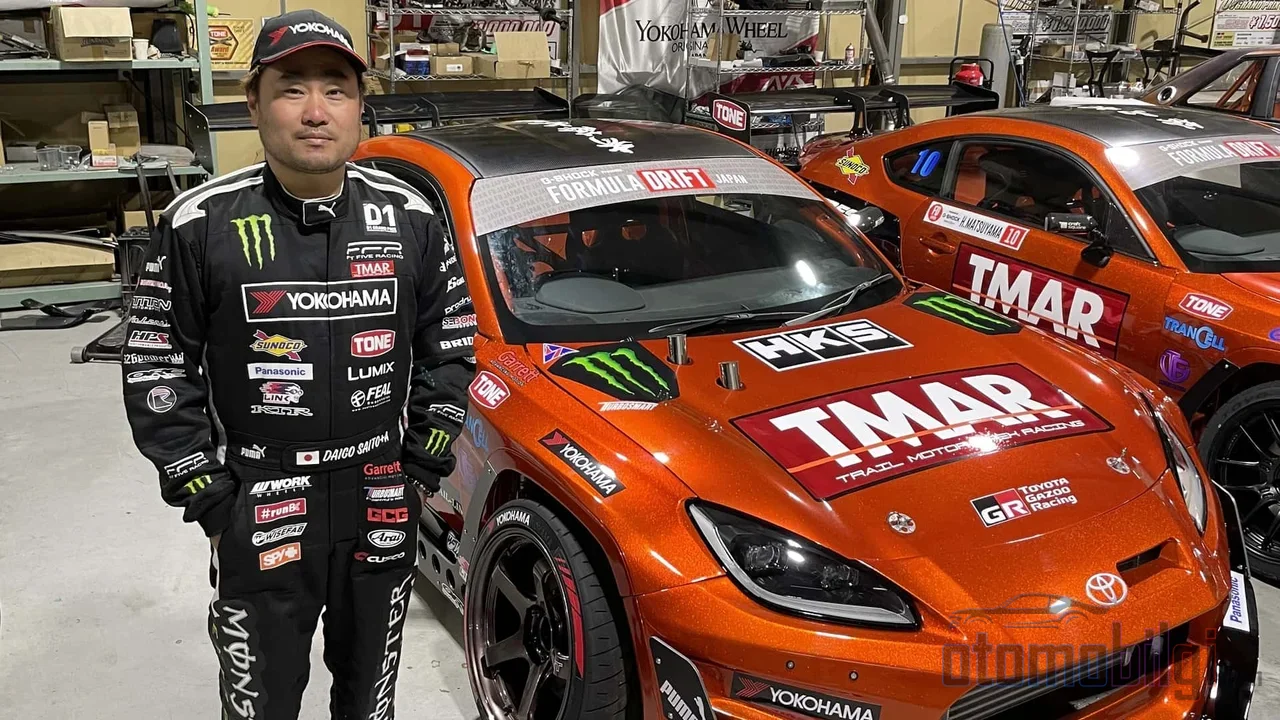
Imagine you're in Japan in 2008. A young man working as a driver at a kindergarten wins the D1GP championship. And that's just the warm-up lap of the story. Four years later, the same name crosses the ocean and wins the Formula Drift championship in its first season - and with a car powerful enough to change the history of the series. Yes, a single driver won both major drift championships, and the only name to have achieved this remains: Daigo Saito. So how did this kid become the most closely scrutinized driver in the drift world? Let's start from the beginning.
How the Drift Passion Began: The First Cars Wrecked
Daigo Saito was born on March 7, 1980, in Saitama. Thanks to his father, he became interested in motorcycles at a young age and got his motorcycle license at 16. But that wasn't the moment that changed his destiny. He made his decision when he witnessed a white Mercedes-Benz sedan drifting in the hills of Karuizawa: he would drift too.
His father was against drifting, so he bought him a Mini Cooper. Saito, of course, tried it and wrecked the car in an accident. There was no giving up; this time he bought a Nissan Silvia S13 without his parents knowing. His first practice session lasted a full 36 hours nonstop. A few weeks later, he wrecked that car in an accident too. Sounds like a disaster, doesn't it? But it was precisely this stubbornness that planted the seeds of a driving style that would later shake the world stage.
The D1GP Era: How Was the JZX100 Legend Built?
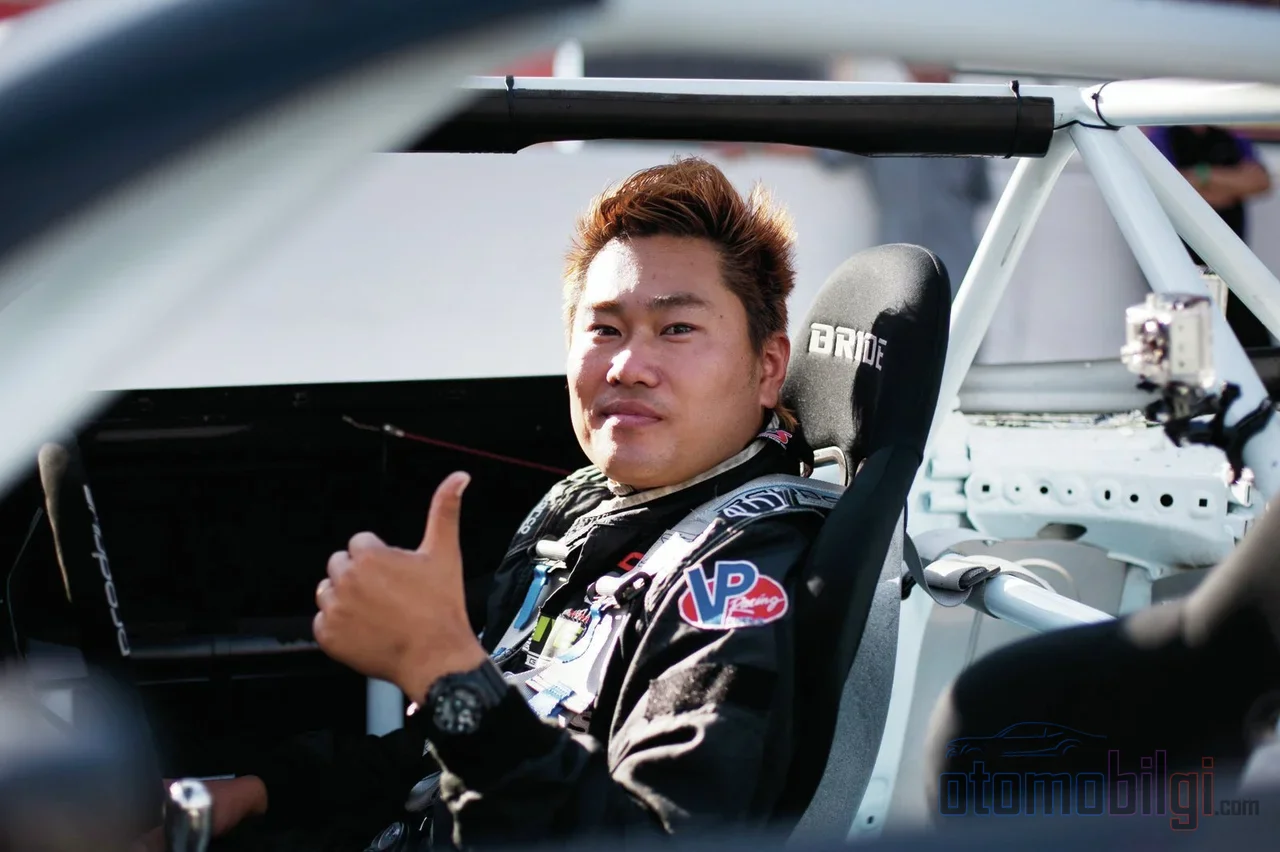
Saito stepped into D1GP in the third round of the 2004 season with a Toyota Mark II JZX90. After the crash with Kawabata at Fuji in 2007, he left the JZX90 and switched to the JZX100 Mark II. This switch was the most important technical decision of his career, because the JZX100 platform transformed into a drift icon along with him.
The numbers don't lie: Between 2006 and 2016, he raced with the JZX100 platform for 11 seasons and collected 15 round victories in D1. In 2005 he won the privateer title, and in 2008 he reached his first D1GP championship. The fact that the young man who had previously wrecked first a Mercedes and then a Silvia worked as a driver at his parents' kindergarten during his championship year adds a bittersweet touch of reality to the story.
Highlights
- Daigo Saito is the only driver in history to win both the D1GP (2008, 2016) and Formula Drift (2012) championships
- 11 seasons with the JZX100 platform and 15 D1GP round victories
- In 2012 he entered Formula Drift with a 1,200 hp Lexus SC430 with a 2JZ-GTE and became champion in his first season
- His 5-victory D1GP season in 2016 could only be matched in 2021
- A total of 20 victories in D1GP over his career
2011 and 2016: Two Peaks, Two Different Stories
2011 saw D1GP's first Tanso (solo run) champion: Daigo Saito added this title to his trophy cabinet as well, with the Toyota JZX100 Chaser. He won the Tanso championship once again in 2016.
The 2016 season, however, is a legend of its own. He won the first two rounds of the season, beating the future champion Masato Kawabata in both of them. When Mark II was banned due to regulations, he switched to the JZX100 Chaser and won three more rounds. The championship was guaranteed with one round to spare. This record of 5 wins in a single season could only be matched by Masanori Kohashi in 2021. There were also tough moments squeezed in between: In 2013, just before the season finale, the garage where his car was kept burned down, and Saito had to borrow his crew members' car for the final. That same year, he founded the Fat Five Racing shop; step by step, he was building his own empire.
The Formula Drift Adventure: Champion in His Rookie Season
In 2012, Saito joined Formula Drift with the Achilles Radial Lexus SC430. The car was prepared from scratch by his own team, completely stripped down to the bare shell; it carried a Toyota 2JZ-GTE engine compliant with Formula D rules. He opened his first event at Long Beach with a podium finish; he took first place at Palm Beach, and by winning the season finale at Irwindale as well, he claimed both the championship and Rookie of the Year in his first season. That was an almost unthinkable achievement at the time.
In 2013, he finished the season third; he won at Atlanta, New Jersey and Irwindale, and took second at West Palm Beach. But a crash during practice in Seattle and car trouble in Texas ended his chance at back-to-back championships. In 2014, he finished the season 14th, yet still took the win at Irwindale. In 2015, he took to the stage at Long Beach with the 1,200 hp Nissan GT-R built in partnership with HKS. The Formula Drift return planned for 2020 was canceled due to the pandemic, just as the 2JZ-powered Toyota GT86 was being shipped to the US. In 2025, his return was announced: he would take the stage once again with his high-horsepower style.
The Daigo Effect: How One Driver Changed an Entire Series?
Here is the most striking part of the story. Until 2012, most Formula Drift teams were racing with cars of around 500 hp. Saito showed up with a heavily modified, 1,200 hp SC430 with a 2JZ-GTE, and the series was shaken from its scoring criteria to its car rosters. This transformation was so pronounced that the Formula D press even gave it a name: the Daigo effect.
Let's make a simple analogy: think of it as someone showing up on an electric motorcycle while everyone else is racing on bicycles. It's within the rules, but it changes the game fundamentally. Saito's aggressive driving style showed that close proximity and consistent drifting should be the main criteria in scoring; tandem, or two-car drifting - the heart of scoring in Japan - took even deeper root on US soil thanks to this. In the 2013 season, most teams added hundreds of horsepower. Formula Drift's official account describes him as the man drivers work for. He is the driver the pilots you love grew up watching videos of.
Car Collection: From V8 Swaps to a Lamborghini
Saito's career is also an engineering exhibition. In 2015, he developed the drift world's first drift-spec Lamborghini Murcielago, and the Monster Energy sponsorship began. In 2017, he drove a non-Japanese-brand vehicle for the first time in his career: the Chevrolet C6 Corvette GT3 with an LS engine. With this monster of about 800 hp and 900 kg, he made the final in only his third race, took his single win at Ebisu, and finished the season third. From 2019 onward, he has been using a Toyota GR Supra in D1GP; while planning a Eurofighter BMW E92 M3, he switched in this direction thanks to Toyota's offer and took his first win in 2021 with his third GR Supra chassis.
His appetite for engine swaps knows no bounds. He signed a Toyota swap project that doubled the cylinder count and pushed output to the 1,000 hp level. His current D1GP car, the GR Supra, is listed with a 2JZ inline-six engine. In short, for Saito, the engine bay is a laboratory where more is always being sought.
| Vehicle | Period | Highlights |
|---|---|---|
| Toyota JZX100 Chaser/Mark II | 2006-2016 | 11 seasons, 15 D1GP wins |
| Lexus SC430 (2JZ-GTE) | 2012-2014 | 2012 Formula Drift championship |
| Nissan GT-R | 2015 | HKS partnership, 1,200 hp |
| Chevrolet C6 Corvette GT3 | 2017 | LS engine, about 800 hp |
| Toyota GR Supra | 2019- | D1GP and FD Japan with the 2JZ |
International Stage and Viral Moments
Saito's influence is not limited to Japan and the USA. In Formula Drift Asia, he won the championship three times in a row in 2011, 2012 and 2013. In 2018, he won the RWD class at Gymkhana Grid, and that same year finished second in the Russian Drift Series with his JZX100 Mark II. In 2019, he raced in Russia with a Toyota Altezza, and returned in 2021 with the GR Supra. On the European side, he announced participation in the King of Europe final rounds with the SC430, and also took part in the 2025 season of Drift Masters with the GR Supra. Joining the Red Bull Drift Shifters in Auckland, New Zealand in 2012 with his JZX100 Chaser was also part of his international calendar.
As for the viral side: In the 2015 Battle Drift video, he performed touge drift with a Lamborghini Murcielago against Vaughn Gittin Jr.'s Ford Mustang RTR in an abandoned Russian village in Niigata, and that video was watched more than 40 million times. The Fat Five Land facility in Tokyo also offers drift tours with MX5s on its own private track; so the legend no longer just competes - he also runs a venue that keeps drift culture alive.
How Did Daigo Saito Become a Global Drift Name?
The clear answer to the question is this: Daigo Saito became the only driver in history to win both major drift championships by taking the D1GP title in 2008 and 2016 and the Formula Drift title in 2012; with his 1,200 hp SC430, he changed Formula Drift's power and scoring philosophy, and with swap projects stretching from the JZX100 Chaser to the GR Supra, he became a worldwide icon.
Still on the stage in 2026: In D1GP, under WEINS Toyota Kanagawa x Oreda! Racing, he uses the 2JZ-powered GR Supra with Valino tires. He also races with his teammate Hokuto Matsuyama in Formula Drift Japan. The round in which he took two wins in a row at Tsukuba in 2024 shows that the energy of the young man who once trained uninterrupted for 36 hours has still not stopped.
This journey, which began with a scrapped Mini Cooper and stretched from kindergarten driver to world champion, proves that drifting is both a sport and an art. Daigo Saito's greatest legacy is not the trophies in the archives: the scoring weight given today to high-horsepower cars and close tandem battles on the Formula Drift circuit is largely the result of his bold move in 2012. Next time you watch a drift video, remember this: that driver learned their style from somewhere. And there's a good chance it was from Daigo Saito.