What Kind of Passion Is Remote-Controlled Drifting?
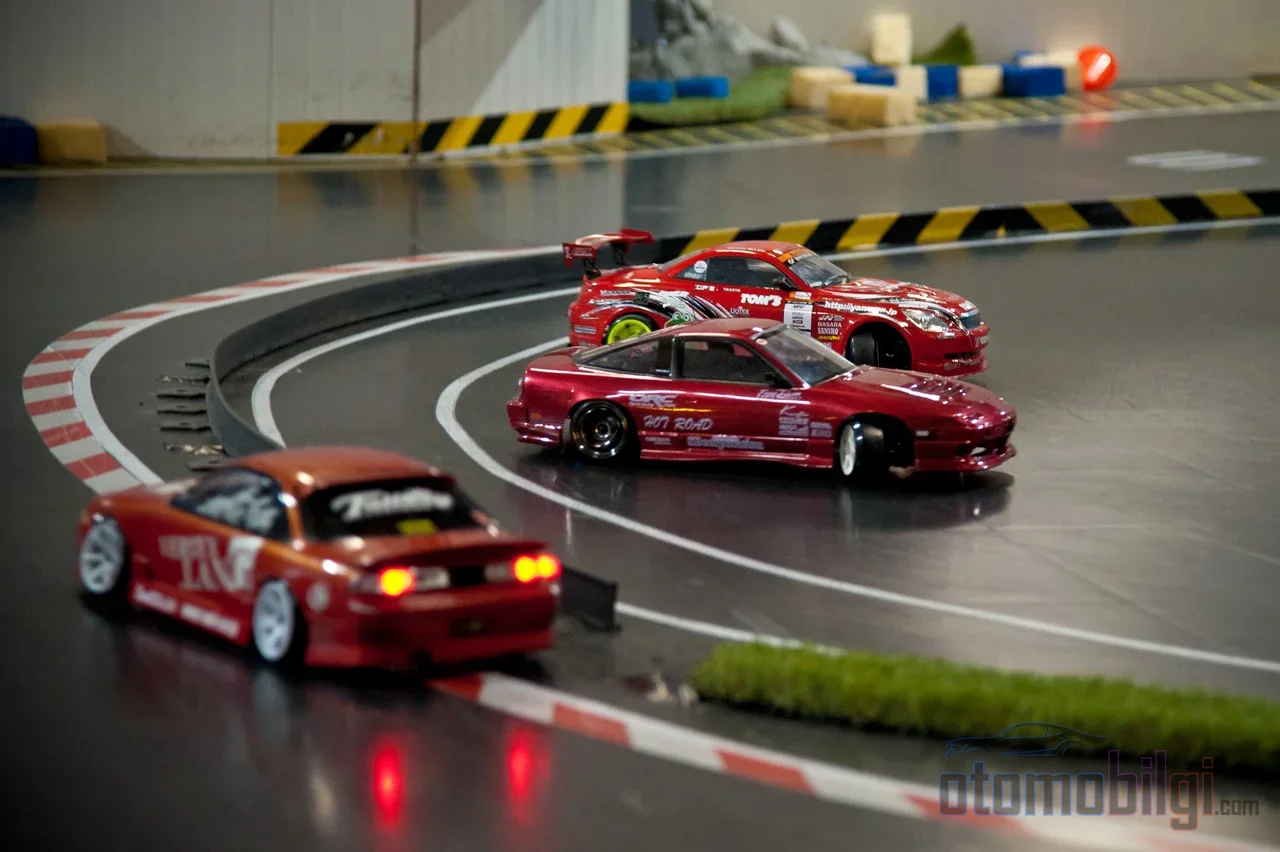
Just imagine: you picture a car sliding down a mountain road with its rear tires shrouded in smoke, then you open your eyes and there is a remote control in your hand. On the table, a perfect miniature of a real drift car sits quietly waiting for you, with its front wheels turned in the opposite direction. Yes, R/C drift is exactly that - a miniature version of drift culture, but never watered down. So how can a car with wheels just a few centimeters across carry the sense of angle, line, and flow found on a real track? That question is the beating heart of the hobby.
The most surprising thing about this hobby is this: your remote-controlled drift car wears plastic tires, not rubber ones. Not rubber! And for someone trying drift for the first time, there are two separate worlds: easy-sliding AWD chassis and RWD chassis for those seeking the feel of a real car. Which one is right for you? The answer is more interesting than you think, because this question is still debated within the community. So let's start from the beginning.
From Mountain Roads to the Desktop: The Miniature Wing of Drift Culture
Drift was born on the mountain roads of 1970s Japan, on the touge. As drivers tried to take corners with their rear ends sliding out, this practice gradually turned into an official discipline. On the touge, precision mattered more than power; so drift was never just a horsepower contest. In 1999-2000, the first professional drift competitions were held in Japan, and over time these evolved into the D1 Grand Prix series. Today, Formula Drift, which welcomes drivers from all over the world, stands as the flagship of the sport.
R/C drift sits right in the middle of this story. What you do on the miniature track - holding the angle, staying true to the line, flowing side by side with another car - is a perfect reflection of real drift's scoring logic. In real series, judges award points based on criteria such as line, angle, and style; under Formula D's current regulations, line gets 40%, angle 30%, style 20%, and the remaining 10% goes to a component left to the judges' own discretion. Nobody gives you points on the miniature track, but you still look at the same three things: did I slide on the right line, is there enough angle, were the transitions smooth? That is exactly why R/C drift is not a toy, but a training ground for drift culture.
Key Highlights
- R/C drift tires are made not from rubber, but from hard plastic compounds like PVC and ABS - hard plastic.
- AWD makes sliding easier, while RWD gives the feeling closest to real car drifting.
- On RWD chassis, a gyro, that is a gyroscope, is practically a mandatory component; on AWD it is not needed.
- Yokomo, MST, Tamiya, Overdose, Team Associated, and HPI are among the hobby's leading manufacturers.
Why Are the Tires Plastic? The Secret of PVC and ABS
A real drift car slides by managing its grip on the road; an R/C drift car, on the contrary, slides by deliberately reducing grip. That is why the best R/C drift tires are made not from rubber, but from hard, slippery plastic compounds. The goal is for the car to lose grip in a predictable way. The more consistent the grip, the more predictable your control will be - just like a real car that behaves the same on every lap of the track.
Two materials stand out here: PVC and ABS. PVC pipe is the classic and cheap drift tire solution, but it is considered a bit too slippery for experienced users. ABS, a chemically slightly different plastic pipe, behaves more softly and, being longer-lasting, offers a better choice for most people. The general rule is this: as surface grip increases, you move toward a slightly softer tire; hard PVC and ABS tires already slide by design.
Tire choice also goes hand in hand with the surface: hard compounds are suited to abrasive surfaces like asphalt and concrete, while softer compounds are suited to polished surfaces. And a warning: drift tires wear out quickly; starting without a spare set is fooling yourself. In fact, the plastic tire is the car's number one tuning element; your grip, your corner-entry speed, and your drift quality depend largely on it. Before you change the motor, think about your tires.
AWD or RWD? The Right Chassis for a Beginner
The short answer to the question is this: AWD if you just want to slide, RWD if you really want to learn drifting. Since AWD chassis provide drive to all four wheels, sliding the car sideways is very easy; the learning curve is gentle, a gyro is usually not needed, and the entry cost is lower. On the other hand, steering angles are more limited and the feel is somewhat less realistic.
RWD is a whole different game. Drive is only at the rear wheels; keeping your car in the corner relies on steering control, throttle sensitivity, chassis setup, and an assistant called a gyro. The heart of RWD driving is the counter-strafe, that is, turning the front of the sliding car against the direction of the slide. You do with your fingers exactly what a real drift pilot does in the seat. Although starting with AWD and then moving to RWD is seen as the standard path in the community, it is not mandatory: starting directly with RWD is also possible; you just need to choose a ready-made chassis wisely. In fact, the two systems are thought of not as different difficulty levels but as different driving philosophies.
| Feature | AWD | RWD |
|---|---|---|
| Drive | Four wheels | Rear wheels only |
| Sliding | Easy and fast | Technical and controlled |
| Gyro | Usually not needed | Practically mandatory |
| Counter-strafe | Less critical | The heart of driving |
| Entry cost | Lower | More expensive with gyro and setup |
| Realism | Less angle | Close to real car drifting |
Is the Gyro a Cheat or the Chassis's Assistant?
When you step into the RWD side, the gyro comes your way: a small gyroscope that detects the chassis's rotation and sends an automatic counter-strafe signal to the front wheels. When the car turns right, the front wheels point left; when it turns left, they point right - at a speed your finger simply cannot keep up with. Think of it as the inner reflex that keeps your balance while riding a bicycle: the gyro makes micro corrections in your place, but the big decisions still stay with you.
Gain tuning is the subtle side of the job. You start in the middle; if the gain is too high, the front wheels twitch while the car drives straight, and then you reduce it. If the gain is too low, the car spins easily, and then you increase it. Also, mounting the gyro flat and solid is a must; a loose gyro mistakes vibration for rotation and ruins everything. Testing whether you installed it is easy too: when you turn the rear by hand, the front wheels should point in the opposite direction.
Within the community, gyros are still debated: some see using one as cheating, but the practical reality is that learning RWD without a gyro mostly turns into a lesson in spinning. The common view among experienced hobbyists is clear: a gyro is not a cheat, it is a tool. Just like the assists in real drift cars, it is there to make you a better driver.
Which Brand, Which Budget? Chassis Guide
The hobby's brand map is broad, but a few names stand out. Yokomo and MST sit right in the middle of the drift market: just below the boutique brands, a big step above budget kits. MST's RMX series is one of the shining products of this segment; MST's product range also offers different layouts such as a front-motor tube chassis. Overdose is a more boutique name followed by enthusiasts; among the chassis most mentioned in community discussions are Overdose's Galm, Shark chassis, and Team Associated products.
One of the most practical examples for beginners is the Yokomo Rookie Drift RD2.0: it combines a fully adjustable chassis with a pre-cut and pre-painted body; so you learn to make adjustments while also having a look straight out of the box. In the budget-friendly kit category, the Tamiya TT-02D Drift Spec has long been considered a classic - with its shaft-driven 4WD layout, resin differentials front and rear, CVA oil shocks, and wide drift tires, it is a complete drift package on the table. Team Associated and HPI are among the brands frequently looked at by those seeking ready-to-run (RTR) sets.
Should You Buy RTR or a Kit?
RTR sets, that is, ready-to-run cars out of the box, are ideal for those who want to start quickly and try things out with an already tuned gyro. A kit, on the other hand, lets you get to know every part one by one, and you see the payoff of your tuning directly on the track. In terms of budget, the general rule is simple: AWD usually offers a cheaper start, while RWD costs a bit more because it requires a gyro and setup. Even the cheapest RTR approach is possible - in the community there are people who start with a simple entry-level chassis and add a gyro, drift tires, and a brushless system. So the hobby's entrance gate is truly wide; how deep you want to go determines how far your wallet will open.
Track and Practice Plan for Your First Belt
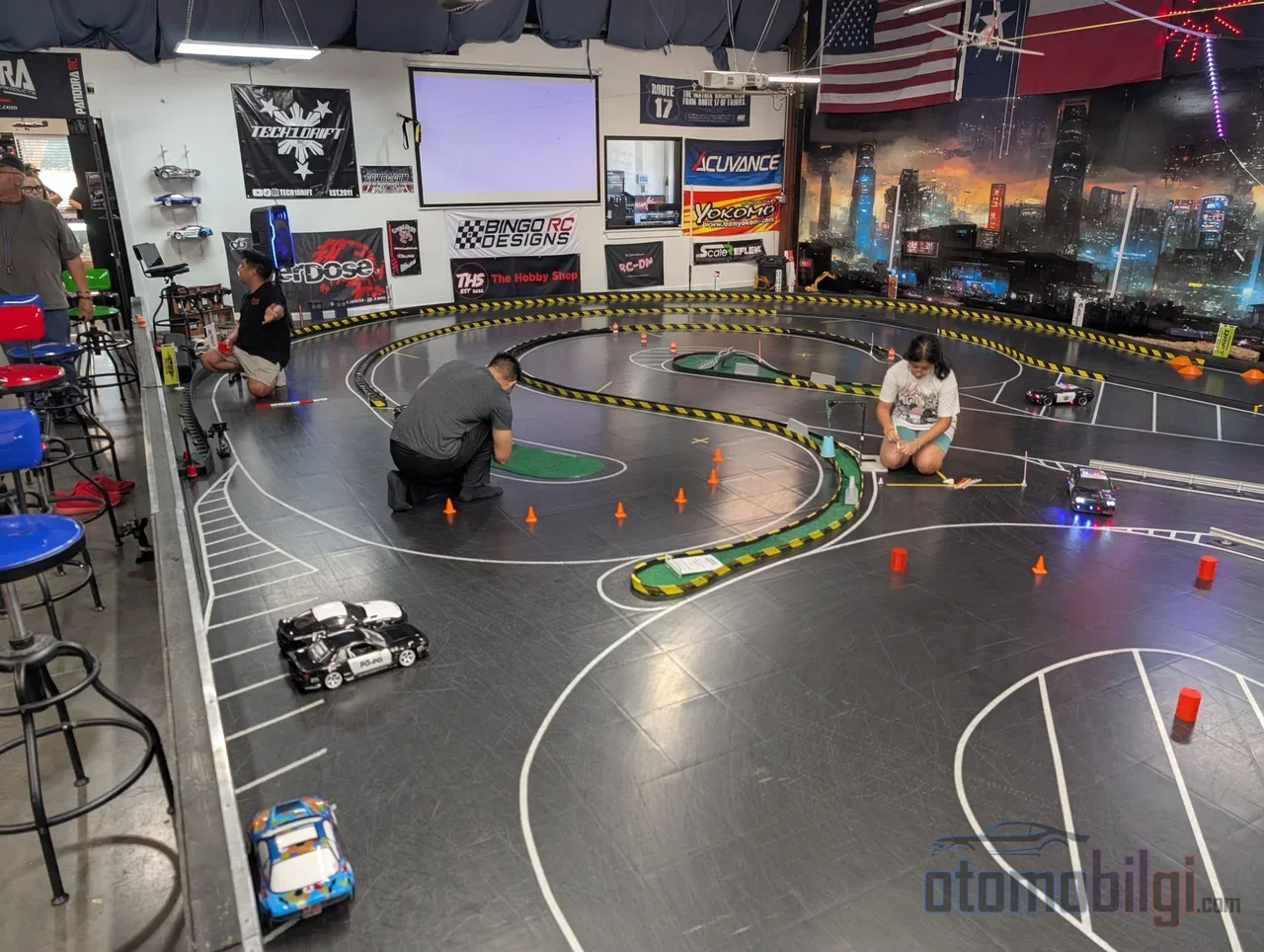
The most critical yet least discussed topic in R/C drifting is the surface. Ideal surfaces are polished concrete, dedicated plastic track surfaces, and consistent materials like P-Tile. Dust and gravel ruin consistency, so closed tracks are the best. The moment the surface changes, the tire's behavior changes, so being consistent on the surface you practice on is half the battle. Even in your own room, if you find a clean, smooth surface, you can do your first slides.
So what should you start with? The community's classic practice progression works like this:
- Slow donuts around a cone - in both directions, until the car slides exactly when you want it to.
- Figure-8 with two cones: it teaches transitions, meaning swinging the slide from one direction to the other.
- Four-cone box drill: cornering with slides, instilling awareness of angle and line.
- Steering with throttle only: changing the car's direction with the rhythm of the throttle without ever touching the steering.
- Line following: sliding along a line on the ground from end to end.
The simplest way to start your first drift is this: press the throttle as you enter the corner. The moment the wheels lose traction, the rear starts to slide, and right then you experience the feeling a real drift pilot lives for. At first the car will spin constantly, and that's normal. Every spin is a lesson about your gyro gain and throttle sensitivity.
Is RC Drifting a Passion?
Our answer is clear: yes, because this hobby fits all the intelligence of real drifting into a body just a few centimeters long. Angle, line, fluidity, counter-steer - this is the only way to experience the scoring logic and technical depth of a real track on a miniature scale. With AWD you get an easy and fun introduction, with RWD you learn real piloting; and thanks to the predictable slide of PVC and ABS tires, every mistake teaches you a clear lesson. What's more, this tabletop discipline is bringing new generations into drift culture: someone watching D1 Grand Prix and Formula Drift on screen finds the chance to become part of that culture on their own miniature track. This passion, starting at the fingertips of a fifteen-year-old, can be the first training ground for tomorrow's real track drivers - and maybe your first slide will one day be the opening sentence of a story you tell at a track.
Sources
- RWD vs AWD RC Drift: What's the Difference? | ArkEdge RC
- RC Drifting for Beginners: RWD vs AWD, Gyros and Drift Tires | Atlanta Hobby
- Best RC Drift Chassis: RWD vs AWD Compared (2026) | RCCarsGuide
- The 7 Best RC Drift Cars for Beginners (RTR & Kits) in 2026 | Eurorc
- Our Simple RC Drift Car Guide | Hearns Hobbies
- How To Choose RC Tires | Horizon Hobby
- RC Car Drift Guide | Oyuncak Hobi
- Drifting is going big... | Red Bull
- D1 Grand Prix | Wikipedia
- Formula D introduces new regulations for scoring and judging | Drift.News