Why Is a Dog Box Transmission Preferred in Drifting?
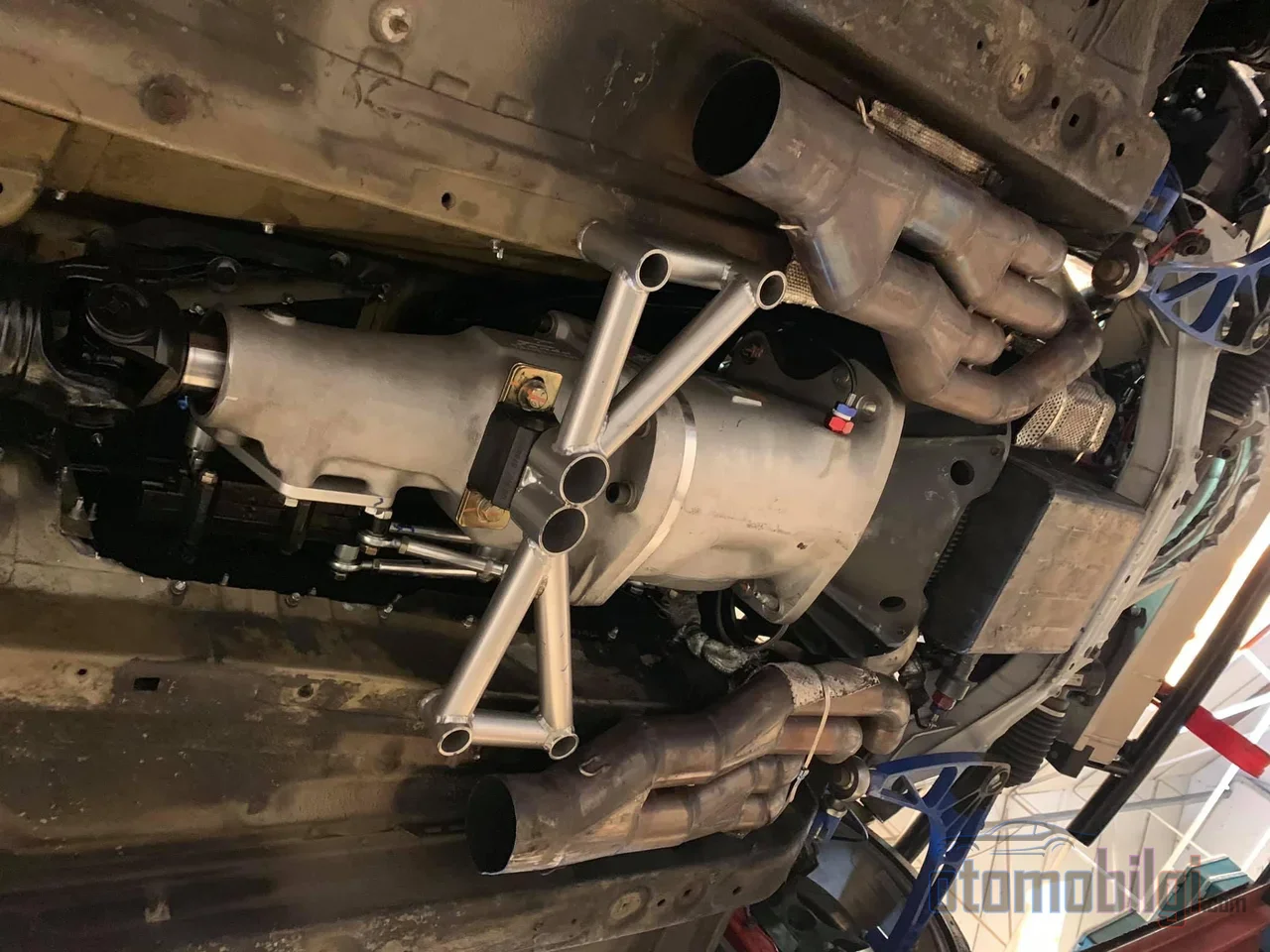
You are cornering at a 90-degree angle, tires smoking; the engine is howling at 8,000 rpm, and a moment later you need to shift to a longer gear. So what do you do? Will you press the clutch and upset the car's balance for a second, or will you trust the slow engagement of the synchromesh box and let the revs drop? This is exactly where the drift world found an answer years ago: the dog box transmission. On this page, we will explore together the technical reasons why drifters take gearbox choice so seriously, from close gear ratios to the cost of sequential boxes. If you are ready, we are diving into the world of clunks.
What Is a Dog Box Transmission, and How Does It Differ From Synchromesh?
First, let's make a simple analogy: think of a synchromesh transmission as a mediator that gently equalizes the speeds of two gears. When you push the gear lever, brass rings and a friction mechanism slowly bring the gears to the same speed; that is why shifting gears in a normal car is quiet and smooth. In a dog box, however, this gentle mediator does not exist. The drive dogs that stick out beside each gear engage directly with a dog ring that locks onto the gear. The speeds of the gears are not politely equalized; they meet through mechanical contact, a bit harshly but very quickly.
The drive dogs have a slight taper, known as a back cut. Once the gear is engaged, the engine's torque pushes these teeth inward; power transfer is not interrupted. The logic is actually similar to a bicycle's gear mechanism: as long as you keep pedaling, the chain does not come off. But every coin has another side: in a dog box, every gear change comes with an audible clunk sound, and if you shift slowly and hesitantly, the dog teeth collide with each other instead of settling into their sockets. The result? Rapid wear. That is why the dog box is a creature designed for racing, not for daily cars.
Highlights
- A dog box is a transmission that engages with dog teeth without using synchromesh; gear changes can be tuned down to the 30-80 millisecond level.
- In drifting, the goal is to keep the engine in its power band by minimizing the drop in revs during gear changes.
- Formula Drift driver Fredric Aasbo drifted in his Toyota Supra for 9 months with a dog box without ever touching the clutch.
- A new dog box starts at USD 5,400; top-tier sequential dog boxes are marketed with a tolerance of 1,800 ft-lbs of torque.
- Gearbox choice is directly connected to differential choice: welded diffs, 2-way LSDs, Torsen and Quaife all have different balances.
Why Are Close Gear Ratios So Critical?
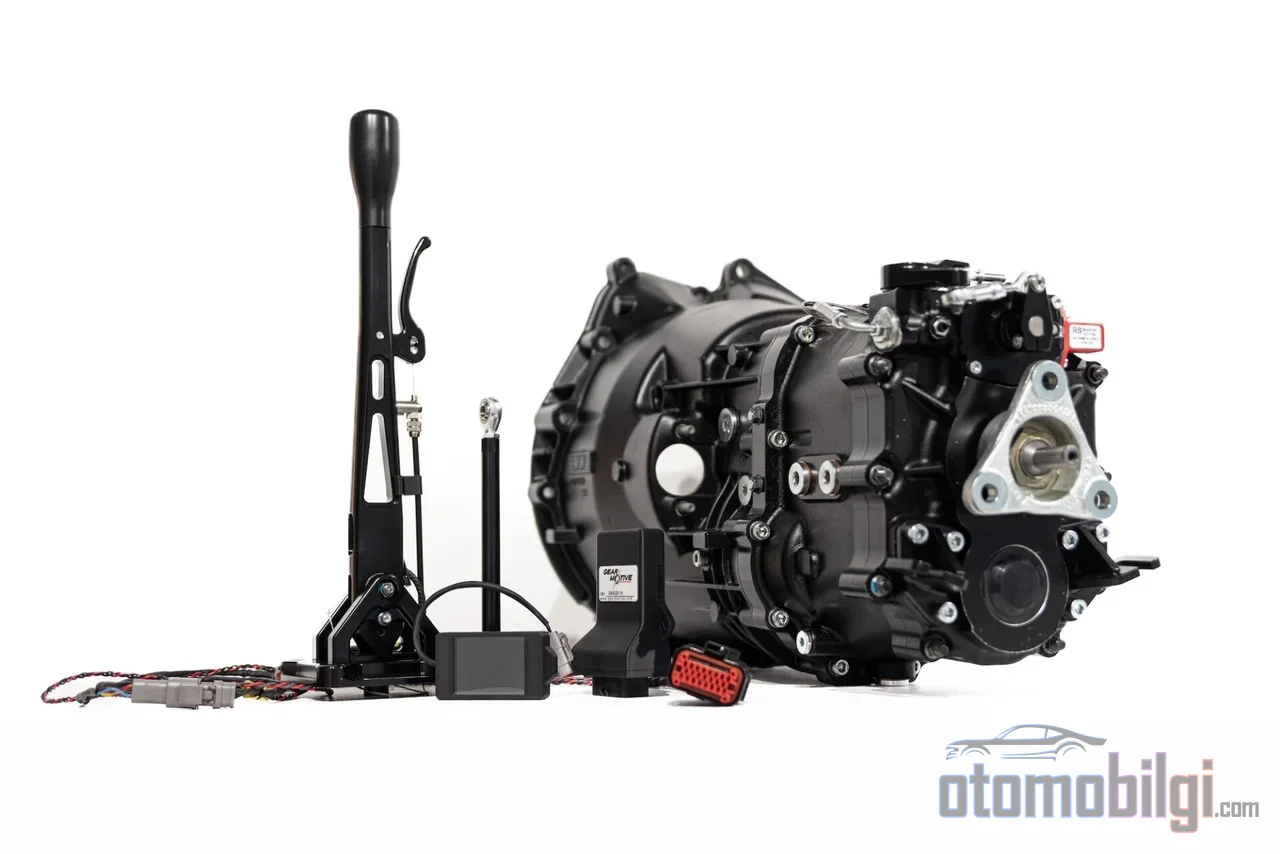
Now let's move on to the drifting side, because the dog box is only half the story. The other half: close gear ratios, in other words, the close-ratio box. Briefly, it refers to transmissions where the ratio difference between gears is lower than average. So what does this do? When you shift, the engine's revs drop by a certain amount depending on the ratio between the two gears. The closer the ratios are to each other, the less the revs drop when you shift to a higher gear; the engine also stays within the power band, meaning that golden range stretching from maximum torque to maximum horsepower.
Think about what this means in drifting: while you are already sliding the car, there is a constant battle between wheel speed and engine rpm. If you shift into a long gear and let the rpm drop below the power, the car cannot sustain the slide and you lose angle. A close-ratio gearbox, on the other hand, gives you gears that let you keep the rpm high across a wide speed range. Short before the corner, long in and after the corner - even within the same run, the engine stays fully awake. In short, dog box and close-ratio are two faces of the same goal: shifting fast without dropping the rpm.
Is Clutchless Shifting Really Possible in a Drift Transmission?
Yes, and here is the most surprising part. In a synchromesh box, shifting at high rpm - say 9,000 rpm - is slow and laborious; the clutch has to be used fully. In a dog box, a momentary interruption of engine torque is enough. You can do this in two ways: you give a short interruption with a light tap on the throttle, or the gear-change ignition cut function in the ECU cuts the ignition for you and you shift while at full throttle. The clutch? Not needed at all.
It is hard to measure its value in drifting. Pressing the clutch in the middle of a run, while the car is at its limit, instantly disrupts weight transfer and balance. Thanks to the dog box, the driver shifts mid-corner while the car is sliding and keeps the rpm above the power - without the car losing any of its balance. There is just one condition: you must be fast and decisive when shifting. If you hesitate, the dog teeth will not engage their slots. The golden rule of these boxes is simply this: the faster, the better; because fast shifts reduce both gear clash and wear.
Examples from Formula Drift Tracks and the Reality of Cost
Why Are the World's Best Drifters Switching to Dog Boxes?
Let's give a concrete example: Formula Drift pilot Fredric Aasbo, after a tough 2021 season, fitted a GearMotive ZF Straight Gear Dogbox Heavy Duty Edition to his Toyota Supra and effectively slid clutchless for the next nine months. In his own words, this box shifts much faster than a synchromesh and did not require the driver to lift off the throttle. At the Formula Drift level, lifting mid-run means losing points, so this difference is no joke. Even Formula 1's modern transmissions have no synchros; shifts are made with ignition cut and millisecond timing - the logic is the same at the very top of racing.
The Balance of Price and Durability
So who pays how much for this technology? The signals on the market are as follows: a new GForce GF4A box costs 5,400 USD plus shipping and taxes; used 4-speed dog boxes change hands as a strong option within the drift community. If you go up to the top tier, sequential racing dog boxes like the 5- or 6-speed RTS 6XD are marketed with a 1,800 ft-lbs torque rating. The Dogbox.lt ZF sequential gearbox is designed for cars over 500 hp and has been tested up to 1100 hp / 1100 Nm. On the amateur side, on the other hand, there is a circulating claim that the combination of a sequential shifter with a dog box delivers the same performance as a full sequential gearbox at half the cost - while not a verified figure, it catches the attention of those looking for a budget-friendly setup.
As for lifespan, let's be honest: dog boxes are not built for daily vehicle life exceeding 100,000 kilometers. Gear and dog tooth wear is natural; there is a reason why strong parts like Andrews gears are preferred in rebuilds such as GSR. A dog box is an investment, both in money and in driving style.
Dog Box or Sequential Gearbox?
This is one of the most frequently asked questions, so let's clarify it. A sequential gearbox is a box where gears are selected only in consecutive order, meaning one up or one down; there is no such thing as a wrong gear in an H pattern. A dog box, on the other hand, describes the clutching type: dog teeth instead of synchromesh. The two can meet in the same box - like the product in Aasbo's Supra whose name includes both sequential and dog box. Manufacturers like HGT offer their 4-speed boxes with straight-cut, ground-finished gears, designed to be ideal for drift cars with wide torque bands. So what does straight-cut gearing have to do with it?
Straight cut gears, that is, straight-cut gears, are famous for that notorious throaty gear whine, but their real advantage is not the sound, it's strength: they reduce power loss and withstand high torque. That's why they are often seen together with dog boxes - what serves the drifter is not the sound effect, but durability and fast engagement.
How Is the Gearbox Choice Connected to the Differential?
Everything up to this point was about the power coming out of the exhaust; now let's move to the rear axle. In drifting, the gearbox cannot be considered independently of the choice before or after it.
| Differential | Role in Drifting | Criticism | |
|---|---|---|---|
| Welded diff | Cheap, easy to initiate drift | There are frequent stories of resources being stretched to the limit | |
| 2-way mechanical LSD | The choice of professional drifters | Demands cost and maintenance | |
| Torsen / Quaife ATB | Harder to initiate drift but possible | Acts like an open diff if a wheel leaves the ground |
A welded differential is the cheapest way to lock two wheels together and it does the job; but its durability is a matter of luck. A 2-way mechanical LSD is what professionals choose, because it provides consistency in both on and off-throttle behavior. On the Torsen and Quaife ATB side, the situation changes: these helical designs contain no wear-prone parts like clutches, ramps, and springs; in MX-5 applications, the Quaife ATB can hold torque above 250 ft-lbs. But when one wheel lifts off the ground, the Torsen acts like an open differential and sends very little torque to the axle - in drifting, this means a limitation on initiation. In short, choosing a Torsen with a synchromesh box is one philosophy, and choosing a welded diff with a dog box is another; they are complementary choices.
Why Should You Keep the Revs High in Drifting?
So how do all these technical choices reflect in scoring? Drift competitions are generally judged in three main categories: line, angle and style; angle and driving style are each worth 20 points on their own. But a big angle alone doesn't guarantee points, nor does uncontrolled speed; judges look for a balanced, controlled run. D1 GP's 2020 sporting regulations also emphasize a lead run where the chasing driver is under pressure. The common ground between all this and the gearbox is this: a car whose revs drop below the power band, that upsets its balance shifting gears, or that loses the slide can sustain neither the angle nor the style. That's where the dog box and close gear ratios make a car that wins points directly from the transmission.
So let's give a clear answer to the question we started with: A dog box is chosen in drift cars because it eliminates the speed limits of a synchromesh box and synchro wear, allowing very fast and consistent gear changes without the clutch; when combined with close gear ratios, it is the most direct way of keeping the engine in its power band at every moment of the run and maintaining balance and revs while sliding. The same logic applies everywhere, from Formula Drift tracks to amateur garages.
One final note: if anyone is planning to install one of these boxes in a daily car and drive it around town, they should give up on that. That clunky noise is fun on the first day and torture by the third week. But on the track, in the tire smoke, finishing the corner with a gear change without ever touching the clutch... it's worth it. Next time, we'll talk about which pilot uses which gearbox.
Sources
- Dog-box tech: what goes on inside
- Tech Nugget: How a Dog Engagement Gearbox Works
- Gearbox Beatdown - Synchromesh vs. Dog Box
- Shift-less drifting - Fredric Aasbo
- Introducing the GearMotive Sequential Dogbox
- Close-ratio transmission
- ZF Sequential Dogbox Transmission
- Welded vs LSD vs Open Diff for Drifting (2026 Pro Guide)
- Motorsport Gearboxes (Sequential, Dog) - Quaife
- Magnus Dogbox FAQs