Why Is the Differential More Important Than Power in Drifting?
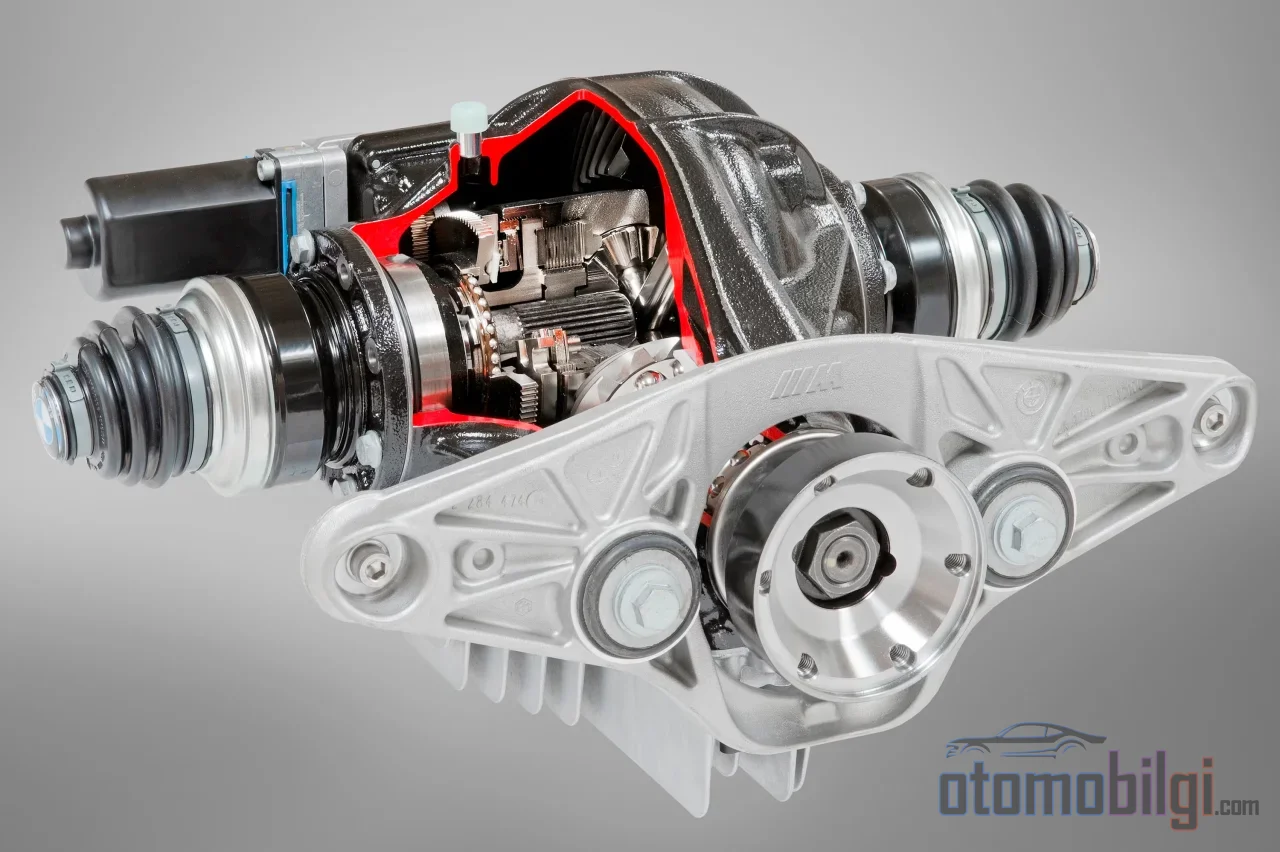
When it comes to drift setups, the first things everyone talks about are power and tires, right? How many horsepower, which compound, how many degrees of angle... But that small metal circle that carries all that power to the tires is always forgotten: the differential. On this page, we have exactly one guest: which LSD is right for a drift car? And believe me, the difference between the right differential and the wrong one is far bigger than you think.
Think about it: the rear wheels are spinning in smoke, you're trying to hold the angle on the throttle, but the car just won't slide the way you want, and you're missing your transitions. The culprit is usually not the engine, nor the tires. The culprit is that loyal but picky unit sitting at the back. Let's get started.
Why Is the Differential So Critical?
First, a simple analogy: think of the differential as a traffic cop distributing power to the wheels. In a corner, the inner wheel rotates slower than the outer one; its job is to manage that speed difference. But once you start drifting, things change.
The standard factory open differential always splits torque 50/50; meaning power flows to the wheel with the least traction. At the moment of slide, one rear wheel spins freely while the other dies. For drifting, this is a complete disaster. Because what you want in drifting is simple: both rear wheels spinning at equal speed when traction breaks. That equality gives you control and consistency in slides and transitions.
The limited-slip differential, or LSD, does exactly that: it allows the two output shafts to rotate at different speeds, but locks the wheels together once the slip exceeds certain limits. The logic also falls into place when you look at the order of a build: after power and tire selection comes the differential. Even in the simulation world, differential adjustment counts as the most important tab of a drift setup; why would real life be any different?
Highlights
- The two-way (2-way) clutch-type LSD is the gold standard of professional drift builds.
- The 1.5-way LSD is the ideal middle ground for both drifting and daily use.
- Torsen and Quaife-type differentials are quiet and low-maintenance, but they do not provide true locking for drifting.
- A welded differential offers 100% lock and low cost, but when done poorly it carries the risk of breaking at the worst possible moment.
Clutch-Type LSD: What's the Difference Between 1-Way, 1.5-Way and 2-Way?
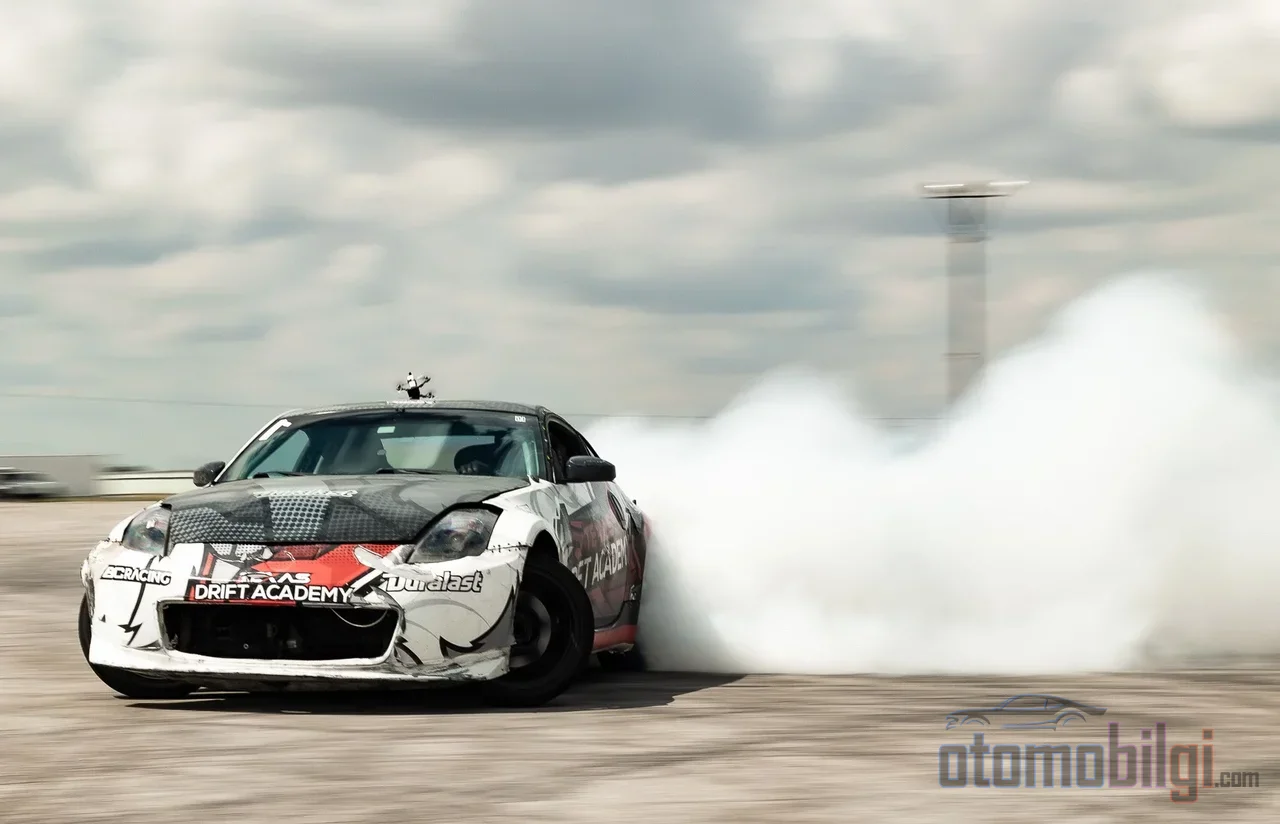
With mechanical clutch-plate LSDs, the real question is: when does the differential lock? There are three answers, and each one fundamentally changes the car's character.
Two-Way (2-Way) LSD: The Gold Standard of Drifting
The choice of professional drifters and competition builds is the two-way LSD. The reason is very clear: it locks 100% both when you apply throttle and when you lift off, that is, while decelerating. When there's no power, it stays open. So no matter what you do, the rear axle character always stays the same.
Why is this so important? Because in aggressive drift driving, with fast entries, feint maneuvers and long 4th gear corners, you need to be able to predict what the rear of the car will do. The two-way LSD keeps lateral movement at the rear even during gear changes; that's what drifting is all about, really. In practice too, when you lift off the throttle, a two-way LSD-equipped car slides more easily and doesn't resist.
The bonus side: being adjustable. You can shape its character to suit your driving through the number of clutch plates, preload, and ramp angle. It provides lock even when a wheel is in the air and withstands high-power engines. Even the ramp angle has an effect: a 30-degree ramp locks faster than a 45-degree one.
So what about the downside? The clutch plates wear out; it requires periodic oil changes and rebuilding over time. During low-speed maneuvers, that is, when parking and in tight turns, it can make a rattling called chattering or a clunk noise. Using the correct LSD oil with friction modifiers is a must. In short, it's a racer: fast but demanding in terms of maintenance.
1-Way and 1.5-Way: For Those Seeking the Middle Ground
A 1-way type locks only under throttle, and the moment you lift off, it behaves like an open differential. It's recommended for front-wheel-drive cars; it's avoided for drifting. Why? Because half of drifting happens with the throttle off: entries, transitions, feints...
A 1.5-way, on the other hand, is a realistic expert: it locks 100% under throttle and about 50% on throttle lift. It's the ideal middle ground for dual street and track use, where both drift and grip driving are done. Practical observation supports this too: a 1.5-way resists sliding on entry more than a two-way. If you drive your car to school on weekdays and to the track on weekends, this is your candidate.
Torsen and Quaife: Quiet but Questionable for Drifting
Now we come to the interesting part. The name Torsen comes from "torque-sensing," meaning it senses torque. Quaife ATB, Eaton Detroit Truetrac, and Wavetrac are well-known members of this family. Instead of clutch plates, they distribute torque with a gear system. They're quiet, maintenance-free, and great for daily use. In fact, according to manufacturer data, the Quaife ATB is fully compatible with traction control and ABS and is suitable for both motorsport and road use.
But on the drift side, the picture darkens. There is no true locking in the Torsen type; it continuously transfers power between the wheels. When one wheel loses traction and speeds up, it directs the excess power to the opposite wheel, until... one wheel lifts off the ground. At that moment it behaves like an open differential and spins only one wheel. Among drifters, the view that Torsen is the worst choice for drifting is widespread; it has been shared many times on forums that an ATB differential doesn't work when a wheel is in the air.
Let's be fair: the debate isn't entirely settled. Torsen is found practical for dual use, and is even described as ideal for drift activities requiring high stability. But the clear fact is this: it doesn't provide the locking character of the differential in the way drifting requires. You decide.
Welded Differential and Spool: The Cheap Route, But Is It Risky?
Let's first clarify what a welded differential is: technically, it isn't even an LSD. The spider gears of the open differential are welded, and the two wheels are permanently locked together. 100% lock, zero cost. It is effective at initiating drift and holding angle; you can drift with a welded differential, and cheaply at that;
But there are costs. It is harsh on the street, the wheels hop in corners, and clunking and juddering during parking and very slow maneuvers are inevitable. It puts extra load on the drivetrain, and it is unsafe on slippery surfaces. Spool tells a similar story: it ruins the turning radius, makes driving difficult in the wet, and wears tires out quickly; adjustability is limited, and it does not suit every drift style. On the other hand, a well-made welded differential can be durable.
The real risk sentence is this: a poorly welded differential can break apart at the worst moment, putting the driver and the car at risk. The risk of breaking under cut load is real. In a head-to-head comparison, though, things become clear: drifting can be done with a welded differential, and it's cheap too; but as driver skill increases, a two-way LSD delivers quicker transitions, more control, and smoother drifts. In fact, some drifters who switch to spool do it to solve the asymmetric locking problem; if the car slides one way, the locked axle behaves equally in both directions.
Viscous LSD and Open Differential: Why Should You Stay Away?
A viscous LSD (VLSD) works with a fluid-filled coupling. It sounds nice, but it is not for drifting: it engages with a delay, cannot provide full locking, and its effect decreases as it heats up. Many Nissans come with factory VLSDs; a worn-out VLSD is completely unpredictable and is best avoided. As for the open differential, there is not much to say: it spins one wheel only, and does not allow drifting.
Comparison Table: What Does Each Differential Promise?
| Type | Locking | Drift Suitability | Standout Feature |
|---|---|---|---|
| Open differential | None | Not suitable | Splits torque 50/50 |
| 2-way clutch LSD | 100% on throttle and off throttle | The gold standard | Adjustable, predictable |
| 1.5-way clutch LSD | 100% on throttle, ~50% off throttle | Good, ideal for dual use | Street and track balance |
| Torsen / Quaife ATB | No true locking | Weak | Quiet, low maintenance |
| Viscous (VLSD) | Partial and delayed | Should be avoided | Effect drops as it heats up |
| Welded / spool | Permanent 100% | Effective but risky | Cheap, harsh character |
Things to Watch Out For in Installation
Let's say you have chosen your differential; the job is not done. With clutch-type LSDs, a break-in period is a must. Incorrect backlash or preload settings lead to premature wear, so professional installation is of great importance. Regular oil changes with quality LSD oil, along with coilovers, an angle kit, and grippy rear tires, are also parts that complement the LSD.
There is also a platform trap: for chassis like the Nissan Silvia, Skyline and 350Z, Toyota Supra and AE86, BMW and Mazda RX-7, there is a wide range of two-way LSD aftermarket options. But beware: even Nissan differentials under the same R200 label come with differences in many points such as mounting holes, ABS sensors, transmission ratio and output flange spline diameter. Before buying a fake LSD, knowing all the details is a must.
So, What's the Answer: Which LSD Is Right for a Drift Car?
Let's wrap it up, because you deserve a clear answer: The most suitable differential for a drift car is a two-way clutch-type LSD; with 100% locking on throttle and throttle-off, it offers predictability in transitions and long slides. If you'll also use your car daily, find the 1.5-way middle ground; if the budget is tight, a well-executed welded differential will get you started, but it will limit you as you progress. Torsen and Quaife, on the other hand, are solutions designed not for drifting but for daily use and grip.
In short: everyone pours money into the engine, but the minority that invests in the differential wins. Next link in the chain: the right power, the right tires, and now the right differential. The rest is up to you.
Sources
- Best LSD for Drifting: Choosing the Right Differential for Maximum Control
- Garage-D LSD & Differential Guide
- Choosing the Best Differential for Drifting
- Welded vs LSD vs Open Diff for Drifting (2026 Pro Guide)
- Best LSD for Street Use: Helical vs Clutch-Type LSD
- Engineering Explained: The Best Kinds Of Differential And What's Most Suitable For You
- 2way vs 1.5way : r/Drifting
- Which type of LSD for daily/drifter? : r/Drifting
- The Truth About Welded vs LSD: What Drifters Shouldn't Overlook