A Tire Stored Incorrectly Loses Its Properties in Two Years
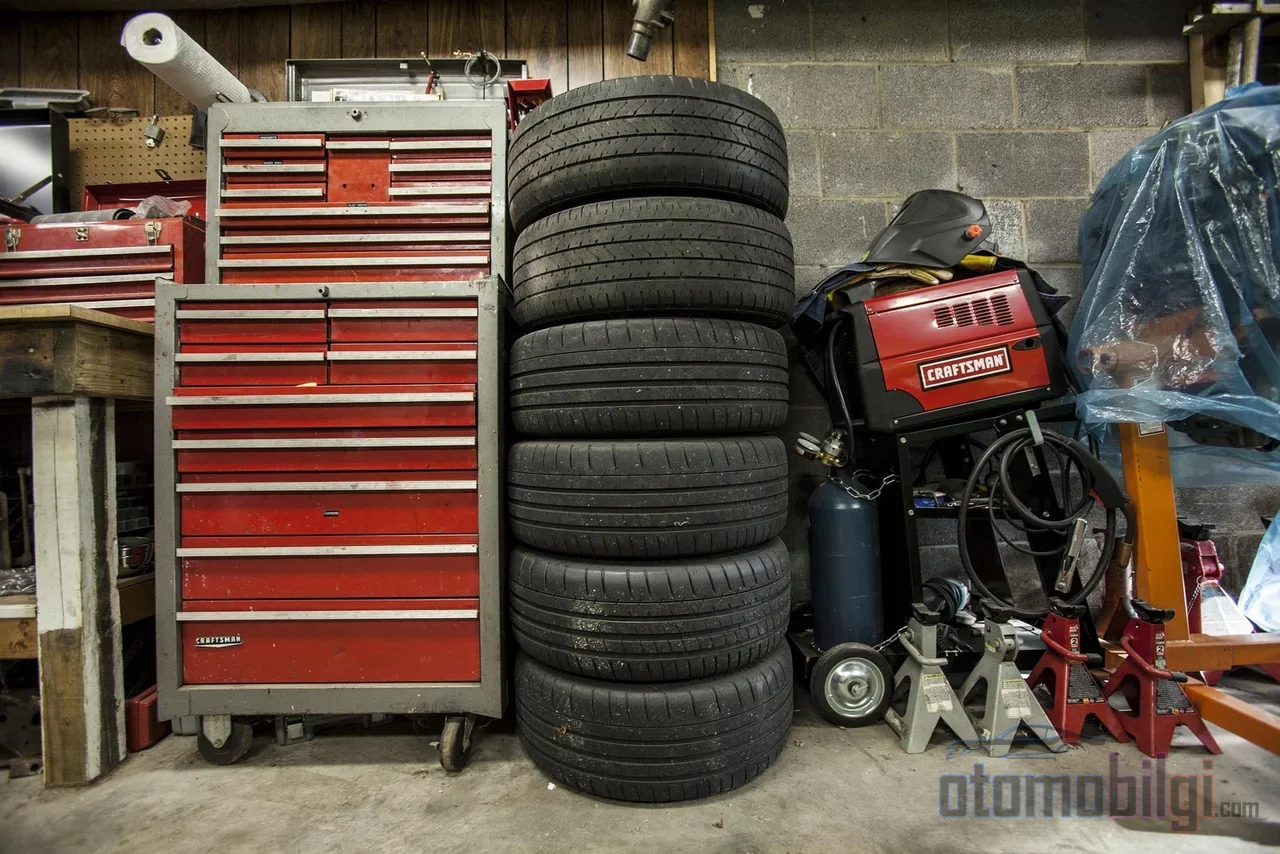
Twice a year, most drivers make the same decision without even realizing it: when switching from winter to summer tires, a set of tires will sit somewhere for six months. This waiting has a cost, and the calculation is usually made only on its invisible part. It is easy to brush off the storage offer made by the tire shop; the phrase "we'll just put them in a corner at home" may be the most expensive sentence in this business. Because the toll that a poorly stored set of tires can take may be far too heavy to compare with any storage fee: early cracking, hardening, and a set that has to be replaced before the tread is even worn out.
In this article, we treat the between-season storage decision of drivers who use two sets of seasonal tires as an ownership cost item, and we place the real costs of service storage and home storage side by side. Without giving current prices, we aim to build a framework at the level of methods and concepts that will remain valid years from now.
What is a tire hotel, and how does it enter the total cost of ownership?
A tire hotel is a service where summer or winter tires removed from the vehicle are stored in professional conditions during the period they are not used, protected from external factors such as light, humidity, and temperature. In Türkiye, most tire dealers and service chains offer this service; at large facilities, tires are logged in with a barcode or QR code, the production date and tread depth are recorded, and they are monitored with cameras and insurance coverage. Tires without rims are stored upright on vertical racks and rotated periodically, while sets with rims are stored in a horizontal stack or hanging.
The critical point here is this: for a driver who uses two sets of seasonal tires, storage is a recurring expense that happens twice a year, and it enters the total cost of ownership calculation as a real line item, as significant as the tire set itself. When the lifespan of a set of tires spreads over eight to ten years, the storage fee paid each season can add up over that period to an amount approaching the price of a tire set. The reverse is also true: if a poorly stored set ends up in the trash at half its lifespan, that loss cannot be compensated by any storage fee.
Highlights
- The storage expense repeats twice a year and is a permanent line item in the total cost of ownership.
- Tires without rims are stored upright, sets with rims horizontally or hanging; the two cannot be stored the same way.
- UV rays, humidity, and heat-induced cracking are the main cost creators of improper storage.
- The storage fee is determined by tire size, rim condition, duration, and additional services; removal and mounting are not included in every package.
- If the right conditions can be provided, storing at home is a free and perfectly valid alternative.
What determines the service storage fee?
The storage fee is not a single number; it is a pricing shaped by several variables. Knowing these variables is also the only healthy way to compare offers.
- Tire size: 13-16 inch passenger car sizes and 19-22 inch SUV sizes are priced differently; a bigger tire means more space and labor.
- Delivery with or without rims: Rim-mounted sets are usually stored at a slightly higher price.
- Duration: Offers are usually in the form of six-month, i.e. single-season, or annual packages; discounts are common on annual packages.
- Additional services: Removal and mounting, balancing, washing, rim cleaning and transport may not be included in the service.
- Insurance coverage: Some facilities store the tires insured; the coverage and exclusions should be clarified in the contract.
In practice, the key point is comparing what is covered. Placing two companies' seasonal fees side by side is meaningless unless one includes removal-mounting and balancing and the other does not. The comparison should be made over the same number of tires and the same duration, with a list of included services. It should also be remembered that a storage service does not make a worn or damaged tire safe again; storage preserves the existing condition, it does not repair it.
The hidden costs of storing at home
The home environment is riskier than most drivers think. Tire rubber is extremely sensitive to sunlight and ozone; ultraviolet rays break down the rubber structure, causing premature aging. A tire left in a sunny corner of a balcony hardens, cracks form on its sidewalls, and it loses grip. Day-night temperature differences and humidity accelerate this process. Heat sources carry the same danger: a tire next to a radiator, a boiler flue, or a cable line ages much faster than one in a dark corner.
The cost can be not only chemical but also physical. A set of SUV tires with rims takes up about one cubic meter of space at home; in a big city, that space itself is a value. Sets with rims left in an apartment basement carry a theft risk. There is also a rarely discussed side to this: brake pad dust, tar, and road debris accumulate on tires coming off the road; carrying these into the house, especially into an environment with children, is not right from a health perspective. For this reason, the tires must be washed and completely dried before being brought into the home.
Chemical risks are not limited to sunlight. Petroleum products, solvents, and strong cleaning agents damage rubber; a tire should not stand next to gasoline, oil, or paint, but on a clean and dry surface.
Rules for storing correctly at home
Manufacturers do not consider home storage an invalid method; on the contrary, when the right conditions are met, they describe it as a completely valid and teachable approach. The ideal environment has three qualities: cool, dry, and dark. Basement floors and dry rooms where the temperature remains roughly constant are the most suitable places for this job. In summary, the rules are as follows:
- Wash the tires and dry them completely; damp tires should not be put in bags.
- Store them in opaque, airtight, or breathable special tire bags; the air in the bag can be evacuated if possible. An ordinary plastic bag with a tightly sealed opening can create a humidity trap.
- Store tires without rims in a vertical position, standing side by side; do not hang them or place weight on top of them. Periodically rotating tires without rims that sit for a long time prevents deformation at a single point.
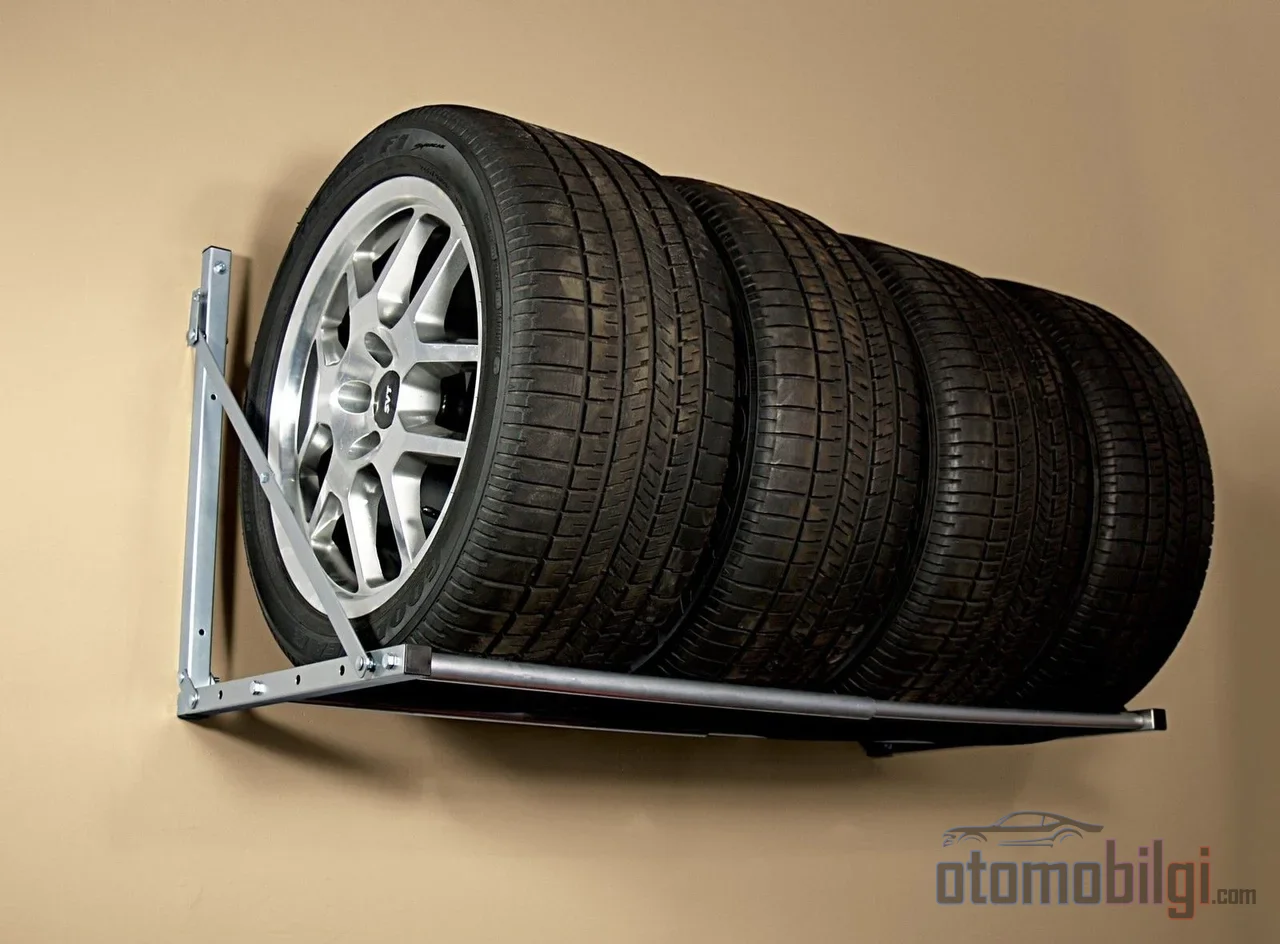
- Stack the set with rims flat on level ground or keep it suspended; placing foam or a thin board between the layers distributes the pressure.
- Keep them away from heat sources, sunlight, and chemicals; an open balcony is a last resort - if it is unavoidable, a UV-blocking cover and shading are essential.
A tire stored in a vacuum-sealed, airtight bag ages more slowly because it has minimal contact with oxygen. One more small detail: slightly lowering the pressure when storing tires without rims helps prevent sidewall cracking. A tire pulled out of a warehouse or a corner should never be mounted directly under any circumstances; first a check for cracks, bulges, cuts, and deformation, then pressure and balancing are done during installation.
How does proper storage change a tire's lifespan?
A tire's age is not measured by its mileage alone. Manufacturers speak of a shelf life of up to ten years for properly stored tires; on the other hand, it is known that a tire kept in poor conditions may lose its properties within two years, forcing it to be replaced due to cracking and hardening while the tread still counts as new. This is why it is necessary to check the DOT production date and storage conditions while the tread depth still gives way.
To be honest, even proper storage does not stop aging completely; rubber naturally hardens over time. The issue here is speed control. Improper storage can cut the lifespan of a set of tires in half, or even lower it further; proper storage, on the other hand, extends this lifespan up to the limit foreseen by the manufacturer. To put it in the language of cost of ownership: the storage decision is the decision that determines how many years a set of tires will last, and therefore your annual tire expenses.
In which situation is service storage economical, and in which is storing at home?
The decision needs to be put into a framework. Service storage makes sense if you do not have a cool, dry, dark, and secure space, if you carry a large set with rims, or if you do not want to bother transporting the tires home; the cost is clear and the scope is defined by contract. Storing at home, on the other hand, is a completely free and safe option if a basement or a suitable dry room is available and the rules above can be followed. The essence of the decision is this: the annual storage fee is compared with the risk cost of storing at home, that is, the early replacement cost of a set of tires that ages prematurely.
Storing "for free" under unsuitable conditions such as a balcony, a sunlit room, or next to a heat source is the most expensive option on this list. In such a case, paying a storage fee is not savings, it is insurance. The opposite holds true: for a driver whose basement is dry, cool, and dark, the money paid for storage is largely a purchase of comfort, and no one has to consider it a mandatory expense. The smartest thing a driver who sets out on two-season tires can do is make this decision consciously once and then repeat the same method every season.
Sources
- How to Store Tires? - Continental
- Tire Storage - Michelin
- Tire Storage - Hankook
- How to Store Tires? - Lassa
- How Should Car Tires Be Stored? - Toyota Blog
- How to Store Tires? - Euromaster Blog
- Tire Hotel: Tire Storage Service - OtoKonfor
- Tire Hotel Istanbul - Istanbul Trusted Storage
- Tire Hotel and Corporate Tire Storage - Checklas
- Tire Storage Conditions - Arslan Jant Lastik