All-Season Tires or a Summer-Winter Set: Which Is More Economical?
Share This Page
Anyone swiping their credit card at the tire shop for the first time asks the same question: Is one set of money enough to keep me comfortable all year round, or is it the smarter move to buy summer and winter tires separately and line them up on the curb waiting in November and April? All-season tires on the shelf always look more expensive; the total of two sets, meanwhile, is intimidating. Yet making this calculation from the purchase receipt alone is a well-intentioned but incomplete one. The right question is this: After five years, who will have paid less money in total?
All-Season Tires or Summer-Winter Set: The Difference Between the Price Tag and the Total Cost
The economy at first glance in tire buying is often an illusion. All-season tires are cheaper in a single purchase than the total of a summer and winter set; you also don't pay a change fee twice a year, and there's no storage hassle. When these three items are considered together, the first-year picture of all-season tires looks quite appealing.
However, the other half of the calculation is hidden in the tire's lifespan. When each set is used only in its own season, that is, when it touches the road only six to seven months a year, summer and winter tires wear out much more slowly. An all-season tire, on the other hand, works twelve months a year, on both hot asphalt and snowy roads; it accumulates the mileage on a single set. A tire that looks economical at first glance can create higher costs in the long run due to its shorter service life. That is why the question needs to be asked not through a one-year window, but through a window of several years.
How Do the Technical Differences Between the Three Tire Types Change the Calculation?
Before setting up the calculation, let's clarify what we are comparing. Summer tires are designed for optimum performance in temperatures above 7°C: they have a shallow tread pattern, a hard and sticky compound, and offer high grip and short braking distances on dry and wet surfaces. Winter tires are the mirror image of this: with their deep, heavily grooved tread and soft material that stays flexible in the cold, they are developed for below 7°C and snow-ice conditions. All-season tires, meanwhile, try to combine the two technologies; models with the 3PMSF mark offer safety between -10°C and +30°C.
| Feature | Summer tire | Winter tire | All-season tire |
|---|---|---|---|
| Ideal temperature | Above 7°C | Below 7°C, snow and ice | Between -10°C and +30°C |
| Compound | Hard, sticky | Flexible in the cold, soft | A balance between the two |
| Period of use | About half a year | About half a year | All year |
| Performance compromise | Hardens in the cold | Wears out quickly in the heat | Weaker than the pure tires at both ends |
| Storage need | Yes | Yes | No |
The performance row in this table is not something that can be directly measured in money, but it indirectly reflects on the cost table. Although all-season tires perform well in hot weather, they don't grip as well as summer tires; steering, braking, and cornering abilities are lower. On snowy ground, the opposite applies: the braking distance of all-season tires is longer and their grip lower compared to certified winter tires. The ignorance balance, however, is here: a driver who drives on summer tires in winter can increase braking distance by up to twice that of a certified winter tire; the compound that hardens in the cold also carries the risk of cracking and splitting. A single accident on the wrong tires wipes out a decade's worth of changeover fees in one go.
Wear Rate: The Main Variable Determining the Five-Year Calculation
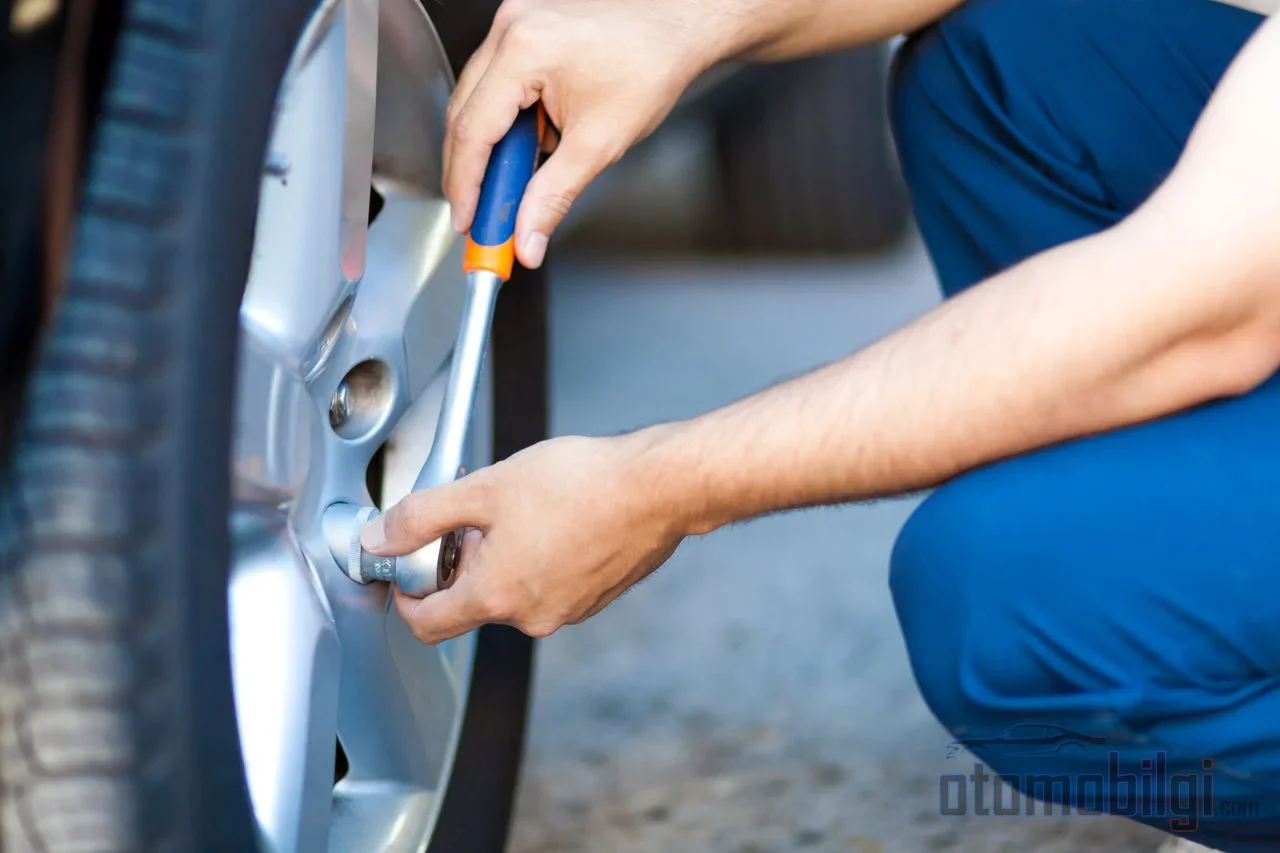
The heart of the total cost is how many kilometers the tire lasts. The general consensus is that a set of tires lasts 40,000 to 80,000 km or 5 to 10 years; in passenger cars, 40,000-60,000 km of efficient life is a common benchmark under proper use. Manufacturers recommend replacing the tire as a precaution at the end of 10 years from the production date, regardless of mileage. It is simply not possible to give a fixed figure for how many kilometers a tire will last; driving style, loading and climate come into play.
This is where the all-season tire's weak point emerges. Since its compound is not as resistant as that of summer tires, it wears faster in hot weather. When the asphalt reaches 60-70°C in the height of the Anatolian summer, the tire softens, wear accelerates, and the risk of blowout from increased pressure becomes more pronounced. In other words, unlike seasonal sets, the all-season tire carries its hottest and most challenging period on its own shoulders. In a seasonal combination, the summer tire works only in the hot months and the winter tire only in the cold months; neither is worn out by a job it is not straining itself with. That is why it is no surprise that the total life of two sets exceeds the life of a single all-season set.
Rotation is another item that must be factored into the calculation. Moving the tires front to back every 8,000-12,000 km ensures even wear and can extend total life by 20 to 30 percent. This applies to both sets, but on an all-season tire it is perhaps the most practical way to extend the life of the single set.
Highlights
- As a single set, the all-season tire is cheaper than the combined cost of summer and winter sets; there is also no storage hassle.
- Since seasonal tires work only in their own season, they generally last more years.
- On hot asphalt, an all-season tire can wear faster than a summer tire.
- If rotation is done every 8,000-12,000 km, total life can increase by 20-30 percent.
- There is no fixed endurance figure: 40,000-80,000 km and 5-10 years is the general framework.
Replacement, Fitting and Storage: The Hidden Bills of the Seasonal Set
Now let us add the expense side to this calculation, which works in favor of the seasonal combination's lifespan. Every driver using a summer-winter set pays for fitting and balancing twice a year; they also have to store the unused set somewhere. This storage job has become professionalized: in facilities called tire hotels, tires are kept in suitable conditions and in insured form during the periods they are not in use. The fee for the service varies depending on the rim diameter, the scope of the work and the city; replacement, balancing, valve and storage may appear on the bill as separate items. Since prices vary widely from region to region and from business to business, it is more honest to say the following rather than give a current figure: The annual changeover and storage fee must absolutely be a line item in your budget.
In the past, this task was solved in everyone's garage, with a sheet stretched over the tires. Today, in big cities where apartment parking spaces are shrinking and storage space has become a luxury, the tire hotel has effectively become a necessity. For someone without a storage place, this annual expense can significantly erode the price difference of all-season tires; it can even close the gap entirely. Storage availability is a variable as decisive as mileage in this comparison.
Fuel Consumption: The Item Quietly Added to the Annual Picture
The tire's effect on gasoline is an expense that most drivers leave out of their calculations, one that accumulates over the years. The impact on fuel consumption is directly proportional to rolling resistance; an A-class rolling resistance rating on the tire label means serious savings in the long run. Summer tires, with their low rolling resistance, provide fuel savings especially on long journeys. In winter, however, using summer tires increases consumption; the compound that hardens in the cold raises rolling resistance. All-season tires sit between these two extremes: in winter they consume less than summer tires, and in summer they consume more. If your annual mileage is high, it is worth factoring in the budgetary impact that the consumption difference between the two sets will create over the years.
How to Do the Calculation Based on Your Own Usage Profile?
If you want a lasting method, look not at current price lists but at your own conditions. The following steps offer a calculation template that works for everyone:
- Write down your annual mileage. Since tire life is consumed by kilometers, high-mileage users will wear out an all-season set faster, increasing the frequency of replacement; seasonal sets, on the other hand, each accumulate only half of that.
- Honestly assess your climate. If snow falls regularly and temperatures stay below 7°C for long periods, the seasonal combination is the most sensible choice in terms of both safety and performance. Summer tires can be the safe option on Mediterranean coasts, while all-season tires may be the safe choice in regions like Central Anatolia where harsh transitions do not occur.
- Factor in your storage availability. If you have room to store them at home or in a garage, the hidden cost of the seasonal set drops; if not, honestly add the tire hotel fee to the picture, whether it favors or works against the two-set option.
- Add up the changeover labor. Since you will have mounting and balancing done twice a year, position this amount as an annual expense against the initial purchase price difference of all-season tires.
- Compare over a window of at least three years. A single-year picture favors all-season tires; in a three-to-five-year picture, set lifespans and repeated replacement costs can shift the balance.
Which Option Wins in Which Scenario?
For a user who lives in a mild climate, has no storage space, and does mostly medium-length daily driving in the city, all-season tires are almost always cheaper overall and unquestionably more practical. In a region where most of the year is mild, a 3PMSF-marked all-season tire completely eliminates the hassle of seasonal changeovers. In a profile with harsh winters, regular snowfall, and high mileage, however, the long lifespan and superior performance of seasonal sets tip the calculation in their favor. All-season tires have improved markedly in recent years; models that stand out in current comparison tests have reached a level where they can meet the demands of both seasons. But no product can get through a Mersin summer and an Erzurum winter perfectly with the same tire; engineering promises no such thing.
A Clear Answer in Terms of Total Cost of Ownership
The question has no single universal answer; none of the sources provide a definitive which-is-cheaper table, because the answer truly depends on the usage profile. Still, here is the summary you should walk away with when closing this page: All-season tires win on initial investment, storage, and changeover labor; the summer-winter set wins on tire life and performance safety. For profiles with a mild climate, low-to-medium mileage, and storage problems, all-seasons are generally more economical overall. In usage with regular snowfall and a long cold period and very high annual mileage, the longer lifespan of two sets more than makes up for the changeover and storage expenses paid. When you plug in your own numbers following the five steps above, the method presented on this page will give you an answer that matches your receipts.
Sources
- Summer Tire, Winter Tire, or All-Season Tire?
- Comparison of Summer Tires and All-Season Tires
- All-Season Tire or Summer Tire? Which Makes More Sense?
- Can All-Season Tires Be Used All Year Round?
- The difference between summer, all-season, and winter tires
- Differences Between an All-Season Tire and a Summer Tire
- Tire Hotel
- When Should a Tire Change Be Done?
- 2026 Tire and Wheel Service Price List
- Tire Change Prices 2026
- Best All-Season Tires for 2025/26