Summer or Winter, or All-Season? The Right Tire Choice Guide
Share This Page
The fundamental difference between summer, winter, and all-season tires lies in their compound hardness: a winter tire retains its flexibility below about 7 °C while summer and all-season tires harden at this temperature and begin to lose grip. The right choice depends on how harsh the winters are in the climate you live in and the temperature range in which you use the vehicle; in mild winters, a single set of all-season tires will do, while regular frost and snow call for a winter tire or a 3PMSF-certified all-weather tire.
Key Takeaways
- Winter tire compound stays flexible at temperatures of 7 °C and below; the limit for the summer tire compound is about 10 °C.
- Real protection for snow comes not from the M+S marking but from the 3PMSF certification.
- New passenger tires typically have a tread depth of 9/32–12/32 inches ; replacement should be planned at 4/32 inch.
- A quality all-season tire lasts 3–5 years in average use.
- Winter tires are not fitted on a single axle but on all four wheels ; including AWD vehicles.
What the Compound Does: The Character of the Three Tire Types
I have been in this business for more than thirty years; the most common mistake is to see a tire as just a rubber ring. In fact, what determines a tire's character is not so much the tread pattern as the rubber blend called the compound. There are three basic compound types, and each is formulated for a specific temperature window. The summer compound is designed for high temperatures and generally should not go below 10 °C . The winter compound is made for 7 °C and below; instead of hardening in the cold, it retains its flexibility. The all-season compound tries to balance these two worlds in a single tire and is developed for the average driver.
Why is flexibility so important? Because a tire that hardens in the cold cannot grip the road. Since a winter tire keeps its softness below 7 °C, it offers shorter braking distances, better cornering grip, and better stability on snowy or muddy surfaces. A summer or all-season tire at the same temperature starts to lose grip; the difference is noticeable even on dry asphalt.
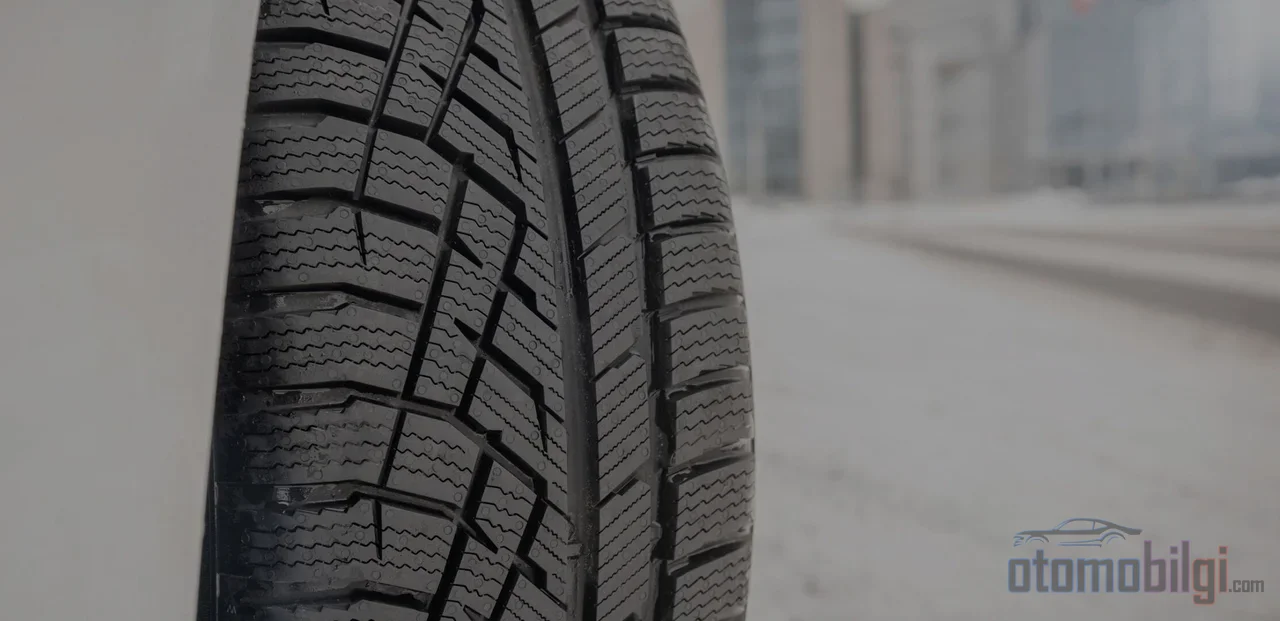
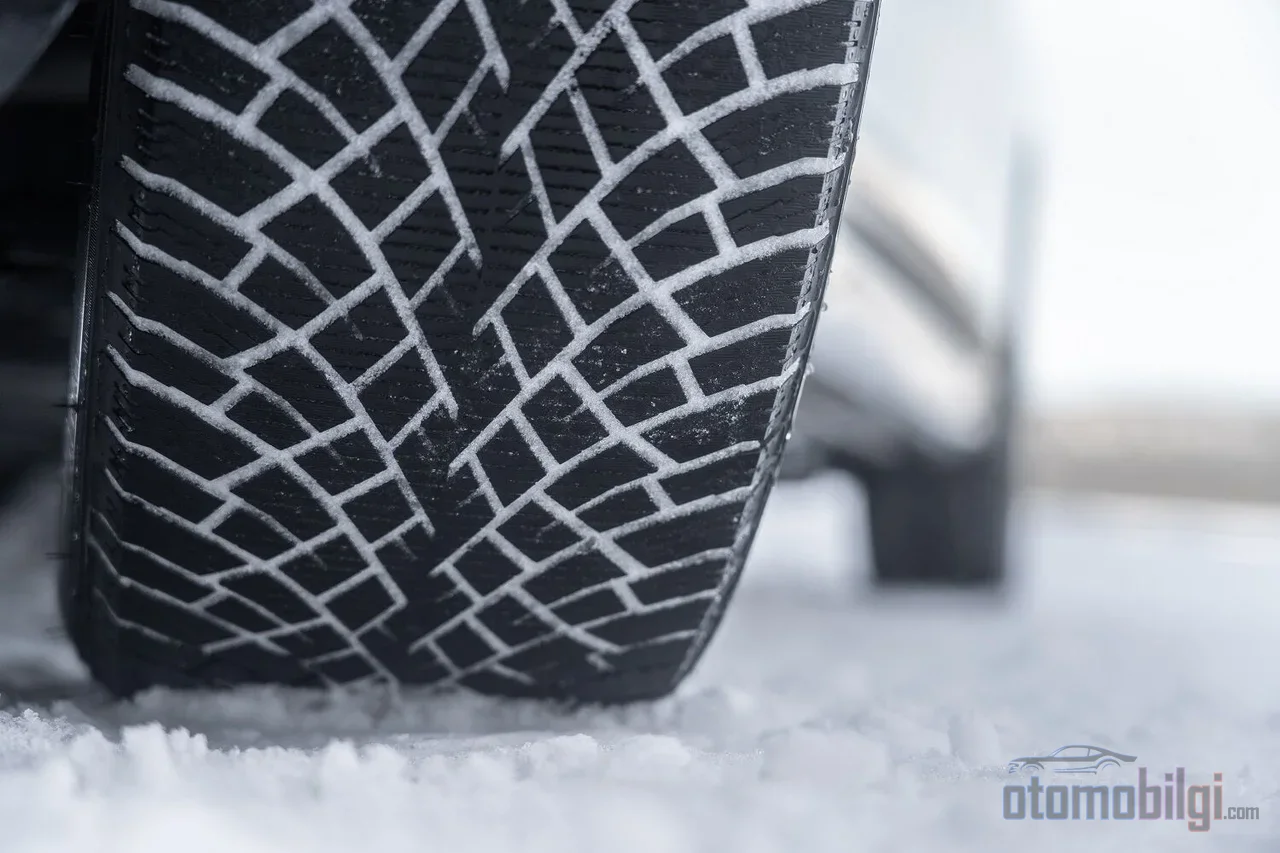
There is also a separation on the tread side. Summer tires, with shallower tread depth and less grooved patterns, put more rubber on the road; they are ideal for high-performance vehicles that want maximum road holding. Winter tires, compared to summer tires, carry far more siping, meaning thin slits on the tread surface. Each sip is a small biting edge; on snow and ice, grip is provided by these fine notches. Manufacturers balance the tread flex caused by excessive siping with compound hardness to maintain cornering stability. All-season tires are produced with an average tread depth and compounds that give longer tread life than summer tires; they are never the best at any extreme, but they are never a disaster in any condition either.
The 7 °C Threshold and the 7-7 Rule: When to Switch to Winter Tires?
The most commonly used criterion in the practical side of this business, now also embedded in popular usage, is the 7-7 rule: if the outside temperature stays below seven days in a row 7 °C drops below, it is time to switch to winter tires. A single cold morning is not enough for panic; the guideline is average temperatures falling permanently below this threshold. In spring, once temperatures have stably risen above the threshold, you switch back to summer or all-season tires.
Another dimension of transition timing is air pressure. Cold air lowers tire pressure, warm air raises it. Failing to check the pressure right after mounting tires at the seasonal change means setting out mid-season with under- or over-inflated tires. Measure the pressure every month and before long trips, on cold tires, according to the manufacturer values on the door label; a tire loses an average of 1-2 psi per month.
In Which Climate Do All-Season Tires Make Sense?
The all-season tire is an invention of climates where winter does not turn harsh. It works in mild winters that see the occasional cold day and light frost. In regions that regularly drop below freezing and struggle with snow and ice, it falls short; there, the solution is a dedicated winter tire or a serious snow-performance-certified all-weather tire. The "all-season" label itself is a broad umbrella: compound hardness, siping density and tread gaps vary greatly from tire to tire. Some all-seasons are good in summer and weak in winter, others are the opposite; even all-terrain tires are officially counted in this class.
The M+S Marking Is Not a Winter Certification
Let us pause here and untangle a common confusion. The M+S marking you see on all-season tires stands for mud and snow, but this is not a test result, it is a designation based on tread pattern; it does not guarantee winter performance. The official winter standard is the 3PMSF, that is, the three-peak mountain snowflake symbol; a tire carrying this certification has measured snow traction performance. A newer mark, Ice Grip , certifies braking performance on ice. All-weather tires are the essence of this distinction: their compounds stay soft at much lower temperatures than all-seasons. In short, all-season speaks for warm weather, all-weather for severe winter.
Comparison of the Three Tire Types
| Feature | Summer Tire | All-Season | Winter Tire |
|---|---|---|---|
| Compound window | Above about 10 °C | Wide middle band | 7 °C and below |
| Tread depth | Shallow, few grooves | Medium | Deep, heavily siped |
| Strength | Maximum grip in dry and wet | One-set practicality in mild conditions | Short braking distance in cold, snow/ice traction |
| Weakness | Hardens in the cold | Inadequate in real winter | Wears quickly in heat |
| Ideal user | High-performance vehicle owner | Average driver in a mild climate | Region with regular snow and ice |
Installation Rules: Mixing, Axles and Wheel Selection
I can reduce this section to a single sentence: all four tires must be of the same type. Mixing different types of tires on the same axle or between axles creates unpredictable skidding. Fitting winter tires only on the drive axle, in particular, is an old misconception; winter tires must always be installed as a set of four, including on AWD and 4WD vehicles. Steering toward a place the rear isn't going, with a narrow front axle paired with a wide rear axle, is not particularly enjoyable.
There is no obligation on the wheel side: winter tires can be mounted on your existing rims as long as they are the same size. Still, many drivers set aside a separate, usually cheaper, set of steel rims for winter tires to avoid the mounting work of a tire swapped every season and the risk of rim damage. There is no doubt about pressure either: winter and all-season tires of the same size do not require different pressures; the value on the sticker on the driver's door is what matters.
Run-Flat Tires: The Price of Comfort
Now that the topic is tire selection, the run-flat designation that appears among the sidewall codes should also be mentioned. Thanks to its reinforced sidewalls, a run-flat tire carries the vehicle's weight on its own for a short time in case of air loss; at zero pressure it offers a range of approximately 80 km . The self-supporting type endures this distance at a speed limit of 80 km/h ; the support ring type handles heavier loads and longer distances.
The advantages are real: when a puncture occurs, you don't have to hunt for a lug wrench at the roadside, and if the vehicle manufacturer has removed the spare entirely, you gain space and weight in the trunk. The disadvantages are also real: fuel economy drops, comfort gets harsher, steering feel dulls, uneven wear can appear, and replacement costs are high. Repair is not entirely off the table; some run-flat tires can be repaired if the location of the puncture, the condition of the internal damage, and the manufacturer's rules allow it. In other words, run-flat is a comfort choice, not a magical safety layer.
When to Replace Tires: Tread Depth and Age
Two criteria determine replacement time: tread depth and age. Wear indicators, that is, TWI bars, are small raised bumps embedded in the tread grooves; when the tread reaches the level of any indicator, the tire has 2/32 inch (1.6 mm) of minimum depth and has legally reached the end of its life. In practice, however, the threshold is higher: since braking distances begin to deteriorate, especially on wet roads, tires that have worn down to 4/32 inch should be planned for replacement soon. A new passenger tire typically comes with 9/32-12/32 inch of tread depth; at 4/32 inch it still does some work on packed snow, ice, and wet surfaces, but the safety margin has thinned. The same measure is used when buying used winter tires: 5/32 inch of tread or below will require a new one before the season is out.
Age Limit: 6 Years or 10 Years?
On age, manufacturers are divided into two camps. One group of manufacturers and many automobile brands recommend at service 6 years recommends replacing tires that are past. Another group of major manufacturers recommends replacement 10 years after the date of manufacture regardless of tread depth, and all tires older than 10 years, including the spare, should be taken out of service. My advice is to err on the side of caution: rubber hardens and cracks as it ages, and the calendar is more unforgiving than tread depth. You can read the tire's date of manufacture from the DOT code on the sidewall.
Life expectancy moves in a similar range: all-season car tires typically last 40,000–70,000 miles (approximately 64,000–112,000 km) or 3–6 years; truck and SUV tires are around 50,000–75,000 miles. For a driver averaging 20,000–25,000 km per year, a quality all-season tire is 3–5 years comfortably sufficient.
Deciding Based on Your Own Climate: Which Choice Suits You?
Let's return to the question at the top of this page with a practical answer. If temperatures regularly drop below 7 °C, running two sets - winter tires plus summer or all-season tires - is safer than a single set; the money is spent not to save on tires, but to save on braking distance. If your winters are mild, with occasional cold days and light frost, a single set of quality all-season tires will most likely suffice. If real snow and ice are your everyday reality, choose either dedicated winter tires or an all-weather tire certified with 3PMSF. Two additional notes. Studded tires provide extra grip on ice but mean noise, wear, and longer braking distances on dry pavement; they are banned or restricted in many countries, so know the rules in your area before using them. Second, whichever set you choose, keep the tire sizes to the dimension codes specified by the vehicle manufacturer; compound choice is a matter of preference, but size fitment is a matter of safety. As I have seen over decades, the most expensive tire is never the badly chosen tire; it is the tire mounted in the wrong season.
Sources
Sources
- Summer vs. Winter vs. All-Season Tires
- All-Season vs. Winter Tires: The Differences of a Cold Climate Tire
- Summer Tires vs. All Season Tires
- Most Drivers Don't Know The 7-7 Rule For Tires
- Difference between all-season and all-weather tires
- All-Season vs. All-Weather Tires
- Run-Flat Tires: Pros and Cons
- Run-Flat Tires: Pros and Cons
- Run Flat Tires Pros and Cons
- What Are Run Flat Tires?
- What Are Run-Flat Tires?
- When to Replace Tires: Wear, Age, and Safety Signs
- Tire Replacement Guide
- Replacing tires
- How Long Do Tires Last?
- How Long Do Tires Last?
- Tread Confidently: Know When To Replace Your Tires
- How Old - and Dangerous - Are Your Tires?
- How Weather Affects Your Vehicle's Tire Pressure
- Correct Tire Pressure Explained
- How to Check Your Tire Pressure
- Tread Rightly: Why Tire Pressure Matters