What Does Tire Rotation Do, and How Deep Should the Tread Be?
Share This Page
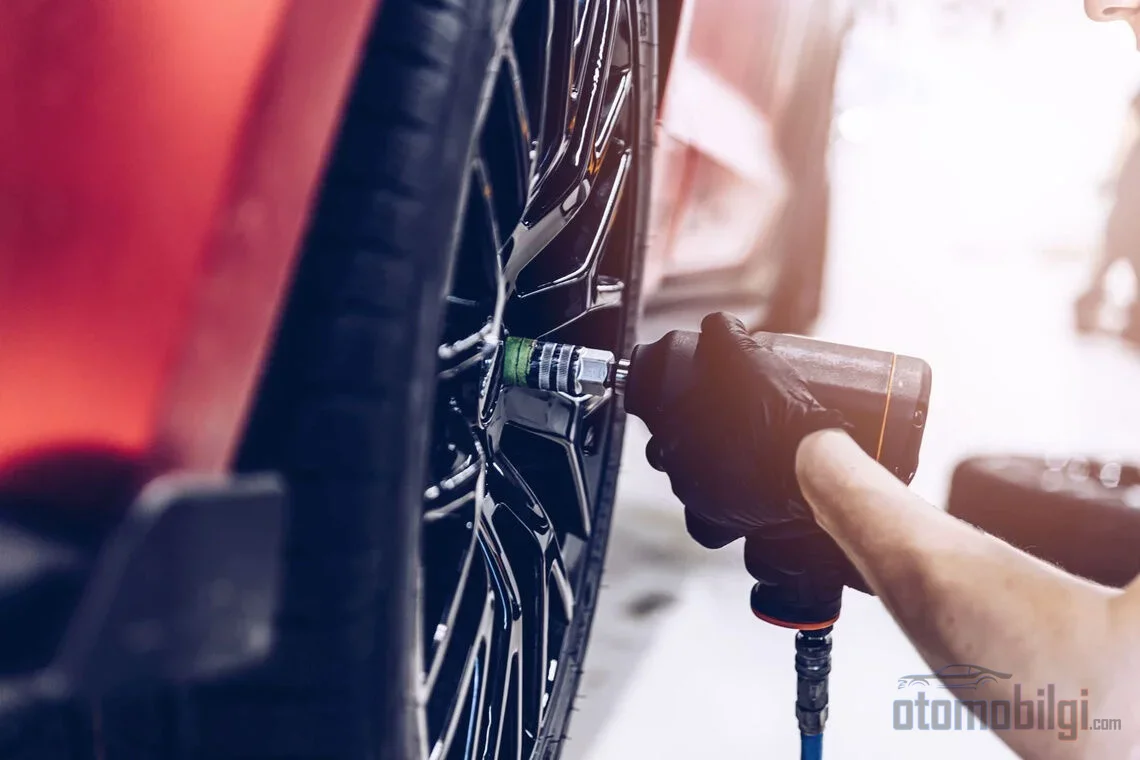
Tire rotation is the practice of changing the positions of the four tires at regular intervals to equalize their wear; as a rule, it is done every 8,000–13,000 km or every 6 months, whichever comes first. As for tread depth, the legal minimum is 1.6 mm; for winter tires this limit falls far short of safety, and you should 4 mm never go below that. Knowing both figures answers the question of whether you are squeezing out the tire's last kilometers or pouring out money too early.
Highlights
- The rotation interval is, as a general rule, 8,000–13,000 km or 6 months; on AWD vehicles this drops to 4,800–8,000 km.
- The legal minimum tread depth is 1.6 mm; the recommended tread for winter tires is 4 mm, ideally 4–5 mm.
- A new tire comes with a tread depth of about 10/32–11/32 inch .
- The threshold for switching to winter tires: days when the air temperature regularly drops below 7 °C .
- Rotation is a condition of some tire mileage warranties; if skipped, the warranty may become void.
As someone who has spent over thirty years in this business, I can say this with ease: the tire is the most neglected part of a car. In the old days there were people who checked the battery level and brake pads, but nobody looked at the tires; even now, not much has changed. Yet the tire is the only point connecting the car to the road, and that contact area adds up to less than four handfuls. Pressure is now known to everyone, but what rotation intervals, tread depth limits, and wear patterns mean still remains in the dark. This page exists precisely to fill that gap.
What Does Tire Rotation Do, Why Is It Necessary?
The answer is simple: to make all four tires wear equally. In a front-wheel-drive vehicle, the front tires carry steering load, braking load, and traction load all at the same time. The rear tires just roll. The result is that the front tires will finish noticeably sooner. In a FWD that is never rotated, the front tires can go bald while the rear ones may look almost new; this is both a loss of money and a safety problem, because on wet roads braking distance increases with a bald tire and the risk of hydroplaning rises.
Regular rotation provides: even wear across all four tires, consistent handling and braking performance, longer tire life, and reliable traction on wet and dry surfaces. On four-wheel-drive vehicles there is also a mechanical dimension: a tread depth difference between the axles creates stress in the drivetrain. Even wear reduces this stress.
There is also the matter of warranties, which gets overlooked. Some tire manufacturers require rotation as a condition of their mileage warranty; without your receipts, your warranty may be left hanging. A fifteen-minute job can count as documentation of a long-term commitment.
How Many Thousands of Kilometers Between Rotations?
The general rule is: every 8,000–13,000 km or every 6 months, whichever comes first. In practice, most drivers combine this with an oil change, which is a perfectly common and sensible approach. The car goes up on the lift, the tires are swapped, and it takes 15–30 minutes of your time.
The vehicle type changes this schedule:
- For sedans and coupes 8,000–11,000 km or 6 months is a reasonable interval.
- For SUVs and crossovers, 8,000–12,000 km is appropriate.
- In electric vehicles, instant torque is high, so wear accelerates; 8,000–9,600 km is a more accurate schedule.
- In performance vehicles, tires wear much faster; locally, 4,800–8,000 km or every oil change is recommended.
- Light trucks and AWD/4WD vehicles require rotation approximately every 8,000 km or at shorter intervals; the interval commonly given for AWD is 4,800–8,000 km.
Let's also add this: aggressive city driving, frequent heavy loads or trailer towing, rough bumpy roads, and stop-and-go traffic shorten this schedule. And if you've fitted new tires, be sure to rotate them within the first 8,000 km ; deep-tread tires are more prone to uneven wear during their break-in period. If you're curious about the exact figure, your vehicle's owner's manual should be the reference; sources define the general range variously as 5,000–8,000 miles, but the essence is the same.
How Does the Rotation Pattern Work According to Drivetrain?
The pattern depends on which axle the vehicle is driven by:
- Front-wheel drive (FWD): The front tires go straight back, and the rear tires move diagonally to the front. This is called the "forward cross" pattern and is the most common one.
- Rear-wheel drive (RWD): The rear tires move to the front on the same side, and the front tires go diagonally to the back. There are small differences between manufacturers in pattern details; some also recommend an arrangement where the rear tires go straight forward. Both are valid approaches.
- 4WD/AWD: All four tires rotate diagonally; both axle and side change.
There are two special cases. Directional tires have a tread pattern designed for a specific direction of rotation; these can only be rotated front-to-back on the same side. If you want to switch sides, the tire must be removed from the wheel. With staggered sets where the front and rear are different sizes, standard rotation may not be possible; if rotation can be done, the tires on the same axle only swap sides.
Also, if you have a full-size spare tire, include it in the rotation, especially on AWD/4WD vehicles. If the spare has a TPMS sensor, the system needs to learn the new tire. Another useful rule: if you're replacing only two tires, fit the new ones to the rear axle; this is the right choice for resistance to oversteer and hydroplaning. Finally, rotation is also an opportunity to check pressures, tread depth, and balancing if needed; don't miss these checks while they're free at the garage.
What Should Tread Depth Be, and What Is the Legal Limit?
The legal minimum is 2/32 inch, i.e. approximately 1.6 mm. This limit is an internationally accepted measure; 42 states in the US use this threshold. For commercial vehicles the picture is slightly different: 4/32 inch is required for steering tires, and 2/32 inch for other positions. Let me remind you, a new tire is sold with a depth of approximately 10/32–11/32 inch ; meaning that by the time you reach the legal limit, the tire has lost a significant portion of its tread.
| Tire Type / Condition | Recommended Minimum Tread Depth | Note |
|---|---|---|
| New tire | 10/32-11/32 inches (approximately 8-8.7 mm) | Factory tread depth |
| Summer tire - legal limit | 2/32 inch ≈ 1.6 mm | Cannot be driven on the road below this |
| Summer tire - practical recommendation | 4/32 inch ≈ 3.2 mm | Replacement should be planned at this level |
| Winter tire | 4-5 mm | Should not be used on snowy roads below 4 mm |
As you can see, the rules are stricter for winter tires. Depth is needed so that snow can be expelled from between the tread grooves; 4 mm a winter tire that has worn below this level does not actually behave like a winter tire on snowy roads. For this reason, in winter use it is wise to start looking for new tires when you approach 3.2 mm (4/32 inch) the level. The timing of the seasonal changeover is just as important as tread depth: switching to winter tires when the air temperature regularly drops below 7 °C and returning to summer tires when it consistently stays above this threshold is the right schedule. Winter tire compounds are formulated to stay soft in the cold; in the heat they wear out quickly and their grip deteriorates.
How Is Tread Depth Measured?
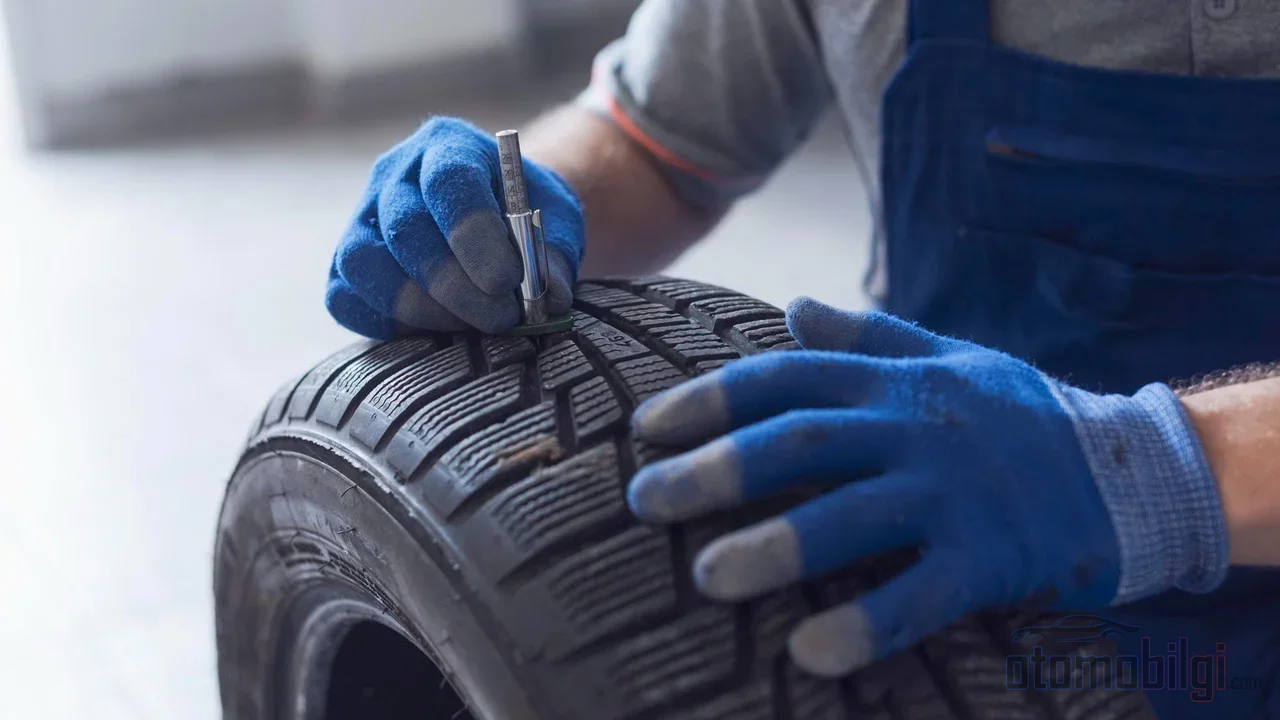
There are three practical methods; let me explain them in order of precision:
- Wear indicator bars: These are thin bars embedded in the tire's tread grooves. When the tread wears down to the same level as these bars, the tire is at its legal limit. No measuring tool is required; a visual check is enough. In terms of being cheap and available at any moment, this is my favorite.
- The coin test: Place a 1-cent coin into the tread with Lincoln's head facing down; if the entire head is visible, the tread is at or below 2/32 inch. As a Turkish equivalent, a 1 lira coin can also be used. A small note: after the discontinuation of the US penny, the future of this test is being debated; the quarter test is an alternative for those who want a higher threshold.
- Tread depth gauge: A simple ruler-like tool sold for a few liras. It provides the most precise measurement; even a tire shop will measure each groove on request.
In the past, you always had to go to a tire shop for this; now anyone with a gauge can map the condition of all four tires in their own garage in thirty seconds. If the depths of the different grooves differ considerably from each other, pay attention to the topic below.
What Do Wear Patterns Mean?
How a tire wears is a report of what is going on underneath the car. Thanks to regular rotation, you get the chance to read this report every 10 thousand kilometers:
- Center wear: If the middle of the tread is worn out, the tire is overinflated.
- Wear on both edges: A sign of underinflation. The pressure should be checked at least once a month, on cold tires.
- Wear on one side: Points to a camber or toe alignment problem; negative camber usually shows itself as the inner edge being worn away.
- Feathering: If one edge of the tread bars is smooth while the other edge feels shaved, the toe angle is off; feathering on the inner side indicates excessive toe-in, while feathering on the outer side indicates toe-out.
- Cupping (scalloped dips): Wavy, cupped areas on the edges point to wheel imbalance or a worn shock/strut.
In short, irregular wear is a diagnostic tool for a problem with pressure, alignment, suspension, or usage conditions. This pattern, quickly spotted during rotation, is solved with a small correction when caught early; when noticed late, you pay for all four tires.
What to Expect After Rotation, and What to Do for Longevity?
Slight noise or vibration after rotation, which can last a few hundred kilometers, is normal as the tires adjust to their new positions. But if it worsens, balance and suspension checks are needed. Alignment is not something that must be done with every rotation; however, checking wear during rotation helps detect alignment problems early and prevents rapid wear in a single position.
Rotation alone is not enough. Correct inflation is known to extend tire life by an average of 7,500 km (4,700 miles); check the pressure at least once a month, before driving, or on tires that are cold after being parked for at least 3 hours. Add to this regular visual inspections, valve cap and spare tire checks, alignment and balancing when needed, and avoiding overloading; all of these together ensure the tire truly reaches the lifespan stated in its guide. As far as I have seen over thirty years, what determines a car's life is not flashy maintenance; it is keeping up with these kinds of small, tedious, and regular tasks.
Sources
- How Often to Rotate Tires?
- Tire Rotation Guide
- How Much Tread Depth Is Enough?
- Using Winter Tires
- Winter Tire Tread Depth
- Minimum Tire Tread Depth Guide
- How to Check Tire Tread Depth: The Penny Test
- Understanding Tire Wear Patterns
- Reading Tire Wear Patterns
- Irregular Tire Wear 101
- How Often Should You Rotate Your Tires?
- TireWise
- Summer Tires vs. Winter Tires