Brake Lights: A Design Art
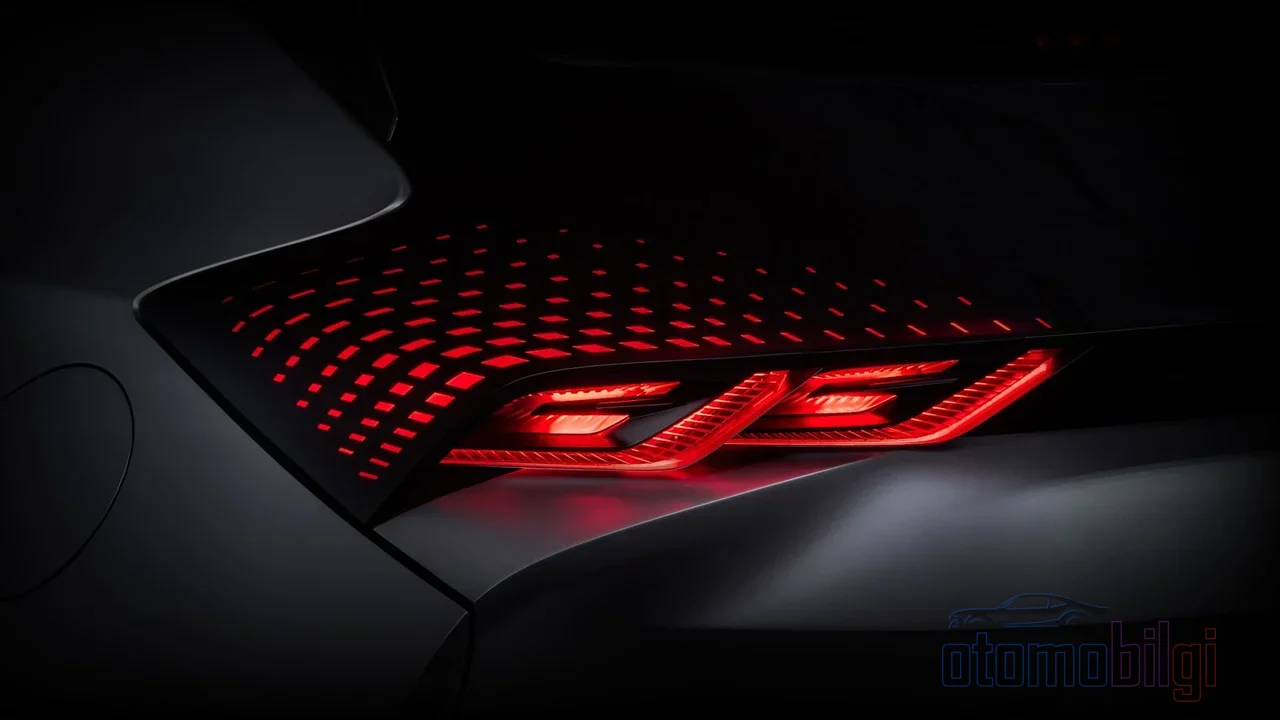
Have you ever wondered while walking through a parking lot at night: Can you name the make of the car coming toward you without looking at its grille, just by looking at that light glowing from a distance? Let's be honest - most of us find this hard because the headlights up front all look alike. But when you turn to the rear, things change completely. Do you see a single full-width strip of light? A certain German sports car brand immediately comes to mind. A sharp, angular light signature? Another one. So how did this all begin, and how did the taillight turn into art? Let's take a look together, because this story is far more fun than you think.
The Rear End, Long in the Shadow of the Front, Finally Became a Star
You know where all the attention goes in car design: the grille, the headlights, the wheels, the hood lines. In other words, the front and the sides. The rear, meanwhile, for many years consisted of just two similar-looking lamps, a trunk lid, and a badge. If you think about it, that's a bit odd - because if you spend hours in traffic looking not at the car ahead but at the car behind you, we see a car's face most often from the rear!
In recent years, though, the balance has shifted. Full-width LED light strips gave brands the opportunity to turn the rear end into a signature area. So much so that it is now possible to guess which brand a car is by looking at its rear in traffic, without looking at the badge. Ford's tri-bars, Porsche's continuous strip, Audi's sharp light signatures, Ferrari's iconic round elements, Lexus's L-shaped strips... Each one is like a signature. It's like recognizing a letter from the handwriting: the brand should be recognizable even from behind.
Highlights
- Porsche unveiled the new Macan with a three-dimensional LED rear light strip; the 2025 911 (992.2) also has a full-width strip.
- Audi's digital OLED taillights offer the 8 digital light signature as standard.
- Mercedes's ribbed taillights were used for about 25 years as a design signature.
- Since LEDs light up fractions of a second faster than old bulbs, rear-end collisions on highways have reportedly decreased noticeably.
- On BMW's Laser taillights, the name of the technology is written on the body.
Where Did the Light Strip Trend Come From?
The fact that all major manufacturers turned to the same solution at almost the same time is actually no coincidence. There are two major driving forces at play: technology and brand strategy. Before LED technology became cheap and widespread, making a single-piece, curved light strip was technically not even a dream - with bulbs you could only make straight lines and round shapes. When LEDs arrived, it was as if designers were handed a pen: now they could draw with light.
The rise of electric vehicles accelerated the process even further. Electric architectures have given designers tremendous freedom, and 2026 trend analyses emphasize that exterior design is built on efficiency and fluidity rather than aesthetics, with slim LED headlights, continuous light bars, and animated lighting turning vehicle lighting into one of the most powerful branding tools. So those light strips don't exist just to look pretty - being recognizable from behind has become one of the strategic goals of the modern automobile.
The Subtle Difference Between Porsche's Strip and Audi's Strip
Although the two light strips look the same, there is a difference between them that changes how they work, and this difference perfectly illustrates the line between good design and bad design. Porsche's strip is embedded into the vehicle's rear face. Part of the light illuminates the body surface, allowing the vehicle's rear contours to be perceived even at night. The three-dimensional LED strip of the new Macan is a current example of this; the strip on the Panamera is not only elegant, it is a solution that enhances rear visibility. On the 2025 911, the full-width strip was introduced together with an active rear wing that rises with speed.
On some competitors, however, the strip sits outside the body. The result is that the light is perceived like a two-dimensional formation floating in the air, and the vehicle's depth is criticized as being lost. With a simple analogy: a strip embedded in the body preserves the room's depth like a soft light cast onto a wall; a strip that protrudes outward can erase that depth like a neon hanging independently of the wall. Since perceiving where each vehicle is in nighttime traffic is critical, this aesthetic detail actually touches on the matter of safety as well.
Digital OLED: The Pixelization of Light
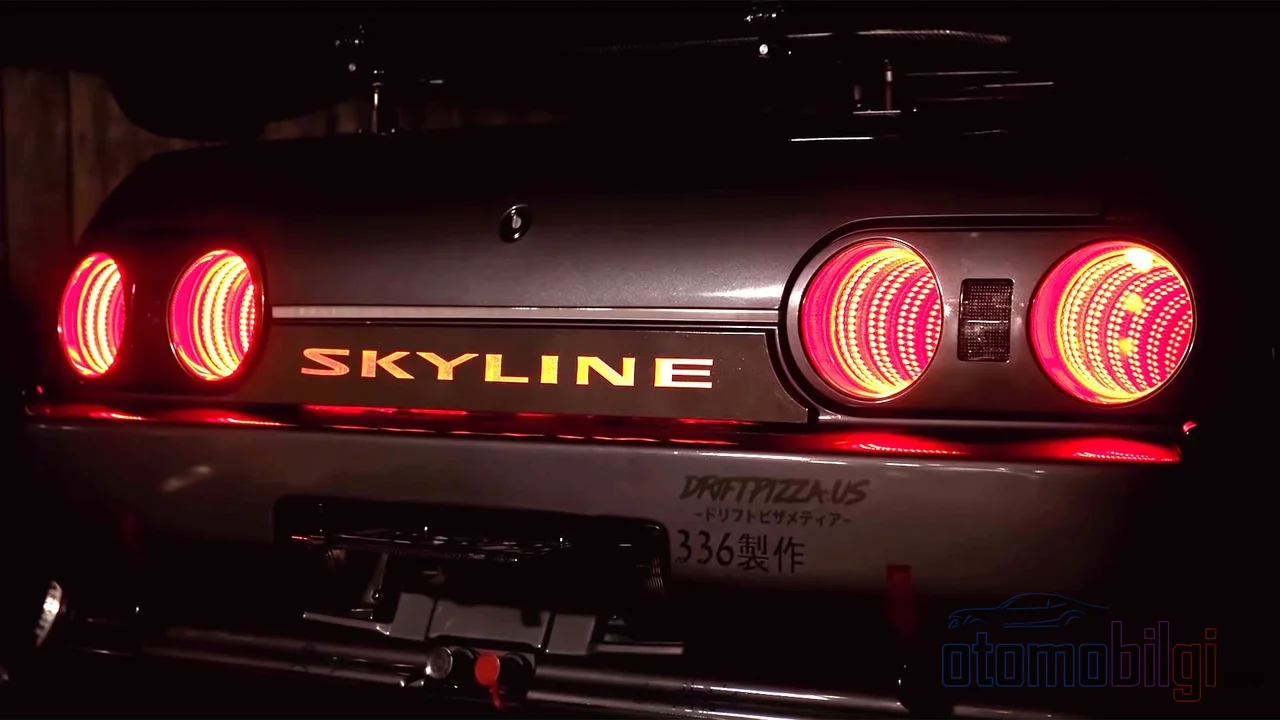
So what is Audi doing at the rear that is being talked about so much? The answer is two letters: OLED. A normal LED is a point source; you distribute it with reflectors and guides. OLED, on the other hand, is an ultra-thin, flexible panel that emits light from a surface - imagine a thin sheet of paper glowing in the dark. This is a game changer for designers: the panel can be divided into individually addressable segments, sharp segmentation can be achieved, and the light becomes a complete brand signature for the vehicle.
The concrete examples are striking. The rear lights of the Audi e-tron consist of 50 different OLED elements and can be programmed with specific patterns. The Q6 e-tron was the first market use of digital OLED 2.0 technology and offers eight digital light signatures as standard - meaning your car winks hello with a specific pattern from behind. Audi has also deployed the world's first curved digital OLED rear lights on production vehicles; the outward-curved panel in the SQ9 is described as the largest panel ever fitted to a production vehicle. This technology also opens the door to new functions such as strips and turn indicator lights.
The conversation-worthy aspect of all this is: the brand no longer settles for a single signature at the rear, it lets you choose and change the signature. There are SUVs that give the customer the option to choose between three different rear light signatures; dynamic welcome effects as well. Also, illuminated logos came into play: lighted emblems that glow as you approach the vehicle can become part of the welcome scenario. The badge is no longer just a piece of metal, but an element that breathes with light.
Mercedes' Half-Century Lesson in Tail Light Design
Do I even need to say that the brand pioneered all of these trends? In the 1950s, Mercedes' rear lights were small, vertically oriented glass blocks with rounded edges, providing only basic signaling. In the early 1960s, on finned models, chrome-trimmed vertical strips carried a distinctly American-influenced luxury accent. Then, in the 1970s, during the era of design chief Bruno Sacco, ribbed, sculpted tail lights emerged - and here's the interesting part: those grooves were not just for beauty; they were a functional innovation that let the wind clean away dirt, mud, and snow. This signature element was used across successive models for about 25 years.
Toward the end of the 1990s, triangular lights spilling onto the trunk arrived, and the brand took on a pioneering role in LED technology. When LED strips replaced bulbs, a small but enormous difference emerged: LEDs light up fractions of a second faster. At highway speeds, that tiny moment gives the driver behind extra reaction time, and rear-end collisions are reported to have decreased noticeably. In other words, something that looks beautiful may save lives - and that is exactly what I love most about design. In the 2010s, lights that sparkled like stardust thanks to microscopic reflectors turned into smart components that adjust their brightness according to daylight and traffic.
Not Everything Shines Bright: Risks and Pitfalls in Lighting Design
Since lighting design is such a powerful signature tool, is everything cotton candy and roses? No. First, there is a historical warning: the last-generation Saab 9-5 carried a system that, upon braking, dimmed the middle section of its strip and turned it into three separate brake lights. A creative idea, but unusual light patterns can become dangerous when they clash with a driver's reflexes; it was explicitly stated that this pattern could not be perceived reflexively and was therefore risky. The lesson is this: no matter how bold the signature, the brain of the person behind you expects familiar signals.
The second risk is overdose. With the spread of cheap retrofit LED strips, an inflation danger in creative lighting is being discussed; the criticism that designers focus more on art than on traffic also arises alongside those floating exterior strips. The third is aesthetic division: the highly circular LED clusters on Ferrari and AMG models are found to be largely divisive among enthusiasts - some see peak performance aesthetics, others find them too ordinary. Which side are you on? A similar debate is also ongoing about the front light strips on the VW ID series and the Hyundai Nexo; whether the trend gained more at the front or the rear, we shall see.
How Do These Lights Shine in Turkiye?
Of course, this story has an end that extends to us as well. Suzuki highlights on its official page that the new Swift hybrid carries a unique design signature with LED daytime running lights and LED rear taillights - meaning even global brands now emphasize the taillight as a signature when communicating in the Turkiye market. The Honda Civic taillight with integrated rear fog lamp, produced for the Turkiye market, is also a detail discussed among owners; there really is such a thing as lighting design shaped by the market.
And there is the domestic side: The world launch of the Togg T10F, the new Renault Clio to be produced in Bursa, and Hyundai's preview of its new model in Adapazari are all part of the current automotive agenda. This rise of light design in brand identity is becoming a field that vehicles designed and produced in Turkiye also care about - nowadays a brand is expected to be recognizable from behind even in its first generation.
So How Did the Taillight Turn Into an Art Form?
To sum up the essence of the matter: LED and OLED technology presented light to the designer as a thin, flexible, programmable material; electric architectures expanded the freedom of form; and brands made being recognized from behind a strategic goal. Forget the badge and try this: did you see a full-width strip, a sharp-cornered signature, or round elements? The answer reveals itself. Rear lights are now the signatures of automotive identity and are being designed to be recognizable even from a distance.
But the real gain goes beyond aesthetics. LEDs that light up faster, embedded strips that preserve the night contour, smart lights that adjust their brightness according to traffic... When something beautiful can also be safer, design is truly doing its job. When it comes to the future, it is predicted that OLED will be able to adapt dynamically in Matrix LED-like adaptive systems - meaning that light strip behind you won't be less smart, it will be much smarter. Next time you're on a night journey, look in your mirror: can you read the signature of the vehicle behind you?
Sources
- Lighting - Audi Technology Lexicon
- From Audi LED to OLED Technology - Audi ME
- Audi SQ9 – Lighting technology
- LED light strip - Terjes cars
- Rear light system for Porsche Macan - Hofmann Impulsgeber
- Illuminated logos for cars - Valeo
- Automotive Exteriors - OLEDWorks
- The Biggest Car Design Trends Taking Over in 2026 - Fast Lane Feeds
- New Suzuki Swift - Suzuki Türkiye
- The Newest Cars of 2026 - Saatolog