Why Has the Porsche 911's Silhouette Remained Unchanged for 60 Years?
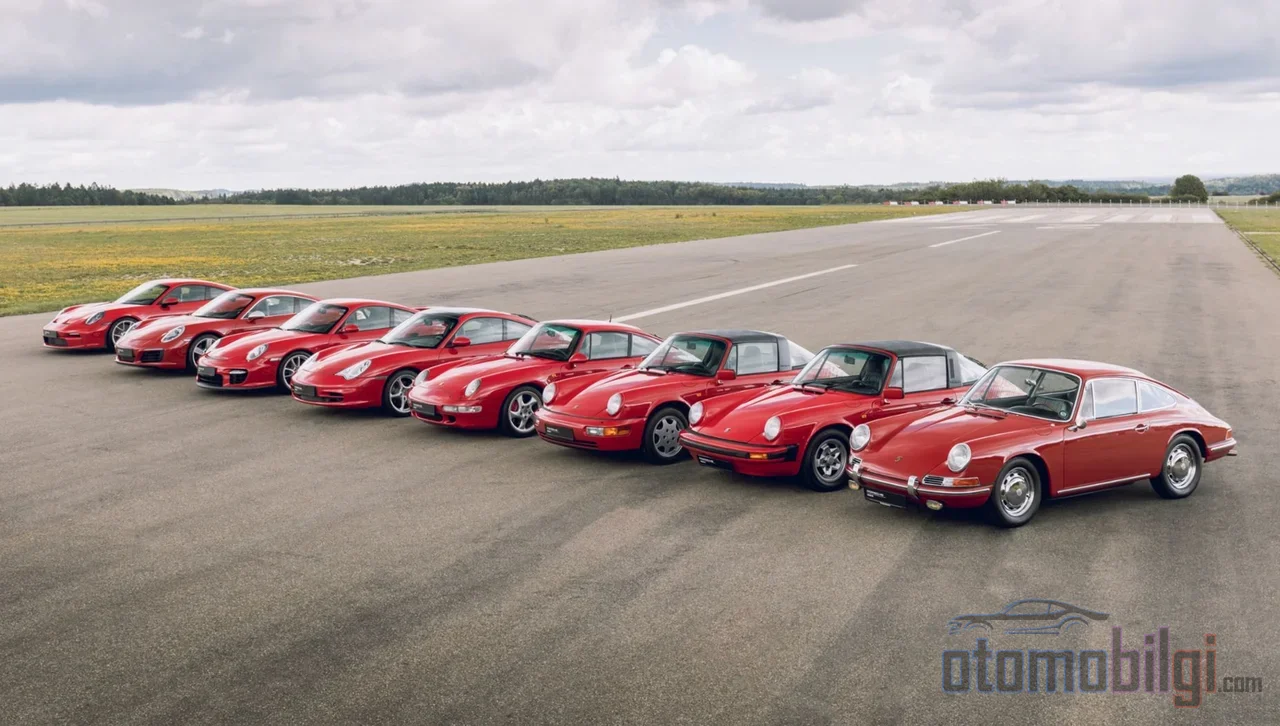
Say you are taking a photograph in 1963: At the Frankfurt Motor Show, a brand-new sports car stands there bearing a three-digit name with a zero in the middle. If you took that photo today and brought it to 2026, most people on the street would struggle to tell which one is old and which one is new. Let's be honest, no other model in the automotive world has managed this. So why has the silhouette of the Porsche 911 barely changed for 60 years? Is it laziness, a genius marketing strategy, or are there physical imperatives behind it dictated by the engine itself? The answer passes through a bit of all three, and its story is far more interesting than you might think.
From 901 to 911: The Moment the Silhouette Was Born
The story begins on September 12, 1963, at the Frankfurt International Motor Show. The car's original name was actually 901. When Peugeot claimed rights in France to three-digit names with a zero in the middle, Porsche renamed the model 911 before it was put on sale. Series production started in September 1964 in Zuffenhausen, and from that day to this, every 911 has come out of that factory alone.
The person holding the pen was Ferdinand Alexander, the young designer nicknamed Butzi; the son of Ferry Porsche and grandson of Ferdinand Porsche. The roots of the silhouette go back to 1959, to Butzi's sketches. The technical identity of the first 911 is also clear: an air-cooled 2.0-liter, that is 1,991 cc six-cylinder Boxer engine, 130 PS of power, 9.1 seconds in 0-100 km/h acceleration and a top speed of 210 km/h. But what really matters is the 2+2 seating layout and rear engine placement set that day: these two decisions have never changed to this day.
What Are the Elements That Make the Silhouette?
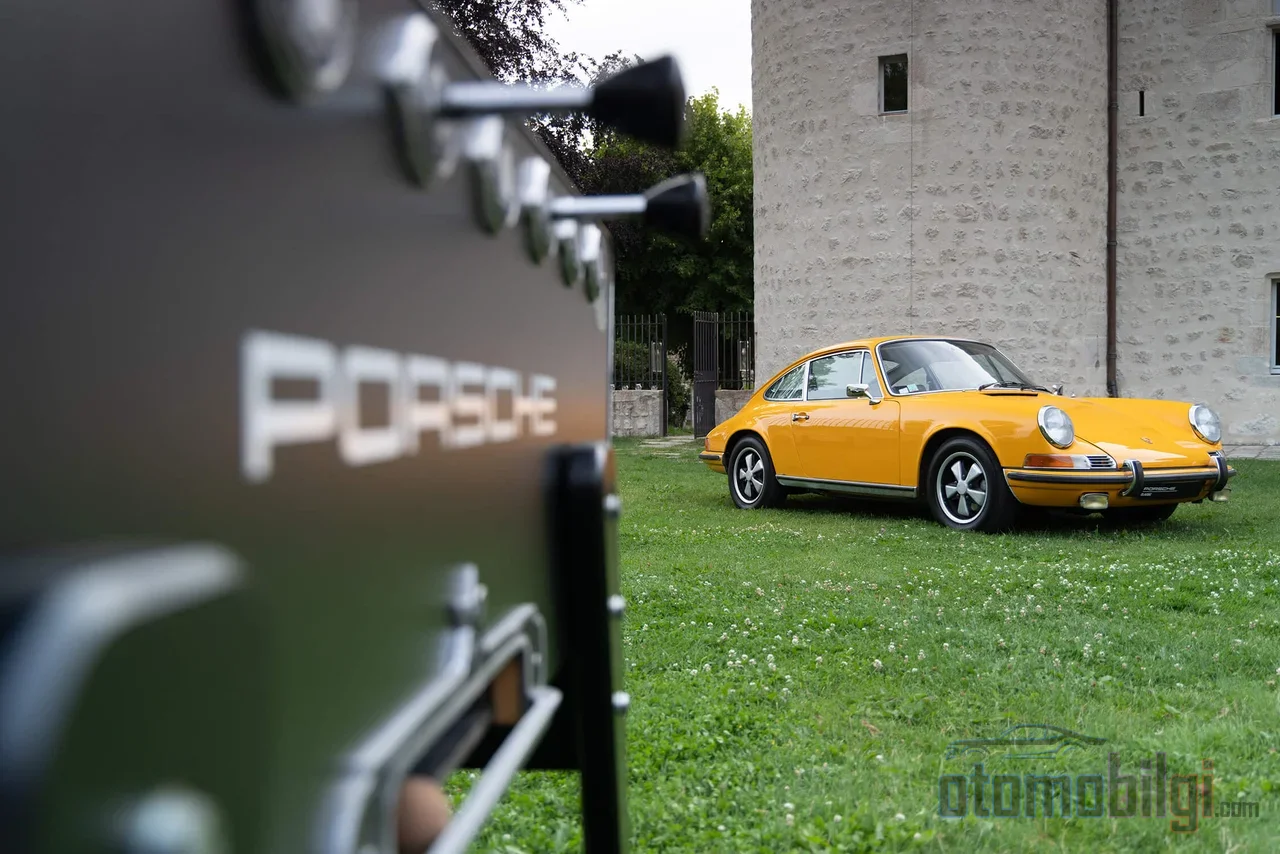
It is possible to recognize a 911 in the dark, just from its side profile. The reason is that a few powerful signature elements have been meticulously preserved across generations. According to the official Porsche narrative, the fundamental elements established by the first 911 and still valid are: the side lines, the fastback, meaning the roof design that descends seamlessly from the rear window to the engine cover, the shape of the side windows, the free-standing front fenders and the flat front hood. In Turkish automotive language, this philosophy is usually summarized as evolution, not revolution.
- The soft, flowing roofline toward the rear: in Porsche's own definition, the legendary flyline.
- The round headlight structure: the most distinctive facial signature carried across generations.
- The forward-sloping, flat hood and free-standing fenders.
- One more clever detail: part of the silhouette is dictated by the engine architecture. Since the heavy six-cylinder Boxer engine sits on the rear axle, behind the rear axle, the rear weight distribution and proportions are shaped accordingly. So that famous tail line is not just aesthetics, it is engineering itself.
Highlights
- The Porsche 911 was first unveiled in Frankfurt on September 12, 1963, its original name was 901.
- Across eight generations, the rear engine placement and fastback silhouette never changed.
- In 60 years, approximately 1.2 million 911s were produced; all of them came out of the Zuffenhausen factory.
- The best-selling generation was the 997, with 213,004 units.
- The 911 Carrera RS 2.7 was the first production car to carry a rear spoiler.
Eight Generations, One Line: A Chronology of Quiet Updates
The easiest way to see what an evolutionary strategy means is to look at it through the generations. Throughout eight generations, Porsche kept the 911 always current but never fashionable. In every generation, while the silhouette stayed the same, serious work was going on under the hood and in the details.
From Butzi to Mauer: Guardians of the Silhouette
As the design seat changed hands, each name left their own touch on the silhouette, but no one was willing to break the pen. During the G-series era, Anatole Lapine held the post, and from 1989 to 2004 Harm Lagaay took over. The 996 generation, bearing Lagaay's signature, became the most radical facelift in 911 history with its controversial fried-egg headlights. Since 2004, Michael Mauer has been in the seat. Butzi Porsche's design philosophy is still the foundation of the school today: according to his approach, good design must be honest; there is no unnecessary ornament or decoration. When you analyze an object's function, the form usually emerges on its own.
The Biggest Revolution Was Under the Hood
The 996, which arrived in 1997-98, was a radical technical step rather than a visual one: the transition from air cooling to water cooling. The reason was emission and efficiency requirements. The same generation was 185 mm longer than the previous 993; wheelbase increased by 80 mm, width by 30 mm. In other words, Porsche was renewing the car down to its foundations while preserving the silhouette. Porsche's design office holds the view that sports cars must remain compact and agile; it takes a deliberate stance against size growth. The current 992 generation has been on the roads since 2018, and in 2026 Porsche announced the goal of emphasizing the 911 DNA even further in its strategy through 2035. The flyline is not slowly dying; on the contrary, it is growing even stronger.
The Ducktail: The Silhouette's First and Boldest Strike
When we say the silhouette never changed, there is one exception, and a much-loved one at that. Introduced in October 1972, the 911 Carrera RS 2.7 went down in history as the first production car to carry an integrated rear spoiler. On this sub-1000 kg car, the spoiler was known inside Porsche by the nickname Entenburzel, meaning ducktail. This single detail instantly changed the 911's rear profile and went down in aerodynamic history. In 1974, for the IROC races, the ducktail was replaced by a larger spoiler known as the whale tail. In other words, while Porsche preserves the silhouette, aerodynamics can dictate the shape when necessary; the trick is doing this with a signature, not with a foreign hand, but in the 911's own language.
Isn't It Risky Not to Change?
So far we've told it like a bed of roses, but let's be honest: carrying the same line for 60 years is a serious risk. Going out of fashion, falling behind competitors, boring younger customers... So why does Porsche insist on this path?
The Advantage of Continuity: Being Recognized Builds Trust
The common observation in the design world is this: familiar shapes become a common language and build trust. In the case of the 911, this means the car itself has become a brand emblem. The person on the street recognizes a 911 in three seconds, and that feeling of recognition is the product of 60 years of accumulation. Porsche manages this legacy not by rejecting the past, but by preserving it; designing a new Carrera means working with the brand's identity, with its very essence. Porsche's definition of its design identity through Hero, rebel and creator - meaning hero, rebel and creator - and Focus, Tension, Purpose - meaning Focus, Tension, Purpose - is also part of this conscious identity management.
The Risk Side: Lessons of Radical Breaks
Porsche's own history also shows the price of radicalism. The 996, with its water-cooled engine and completely different headlights, was the boldest modernization of the 911; although it led the way in modernization, its headlight design was debated for years. The brand learned from this reaction: with the 997, the line returned closer to the original 911 form, and the 997 became the best-selling 911 to date with 213,004 units. The message is clear: The Porsche customer loves innovation but does not like the silhouette being touched.
Porsche's Path vs. the Competitors' Path: Two Different Playbooks
So do the other giants give a different answer to the same question? I have to be honest here: Neither BMW's nor Mercedes' design has a strategy of preserving a silhouette across generations on the scale of Porsche; both brands follow a path of spreading their signature elements, such as details like the kidney grille at BMW, across the brand as a whole. The positioning is also different: While Porsche emphasizes performance and driver focus, BMW stands out with the balance of sportiness and comfort, and Mercedes with its emphasis on luxury. In other words, BMW and Mercedes carry their signature in the details, while Porsche carries it holistically, in the very silhouette itself. This is not good or bad; two different design cultures. But only the 911 has the luxury of using the form itself as an emblem.
So What Is the Real Answer? Why Has the 911 Looked the Same for 60 Years?
Let's summarize, because the answer to the question has three layers. The silhouette of the Porsche 911 has not changed for 60 years because the rear-engine architecture physically dictates the form, because recognizability builds a brand presence and trust worth its weight in gold, and because Porsche chooses refinement over revolution in every generation, allowing the design to mature without losing its identity. The fastback roofline, round headlights, and flowing fenders have gone beyond being an aesthetic choice; they are now a graphic signature recognized all over the world.
And let's not forget this: this car, thought to have never changed, actually undergoes a silent revolution of kilometers in every generation. The switch was made from air cooling to water cooling, dimensions grew, weights changed, and 1.2 million vehicles were produced in 60 years. Porsche's genius is not in not changing; it is hiding the change within a line that even an eight-year-old child will recognize even years later. Butzi Porsche's sketch from 1959 is still on the roads and, according to plans for 2035, it looks set to stay there for quite a while longer. Not a bad job, but not too bad a job, don't you think?