From the Y-Job to Today: How Did Concept Car Culture Come to Be?
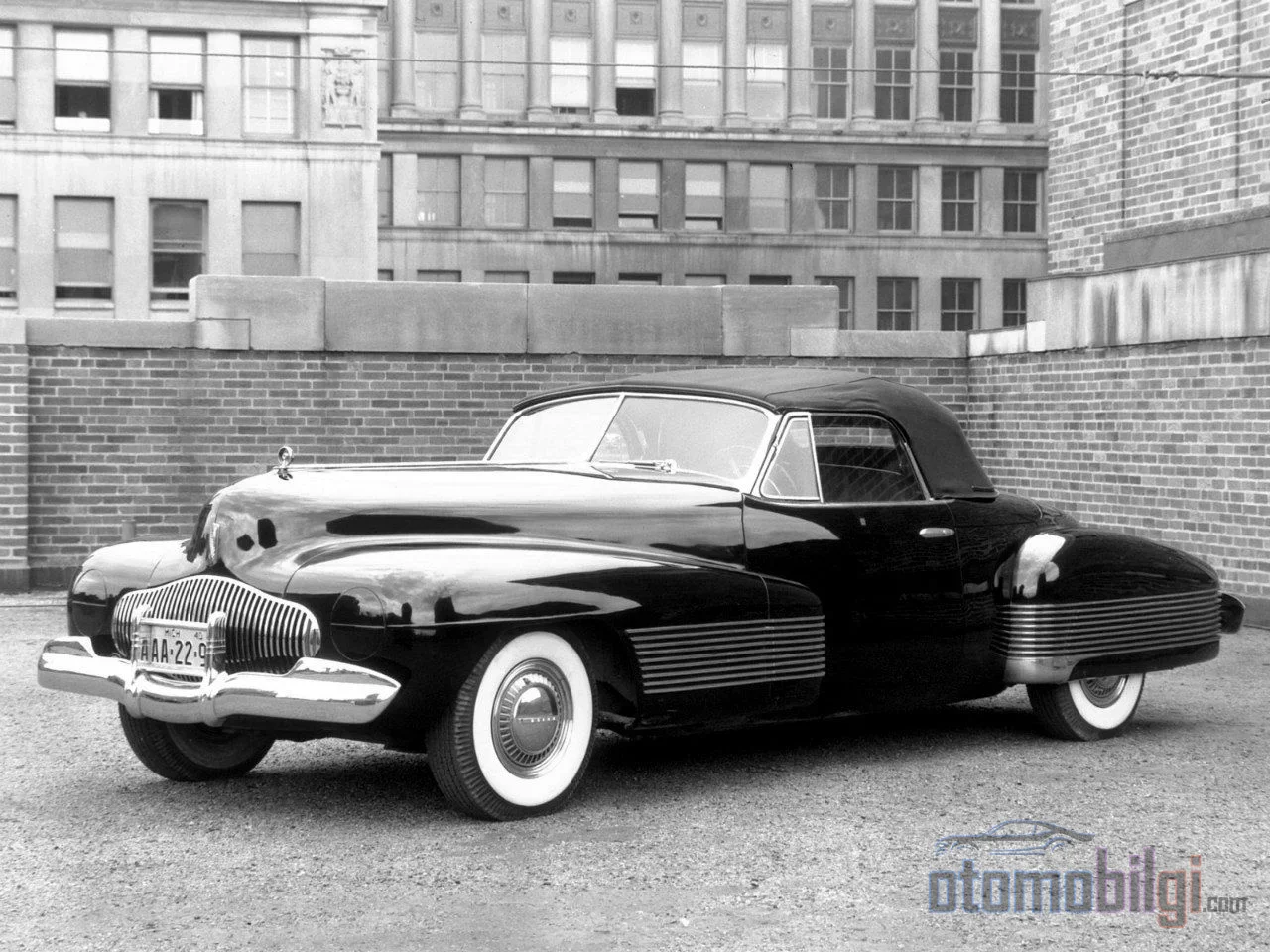
In Detroit of 1938, something strange begins to stir in General Motors' design studio: a car that will never be sold, built only to showcase an idea, is taking shape. All of the concept cars that are a staple of today's auto shows were born from the question in the mind of the man who ran that studio back then: how do you show tomorrow's car today? That man's name was Harley Earl, and the car's name was the Buick Y-Job. The story of history's first concept car tells us where those "show cars" you and I photograph at exhibition halls came from.
Who Is Harley Earl and How Did He Establish the Design Studio?
First, let's put our fingers on the map: Harley Jarvis Earl was a Californian, born in 1893, who grew up in Hollywood. Hollywood means showmanship, means spectacle - and Earl learned that lesson very well. While working at his father's coachbuilding company in California, he developed the method of modeling designs in clay instead of on paper, allowing him to see the result in its most realistic form. In other words, the philosophy of "carve the car in clay first, then let's discuss it" was his signature.
In 1927, at the age of 34, he walked through GM's doors and founded the Art & Colour Section on June 23, 1927. That unit eventually became the Styling Section, and today, GM Design. This office is the ancestor of every automobile design studio in the world; in 1940, Earl went down in history as GM's first Vice President of Styling. He is also the creator of some of the most iconic elements of American car design, such as tailfins and wraparound windshields. In short, the man was the founding big brother of the industry.
The Y-Job: Not a Car, but a Brainstorm on Four Wheels
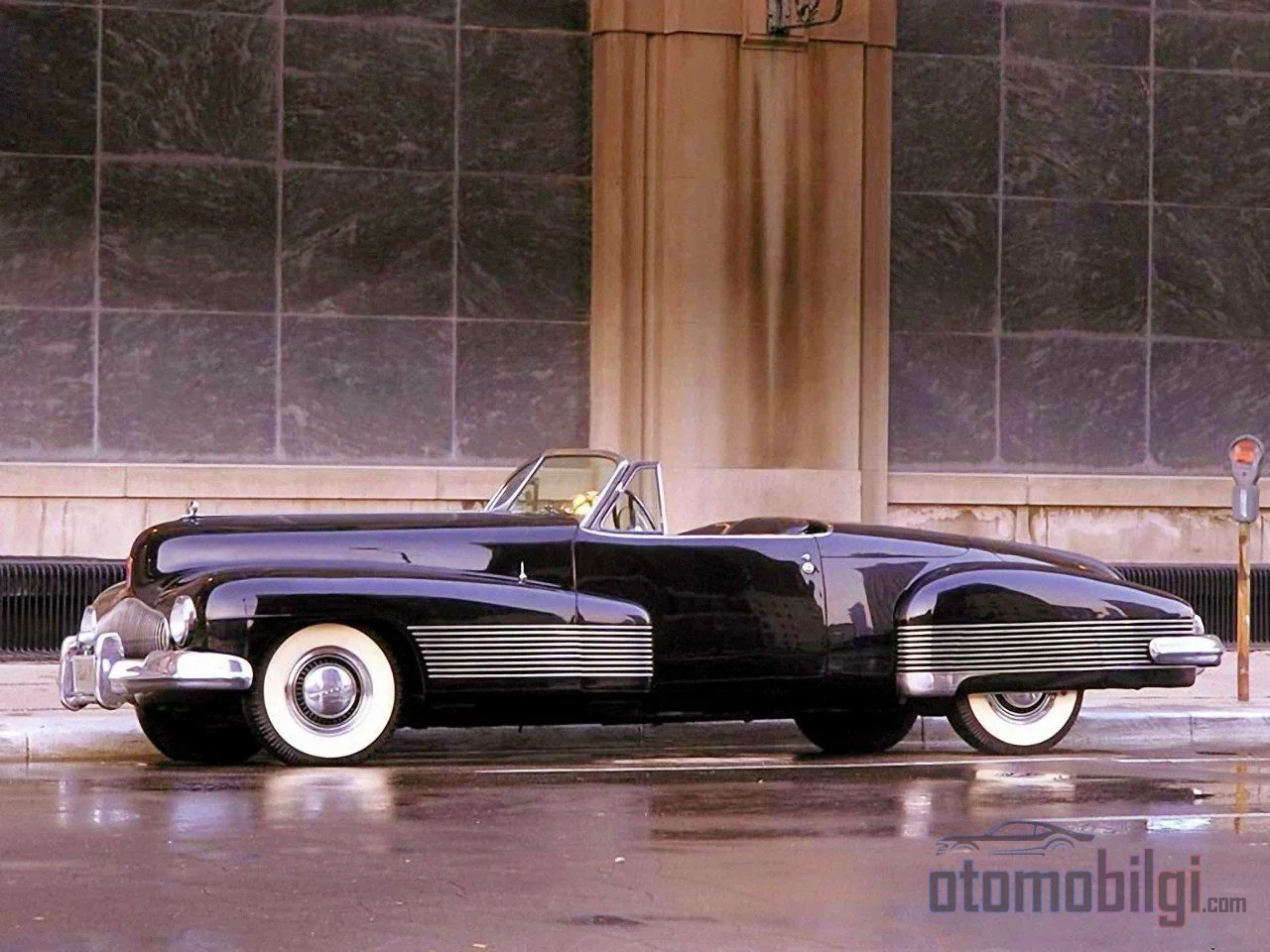
So what did Earl do in 1938? In short: he built a car that would never be sold. Yes, you read that right - in an industry worth millions of dollars, a one-off vehicle that was never intended for mass production. As a 1956 GM press release summarized, Earl's goal was to test public reaction to design and engineering innovations; that is where the idea of the "dream car" came from. GM positioned the vehicle as a pure design exercise conducted to preview the future.
The vehicle itself was a two-door convertible, built on a 1937/1938 Buick chassis and carrying a 5.2-liter (320 ci) naturally aspirated Buick straight-eight engine. That engine produced 141 hp at 3600 rpm; power was sent to the rear wheels through a three-speed manual transmission. The body, roughly 5.3 meters long, looked wide and low by the standards of the era.
Highlights
- Built in 1938, introduced in 1939; considered the first concept car in history
- Designer: Harley Earl, GM's first design chief
- 5.2-liter straight-eight engine, 141 hp
- Hidden headlights, power windows, flush door handles: science fiction for 1938
- Earl used the vehicle as his personal car until 1951
Features That Seemed Like Science Fiction in 1938
Now let's get into the technical details, because the Y-Job's real bombshell is its feature list. This car had things that no car on showroom floors that year had:
- Hidden headlights that folded electrically into the fenders
- Flush door handles, level with the body
- Power windows
- Completely eliminated running boards
- Wraparound bumpers and a retractable roof
- The "gunsight" ornament on the hood
What did all of these have in common? They all removed the protruding, wind-catching, friction-creating parts of the vehicles of that era. The hidden headlights and flush door handles created a clean, aerodynamic profile - the foundation of GM's post-war design philosophy was laid in exactly this moment of understanding. It would not be wrong to say this car is the inventor of the language we use today when talking about a car's "flowing lines."
Its impact was also long-lasting: The Y-Job's styling details left their mark on Buick into the 1950s, and the grille concept the car championed is considered the forerunner of the brand's vertical "waterfall" grille tradition. Buicks from 1942 onward were strongly influenced by this car's lines. An interesting detail: the hidden headlight concept did not reach a GM production vehicle for many years - the idea was far ahead of its time, and the world of mass production was not yet ready.
Why the Name "Y-Job"? Two Competing Stories
The name is odd, isn't it? The "Job" part is easy: in studio jargon it means work, a project. As for the letter "Y," there are two accounts. The first: at the time, experimental vehicles were called "X," and Earl moved on to the next letter of the alphabet, "Y." The second: in the aviation industry, the letter "Y" denoted the most advanced prototypes, and Earl liked that vibe. We don't know which is true, but both fit the story; after all, the car means either "the next level beyond X" or "an aviation-grade prototype." Both carry the same message: this was no ordinary project.
Detroit's Open-Air Showcase: Earl Drove the Car Himself
Now comes my favorite part of the story. Imagine: you're in an era when auto shows didn't display concept cars, when such a tradition didn't even exist yet. How do you show your new ideas to the public? Earl's answer was legendary: he made the car his own and started driving it on the streets of Detroit as his daily means of transport. Until 1951, for a full 13 years, he used it as his personal car; then he replaced it with a 1951 model vehicle.
Think about this for a moment: the world's most technologically advanced, one-of-a-kind car, passing right by you in traffic. Everyone around was watching the power windows and the disappearing headlights, curious and asking questions. The Y-Job thus became a moving open-air showcase; GM was gauging public reaction to new ideas without ever attending a single show. In an era without social media, that was how you went viral.
The car's subsequent journey was also dramatic: only a single example was built, it was never offered for sale, and it was never intended for production. It was later restored at the Henry Ford Museum, returned to the GM Design Center in 1993, and is preserved today in the GM Heritage Collection. In 2001, Buick, drawing inspiration from the Y-Job, created the Blackhawk with modern adaptations; meaning the idea continues to inspire even after more than eighty years.
Motorama: How Was Show Car Culture Institutionalized?
The Y-Job was a spark; what fueled the flame was Motorama. The GM Motorama was a massive auto show held between 1949 and 1961; its roots trace back to the annual industry banquets Alfred P. Sloan had organized at the Waldorf-Astoria Hotel in New York starting in 1931. The first show was held in 1949 under the name "Transportation Unlimited Autorama".
Motorama was not an ordinary fair; it became the premier automotive event and staged groundbreaking innovations. Harley Earl used these shows to present new ideas to the public with visionary, non-production vehicles he called "Dream Cars". So what the Y-Job had started on the streets had now turned into an organized show.
There is also a cruel side to the story: most of GM's dream cars were actually vehicles never meant to survive. Some were narrowly saved from the scrap shear in the mid-1980s. Thinking that concepts now sold for millions of dollars were once sent to the trash gives one a strange feeling, doesn't it?
What Does the Y-Job Tell Us Today?
So let's give a clear answer to the main question, just like an answer key: The Y-Job, produced in 1938 and introduced in 1939 by General Motors under the leadership of Harley Earl, is history's first true concept car, built not to be sold but to showcase the future and gauge public reaction. Nearly all of the innovations on it made their way into production vehicles within the following fifteen years; which proves how accurate the idea was.
Today, when you walk into an auto show, you now know that the floor on which that dazzling concept stands on a rotating platform was laid in 1938. The concepts of the electric era, the rotating stages, the light shows - they are all descendants of the one-off convertible coupe that Earl drove around the streets. The Y-Job's true legacy to us is this: a car can cease to be a product to be sold and become a showcase for a dream. And this idea still works, more than eighty years later.
Sources
- Buick Y-Job - Wikipedia
- Y JOB - Harley Earl (harleyjearl.com)
- What was the First Concept Car? Meet the Buick Y-Job
- Why the 'Y-Job' - Harley Earl and the Buick Dream Car
- GM Design - Y-Job introduction anniversary
- Buick Y-Job: The First Concept Car Harley Earl Drove to Work
- The Buick Concept Car That Changed The World Of Auto Design
- Buick Y-Job the first concept car in automotive history