Raymond Loewy's Mark on Automotive Design
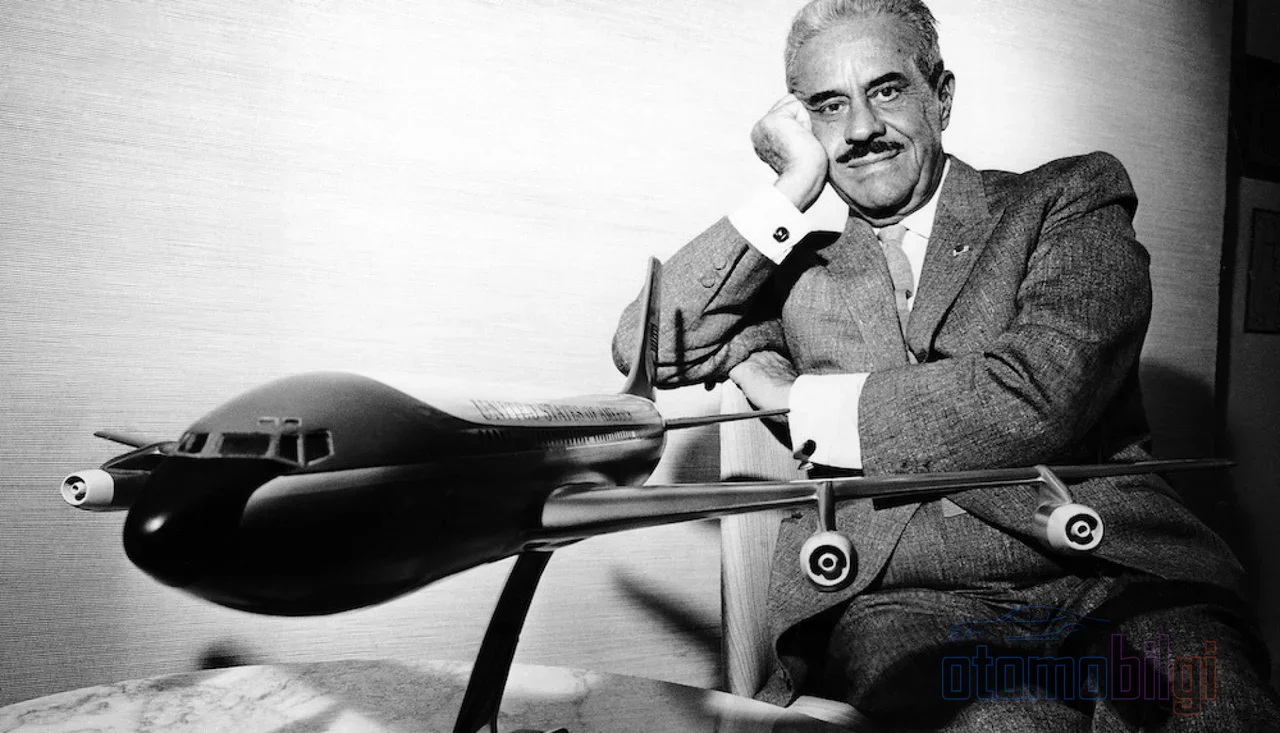
February 1961, Palm Springs. In the middle of the California desert, far from the city, four men are sketching a sports car in a closed-off house. Duration: 40 days. The mission: to save a struggling car company. And the man at the table is someone whose profession is not car design: Raymond Loewy, who shaped the visual identity of the 20th century, from the Coca-Cola bottle to the Shell logo, from the refrigerator to NASA's space station interior. Raymond Loewy, who shaped the visual identity of the century. So how did an industrial designer create a brand like Studebaker and the Avanti, whose legend is still talked about today? That is exactly where the story begins.
Who Is Raymond Loewy and Why Is He Called the "Father of Industrial Design"?
Raymond Loewy was born in Paris on November 5, 1893. While he was studying design, World War I intervened; he joined an artillery unit and was awarded the Croix de Guerre. Loewy emigrated to the United States in 1919, first working as a fashion illustrator at Vogue magazine and later as a window display designer. In other words, he began his career not with cars, but with pen and paper, in a completely different world.
With America's postwar economic boom, his career gained momentum. Loewy became so famous as one of the founding figures of industrial design that his name became almost synonymous with the profession itself, and he became one of the few designers to appear on the cover of TIME magazine. What made him so special? A very simple idea: every object has an ideal form that best expresses its function, and good design links function with profit. Nothing is added for ornament; every detail has a purpose. A company executive who worked with him described him as a man with one eye on his imagination and the other on his muscles. The coming together of design genius and commercial intelligence in one person - that was Loewy's secret.
Highlights
- Raymond Loewy was born in Paris in 1893 and died in Monaco in 1986
- Loewy's relationship with Studebaker lasted from 1938 to 1962
- The Avanti was designed in Palm Springs in 40 days and produced between 1962-63
- The MAYA principle: Most Advanced Yet Acceptable
- Loewy's own Avanti is in a museum collection today
Why Did Studebaker Bring in an Outside Designer?
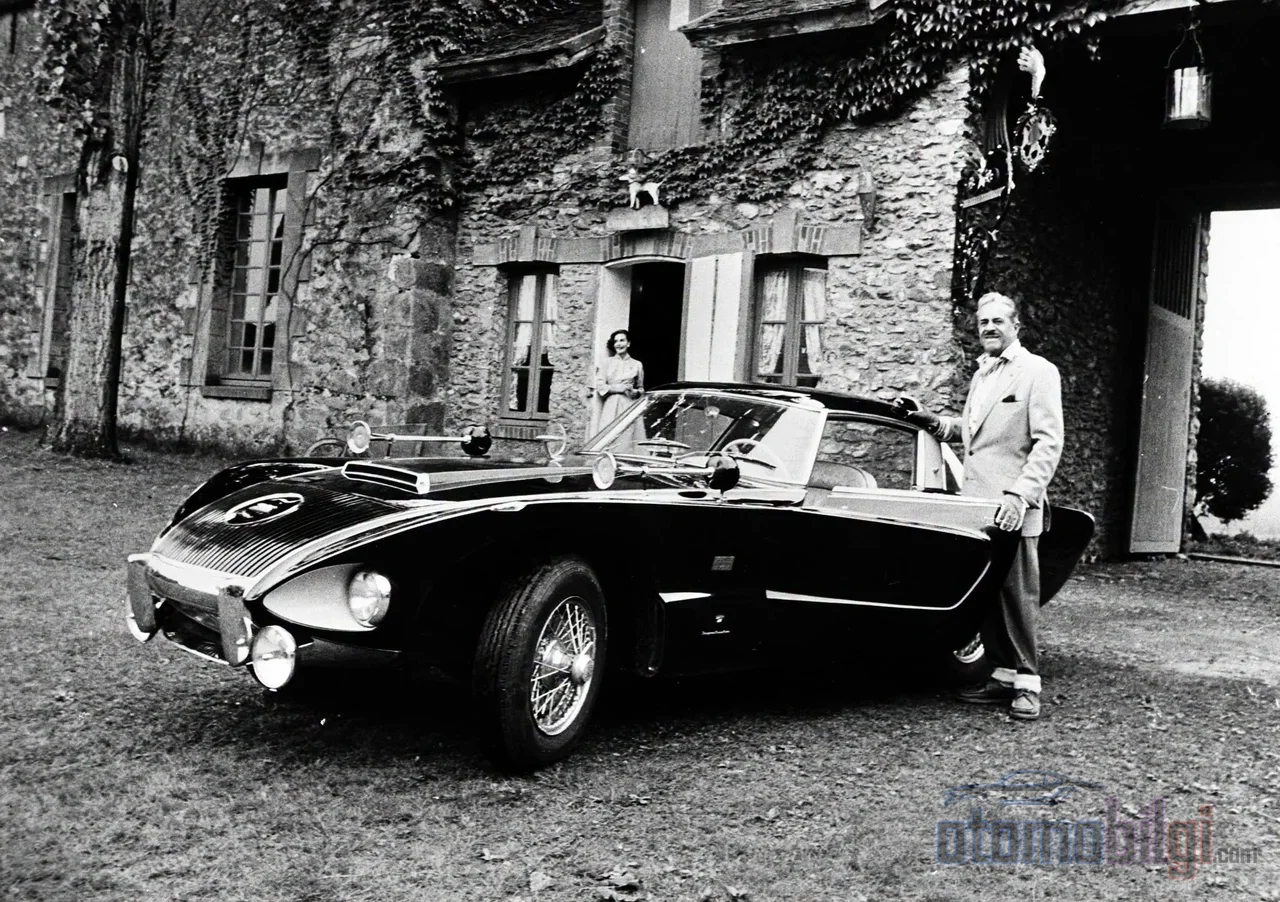
In 1930s America, the car giants had their own design studios, but Studebaker had no such department. So the company looked for a solution outside and established a consultancy relationship with Loewy's firm in 1936. While Loewy's team was responsible for the car's exterior surfaces, Helen Dryden worked on the interior. By Loewy's own account, his relationship with Studebaker officially began in 1938 and continued uninterrupted until 1962.
This collaboration became a turning point for Studebaker. Between 1938 and 1956 and beyond, with the Avanti, Loewy and his team produced the brand's most iconic designs; Studebaker came close to being the leader of the industry during this period. The Starliner, released in 1953 and today a favorite of design lovers, was also a product of this era. In short, Studebaker invited the brightest mind in industrial design to its door not despite lacking its own studio, but thanks to this.
This period also saw an internal rivalry: relations with Virgil Exner, who worked in Loewy's team, were never good; the two designers did not get along, and this rivalry is still remembered as one of the best-known feuds in the history of industrial design. Exner later trained as a stylist at GM and created his own legend.
Loewy's Legacy Beyond Automobiles: From Coca-Cola to Space Stations
Before moving on to the Avanti, one thing needs to be clarified: Loewy never saw himself as an automobile designer. Because his production range was incredibly broad. The Shell and Exxon (formerly Esso) logos, the TWA logo, the old BP and Quaker State logos, the US Postal Service logo, the Lucky Strike packaging... If you noticed, you have seen all of them at some point in your life; the architect of that visual memory is Loewy.
- He modernized the Coca-Cola bottle and designed vending machines
- He drew the GG1, S1 and T-1 locomotives for the Pennsylvania Railroad; these designs were aerodynamically optimized, drag-reducing forms
- The 1954 Greyhound Scenicruiser bus, the 1962 Air Force One exterior paint scheme, the NASA Skylab living quarters, the Elna Lotus sewing machine and the Coldspot refrigerator all bear his signature
- In 1964, he sat on the floor of the Oval Office with the Kennedy family and designed a stamp with colored papers
This list may seem too long for an article about cars, but that is exactly the point. When Loewy drew a car, it bore the stamp of not just someone who drew cars, but of an eye that had shaped everything from bottles to locomotives, from logos to space stations. Loewy, who sometimes criticized American cars as wheeled music boxes, drew the discipline he brought to car design precisely from this broad range.
What Is the MAYA Principle and How Does It Apply to Cars?
Perhaps Loewy's most enduring legacy is the MAYA principle. It stands for Most Advanced Yet Acceptable. The idea is this: a design should be as innovative and advanced as possible, but it must also respect the limit of what society can accept. It is necessary to strike a balance between the world the user knows and is familiar with, and the new and unfamiliar. Think: would you have gotten used to your phone if its design had been completely different every year? Neither entirely old nor entirely from outer space; exactly that sweet spot. The Coca-Cola bottle and the Shell logo are classic examples that were modernized over time in line with this principle while retaining their recognizability.
On the automobile side, the price of this principle can be heavy: if you go too far forward, the customer gets scared; if you pull back too much, you become ordinary. Loewy's Studebaker designs can be read as the textbook example of striking this equation. Another of his principles concerned his view of weight: weight is the enemy. The same philosophy lay behind the idea of a fiberglass-bodied sports car.
A Legend Born in 40 Days: How Was the Avanti Designed?
In the spring of 1961, Studebaker's new president Sherwood Egbert called Loewy back to bring vitality to the company. The company was going through hard times, and a sports car would lift the brand to its feet. Loewy accepted the offer on a single condition: the design work would be done far from the city, away from outside influences.
So Loewy shut himself away in Palm Springs with his small team consisting of Tom Kellogg, Bob Andrews and John Ebstein. The team designed a radical sports car with an intense 40-day program. The result was the Avanti, introduced in 1962 and produced between 1962-63: a fiberglass-bodied car with an unusual sense of symmetry and sweeping lines, remarkably bold for its era. In 1963, the R2 version with a supercharged V-8 engine was produced, and today this car is regarded as one of the masterpieces of the mid-century. Loewy's famous "weight is the enemy" motto was embodied in the fiberglass body.
So did the Avanti save the company? This is where the story gets a little sad. The Avanti burned briefly but brightly; it could not single-handedly turn Studebaker's fate around. But the design itself left such an impact that Loewy's own customized Avanti is now in the collection of a major museum in Los Angeles, and it continues to come back into the spotlight in various exhibitions and shares throughout late 2025 and 2026. Perhaps the car could not be a savior for the company, but it became a lasting victory for the history of design.
What Was Loewy's Distinctive Vision That He Brought to Cars?
Here lies the answer to the question we asked at the beginning of the article. Loewy's real contribution to automobile design was not the lines, but the mindset he brought. He believed that a product should exude emotional appeal even while sitting on the shelf; he said that people want to touch a car's elegant curves, love it, and be recognized as its distinguished owner. Logic alone does not sell cars, emotion does. This is precisely what brands have been talking about for years as design language.
For him, symmetry was not sacred; the Avanti's unusual symmetry and sweeping elements were a deliberate challenge to the neat mirror games of classic car design. There was no useless, purposeless ornamentation of any kind. And every innovation was kept within the acceptability limits of the MAYA principle. Of course, critics did not forget the moments when he contradicted his own rules: he could be caught riding in gold-painted special vehicles in the style of the American cars he criticized as wheeled music boxes. Some also said that he was a brilliant designer but that he was also in the right place at the right time. That is partly why some historians see him as an authority who took credit for every job simply because his name was at the door. These are debatable; but 20. century's claim to have made daily life more beautiful ultimately left behind not a registered millionaire, but a visual world etched into the public's memory.
Why Is Raymond Loewy's Legacy Still Important?
Loewy, who passed away in Monaco on July 14, 1986, left behind cars exhibited in museums, logos still recognized on the roads, and a principle that the design world still uses today. Today, when a brand introduces its new design and praises lines that are not overly assertive but look fresh, it is essentially an unwitting repetition of the MAYA principle. Designing the interior of an electric car like an airplane cabin is the modern-day echo of the weight is the enemy motto.
When it comes to automobiles, Loewy's mark is not limited to a single model; he lives on through his role as a bridge that carried the discipline of industrial design, the understanding of emotional design, and aerodynamic awareness into automobile studios. The Studebaker Avanti could not save a company, but it made a way of thinking permanent: a good car, like any well-designed object, must be both forward-looking and familiar. The next time you look at a photo of a concept vehicle and say "this is very bold, but nobody would buy it if it went into production," you will be talking to Raymond Loewy without realizing it.
Sources
- Raymond Loewy - Wikipedia
- Studebaker Avanti - Wikipedia
- Career Highlights - The Official Licensing Site of Raymond Loewy
- 50 Works 50 Weeks: Raymond Loewy's Studebaker Avanti - LACMA
- Sublime Studebakers: The Raymond Loewy Era - Studebaker Museum
- Coachbuilt.com - Raymond Loewy
- Studebaker Avanti: Loewy's rider - Classic & Sports Car
- Raymond Loewy vs. Virgil Exner - Core77
- Raymond Loewy, the Man Who Made the 20th Century Beautiful
- The MAYA Principle - IXDF