Virgil Exner and the Forward Look Revolution in Automotive Design
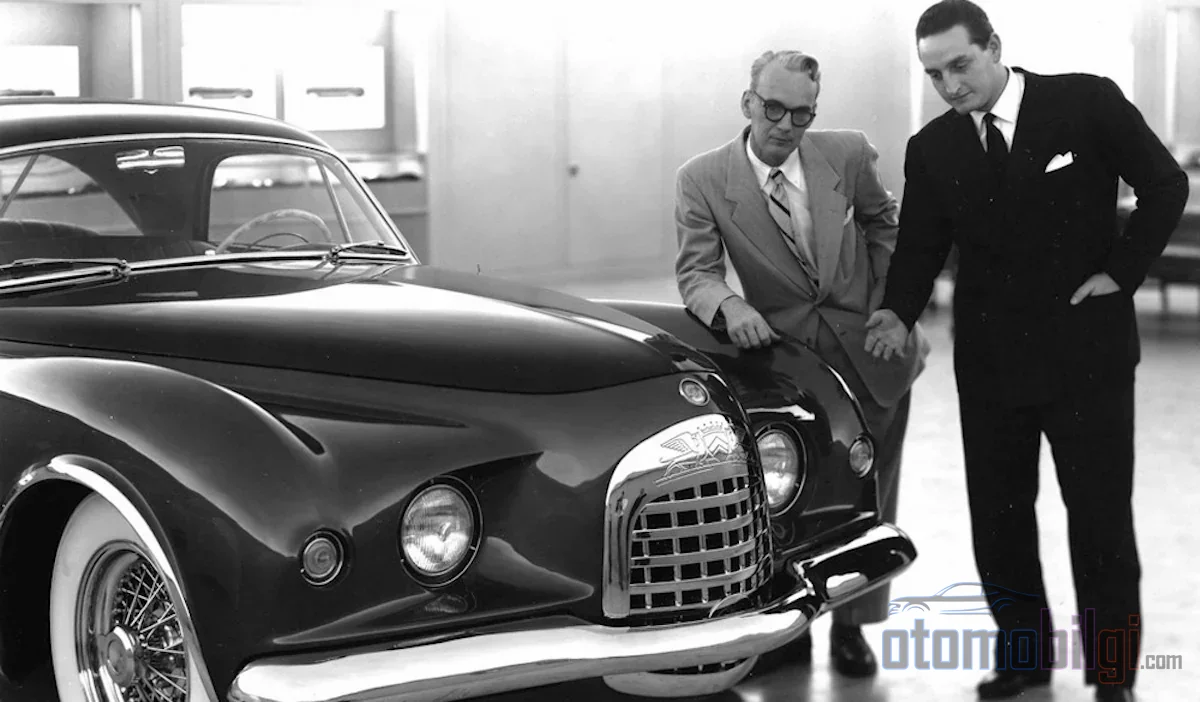
1957, Detroit. Panic mode is on in General Motors' design studios: Chuck Jordan from GM climbs a fence, thinking it's worth a tip, and sees Chrysler models that haven't even been launched yet. What he sees is so shocking that styling chief Bill Mitchell persuades Harley Earl to reopen the completed 1959 designs and commissions alternative designs for every line from Chevrolet to Cadillac. Who is the man who could make an automotive giant sweat like this? His name is Virgil Exner. And the design language he created, the Forward Look, changed American automobile design in a single stroke.
You might say, wait a minute: didn't Harley Earl come up with the tailfin idea? Yes, Earl used it for the first time on the 1948 Cadillac. But the one who truly carried the fin, gave it an identity, and brought the jet age to American roads was Exner. If you're ready, let's begin the story of the man who transformed Chrysler from boring boxes to the king of style.
Who Is Virgil Exner? The Road from Studebaker to Chrysler
Virgil Max Exner was born on September 24, 1909, in Ann Arbor, Michigan, and as an infant was adopted by George W. and Iva Exner. He studied art at the University of Notre Dame, but in 1928, after two years, he dropped out due to lack of money and began working at an advertising studio. So those magnificent lines you see were shaped not only by talent, but also by a struggle for survival.
His first big opportunity came at General Motors: styling boss Harley Earl hired him, and Exner became responsible for Pontiac styling before the age of 30. In 1938 he moved to Raymond Loewy's firm, where he worked on the advance planning of postwar Studebakers. He was fired by Loewy in 1944, but Studebaker took him directly onto its staff, and this became the sweetest revenge of his career: Exner was the final designer of the well-received 1947 Studebaker Starlight coupé. Although it was Loewy who gained public recognition, the design patent listed Exner as the sole inventor.
In 1949, Exner joined Chrysler's Advanced Styling Group. On July 25, 1957, he was appointed Chrysler's first vice president in charge of styling; he had more than 300 personnel under his command. So why did such a successful designer have to go to Chrysler? The answer may surprise you.
Anger Born from Boxes: Chrysler Before the Forward Look
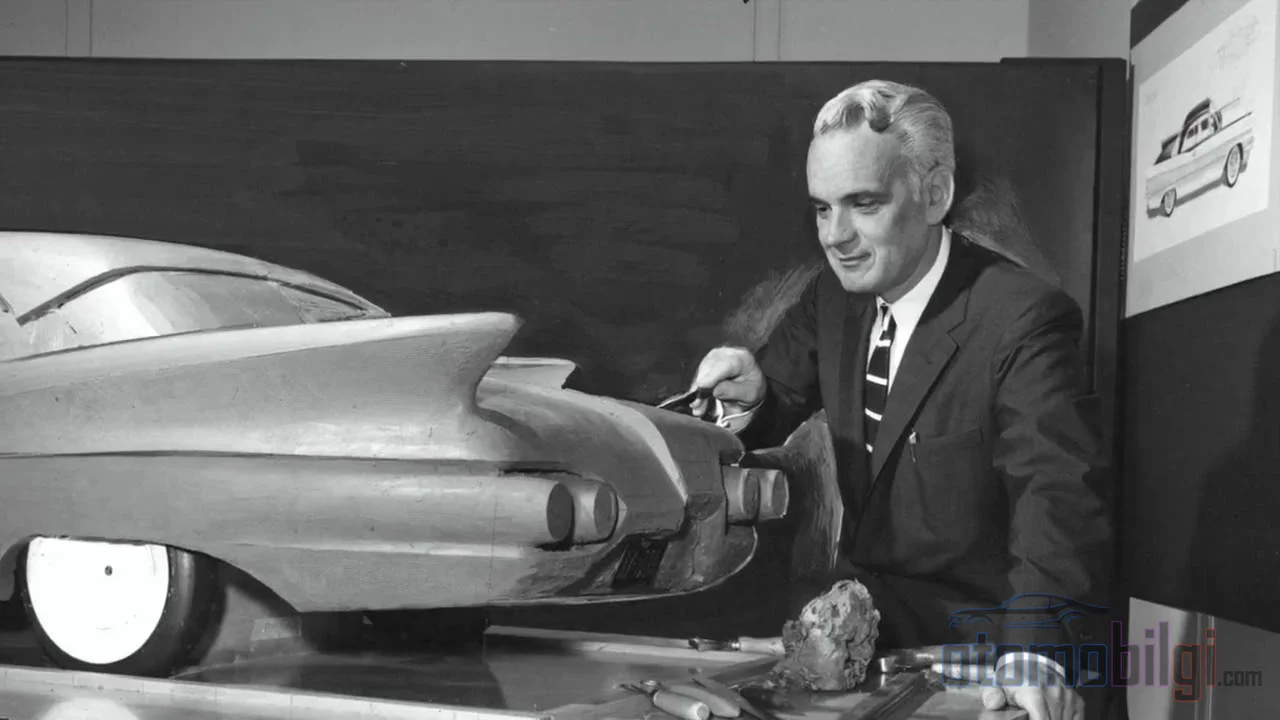
When Exner arrived at Chrysler, the picture was deplorable. The vehicles were shaped by engineers, and the company was known for solid, well-engineered but stylistically extremely boring products. Exner utterly despised the boxy 1949 Chrysler bodies and regarded the Town & Country model as a lumber wagon. For a designer, there could be no greater insult.
Highlights
- The Forward Look is the design language covering Chrysler products from 1955-1963
- Exner became Chrysler's first vice president of styling on July 25, 1957
- The 1957 Imperial was the first production vehicle to use wraparound curved glass
- Harley Earl was the first to use the tailfin idea, but it was Exner who carried it
- The influence of Exner's K-310 and d'Elegance on the Karmann Ghia's design is evident
It is rumored that the president of the era, K. T. Keller, wanted tall cars so that passengers could sit wearing hats. Although Keller was often blamed for the boxy look, he was in fact aware of this stylistic drawback and wanted to change it. Indeed, in 1949 he commissioned from Pininfarina a slender four-door concept based on the New Yorker chassis; in 1951 the Italian Ghia workshop brought this idea to life with the Plymouth XX500. It was precisely with this car that the idea of commissioning truly experimental cars was born in Exner. And it was from here that one of the most striking design languages in American automotive history would emerge.
What Is the Forward Look? Long Hood, Slim Body and Fins
Let us define it briefly: The Forward Look is the design language Exner brought to Chrysler products between 1955 and 1963, characterized by a long hood, short trunk, low roofline, wedge-like forms and dramatic tail fins. But there was serious engineering behind it as well: Exner was passionate about fins for both aesthetic and aerodynamic reasons, and had his designs tested in a wind tunnel at the University of Michigan.
The fuse of the fin idea was lit when Exner saw the fins on a 1948 Cadillac inspired by the Lockheed P-38 Lightning fighter aircraft. Exner placed fins at the center of his designs, lowered the rooflines, and instantly made cars more elegant and more aggressive. In 1955, Chrysler took the stage with a new design philosophy introduced as The New 100-Million Dollar Look; the first Forward Look production cars were the 1955 Imperial and the first Chrysler 300. These two models transformed the company from a cautious manufacturer into a serious style leader.
1957: The Year That Suddenly Flew to 1960
1957 was Exner's masterpiece year. Chrysler launched entirely new models: long, low, wide cars with sweeping fins. They created a sensation in the North American automotive industry. The 1957 Imperial used compound curved glass for the first time in a production car, and the fin had become a symbol as recognizable in late-1950s America as Elvis Presley. Plymouth's advertising slogan summed it all up: Suddenly, it's 1960! That is, today is 1957, but our cars are three years ahead. In June 1957, Exner and his team were honored with the Industrial Designers Institute's gold medal. In 1958, the Forward Look sponsored the era's groundbreaking Fred Astaire TV special. In short, Exner was now designing not just cars, but popular culture.
Earl versus Exner: The Fin Wars
In 1950s Detroit, the real rivalry was between Harley Earl and Virgil Exner. Earl was the first to use the fin; but Exner made it the carrier of style. By the late 1950s, the two giants had grown the fins so large that, as Cadillac and Chrysler tried to outdo each other, some eyes began to find this race stylistically problematic. Still, fins became the symbol of American luxury in the early 1960s.
Returning to that famous fence story: GM seeing Exner's ready-made designs led to a redesign of the completed 1959 GM lines. Stopping a competitor's work and forcing a reshuffle of the drawing board is the greatest compliment you can give in this industry. But like every peak, Exner's would not be permanent.
The Ghia Collaboration: Ten-Thousand-Dollar Dreams
Exner had a strong personal bond with Luigi Segre, head of the Italian Carrozzeria Ghia, and this alliance produced a flood of concept cars ranging from the 1952 Chrysler K-310 to the Dodge Firearrow series, and from the Chrysler d'Elegance to the DeSoto Adventurer. The economics of the arrangement were unbelievable: Ghia built a small body on a standard chassis and turned out show cars for $10,000 to $20,000; while Chrysler's own workshops were spending $200,000 to $300,000 on show cars. The K-310, the first Ghia custom car, had cost only $10,000.
The most dramatic fruit of this collaboration was the Chrysler Norseman: Designed under Exner's supervision, hand-built in Turin, and a masterpiece with its Hemi V8 and aluminum body. But the public never saw it, because it sank into the ocean along with the ship it was being transported on, the Andrea Doria. One of the most painful losses in design history. Another interesting project was the Plymouth XNR, an asymmetric roadster that challenged the Corvette.
A Surprising Legacy: The Karmann Ghia Connection
Here is the least-known side of the story: Exner's imprint on the design of the VW Karmann Ghia is controversial, but his influence is undeniable. The car bears striking similarities to Exner's d'Elegance and K-310 concepts; it was introduced at the 1955 Paris Motor Show and over 445,000 units were produced in 19 years with almost no changes. When Exner saw the car in production in 1955, he was delighted that one of his designs had gone into large-scale production. Segre also sent the first production Karmann Ghia imported to Michigan to Exner as a token of gratitude. So Exner's lines had also seeped onto German roads, via a journey you were unaware of.
The Decline: The 1962 Fiasco and Beyond
Every hero's story has a breaking point; Exner's began in 1956, with the heart attack he suffered during the design of the 1961 models. He returned to work in 1957, but the real blow would come from elsewhere. When a rumor surfaced that GM would be shrinking its cars, Chrysler president Tex Colbert ordered Exner to shrink the 1962 design as well. Exner objected, believing it would make the cars ugly, but he resisted only as long as he could. The rumor turned out to be false and GM did not downsize; 1962 Plymouth and Dodge sales fell seriously.
Chrysler removed Exner from his post the same year; the 55-year-old designer was left with a consulting position in exchange for a retirement pension. In his place came Elwood Engel from Ford, the designer of the 1961 Lincoln Continental. Exner later described the wingless, downsized 1962 Plymouth and Dodge models as plucked chickens. A bitter but very precise description. The 1961 models are considered the last Forward Look designs. The Forward Look legend, born in the 1955 model year showrooms with long and low cars, is rapidly rising in value in the collector market today.
Its Legacy: A Line Extending to Today's American Design
After being fired, Exner did not give up. He designed a series of Revival Cars planned for production in 1963: The Duesenberg revival attempt, Stutz, Mercer, the Bugatti Type 101 concept, and the Mercer-Cobra were all part of this series. The Duesenberg Model D proposal was a dramatic luxury concept; the Bugatti concept, despite a chassis not faithful to the original, was considered both an engineering and a styling success. These very projects were the forerunners of today's heritage-badged models, that is, series returning with names from the past.
His influence lingered in the industry for a long time: the Porsche 917 racing cars of the early 1970s carried wings reminiscent of Exner's designs. In 1961, Exner founded his own company with his son Virgil Exner Jr. and passed away on December 22, 1973, in Royal Oak, Michigan, from heart failure. But his lines did not die.
So what is the essence of this story? This: Virgil Exner is the name who, even if he did not invent the fin idea, earned it its place in American culture, made Chrysler a styling leader, and laid the foundations of today's American design language with the long hood, low roof, and expressive front-end philosophy. Earl started a trend; Exner turned it into a way of life. Next time you look at a photo of a classic Chrysler, see the ambition at the tips of those fins. Exner will be there, waiting at the end of his line.
Sources
- Virgil Exner: The Designer Who Gave Chrysler Its Forward Look
- Virgil Exner, Part 2, Chrysler: Birth of the Tailfin
- Virgil Exner - Detroit Historical Society
- Virgil Exner's Forward Look cars rocket upward in a down market - Hagerty
- 1958 Chrysler New Yorker show car driven - Classic Cars Magazine
- Virgil Exner's greatest hits - Classic & Sports Car
- Exnercising - A unique Bugatti - Revs Automedia
- Virgil Exner - Wikipedia