The Hidden Hero of the Jaguar E-Type: Malcolm Sayer
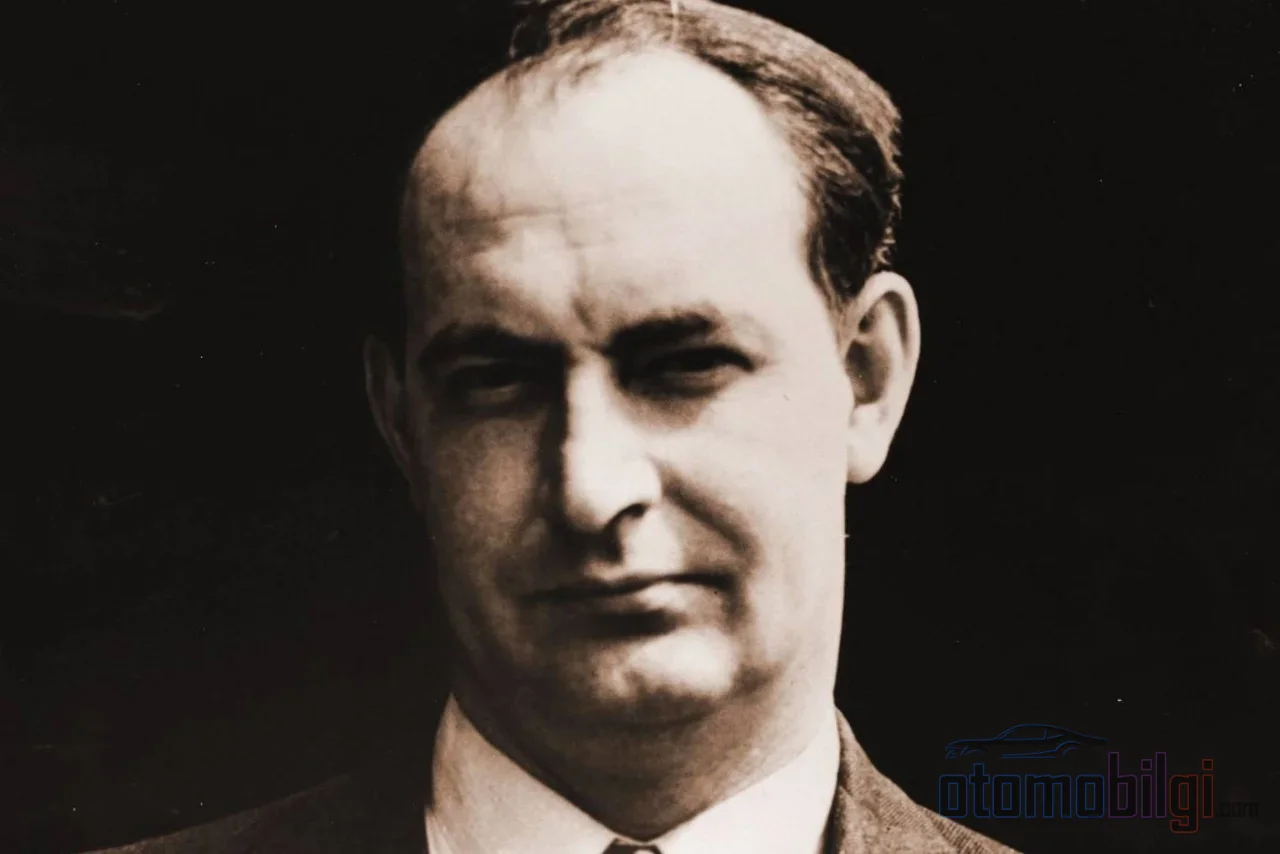
Suppose you have no computer at all. You don't have a wind tunnel either. Just a slide rule, seven-digit logarithm tables, and a huge sheet of paper. And you are asked to draw one of the most beautiful cars in the world. Sounds impossible, doesn't it? But Malcolm Sayer did exactly that. The flowing, aircraft-wing-like silhouette of the Jaguar E-Type is not the moment of inspiration of an artist; it is the product of thousands of mathematical calculations done with a pencil. So how did this mathematician, who grew up with aircraft aerodynamics, turned the beauty of a car into formulas? Let's get started, because I think this story is one of the best ones never told in the classroom.
From Aircraft to Cars: How Did Sayer's Path Open Up?
Malcolm Sayer was born on May 21, 1916, in the town of Cromer in Norfolk. His father Gilbert taught mathematics and art at Great Yarmouth Grammar School; so he grew up in a home immersed in numbers and drawing. Don't you think this combination was destiny from the very beginning? At the age of 17, Sayer won a British Empire scholarship and began studying Aeronautical and Automotive Engineering at Loughborough College. He graduated with a first-class honors degree in 1938.
Then came the war. Sayer began working at the Bristol Aeroplane Company, where he worked on the design efficiency of combat aircraft such as the Beaufighter and Blenheim. In other words, before drawing cars, this man had learned how metal floating in the air converses with the air itself. Then, in 1948, an interesting stop: He went to Iraq to establish an engineering faculty at Baghdad University. When the faculty remained only on paper, he took over the maintenance of the state's vehicle fleet and returned to England in late 1950.
The real turning point came in early 1951. Jaguar's technical director William Heynes recognized Sayer's mathematical aerodynamics understanding rooted in aviation and brought him into the engineering drawing office. I think this was one of the most accurate hires in automotive history.
Highlights
- Malcolm Sayer calculated aerodynamic forms with a slide rule and logarithm tables instead of a wind tunnel.
- The C-Type won Le Mans in 1951 and 1953, while the D-Type won it in 1955, 1956 and 1957.
- The D-Type reached a speed of 192.4 mph (approximately 310 km/h) on the Mulsanne Straight.
- The E-Type was unveiled in Geneva in March 1961 and entered the permanent collection of MoMA in New York.
- The Series 1 3.8 engine produced 265 bhp of power and 354 Nm of torque.
What Do You Do Without a Wind Tunnel? Sayer's Method
Now stop and think: today, wind tunnels costing millions of dollars and supercomputers are used to improve a car's aerodynamics. In Sayer's era, wind tunnels were both rare and expensive; and Jaguar had no such facility. What did Sayer do? He relied on calculation.
Using a slide rule and seven-digit logarithm tables, along with formulas he developed himself, he defined three-dimensional curves through numerical points, that is, datum points. Today CAD software does this job in seconds; Sayer, for his part, was getting the same results with a pencil at his desk. This system, said to have been learned from a German professor during his Baghdad years, was essentially a handmade computer.
Testing Airflow with Wool Tufts
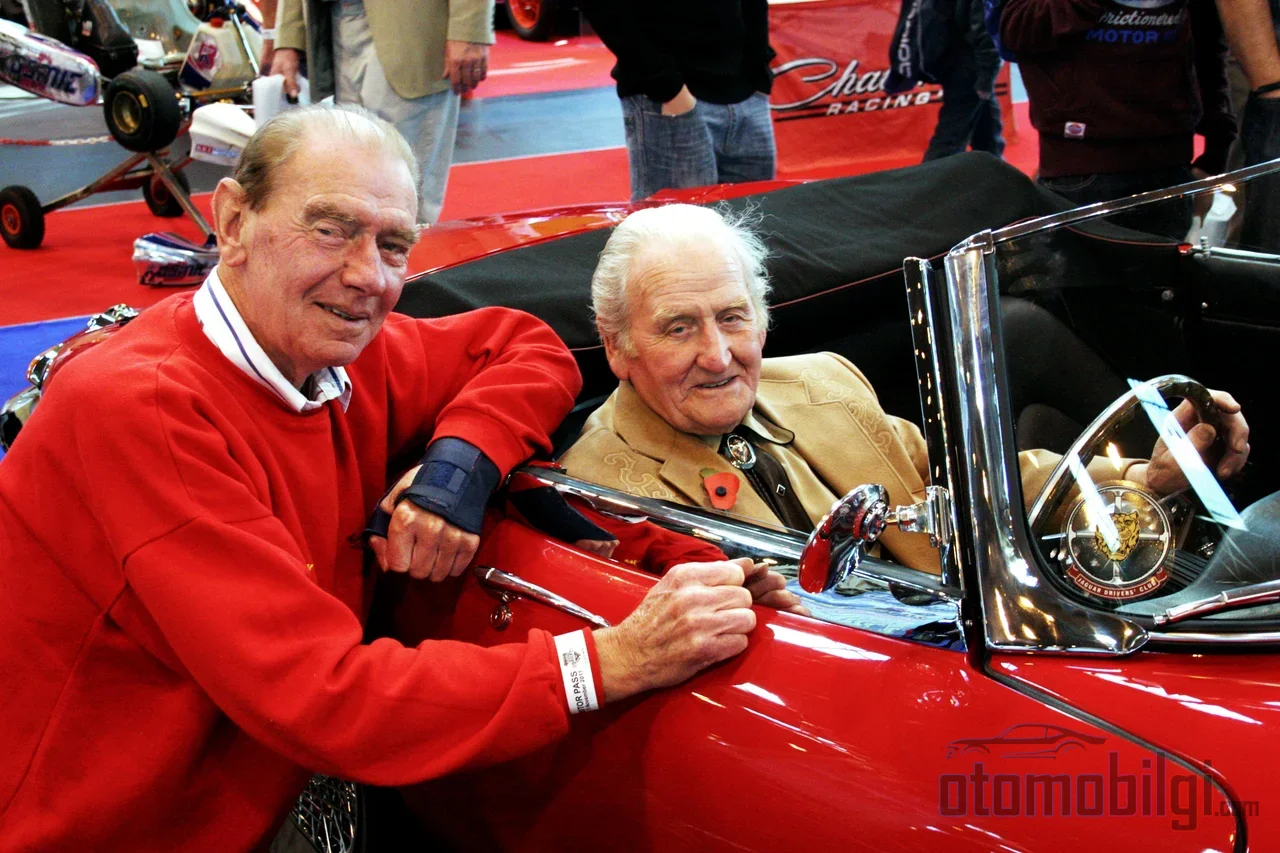
But did the calculations hold up in the real world? This is where Sayer's most charming method comes into play: he glued wool tufts to strategic points on the prototype's body and drove the car on the roads, watching how the threads fluttered. If the wool was calm, the airflow was smooth; if it danced wildly, there was turbulence there. Years later, chief test engineer Norman Dewis recounted that Sayer's paper, stretching along the wall, was filled with colorful curves and figures, while he himself couldn't even see a car in those drawings. Because on Sayer's paper there was not a car, but the mathematical soul of a car.
His perfectionism was also legendary in scale. When someone made a 1.5 mm deep recess in the bonnet for the Jaguar emblem, Sayer had it removed, believing it disrupted the purity of his calculations. Yes, 1.5 millimeters. How could one not respect this man?
C-Type and D-Type: Winning Le Mans by Calculation
Sayer's first major work at Jaguar was the C-Type (XK120-C). In this sports racing car, which entered production in 1951, the general layout, body, and chassis were his responsibility. The result? The C-Type won Le Mans on its very first attempt; in 1953, a second consecutive victory came with Duncan Hamilton and Tony Rolt at the wheel. Moreover, the 1953 victory meant that for the first time in Le Mans history, the race was won at an average speed above 100 mph.
The true aerodynamic masterpiece, however, was the D-Type. Introduced in 1954, this car was built to be both light and strong, like an aircraft fuselage. During development, 1/8-scale wind tunnel models were first tested at Loughborough, followed by full-scale tests at Farnborough. That famous stabilizer fin behind the driver's seat provided stability at high speeds; this was a real solution carried from the world of aviation to the automobile. The D-Type won Le Mans consecutively in 1955, 1956, and 1957; in 1957, D-Types took five of the first six positions. The 192.4 mph, or roughly 310 km/h, achieved on the Mulsanne Straight was the clearest proof of how accurate the calculations were.
Meanwhile, the seeds of the E-Type were also being sown: the E1A and E2A prototypes formed the bridge between the D-Type and the E-Type. The E1A had an aluminum body and hit the roads in May 1957.
E-Type: An Icon Born from Mathematics
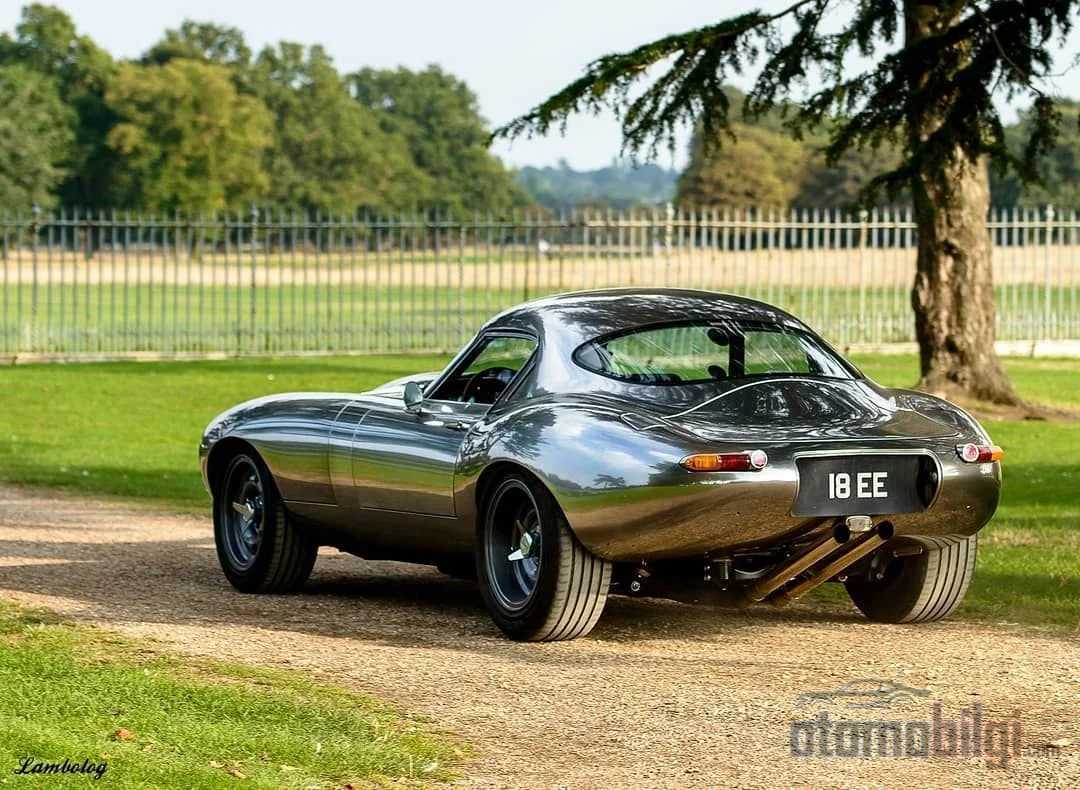
And in March 1961, it took the stage in Geneva: the E-Type. Enzo Ferrari's description of it as the most beautiful car ever made summarizes, in a single sentence, this car's place in the design world. But the part that concerns us is this: the E-Type's general form - that long bonnet, the bulge over the rear wheels, and its flowing stance - was born from Sayer's mathematical curves. Cyril Crouch turned this form into a manufacturable steel monocoque, Bob Blake played a critical role in the sheet metal work, and launched the closed coupé version; Sir William Lyons, for his part, oversaw the refinement and production feasibility.
How Sayer described himself also tells it all: aerodynamicist. He hated the word stylist; in his own words, he was an aerodynamicist, not a hairdresser. That is why the beauty of the E-Type was not aesthetics for aesthetics' sake; as Ian Callum, Jaguar's later design chief, also emphasized, the car's form was shaped entirely with pure geometric lines, independent of aesthetic concerns. Beauty was a by-product of function. The E-Type is in the permanent collection of MoMA in New York today; think about what it means for a car's design to enter not a design museum, but an art museum.
| Specification | E-Type Series 1 3.8 (1961) | E-Type 4.2 (from October 1964) |
|---|---|---|
| Engine | 3.8-liter inline-six | 4.2-liter inline-six |
| Power | 265 bhp (at 5,500 rpm) | 265 bhp (198 kW) |
| Torque | 354 Nm (at 4,000 rpm) | 283 lbs/ft (an 18% increase) |
| Top speed | in the region of 150 mph (241 km/h) | 150 mph (241 km/h) |
| Acceleration | 0-60 mph in 7.0 seconds | Manufacturer data for 0-100 km/h not disclosed |
| Drag coefficient (Cx) | Not disclosed by the manufacturer | Not disclosed by the manufacturer |
After Sayer: XJ13, XJS and the Unrecognized Genius
Of course, Sayer's story doesn't end with the E-Type. The mid-engined XJ13 prototype he designed for Le Mans in 1965 never made it to racing due to cost and rule changes; when it was taken to the track in 1971 for the launch of the V12 E-Type, it suffered a serious crash and lost some of its classic lines during restoration. The XJS, which entered production in 1975 and stayed for 21 years, was the last great project of the Sayer era; although not as iconic as the E-Type, it won acclaim as a grand tourer.
Sayer himself passed away on April 22, 1970, at the age of 53-54, from a heart attack. He was big-built and witty; a man who drew cartoons, painted watercolors, and played piano and guitar. But he was a back-room man who did not like the spotlight and left fame and glory to the company. The era of the star designer had not yet begun; Jaguar collected the fame. His daughter Kate thought her father deserved more than Jaguar gave him. I think she was right.
Where Does Sayer's Legacy Live On at Jaguar Today?
So how has this legacy reached the present day? The answer, in fact, can be seen in every new Jaguar. Design elements of the E-Type, such as the long bonnet, the bulge over the rear wheels, and the stance, continued to live on in the marque's series, from Geoff Lawson's XK8 coupé through Ian Callum's era. Callum emphasized that Sayer shaped the E-Type entirely with pure geometric lines and did not target aesthetics for aesthetics' sake, showing that this philosophy was carried on.
Jaguar's official C-Type and D-Type Continuation programs are also a direct reference to Sayer's aviation-derived aerodynamic body and the aerodynamics he developed with Heynes. So while the brand proudly embraces its history, one of the things it takes the greatest pride in is still Sayer's calculations.
So let's clarify the short answer: What created the timeless beauty of the E-Type was not the untouchable touch of a stylist, but a mathematical aerodynamic discipline that blended science and art in a unique way. Sayer produced shapes with formulas, and more than sixty years later those shapes still refuse to leave our sight. The next time you look at a photo of an E-Type, remember this: every curve dancing on that hood once lived on a logarithm table. That may be the most a car deserves, don't you think?
Sources
- Malcolm Sayer
- Jaguar: Malcolm Sayer - the man behind the curves
- Malcolm Sayer - Leamington History Group
- Jaguar E-Type technical description and specifications 1961 (official Jaguar document)
- Jaguar E-Type
- Jaguar E-Type - Technical specifications - Carphile
- E-Type to New XJ: Fifty Years of Design Integrity - Jaguar Land Rover Media
- The new Jaguar C-Type Continuation - Jaguar
- Loughborough graduate and designer of E-type Jaguar honoured
- The Great Curve (Sayer/Costin profile)