The Quiet Revolution of Japanese Automotive Design
Share This Page
Japanese car design took a very different path from Europe's flamboyant classics: From the angular futurism of the 1980s to the creativity born from the rules of kei cars, from Mazda's Kodo philosophy to the origin stories of legends like the LFA and GT-R, Japan went through a quiet yet revolutionary design evolution. Here are the eras, brands and icons of that story.
Highlights
- There are three distinct periods in Japanese design history: the "jet age" of the 60s, the angular "techno-boxy" of the 80s, and the soft-lined "lozenge" period of the 90s.
- The kei car category was established in 1949; the first regulations limited engine displacement to 100-150 cc.
- The development of the Lexus LFA began in the early 2000s under the codename TXS; the first prototype was completed in June 2003.
- Mazda's Kodo design has three core concepts: Yohaku/Ma, Sori and Utsuroi.
- Toyota's wooden concept car Setsuna was unveiled at Milan Design Week.
Why Is Japanese Car Design Considered a School of Its Own?
Let me give you the short answer: because Japan turned its design into a school not by copying Europe or America, but by creating it from its own culture, its own cities, and even its own rules. Instead of the sculptural approach of Italian coachbuilders or Detroit's love of chrome, the Japanese put simplicity, refinement, attention to detail, and even humor front and center. These five qualities have long been considered the signature of Japanese design, and in the rest of this article I will tell you, period by period, how it came about.
And there are those who don't accept this. Some readers point to the 2000s with the criticism that "Japanese design is dull and tiresome." But let me warn you: that "dull" minimalism you mention turns into a far more intriguing story when combined with Mazda's aesthetics of emptiness and the Japanese approach of arranging interiors for maximum usability in 2026. We will put the debate openly on the table, don't worry.
The Map of the Eras: From the Jet Age to Angular Futurism
If we divide Japanese design into periods, everything becomes much clearer. The 1960s were the "jet age": an era enamored with airplanes, the space race, and futuristic dreams. The 1980s were the "techno-boxy," that is, the technological-angular period; as computers entered our lives, cars took on an angular, digital-feeling appearance. The 1990s, meanwhile, were the "lozenge" period: softer, diamond-like refined lines.
But the most exciting part of the story is the Japanese sports car era of the 1980s-1990s. In these years, Japanese manufacturers began competing seriously with European and American sports cars for the first time. The Toyota Supra, Mazda RX-7 and Nissan Skyline GT-R were fitted with lightweight bodies; an aggressive front design known as the "shark nose" stood out. On top of that, new electronic systems such as traction control and ABS were added. In other words, the angular design wasn't just aesthetic - it was the face of a technological statement.
If you want to see the eras at a glance:
| Era | Years | Notable character |
|---|---|---|
| Jet age | 1960s | Futuristic lines inspired by the age of aircraft and space travel |
| Techno-boxy | 1980s | Angular, technological; shark nose and new electronic systems |
| Lozenge | 1990s | Softened, diamond-cut lines |
| The modern supersport era | 1990–2000s | CAD, wind tunnel, carbon fiber monocoque |
| The retro-inspired era | 2000–2010s | Nostalgia meeting modern technology |
Behind the Japanese success of the 90s and early 2000s also lies the "Kaizen" philosophy: continuous improvement. This mindset, aiming each day for something a little better instead of great leaps forward, made a difference in engineering as much as in design.
Mazda's Kodo Philosophy: How Does a Stationary Car Move?
Now comes my favorite. Mazda's design language Kodo means "soul of motion" in Japanese. The aim is very clear: to capture energy and life in a vehicle even when it is standing still. Just think, a parked car appearing as if it could leap away a second later - that is exactly the essence of Kodo. The inspiration source of the designers in motion is animals; especially the stance of an animal ready to attack, that muscle structure that is tense yet balanced.
Kodo has three core concepts, all easily understood from daily life:
- Yohaku / Ma - the beauty of empty space. In Japanese aesthetics, an empty space is not a deficiency but a place that breathes. A painting doesn't have to fill the frame, and neither does a car.
- Sori - balanced and elegant curves. No excessive ornamentation, but every line carries a purpose.
- Utsuroi - transition and transformation. The surface's character changing as light touches the body, just like an evening sun slowly shifting the color of a wall.
The emotional side is not neglected either: In its advertising language, Mazda refers to the philosophy of jinba-ittai, meaning "horse and rider as one". The idea of the driver and car becoming a single body is a summary of the goal of creating balanced and lively vehicles before the engine even comes into play. In my opinion, the smartest aspect of Kodo is this: it doesn't sell a piece of metal, it sells a feeling.
Kei Cars: Uniqueness Born of Necessity
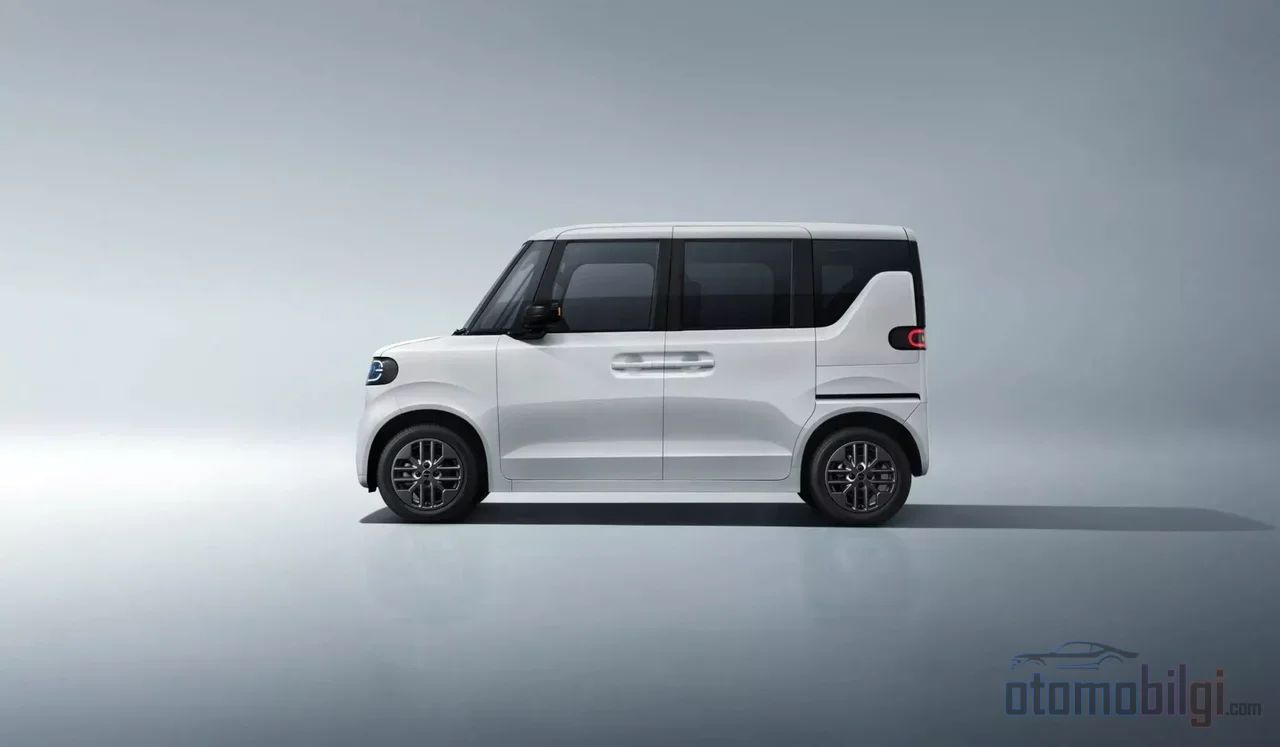
In my opinion, the most striking chapter of the Japanese design story is right here. The Japanese government created the kei car category in 1949 to revitalize car ownership and industry. In the first regulations, engine displacement was limited to 100-150 cc - barely more than a lawnmower. Initially, small vehicles, usually Italian-inspired, were proposed to replace the three-wheeled mini trucks on farms.
But here's the surprise: these strict rules did not kill creativity - quite the opposite, they fueled it. Regulatory stability became one of the keys to the diversity of vehicles in Japan - because the rules did not change, designers meticulously explored what could be done within the boundaries. Kei vehicles are today the smallest highway-legal passenger cars in Japan; small, affordable, and - to use a word even the documents would accept - "fun". They became the textbook example of context-sensitive design, that is, design that uses the constraints of the environment as the solution. There are even kei vehicle models that "accidentally" influenced global car design.
Let me draw an analogy: Compare the kei car to a comic that starts drawing manga within a four-panel limit. The limit doesn't suffocate you; it makes you smarter. Japan proved this on the scale of an entire industry.
LFA and GT-R: How Were the Icons Born?
Now for the story side. The Lexus LFA was a car that "turned the tide" for the brand. Development began in the early 2000s as a relatively simple research and development project under the code name TXS. The first prototype was completed in June 2003, and regular testing began at the Nürburgring. If you like, put its length this way: The LFA's development journey began during Toyota's preparations for its entry into Formula 1 - the maturation of a supercar sharing the same breath as an F1 project. Toyota designed the engine to be as small and light as possible; those who haven't forgotten their history will of course recall the legendary 2000GT developed in the 1960s.
So, LFA or GT-R? This debate is one of the classic feuds of Japanese car enthusiasts. The LFA is the symbol of the "modern supersport era," in which CAD, 3D printing, wind tunnels and CFD simulations, carbon fiber monocoque structures, and the optimization of maximum downforce and minimum aerodynamic drag reached their peak. The GT-R, the continuation of the Skyline, walked an entirely different path: the continuation of the 1980s legacy, when a light body and electronic intelligence took on the European giants with the simplest of cars. In other words, both are icons, but one is the product of the laboratory, the other of the street fighter.
Design Languages That Became Brand Identity
Japanese brands' design languages are now not just an aesthetic pleasure but the very essence of brand identity. Nissan summarizes this beautifully - according to Global Executive Designer Satoru Tai:
"Our design philosophy focuses not on what we do, but on how we do it."
Nissan's recent concept vehicles are proof of this: they carry details inspired by the aesthetic values of traditional Japanese culture. On the Lexus side, projects combining Japanese elegance with technology are being showcased at Milan Design Week; there's an interesting emphasis there - in the LS name, the "S" no longer stands for "Sedan" but for "Space," representing space. So the approach is "designing a space, not a car." In 2026, Japanese automotive design is characterized by minimalism and functionality; interiors are arranged for maximum usability. The funny thing is that while the Japanese avoid ostentation, they have actually settled into the future early.
Concept Craziness and Visual Culture
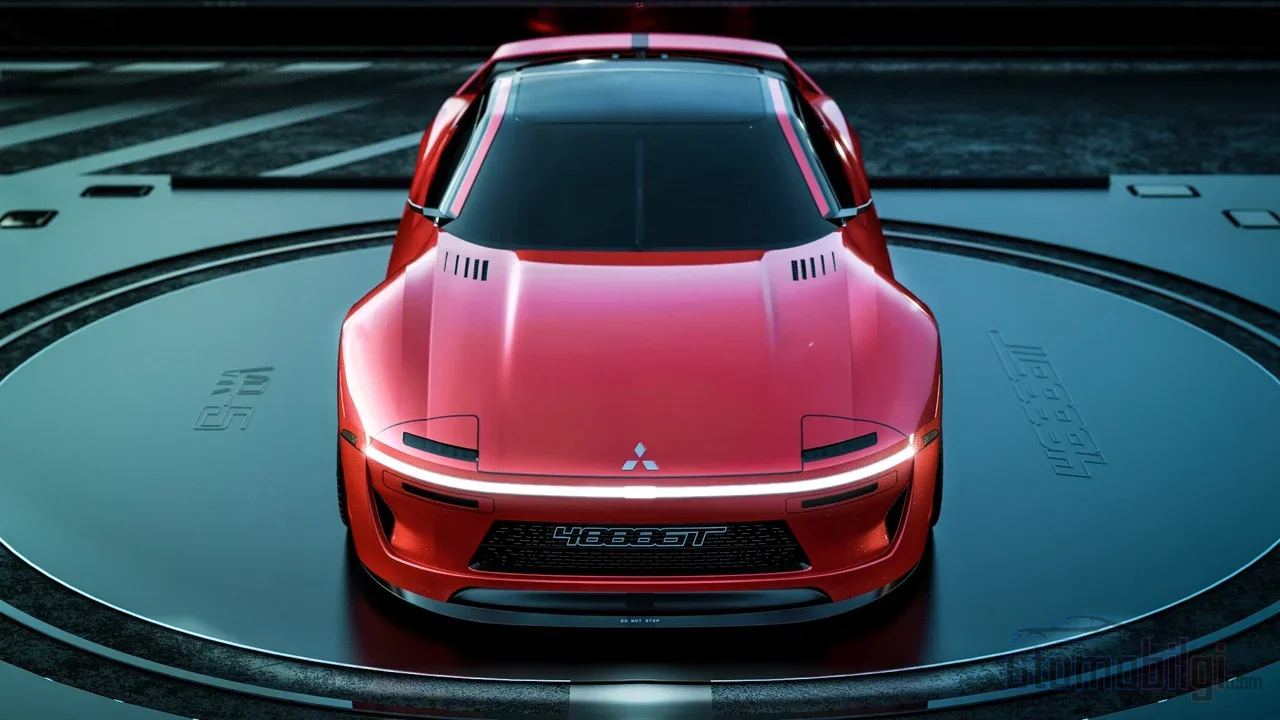
Japanese design's "honest and simple" face also has a side that's insanely fun. Look at concept vehicle history: Toyota EX-III (1969), Mazda RX-500 (1970), Honda Fuya-Jo (1999), Mitsubishi Se-Ro, Nissan Pivo, Mazda Furai... This legacy, summarized by the sentence "Toyota has produced some of the strangest-looking concept cars ever made," is the exact opposite of seriousness. I love the Honda Fuya-Jo for its name alone.
Concepts have not just an exhaust note but a craft story as well. For Milan Design Week, Toyota designed the Setsuna concept, combining traditional Japanese woodworking craftsmanship with today's technology. Material experiments like the Bambgoo are also part of this culture. There were even periods when foreign designers worked for Japanese brands - the design language is universal, but the palate belongs to Japan.
So Which Year Was the Peak? Design Fatigue or Minimalism?
Readers' favorite discussion question is this: Which year was the peak of Japanese car design? The honest answer is that it's open to debate. Some defend the jet age of the '60s, some raise their hands for the angular futurism of the '80s or the soft lines of the '90s. My reading is this: every era produced its own peak; the '80s were boldness, the '90s elegance, and the 2000s the peak of storytelling and engineering.
The tension between the "bland design" criticism and minimalism being presented as a value is, in my view, not a contradiction but a matter of perspective. If a car seems dull to you, you're probably seeing emptiness as emptiness - without knowing Mazda's concept of Yohaku/Ma. The kei vehicles have long since answered the question of whether boundaries hinder or nurture creativity. The silent revolution of Japanese design lies exactly here: it won not by shouting but with patience and continuous improvement.
What do you think? Which year is the peak, the LFA or the GT-R? Write in the comments - I'd love to keep this conversation going.
Sources
- QotW: What year was the peak of Japanese car design?
- A Brief History of Car Design
- Mazda's KODO design philosophy
- Lexus LFA Timeline: Redefining the Japanese Supercar
- Lexus LFA - Wikipedia
- Japanese Philosophy - Nissan Stories Europe
- Nissan's concept cars take inspiration from traditional Japanese culture
- Kei car - Wikipedia
- Kei cars - how Japan's regulations drove creativity
- What Is a Kei Car?
- Here's Why Japanese Cars Dominated The '90s And Early 2000s
- The Most Eccentric Japanese Concept Cars
- Concept Vehicle Design Made of Wood from Toyota
- Japanese cars designed by foreigners
- Japanese Cars 2026: Best Brands, Top Models, and Key Trends
- Zen and the Art of Automotive Design