Why Do Cars Suddenly Become Angular? The Story of the Wedge Shape
Share This Page
Cars became angular almost overnight in the early 1970s because the Italian design studios, especially Bertone and the star at its drawing board, Marcello Gandini, abandoned the rounded body and switched to a geometry that minimized the front section, with a nose lying down toward the ground: the wedge shape. This form both allows air to flow easily over the vehicle and spoke the language of the future; it quickly spread everywhere, from concepts to super sports cars, and from there to road cars.
Highlights
- Wedge movement Defined in 1967 faded out in the 1980s
- Lancia Stratos Zero introduced at the 1970
- Turin Show Countach concept debuted in 1971 production lasted from
- 1974 to 1990 Stratos HF a full 492 units
- were produced for homologation Scissor doors were first used on the Countach
What is the wedge form, and what does it bring to cars?
Think: place a wedge on the ground with its sharp point facing forward. The wedge form in automotive design is exactly this: a low, sharp nose; a hood sweeping forward; a body rising toward the rear. When the surface area at the front is minimized, excess air slides over the sloped upper surface instead of going under the vehicle. So this shape is not just for looks, it is also physically logical - that's why contemporaries saw it as a natural solution.
But there is also a cultural side to it. The wedge evoked not only aerodynamics but also modernity and an image of a geometric future. It fit perfectly with the space-age atmosphere of the 1970s. The arrival of the mid-engine layout completed the job: when the engine is moved to the rear, the nose becomes completely free, and the pure wedge could finally become real. Mid-engine show cars appeared in the early 1960s, and production cars in the mid-60s; the wedge sprouted exactly on this ground.
Marcello Gandini: who is the architect of the wedge?
The name behind the wedge revolution is Marcello Gandini, born in Turin as the son of an orchestra conductor. This man, who had been drawing cars since childhood and obsessed with mechanics, took over as Bertone's design director in 1965 - and he sat in that seat after Giorgetto Giugiaro. Just look at the vehicles he signed in a single decade: Lamborghini Miura (1966), Alfa Romeo Carabo (1968), Lancia Stratos Zero (1970), Lamborghini Countach (1971), Lamborghini Bravo (1974), Alfa Romeo Navajo (1976). In the middle of this list lies an entire design revolution.
You can see the Carabo as the pioneer of the pure wedge idea; but Gandini's real signature was the wheel arch. He perfected the sharp geometry in which he embedded those arches on the Countach. Gandini passed away in 2024; but even today, whenever you look at any sharp-edged super sports car, you see his shadow.
Lancia Stratos Zero: the first shockwave of the wedge form
Standing at the Bertone stand at the 1970 Turin Motor Show, the Stratos Zero, slammed a door in people's faces so decisively. It was an extremely low, wedge-shaped concept; the glass and body panels merged like a single sheet, and there was no such thing as a conventional door - entry to the vehicle was through a glass section that opened forward and upward. One of their aims was also a separate strategy: to take Lancia's design business away from Pininfarina and pull it toward Bertone.
The beautiful part is this: the Zero was not just a dream machine. Although it was a concept, it was fully functional; it had two seats inside, a luggage compartment, and even a spare tire. This period was later dubbed the folded-paper era, and the Zero was cited as the most extreme expression of that era.
Lancia Stratos HF: from wedge form to rally championship
The production version that followed the Zero Stratos HF, was born for a single purpose: winning rallies. At its heart was a 2.4-liter Ferrari Dino V6 - securing this engine required a tough negotiation with Enzo Ferrari. For homologation, exactly 492 units were produced; with fiberglass body panels, a steel monocoque mid-section, and a dramatically raked windshield.
Its shortness was legendary: approximately 358 cm in length, with a 218 cm wheelbase - only 20 inches longer than the 1966 Mini Cooper. With Sandro Munari at the wheel, it won three consecutive manufacturers' championships between 1974 and 1976 ; the design kept winning rallies until 1981. Nuccio Bertone initially wanted to name this ultra-compact wedge look the Stratoline; the forward-swept windshield perched on a high-shouldered wedge and the inkwell-handle doors, together with the Fiat X 1/9 that came out of the same workshop, became the production face of the folded-paper aesthetic.
Lamborghini Countach: how did the Italian wedge reach its peak?
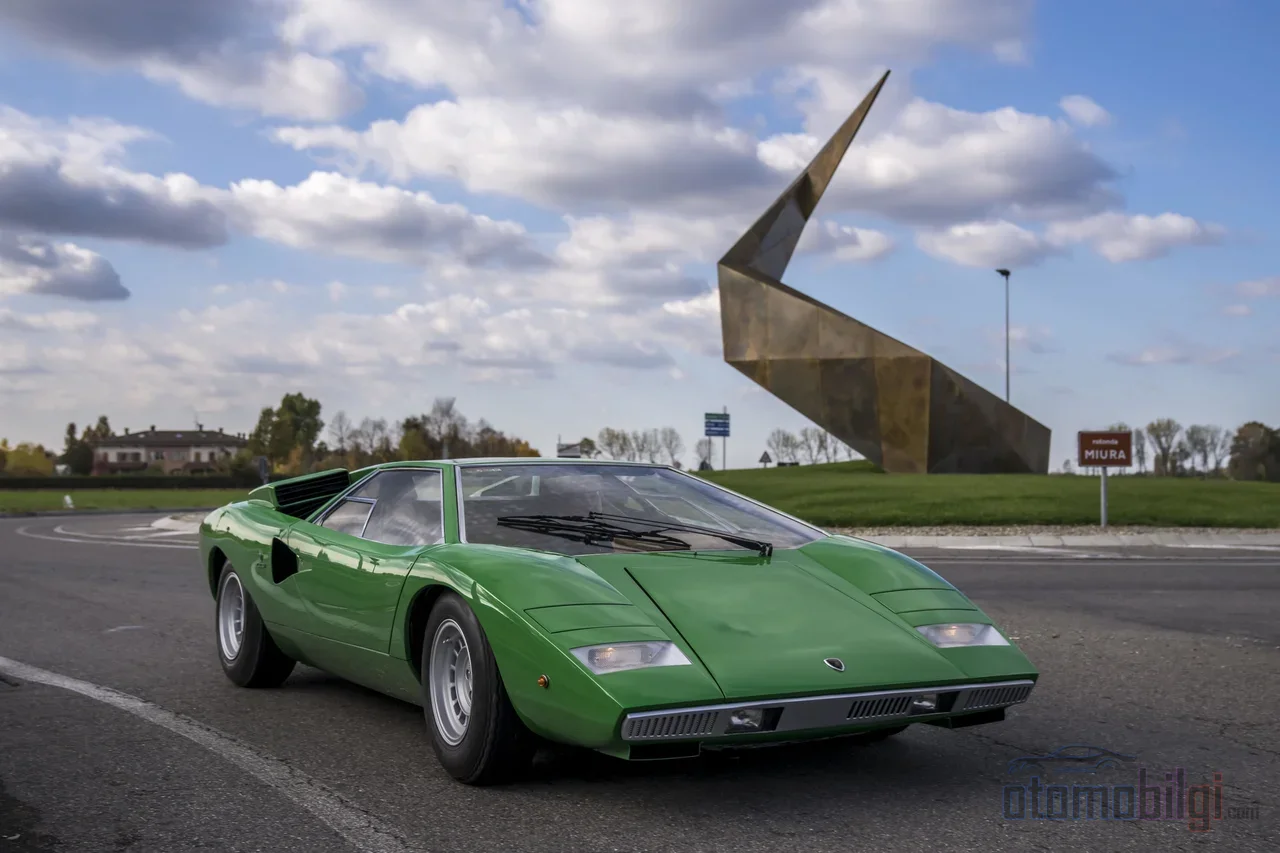
Gandini's concept, shown in 1971, between 1974 and 1990 was produced in Sant'Agata Bolognese and transformed into the Countach. With its sharp wedge body, angular lines, wide shoulders, and aggressive proportions stretched rearward, this car became the pioneer of the Italian Wedge design language that would dominate high-performance cars for many years. The engineering side was handled by Paolo Stanzani; in the eyes of authorities who regard the Miura's blueprint as the beginning of today's super sports cars, the model was already a continuation of a legendary lineage.
And of course, the scissor doors. The world saw them for the first time on the Countach. With its cramped two-seat cabin and low nose, the Countach carried the era's most extreme design idea into series production. It celebrated its 50th anniversary in 2021; but there is an interesting footnote: Gandini took a distant approach to the modern LPI 800-4 reinterpretation, stating that it was a modern interpretation born of the skilled work of Centro Stile and R&D. Even the architect of the legend was wary of those who copied his creation.
From wedge to the street: why did the angular language spread everywhere?
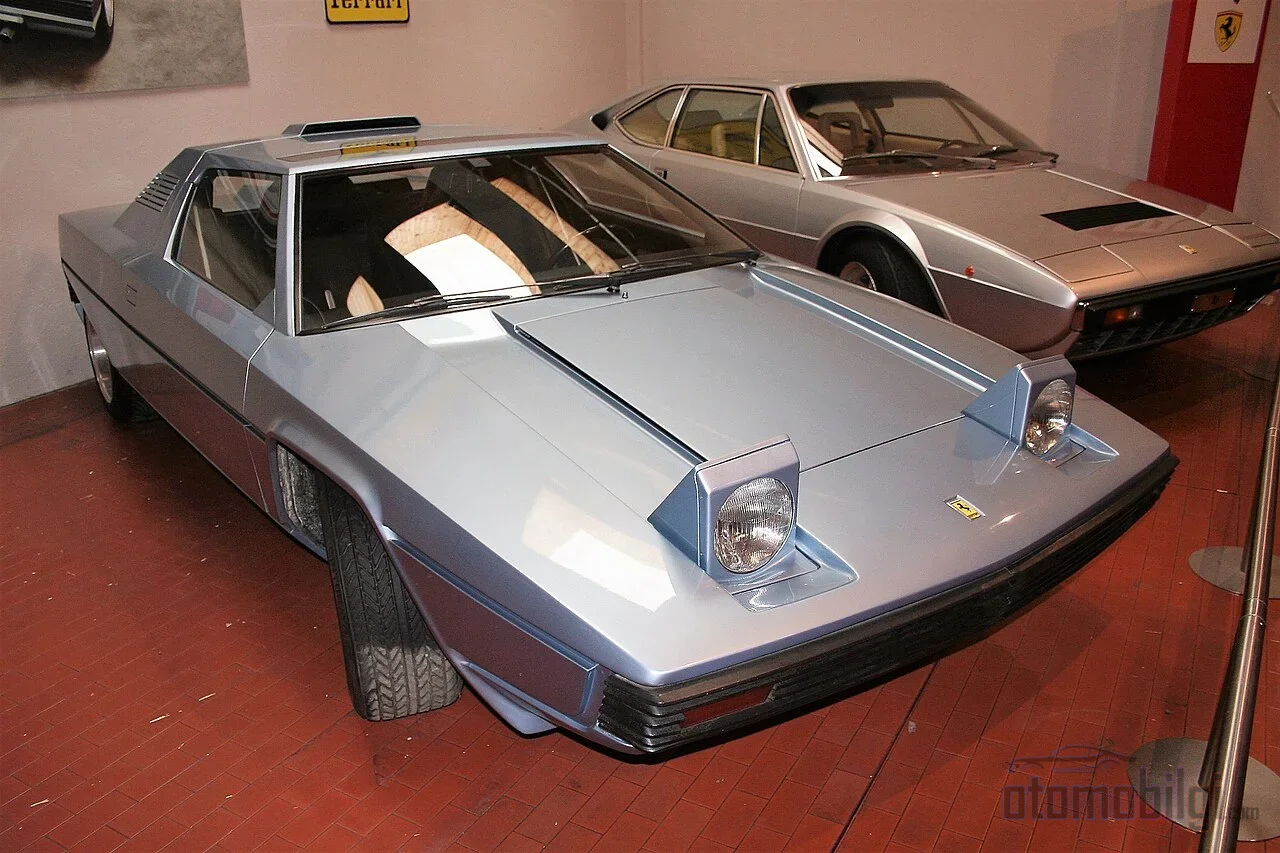
The wedge was born as Italian concept cars leaping toward a future that defied convention; but it soon moved from the crazy showroom to the streets. From 1967 into the 1980s , the process influenced everything from concept cars to hatchbacks. Ferrari Dino 308 GT4, Lotus Esprit and BMW M1 brought their own interpretations to the wedge style; British brands also perfected this form in their own way. Throughout the 70s and 80s, angular lines, wedge silhouettes, and pop-up headlights defined sports car design.
Many design trends remain showcases; the wedge went into production. Bertone's mid-engine concepts virtually bridged the gap between concept forms and production models. Today, the exhibition the Petersen Museum has dedicated to the wedge revolution shows exactly the scale of this spread: a formal transformation spanning from the 1960s to the 1990s, led by Giugiaro and Gandini.
How did the wedge form end?
Every revolution has an end. Although the wedge's end date is debatable, there is a strong candidate: April 1978 introduced at the Turin Motor Show, Lancia Sibilo. Gandini's final wedge, this concept sat on a 100 mm stretched version of the Stratos chassis; it drew 190 hp from a 2,418 cc Ferrari Dino V6. The hand-beaten steel body had no visible seams at all, brown-tinted window surrounds erased the boundary between glass and body, there were round side windows that retracted and slid on a rail, and a speaker-equipped steering wheel without spokes. Due to a glass supply delay, even the canopy material was polycarbonate instead of fighter-jet glass.
The most interesting part of the Sibilo's story is its context: due to the 1973 oil crisis, tightening safety regulations, and rubber bumpers, the pure wedge could no longer be homologated. While Giugiaro turned to functionalism and Pininfarina to soft aerodynamic surfaces, Gandini did exactly the opposite, pushing the wedge to its very limit - and left it there. In the 1980s, sharp edges in production designs were softened; although aerodynamicists still loved sharp creases, the wedge ceased to be the industry's most widespread design theme. The Sibilo itself managed to become a cult classic: it directly inspired the Mars taxi in the 1990 film Total Recall , and today its estimated value is mentioned at around 1 million euros .
Is the wedge dead, or still inside you?
In my opinion, the wedge never truly died; it simply vanished from view. Every time you look at a new supercar and see that low nose, that forward-swept silhouette, you are facing an heir to Gandini's ruler-drawn world. So which wedge car would you put in your garage: the rally legend Stratos, or the king of wall posters, the Countach?
Sources
- Marcello Gandini - Wikipedia
- Lamborghini Countach - Wikipedia
- By Design: Lancia Stratos
- Lancia Sibilo: Gandini's final wedge from 1978
- Lamborghini Countach - 50 years on, Revs Institute
- Lancia Stratos HF - Stellantis Heritage
- The Wheel Arch Was Marcello Gandini's Signature - Dyler
- Gandini distances himself from new LPI 800-4 - Top Gear
- Petersen Museum's The Wedge Revolution
- A look at wedge cars of the 60s and 70s - designboom
- 8 Ostentatious Cars That Defined The Wedge-Shape Era - Jalopnik
- 10 times Britain perfected the wedge car - Hagerty UK