Why Do Modern Classics Always Take Refuge in the Lines of the Past?
Share This Page
Modern classic cars are vehicles in which brands reinterpret the iconic lines of the past with today's technology; models like the Fiat 500, Mini and New Beetle are the most familiar faces of this trend. So why, after decades, do brands recall that legend from our father's or uncle's garage instead of developing a completely new car? Because a well-designed retro-modern packs both nostalgia and innovation under the same hood - on the condition of authenticity.
Highlights
- The New Beetle was first introduced as a concept in 1994, was introduced as a concept, in 1998 it went on sale
- Frank Stephenson revived the new MINI in 2001, and the Fiat 500 in 2007 was brought back to life
- MINI has sold approximately 5 million units to date
- The Anadol STC-16 was the first mass-produced car with a design belonging to Türkiye
- Togg's design is the product of a total of 150 thousand hours of work
It All Started With a Showcase Car in 1994
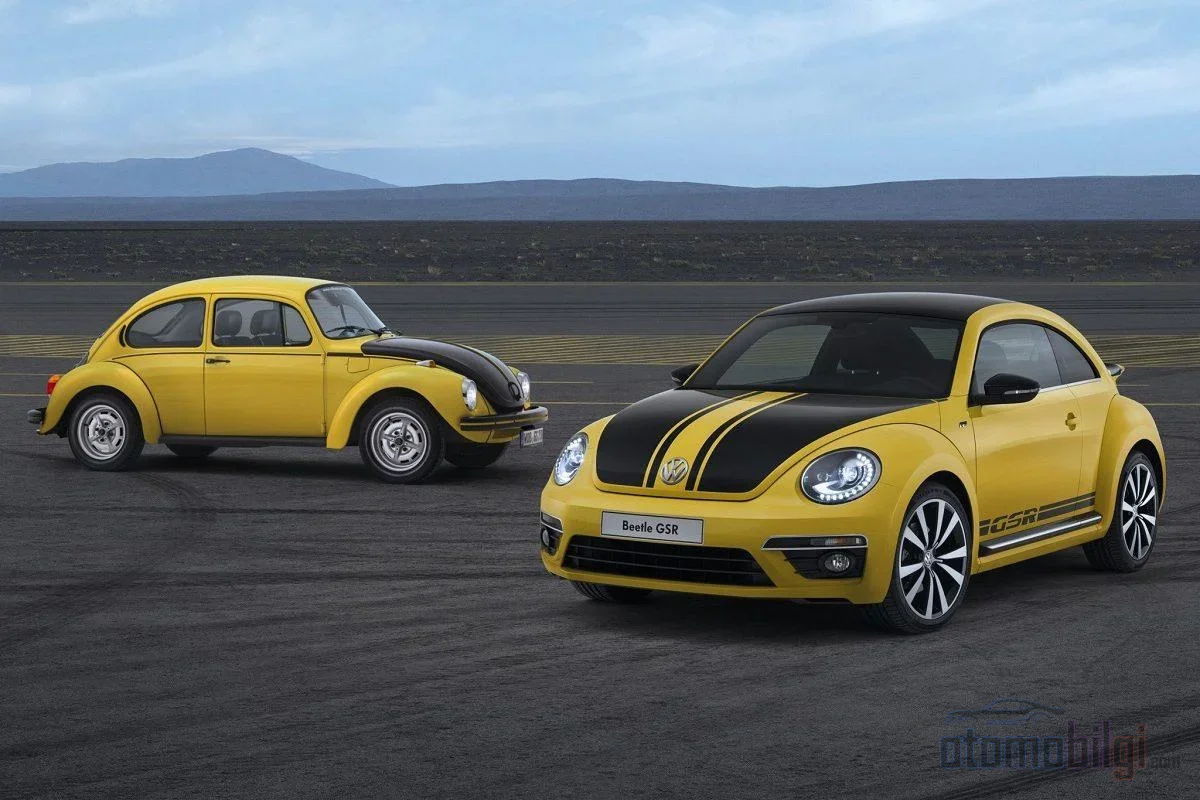
The car considered the father of the retro-modern wave is Volkswagen's New Beetle. The story actually begins at a trade show display: Concept One was unveiled for the first time at the 1994 North American International Auto Show, with the design team led by J Mays, Freeman Thomas and Peter Schreyer. Everyone fell in love with this bug-like car - so much so that, faced with unexpectedly strong public interest, the company had to say "okay, let's build it." The result? On the roads in 1998.
The funny thing is: the New Beetle shared almost nothing technically with the original Beetle. No rear-wheel drive, no air-cooled boxer engine, no front trunk. So what did they have in common? The bug-eyed headlights, the general Beetle silhouette and the fake running boards. In other words, what was actually being sold wasn't a mechanism, but the modern packaging of a memory. And this packaging worked so well that even ten years after its launch, sales kept rising by around 6 percent in a single year.
Frank Stephenson and the Legendary Beer Can
If we're going to talk about the key figure of retro-modern, we knock on Frank Stephenson's door. This man single-handedly signed three of the trend's biggest icons: he designed the VW New Beetle, led the design of the new MINI, and was also at the head of the Fiat 500's design team. It seems a bit unfair to lay this many icons on one person, doesn't it?
The MINI's story is particularly delicious. Stephenson started working on its design at BMW in 1995 and spent five years on it. His method was crazy: by mentally advancing the original MINI's design one step per decade, he squeezed 40 years of possible design evolution from 1959 to 1999 into a four-week sketching marathon. In other words, the car was conceived as if it had truly "aged" - but stopped at exactly the right age.
And that famous anecdote: the mock-up was missing its exhaust before the presentation to the board of directors. What did Stephenson do? He cut a piece from a beer can and placed it in the clay. The board's answer: "Don't change a thing." That beer can lip still stands in the MINI Cooper's design. Next time you see a MINI, stare at it like a hammer from behind and try to find that detail.
The pace on the Fiat side is even stranger: the design process of the Fiat 500 required an unusual approach that had to be completed in less than a year on the market. But the risk paid off; exactly 50 years after the original went into production, the 500 went back on sale in 2007. MINI, meanwhile, has sold around 5 million units to date - nostalgia really does sell.
So Why Are Brands Embracing the Past?
The answer has several layers. First, establishing a completely new design language is risky and expensive; whereas standing next to a proven icon gives the buyer a ready-made signal of trust. Second, a retro-modern car is an emotional shortcut: when people look at the car, they see not just a vehicle but their own memories. Even today, the return of retro design in the industry rests on a blend of classic style, emotional appeal, and modern technology.
The Authenticity Rule: Not Every Retro Is Successful
But hold on - not everyone who says "let's make it look like an old car" is a winner. The most famous failure is the Chrysler PT Cruiser: it looked retro but was not a remake of a genuine classic model, and its sales halved within a year. There is a widespread view that the secret of success is "authenticity": the vehicle should be a remake of a specific classic model from the catalog, not just empty talk.
Stephenson's formula is similar but with a subtlety: no element should be copy-pasted, otherwise the new car becomes outdated right at launch. On the other hand, the "family feel" should be preserved by emphasizing the strongest character elements of the original. In other words, not a copy, but an adopted child. Let's also add that he criticized the New Beetle as a "design-before-purpose" project; according to him, form and function should go hand in hand.
Three Great Icons Side by Side: Different Paths, Same Goal
The interesting thing is this: the three great retro-modern success stories were achieved with strategies that bear no resemblance to each other. The New Beetle and Fiat 500 sat on the proven platform of a cheaper model; the new MINI was built on a completely new platform not based on any existing platform. And both worked. Why? Because MINI carried not only the looks but also the driving character of the original. Here is that fine line: a copied appearance, or a completely redesigned soul.
| Model | Relaunch Year | Approach |
|---|---|---|
| VW New Beetle | 1998 | Proven platform, iconic silhouette |
| New MINI | 2001 | Completely new platform, original driving character |
| Fiat 500 | 2007 | Short design period, proven platform |
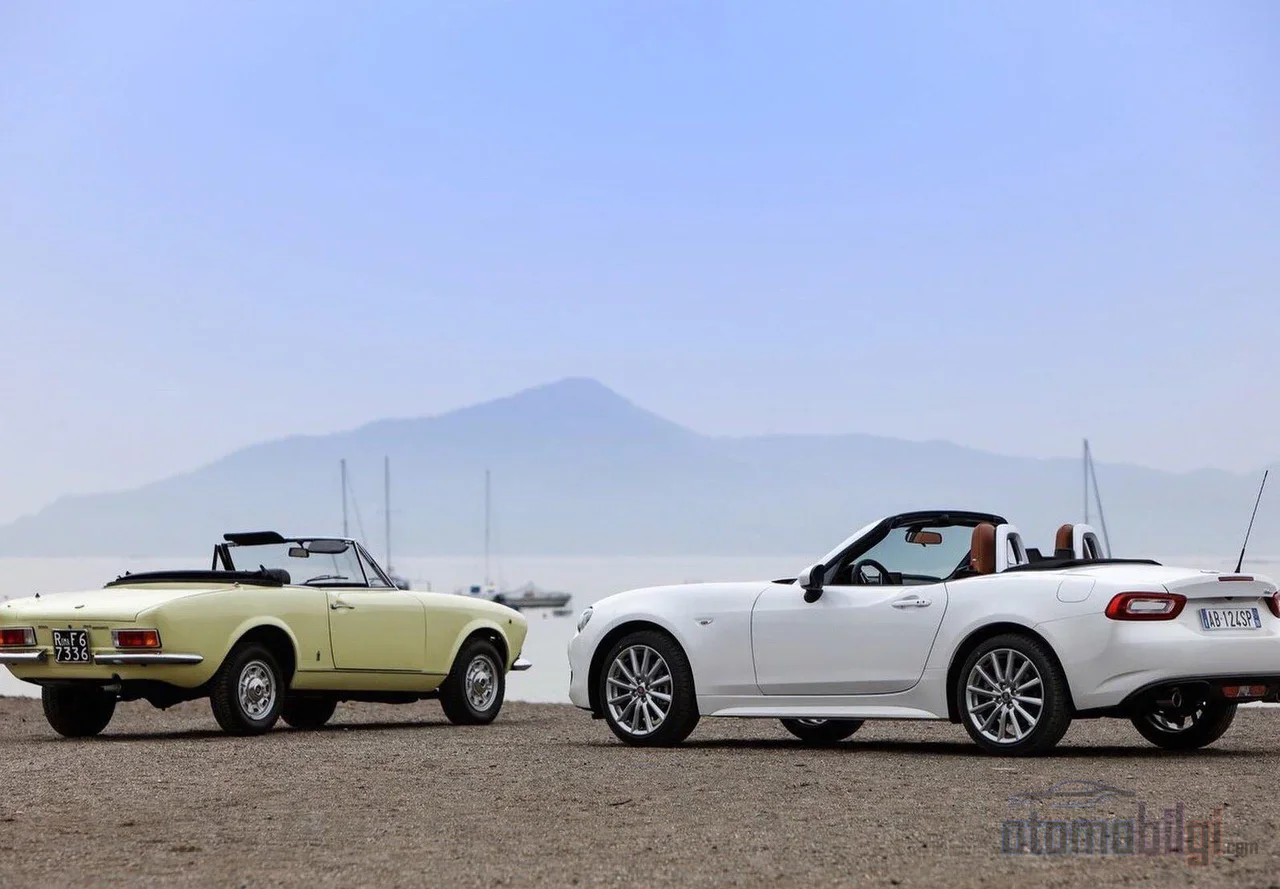
Of course, the list doesn't end there: the Ford Mustang was reborn in 2005, the Chevrolet Camaro returned in 2010, Fiat brought back the 124 Spider after 30 years, and in 2019 the Land Rover Defender continued on its way. Each tried to sell the nostalgia of its own era to a new generation - and most succeeded.
Safety and Aerodynamics: The Biggest Enemy of Classic Lines?
Now let's get to the annoying part. Those lovely round headlights and short hoods existed because there was design freedom in the 1950s - today's rules didn't exist. Modern cars, on the other hand, are being pushed toward an increasingly uniform design language because of aerodynamic efficiency and safety standards. That's why some critics see some modern retro cars as "bloated versions of their ancestors" - which is entirely a matter of opinion, but there's an undeniable grain of truth to it.
Stephenson's approach to this is very calm: Safety is now the main driving force of modern design, but it's not an obstacle; it should be seen as an opportunity to explore new design directions. His answer to the "not mini enough" criticism of the MINI, in my view, ends the debate: The car had grown in order to pass crash tests and protect its passengers. If you want to copy the classic silhouette exactly, you put your passengers at risk - the choice is yours.
Will This Wave Run Out of Time?
Here is perhaps the most curious question of all: How many more generations can the Mini, Mustang, Fiat 500 and Beetle be repeated? Will they enter an endless cycle like the Porsche 911? Some designers are doubtful about whether this is sustainable. Even Stephenson himself doesn't hope this cycle will go on forever; in his view, car design must move forward through innovation, and that is the designer's social responsibility. It may be a retro-modern rescue operation, but it may not be a lasting road map.
On the other hand, the wave is still strong: Dozens of current models and concepts inspired by the past are on roads and in showrooms today, there is an expectation of a retro-styled two-door pickup in the US, and you come across assessments in the automotive press describing 2026 as the year of nostalgic designs. Even Renault chose, as its first concept car inspired by the past, an electric Renault 5 concept inspired by the model known as the "Supercinq". It is also worth noting that Porsche has re-presented its 911 models from 1950-1980 under its "Heritage Design" strategy.
So Where Does Türkiye Fit Into This Picture?
Türkiye has its own classics in this story, and they're older than you might think. Anadol, Türkiye's first mass-produced domestic car, was manufactured between 1966 and 1991, with official sales starting in 1967. Its design came from the British firm Ogle Design, which had entered car design in the late 1950s; Otosan produced it in collaboration with Reliant, and total production reached approximately 93 thousand units. But our real source of pride is something else: The Anadol STC-16 was designed by Eralp Noyan, and it became the first mass-produced car with a design belonging to Türkiye. The car that proved design, too, could be national, in my opinion, still doesn't get mentioned enough.
Going further back, in terms of design-engineering the first Turkish automobile was the Devrim; so the idea of "let the design also be ours" is not very new. Today, the name on the scene is Togg: it is the product of a total of 150 thousand hours of work under the leadership of TOGG's design and engineering teams, received design registration from the EU, and world-renowned Turkish designer Murat Günak was part of the design team; it was selected from among the three highest-scoring designs. In the design language, a tulip motif is reflected in the interior, and stylized sporty lines with blue accents stand out. Togg is not remaking an old model, but Barış Özcan makes an important observation: before Togg, the country first needed to create a "car design culture." So one day a "modern classic" may emerge from Türkiye too - perhaps in the future someone will look at the electric Toggs on the roads today and feel nostalgic.
Conclusion: Looking at the Past Is Not Going Backward
Retro-modern design, in short, is nostalgia turned into a design strategy. The working formula looks simple but is hard to apply: Be authentic, but don't copy; emphasize iconic elements, but don't separate form from function; salute the past, but protect your passengers with today's safety standards. If you succeed, you reach 5 million like the MINI; if not, you stay on the shelf like the PT Cruiser. Which classic do you think should be reborn in the next generation? My list is starting, but it keeps growing and growing.
Sources
- Rating the retros: Fiat 500 takes on Mini and Beetle - Drive
- From the Defender to the Mini, here's how to reinvent a classic car - Gentleman's Journal
- Are Retro Cars Here to Stay?
- The New Retro Wave: 13 Cars of the Present Inspired by the Past
- Togg T10F
- My thoughts on Türkiye's car TOGG - Barış Özcan
- Anadol - Wikipedia
- A Journey Through History with Anadol Car Models
- Renault's Electric Concept Inspired by the Past
- Retro Automobile - Yapı Kredi Look
- The Return of Retro Car Design
- 5 2026 Car Trends We're Already Dreading