Pop-up Headlights: The Lost Boldness of Car Design
Share This Page
Pop-up headlights are rotating lighting units that hide beneath the hood or fender when not in use and rise up and light up when you press the headlight switch. This idea, which entered mass production with the 1936 Cord 810, added a touch of mystery to cars' faces for thirty years and was effectively buried in history with the discontinuation of the Corvette C5 and Lotus Esprit in 2004. So why does a design trend become so beloved and then disappear entirely? Let's begin the story, because this story is really the story of an entire era of car design.
Highlights
- First mass-production example: 1936 Cord 810, whose headlights were hidden and opened by hand-operated levers
- First hidden headlights with an electric motor in the 1938 Buick Y-Job concept; first in a production car on the 1962 Lotus Elan in
- Golden age: Lamborghini Countach, Ferrari Testarossa, Mazda RX-7 and thousands more vehicles
- Last production cars with pop-up headlights The Corvette C5 and Lotus Esprit, discontinued in 2004
- Pop-up headlights were never explicitly banned; safety regulations simply made them impossible to produce
It All Began with a Patent and a Stubborn Designer
In 1933, Gordon Buehrig designed a system for his sedan, known as the "baby Duesenberg," that would retract the headlights into the fender, and he patented the idea in 1934. It may look like a simple trick from today's perspective, but at the time it was a revolution: for the first time, a car's front face was being freed of its headlights and turned into a single, uninterrupted line.
Buehrig's idea reached mass production in 1936 with the Cord 810 . Unveiled at the New York Auto Show in November 1935, this car's headlights were opened by hand using levers, not an electric motor. The reason was purely money: the cost calculations of the era did not allow for an electric system. Imagine getting out of your car at night to fiddle with the hood just to turn on the headlights. Strange? Yes. But what you ended up seeing was the most stylish front face of its day.
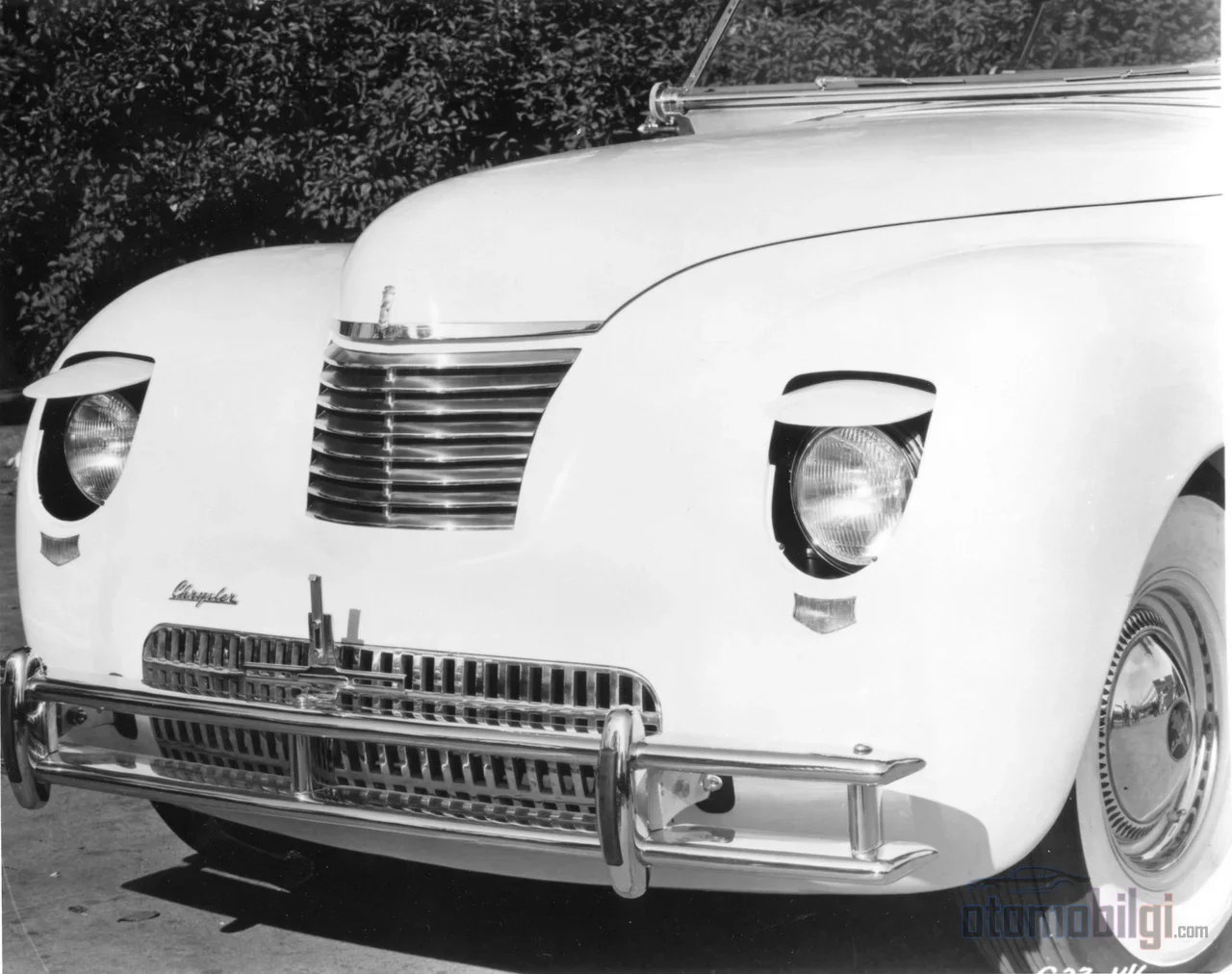
The next step became motorized: Harley Earl's 1938 Buick Y-Job concept carried the first motorized hidden headlights. Europe was not idle either; in 1939, Stabilimenti Farina and Pininfarina experimented with hidden headlights on Lancia, Fiat, and Alfa Romeo chassis. In 1942, the DeSoto became the second American production car to feature this trait.
So if the idea was from the 1930s, why did the golden age take years to arrive? The answer: American laws. Throughout the 1950s, this feature only appeared in concepts in the US; the 1951 LeSabre, the 1956 Pontiac Club de Mer, and the Packard Predictor were all showpieces. As Chuck Jordan of General Motors put it, manufacturers were "condemned to 7-inch sealed beams" because of cost and regulations. When smaller sealed beams were permitted with the quad headlamp system in 1957, the doors opened slightly.
The 1960s: A Creative Way to Get Around the Ban
This is where the real superpower of pop-up headlights emerged. American regulations fixed headlight height at a certain level, but designers wanted the car as low and snake-like as possible. The solution? Hide the headlight, raise it when needed. That way the body could be as sleek as it wanted, while the headlights stayed at a legally compliant height. In other words, pop-up headlights were once literally a legal trick. In 1983, Toyota AE86 already exported the retractable-headlight Sprinter Trueno version of the, which went to the US, to comply with regulations without increasing body height.
The first motorized hidden headlights in series production appeared on the 1962 Lotus Elan, and then it grew like an avalanche: in 1963, with contributions from Larry Shinoda, the Corvette arrived with electric hidden headlights, and this tradition continued until the C5 generation. In 1965, the Buick Riviera introduced its clamshell-type lidded system, and in 1966 the Dodge Charger and Oldsmobile Toronado introduced their own systems. The '67-'69 Camaro RS package, the '68 Caprice and the GTO option... The list kept growing and growing.
Early Failures: The Price of Magic Lids
Of course, that much mechanism meant that much trouble. The '65 Riviera's single-motor system was extremely prone to failure. On the '67 Cougar, the vacuum system led to a recall because of "sleepy lids"; the lids opened and closed on their own. On the '68 Toronado, when the lids blocked the radiator's airflow, a thermostatic valve had to be added. In other words, pop-up headlights were paying the price of style from the very beginning. To put it in perspective, it was like your winter coat's zipper needing adjustment every morning: impractical but just as cool.
The Wall Poster Era: The Golden Age of the 1970s and 80s
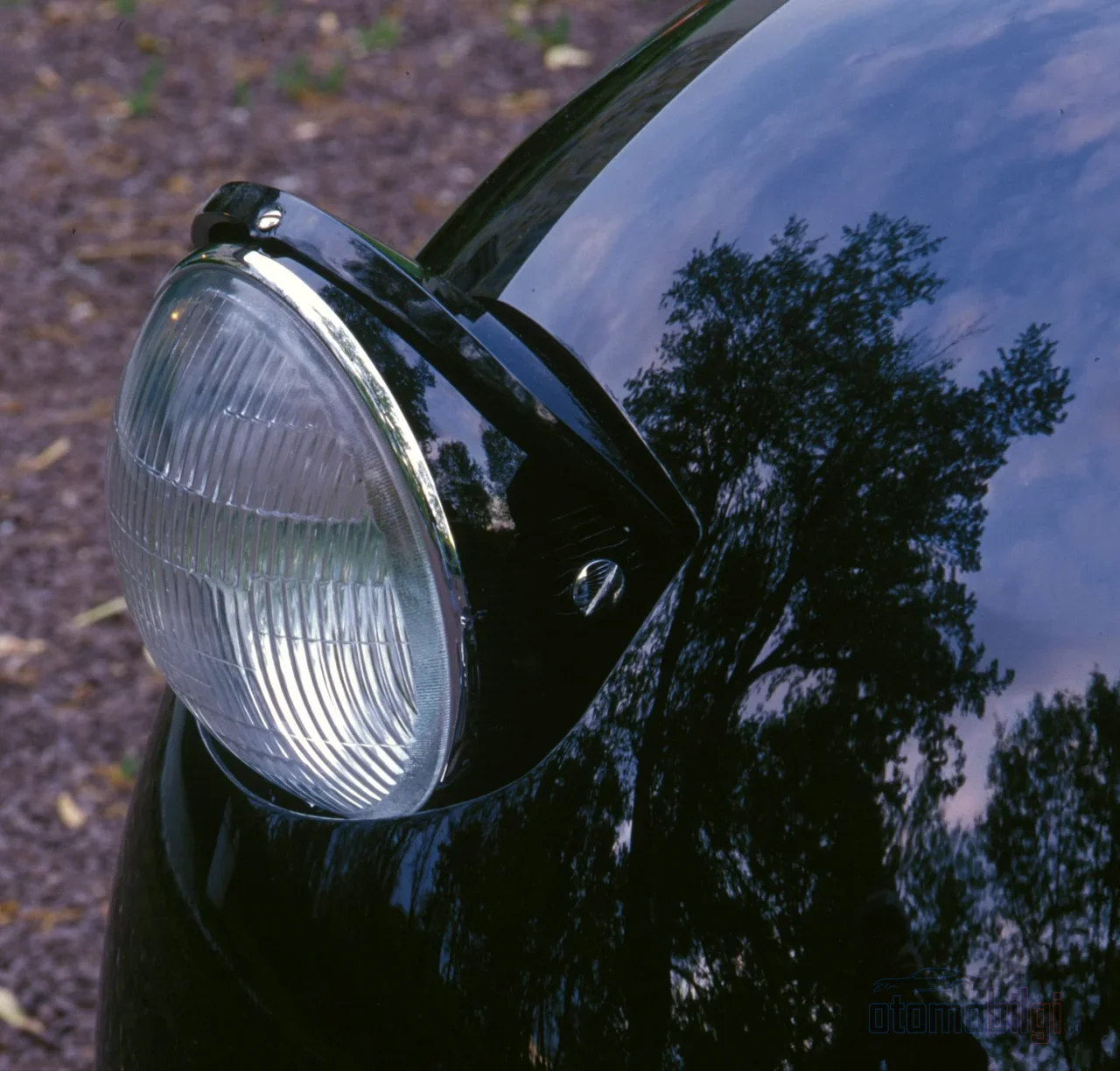
Now we come to the really fun part. In the 1970s and 80s, pop-up headlights were no longer the privilege of only luxury or sports cars; almost anyone could buy one. Alongside the stars of wall posters like the Ferrari Testarossa and Lamborghini Countach , this feature also became widespread on ordinary but charming cars like the Toyota MR2, Honda Prelude, Mazda MX-5 . Imagine: an ordinary weekday evening, an MX-5 parked on the street, its headlights rise, and everything instantly becomes cinematic. That's exactly why these cars are still cult.
The undisputed icon of this era is the Countach. In this silhouette Marcello Gandini drew for Bertone, the pop-up headlights were the design's signature element; with the lids closed, the front face was almost as smooth as a spaceship. Gandini, this legendary designer born in Turin on August 26, 1938, was one of the most important pens of his era, and he passed away in 2024 at the age of 85. His departure from the mortal world was, in fact, the beginning of a process that reminds us why pop-up headlights will never return either; the exhibition at the Museo dell'Automobile in Turin brought his legacy back into the spotlight, but it did not bring a new Countach to the stage.
Let's fit the icons into a table, because these cars deserve to be remembered one by one:
| Vehicle | Pop-up Headlight Era | Why Is It Important? |
|---|---|---|
| Cord 810 | 1936 | The first example in series production, manually operated headlights |
| Lotus Elan | 1962 | The first motorized hidden headlights in a production series |
| Lamborghini Countach | 1970s–90 | Gandini's signature, the peak of poster culture |
| Mazda RX-7 | 1978–2002 | Japanese icon with pop-up headlights across four generations |
| Lamborghini Diablo | 1990–2001 | Super sports car carrying on the Countach's legacy |
| Corvette C5 | 1997–2004 | The last production Corvette with pop-up headlights |
| Lotus Esprit | - | The name that closed this era along with the C5 in 2004 |
There was, of course, also an aesthetic debate. Open pop-up headlights, especially on vehicles like the 1993-2002 Firebird , disrupted the sleek, aerodynamic look of the nighttime silhouette. To some this was a flashy detail, to others a flaw. In my view it is a nice reminder: no design trend can please everyone in the same way.
Why Were Pop-Up Headlights Banned, Are They Really Banned?
Here's the question everyone asks: Are pop-up headlights banned? Surprise: No. They were never explicitly banned. What happened took a more indirect route. In the late 1990s and early 2000s, tightening legislation mandating pedestrian safety in Europe and global markets began to require front ends to be designed to be soft and minimally harmful in a collision. Updated pedestrian safety guidelines in Europe in 1998 introduced size and protrusion limits; ECE regulations also restricted body protrusions. The hard, sharp edges of an open pop-up headlight posed a serious risk of injury when hitting a pedestrian.
The result? Global manufacturers chose to eliminate regional incompatibility; in other words, instead of developing a separate front end for each market, they adopted a single design that complied with the strictest rules. Pop-up headlights were an element in this equation that multiplied costs and headaches: the motor, linkages, wiring... All of it meant failure risk and money. Then there's the aerodynamic paradox: headlights that reduced drag when closed disrupted airflow the moment they opened. So the supposed aerodynamic aid became an obstacle when it was time to do its job.
Technology didn't help either, quite the opposite. Projector headlights (for example, the 1990 Nissan 300ZX Z32), then HID and LED, eliminated the need to hide large headlights. A small headlight unit could now deliver far more light than the giant sealed beams of the past. There was nothing "big" left to hide. On the US side, FMVSS 108 required headlights to be between 22-54 inches from the ground, but today's US laws already allow aerodynamic headlights. So the law changed, technology changed, and pop-up headlights got caught in between.
Thus, when production of the Lotus Esprit and Chevrolet Corvette C5 ended in 2004, the last pop-up headlight cars in volume production also faded into history. An era came to a close not as the victim of a ban, but of cost and regulatory pressure.
Seems Like a Contradiction: Why Are Giant Pickup Trucks Legal?
It must also be said: Many car enthusiasts see a double standard here. While small, sharp pop-up headlights disappeared in the name of pedestrian safety, why are huge pickups with massive bull bars in front still legal? This question has been discussed countless times on social media and in car magazines, and there is still no satisfying answer. On one side are those who argue that advances in fixed headlight technology have undermined the engineering justification; on the other, those who downplay the role of pop-up headlights in pedestrian injuries. The truth is: The rules are not uniform, they vary by vehicle class, and this fuels the debate.
What Remains Today? The Daytona SP3 and the Search for Modern Boldness
Pop-up headlights are not entirely dead, actually; they have just dwindled like a rare bird. The Ferrari Daytona SP3 has partially retractable headlight covers. In vehicles produced through legal channels, such as the Ares Design Project1, this feature can be used. The Mazda Iconic SP concept also showcased hidden headlights. So it is not technically impossible; there simply is no longer a line in today's accounting books for this romance.
The truly sad part is this: Today's car front ends all look alike, and the reason is regulations and aerodynamics. Headlight positioning rules, pedestrian safety standards, and every tenth gained in the wind tunnel tie designers' hands. Some describe this situation as aerodynamics' "hostage negotiation with the wind"; others complain about gray SUVs looking alike. In the 1960s, a designer could hide the headlights and make a car sleek as a snake; today, that same boldness is far more difficult. Classic car enthusiasts in Türkiye also show special interest in these icons; pop-up headlight models like the Ferrari Daytona, the 1967-69 Thunderbird, or the Porsche 928 are mentioned with nostalgic lists in local car content. Even though Turkish-language sources are scarce, curiosity is great.
In the end, pop-up headlights teach us something: design courage is sometimes born from laws, and sometimes dies because of them. The rising of a headlight cover carved out a place in the hearts of millions of people for more than thirty years. Seeing headlights rise slowly on a night journey is now only possible in old movies or classic car meets. Perhaps one day an engineer will design a soft pop-up system that truly protects pedestrian safety, and this magic will return. Who knows? But until that day, when you see a Countach or an RX-7, don't neglect to watch those headlights rise; because what you are seeing is not just a headlight, but the farewell of an era.
Sources
- Hidden headlamp
- Pop-Up Headlights - Seventy Years of Hidden History
- What happened to pop up headlights?
- The Rise & Fall of the Pop-up Headlamps
- The History of Pop-Up Headlights
- Why we will never see pop-up headlights again
- Are Pop-Up Headlights Banned For Pedestrian Safety...
- Why Are Pop-Up Headlights Banned...
- 5 Cars That Chart the Progress of Pop-up Lights
- Lamborghini Countach & Iconic Cars With The Best Pop-Up Headlights
- Marcello Gandini
- In memoriam: Marcello Gandini (1938-2024)
- The 10 Most Beautiful Classic Cars With Retractable Pop-up Headlights