Flaminio Bertoni: The Sculptor Who Drew the Citroën DS
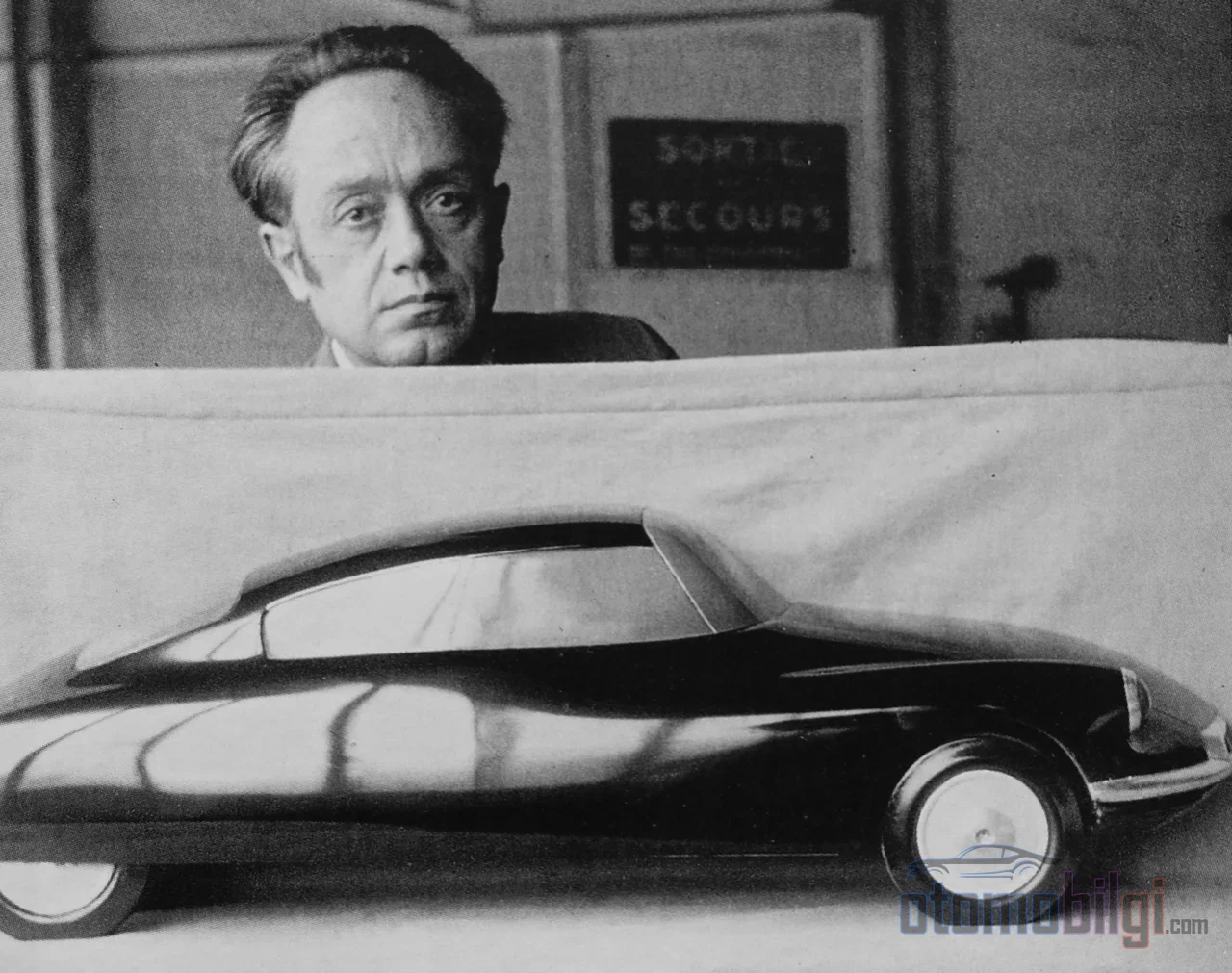
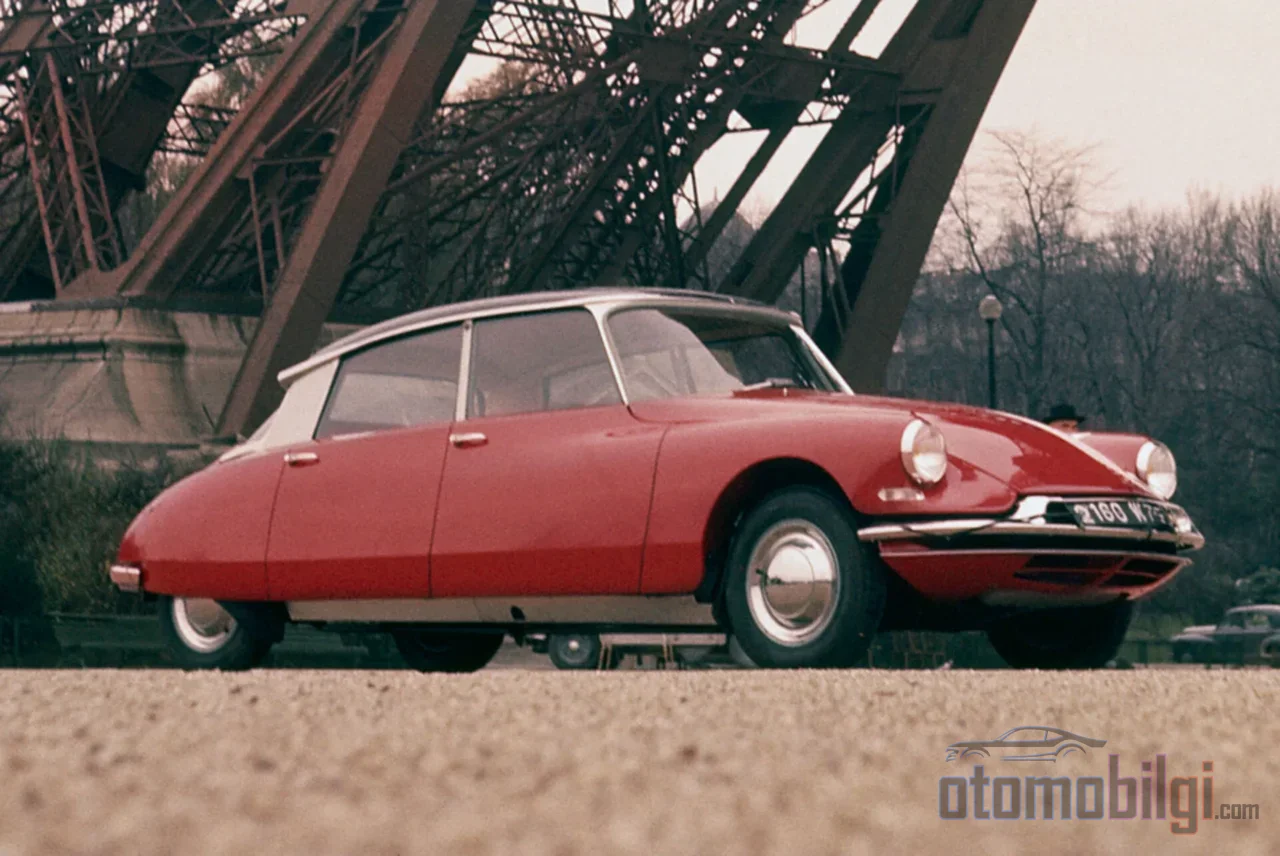
Paris Motor Show, October 1955. The crowd in front of the Citroën stand is so dense that people queue just to get an order form, and on the opening day alone 12,000 orders are written down. The name of the car on display there is DS, and its body looks like no automobile ever seen before: soft, fluid, as if not metal but a lump of clay shaped by skilled hands. Because that is exactly what it was. The man who drew this silhouette was not even a car designer to begin with: Italian sculptor Flaminio Bertoni was an artist known more for his screwdriver and his hands than for his pen. So how did a sculptor come to create, single-handedly, three revolutionary silhouettes stretching from the Traction Avant to the 2CV, and from there to the DS? The story begins in Varese, a small town in Italy.
From Sculpting to the Coachbuilding Workshop: Who Is Bertoni?
Flaminio Bertoni was born on January 10, 1903 in Masnago, part of the town of Varese, Italy. When his father died, he left school and started working at a coachbuilding workshop called Carrozzeria Macchi to support his family; he entered the place as a carpenter and within a few years rose to become chief draughtsman. He took drawing lessons at night and learned modeling and sculpting techniques from his teacher Giuseppe Talamoni. So from the very beginning, for Bertoni, the automobile and sculpture were not two separate worlds but two pursuits of the same pair of hands.
In 1923 he went on a study trip to France; he gained work experience at coachbuilding workshops such as Felbert, Manessius and Rothschild. In 1929 he founded his own design office, and in 1932 there came a knock at his door: a job offer from Citroën. He had married a woman his mother disapproved of, left Italy and settled in Paris; before long, the French manufacturer brought him onto his team. This seemingly coincidental move became the start of one of the most extraordinary design careers in automotive history. One more detail: Bertoni was an admirer of Leonardo da Vinci, and his admiration was so great that he named his first son, born in 1932, Leonardo.
Keep one question in mind: Nothing Bertoni had done up to this point was a classic car designer's training. This man was a sculptor, and this will explain everything in a moment.
Traction Avant: The Rule Broken with Clay (1934)
André Citroën had in mind a revolutionary car with front-wheel drive; the engineering side had been solved, but what the car would look like was still unclear. The task was given to Bertoni, and what did he do? He did not make brand-new drawings with a pen on paper. He took a mass of plasticine, sat down at the table, and shaped the car literally like a sculpture. According to legend, this work was completed in a single night, and the DNA of the Traction Avant, introduced in April 1934, was precisely that sculpture. Compared to the heavy, boxy bodies of the era's cars, the Traction Avant had a structure far lighter than the metal-and-wood bodies of its contemporaries, with balanced weight and aerodynamic form. Some call it the first truly sculpturally shaped automobile; and that is no exaggeration at all.
Then again, revolutions don't come free. The development cost of the Traction Avant pushed Citroën to the brink of bankruptcy, and months after launch the company fell into Michelin's hands; Pierre-Jules Boulanger took over its management. Still, the game wasn't over: around 760,000 units were sold over the vehicle's lifetime, and it was considered one of the most influential automotive designs of the 20th century.
Highlights
- Flaminio Bertoni was an Italian-born sculptor who joined Citroën in 1932.
- The Traction Avant's form emerged from a plasticine sculpture; the car sold around 760,000 units.
- The 2CV launched in 1948 and managed to sell more than 5 million.
- The DS received 12,000 orders on the opening day of the 1955 Paris Motor Show.
- Bertoni's name is today part of the MoMA collection in New York.
2CV: The Simplicity a Basket of Eggs Demands
Boulanger's request was utterly concrete: TPV, the Toute Petite Voiture (Very Small Car) project. He wanted a people's car that could carry a farmer, his wife and their goods at 60 km/h; according to one legend, the specification even required the car to cross a field with 50 kilos of potatoes or a basket of eggs. In other words, this was not about a flashy silhouette like the DS, but about functional simplicity. The 2CV was born on paper in 1935, but because of the war it could only be produced after the war.