How Did Bruno Sacco Shape Mercedes Design?
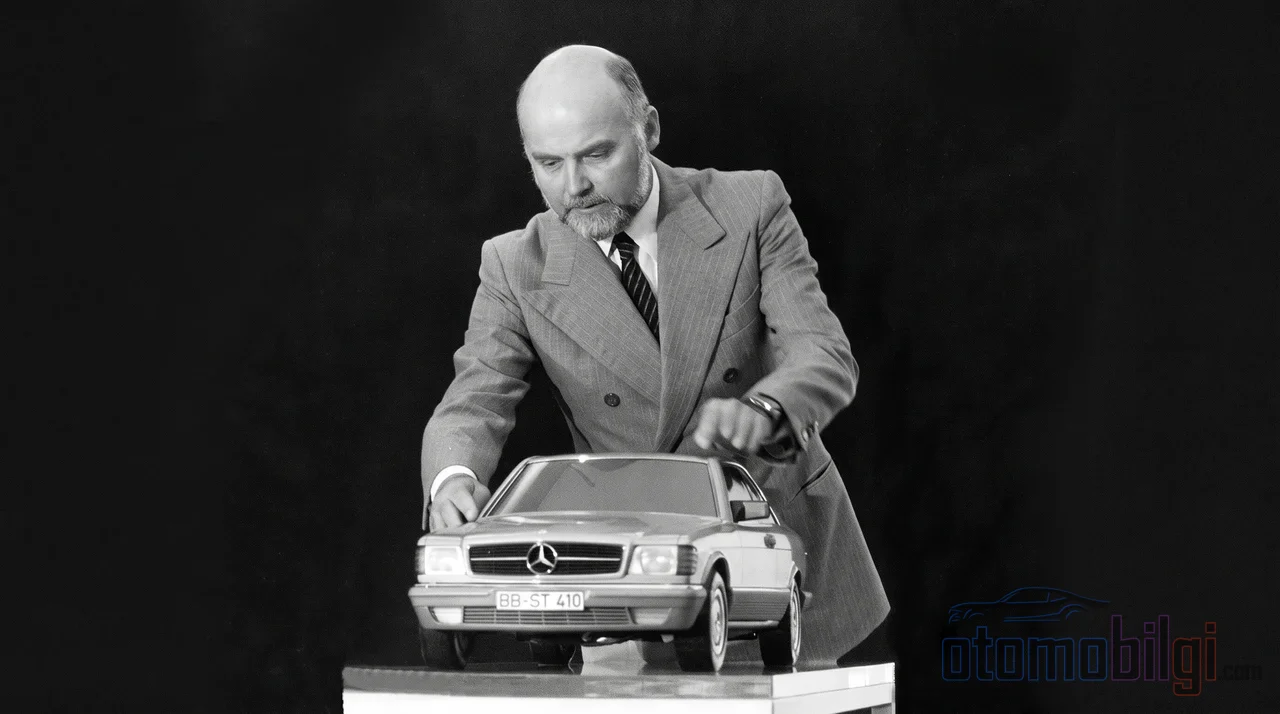
A young Italian studying engineering in Turin moving to Stuttgart got involved in something hardly anyone paid much attention to in 1958. In 1975, that young man took charge of Mercedes-Benz's design, and with every project he took on, he asked the same question: will this car still look like a Mercedes 20 years from now? Bruno Sacco's answer became that famous philosophy of simplicity and timelessness that we still debate today. If you're ready, let's dive into the story of how Sacco shaped Mercedes design; I promise, you'll never look at those boxy Mercedes of the '80s the same way again.
The Italian Who Went to Sindelfingen: Who Is Bruno Sacco?
Bruno Sacco was born on September 12, 1933, in the city of Udine, Italy, and studied engineering in Turin. After working briefly at Ghia in Turin, he started work on January 13, 1958, at the Mercedes-Benz design center in Sindelfingen. He later recounted that the success of the 300SL Gullwing and the W196 Silver Arrows F1 car had influenced his decision to come to Stuttgart. So in short: legendary race cars changed the fate of a young man.
Working alongside names like Friedrich Geiger and Karl Wilfert in Sindelfingen, Sacco rose to the positions of head of body design and head of body development. In 1975, he succeeded Geiger as head of the Stilistik department and was responsible for the brand's design for a full 24 years between 1975 and 1999. His first project was the station wagon series of the W123; introduced in 1977, this family went down in history as the brand's first station wagon model. Sacco retired in 1999 and passed away on September 19, 2024, in Sindelfingen at the age of 90.
One more detail, and one I really love: As design director, Sacco never drew anything himself. Like an orchestra conductor, he managed a broad creative team, running a meticulous development process on countless clay models in the Sindelfingen studio. That's why, for example, it's simply not possible to attribute a car like the W126 to a single designer's signature; those cars were the product of a team, of a method.
Highlights
- Bruno Sacco worked at Mercedes-Benz from 1958 to 1999; his tenure as head of design ran from 1975 to 1999.
- The first design he took full responsibility for was the W126 S-Class, introduced in 1979; it achieved a drag coefficient of 0.34 Cd.
- The W201 190 of 1982 was the brand's first compact sedan and earned the nickname Baby Benz.
- In retirement, he kept a dark blue 1989 560SEC (C126) in his garage.
- His final design was the R230 SL convertible, released in 1997.
Sacco's Two Golden Rules: What Is Horizontal and Vertical Affinity?
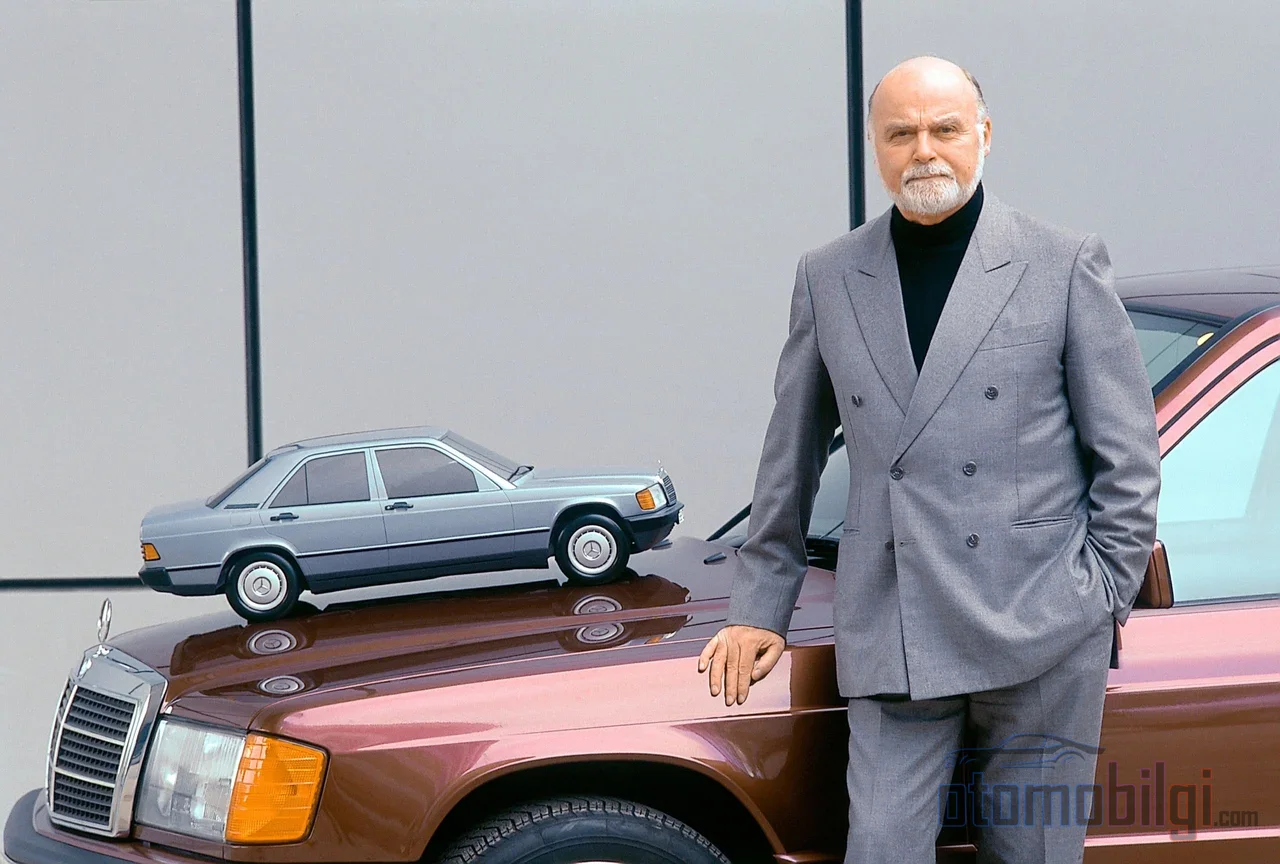
To understand Sacco's philosophy, you only need to know two concepts; the rest falls into place on its own. The first is the principle that all Mercedes models of the same era should resemble one another: a Mercedes, whatever class it belongs to, should look like a Mercedes. The smaller model shouldn't be a shrunken copy of the larger one, but should stand as a member of the family. Indeed, Sacco championed this approach even for the Baby Benz: even the smallest Mercedes had to look like a Mercedes, not just a shrunken copy.
The second principle was continuity across generations: a Mercedes' successor had to be visually connected to its predecessor so that even 10, 20, or even 50 years later, the car would be recognized as a Mercedes at first glance. Essential design elements were to be preserved and refined from generation to generation. This approach, which seems so natural to us today, was no small answer to the design mentality of chasing the fashion trends of that era.
And of course, on top of that, there was the approach Sacco considered the essence of successful design: the art of elimination. Few lines, little ornamentation, much substance. He himself would say that it took years to fully understand Daimler-Benz culture, and that the company never had written design laws. The rules were not written down; but look at the Mercedes models of Sacco's era and you will see that they all followed the same invisible book.
W126 S-Class: The Triumph of Simplicity
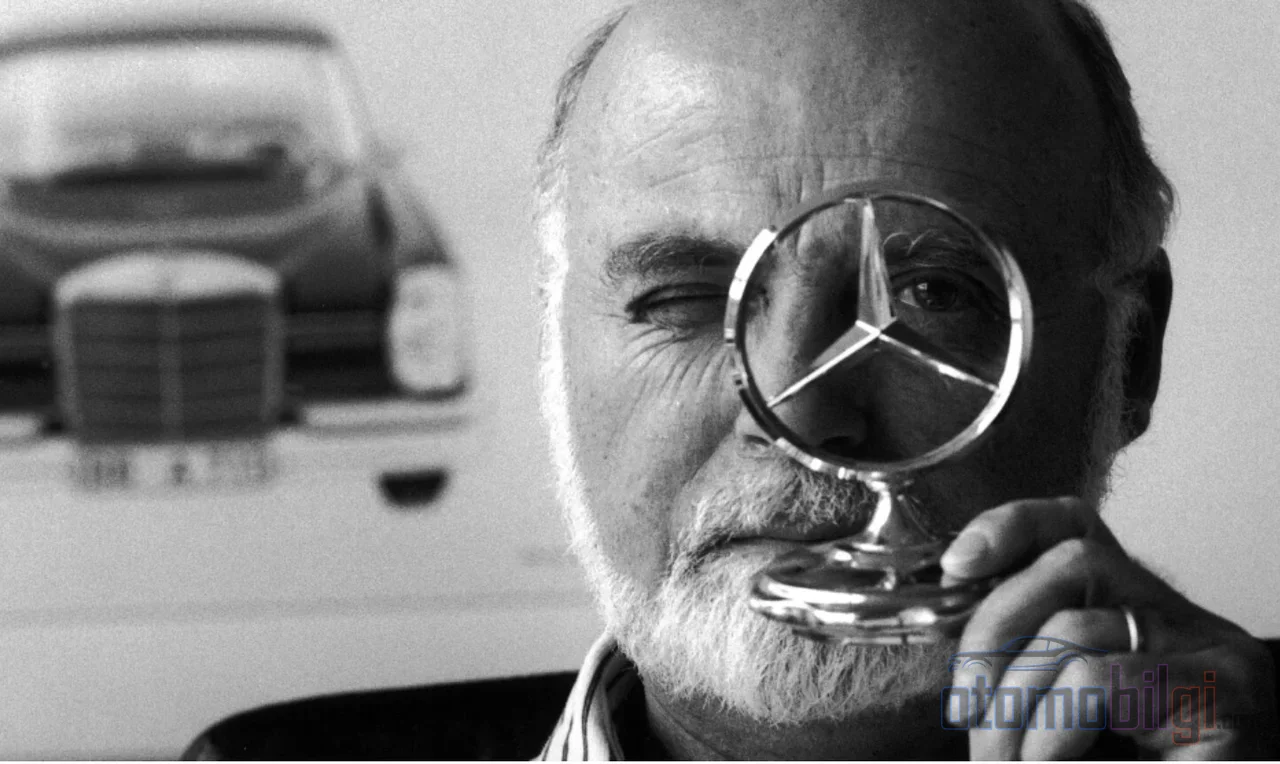
The oil crisis, aerodynamics, and 0.34 Cd
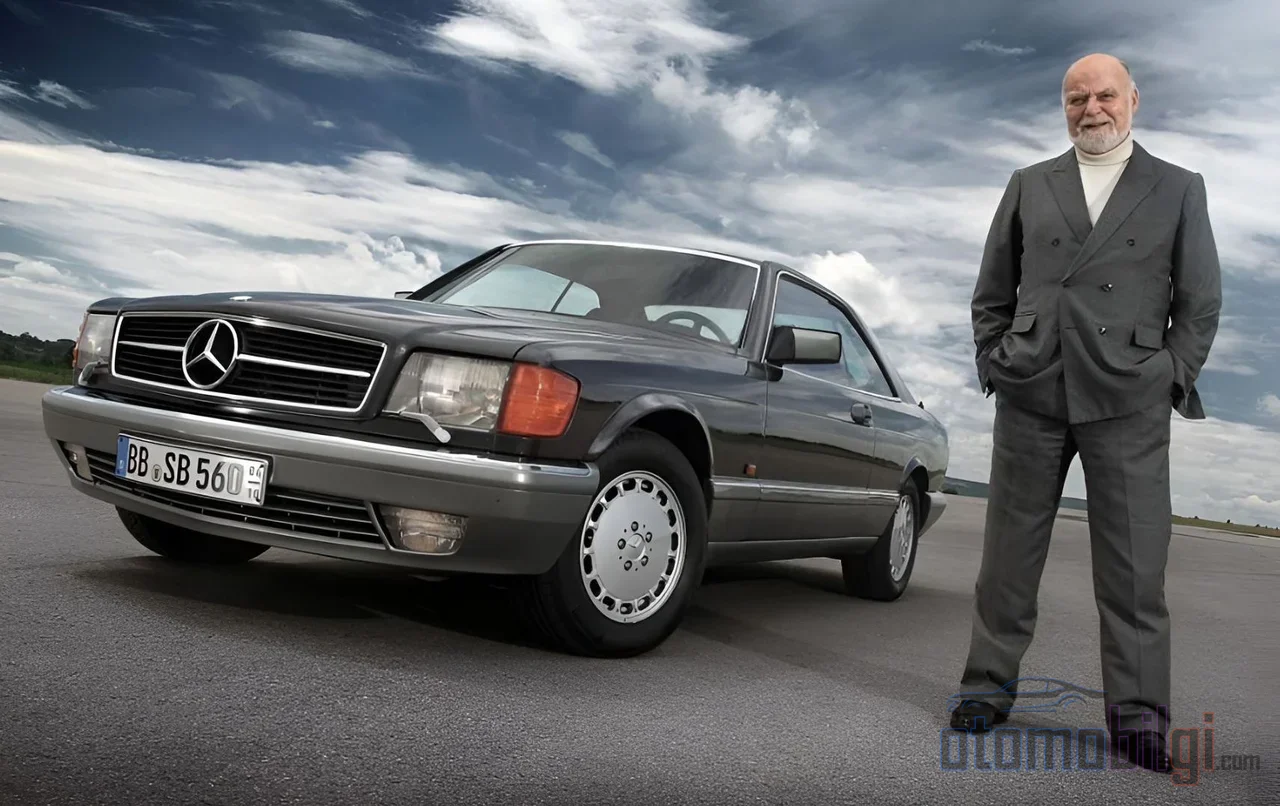
Introduced in 1979 (1980 model year), the W126 was the first major design Sacco took full responsibility for, and its balanced, flowing, clean appearance sealed his style. The timing was also interesting: because of the oil crisis and the CAFE fuel economy regulations in the US, the new S-Class needed to be lighter and more aerodynamically efficient. So Sacco was not just drawing a beautiful car; he was designing according to the direction the world was heading.
The result? An S-Class that looked more elegant and athletic than its predecessor, the W116, with an almost fastback-like line and a body that tapered front and rear when viewed from above. The low hood inspired by the SL and the more elegant roofline with a slimmer C-pillar gave the car a drag coefficient of 0.34 Cd. The C126 coupé, meanwhile, continued the brand's tradition with its pillarless B-pillar design. As the best-selling S-Class to date, the W126 was richly rewarded for this simplicity.
The signature elements are also hidden in this car. The grey sill and bumper panels were a practical solution for areas where painted sheet metal was risky, and the idea was so spot-on that it was copied by other brands for years. Despite the fashion of the time for sharp surfaces like folded paper, Mercedes preserved softly curved surfaces with generous radii; the goal was the impression of thick, single-cast metal. The W126 is counted among the first aerodynamic cars, along with the Audi 5000/100 and the Ford Taurus. Sacco keeping a dark blue 1989 560SEC in his garage in Stuttgart during retirement, and mentioning a coupé as the most perfect car of his career, shows how deep his bond with this car was.
W201 190: The Courage of the Baby Benz
Introduced in November 1982, the W201, known to us by its name 190, was Mercedes-Benz's first compact sedan and bore Sacco's signature along with Peter Pfeiffer's. The risk here was this: would a luxury brand moving into the entry level damage its prestige? Sacco's answer was the design itself. Bright chrome ornamentation was removed entirely, except for the traditional front grille; The grille tilted back for aerodynamic efficiency, with a distinctive wedge shape straight out of the wind tunnel, balanced by a high rear end and rectangular body surfaces. The car also boasted a low drag coefficient, paving the way for the W124.
Sacco later openly explained that the 190 was deliberately jarring, designed to attract new customers. When introduced, its stark modernity sparked debate; but hundreds of imitators emerged in the following years, so today it may seem ordinary to us. That's the real point, my friend: a design becoming ordinary is often proof that it was very good. If everyone copied it, the original was the first wave in the ocean.
The W140 Debacle and the Design Freedom Era
Every legend has a breaking point; Sacco's came with the W140. Under pressure from the BMW E32 7 Series, dimensions grew during development and the proportions suffered. Sacco clashed with management over this, but was ultimately overruled. Launched in 1991 amid a recession, the W140 sold below expectations and was remembered as Mercedes' last "cost is no object" program. Afterwards, Sacco's principles gave way to the trend-chasing Design Freedom approach. Some criticize the W140 as an exercise in excess size and engineering hubris, while others argue that 30 years on, it was a virtue in terms of its shout of money and prestige. That's how design debates go: the car ends, the argument never does.
Was Sacco Truly Timeless? Comparison With Today's Mercedes
This is the most fun part, because everyone has an opinion. Whether Sacco's design is truly timeless or merely a symbol of its own era is still debated. Some say those cars smelled of the 80s and 90s, and different examples are cited for true timelessness. One fact is indisputable: the W201 and W124 could be recognized as Mercedes even from afar, and this was a completely deliberate choice. There is harsh criticism that today's Mercedes front ends wouldn't be distinguished without the emblem; in the post-Sacco era, the replacement of affinity principles with a trend-chasing mindset is counted among the factors that diminished the brand's brilliance.
There is also the other side of the coin: maintenance costs of Sacco-era vehicles are quite high. Those who own these vehicles today know that every repair means a serious bill. So timeless beauty can also take a timeless bite out of your wallet. There were risky moves within the era itself as well: the round headlights of the 1995 W210 were, to some, a bold and rewarding move; to others, a stylistic trick.
So, shall we give a clear answer to the big question? Bruno Sacco shaped Mercedes design with two simple but powerful principles: all models of the same period should look like a family (horizontal affinity), and successor models should connect to their predecessors so that the car is recognized as a Mercedes even decades later (vertical affinity). The elegant simplicity of the W126 and the bold wedge form of the 190 shaped the entire automotive industry's understanding of simplicity as two of the finest applications of these principles. The roots of the argument we use today when talking about a brand's design language most likely reach back to Sacco's clay models in Sindelfingen.
Let me leave you with a question: if a car can still look right 40 years later, what are we waiting for to call it timeless? Whatever your answer, the man who keeps that dark blue 560SEC in his garage is the person we owe the question to.
Sources
- Former Mercedes-Benz chief designer Bruno Sacco has passed away
- What did the future look like in the past, Mr Sacco?
- Bruno Sacco's Designs Took Mercedes-Benz to New Heights
- Why Mercedes-Benz's Late Design Chief Bruno Sacco Was a Maestro
- Bruno Sacco: look back at the late chief designer's Mercedes-Benz models from 1958 to 1999
- Bruno Sacco Obituary: Mercedes-Benz chief designer dies aged 90
- How Bruno Sacco Transformed Mercedes-Benz