Legendary Designers of Automotive History
Share This Page
Car designers are the people who apply that signature that makes you look at a car's face and say "that's a BMW" or "that's definitely a Kia". From Chris Bangle's flame-like curving surfaces to Marcello Gandini's sharp forms, from Giorgetto Giugiaro's folded-paper lines to Peter Schreyer's tiger nose, on this page we look at people more than series: which designer stood out with which car, which design language they created, and how they left their mark on today's brand identities?
Highlights
- Chris Bangle, October 1, 1992 became BMW's first American head of design.
- During the Bangle era, BMW overtook Mercedes to become the global leader in premium sales.
- Marcello Gandini, Lamborghini Miura, Countach and Lancia Stratos is the pen behind such icons.
- Peter Schreyer's "tiger nose" grille gave Kia a signature recognized everywhere.
- Murat Günak served as chief designer at Mercedes-Benz and Volkswagen; he then joined TOGG.
Chris Bangle: Flames, Controversies and the Birth of a Signature
Chris Bangle, October 14, 1956 was born in the town of Ravenna, Ohio, and started his career from a place you would never expect: between 1981 and 1985 at Opel, with the interior design of his first major project, the Opel Junior concept. He then moved to Fiat; Fiat Panda's second generation, the Fiat Coupé, of which he was chief designer from 1990 onward, and the Alfa Romeo 145. Then the door knocked and his life changed.
And that door was BMW's: Bangle, October 1, 1992 became BMW's first American head of design, and over time he became responsible for the entirety of BMW, MINI and Rolls-Royce automobiles. His first big test was the Z9 Gran Turismo concept. But the real earthquake came in the early 2000s: "flame surfacing".
Was Flame Surfacing really Bangle's idea?
An interesting detail: It is a common misconception to think that this revolutionary design language, those twisted surfaces said to be inspired by human and fabric forms, was Bangle's idea alone. Its origins go back to Anders Warming. Warming was influenced by human figure drawing; saying "not the outline, but the shape in between - bone structure and muscle", he sketched the E85 Z4. Bangle looked at these twisted surfaces and interpreted them as "like flames". Technically, there is also cleverness at work: BMW's 3D panel pressing technology could produce compound curves even with a single press. Bangle cited the architect Frank Gehry as his source of inspiration.
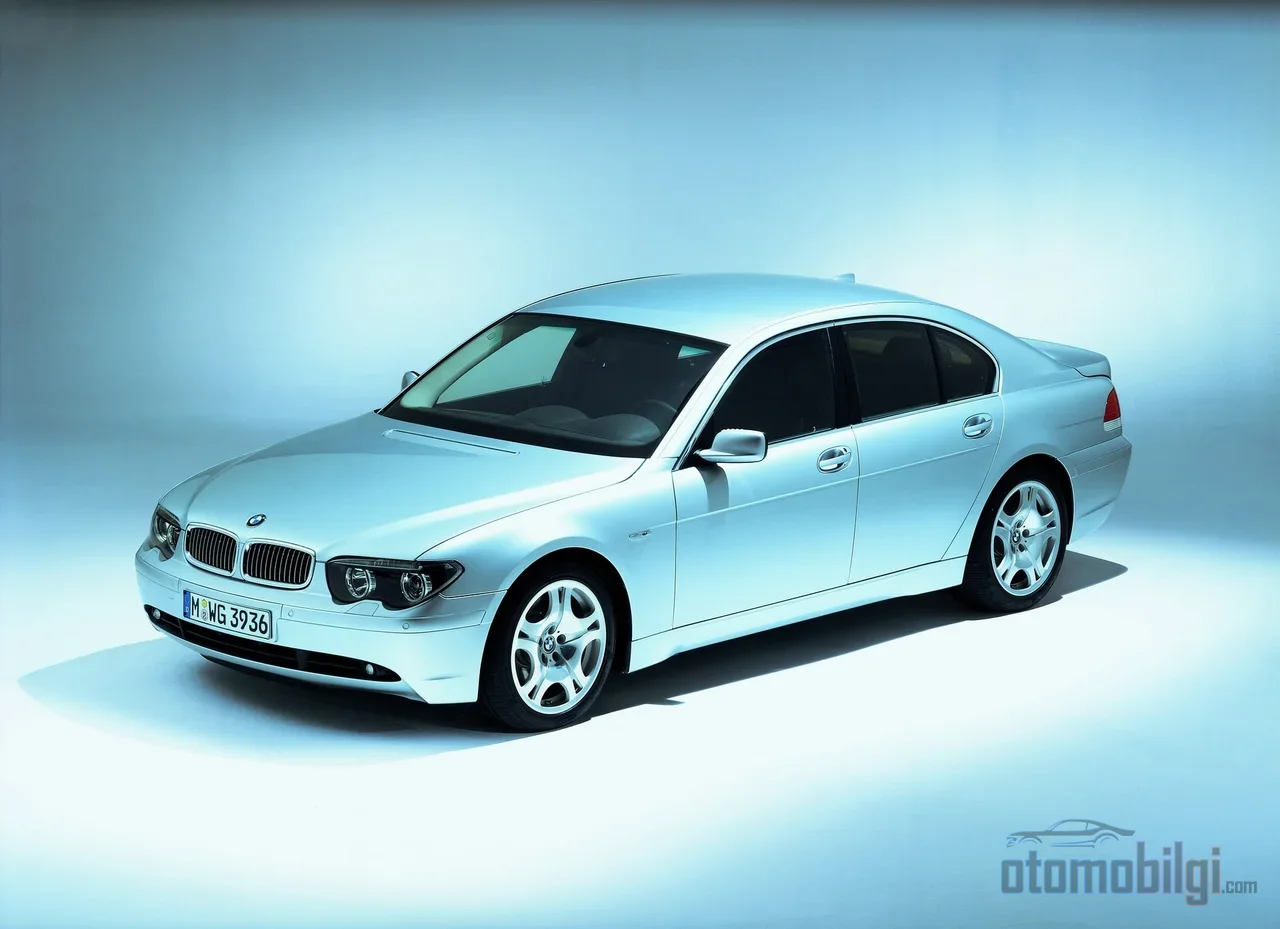
First external presentation to the design world X Coupe was made with the concept; then came the E65 7 Series came. And things heated up in an instant. The E65 initially received heavy criticism, and the design was softened in the facelift. One magazine declared it one of the "50 Worst Cars of All Time"; there were even online signature campaigns calling for Bangle's dismissal. Come on, a signature campaign over a car's design? But the funny thing is: the E65 became the best-selling 7 Series of all time. Moreover, during the Bangle era, despite the controversial design, BMW overtook Mercedes to become the global leader in premium sales. Later on, even voices emerged saying "they were all wrong, Bangle was a prophet."
Another piece of misinformation needs correcting: The E60 5 Series is often thought to be the symbol of flame surfacing, but in fact that design was "a thing of its own". Designer Davide Arcangeli focused more on fabric than on humans, especially fabric stretched over a zeppelin frame. There is also this: Bangle himself did not coin the term "flame surfacing"; the term is attributed to an automotive journalist, and it was probably the first adaptation of Deconstructivism to automotive design.
How did the industry receive it? Ford's chief creative officer J Mays admitted he did not like the designs but acknowledged Bangle's importance in reshaping modern cars. Renault's chief designer Patrick le Quément described him as "the most talked-about designer" while criticizing his use of concave surfaces. Klaus Draeger's assessment from BMW management was short and clear:
Christopher Bangle has left a lasting impact on the identity of the BMW Group brands.
Bangle, on June 10, 2008 unveiled the fabric-clad, shape-shifting GINA concept, and on February 3, 2009 he announced his departure from BMW and the industry; Adrian van Hooydonk took his place. A joke before we move on: the German press had poked fun at BMW's evolutionary approach, saying of the models "one sausage, three different lengths." Yet before Bangle was appointed, the design department was at the bottom of the company hierarchy - after Bangle, it never was again.
Marcello Gandini: The Sharp Pen of the Supercar
Now let's move to Italy. Marcello Gandini took his first step toward design immortality with the Lamborghini Miura ; Countach was his second great work. The Miura was a groundbreaking car: the first model to bring a mid-engine layout to a Lamborghini. On top of that, he drew some of the most radical cars in history, such as the Lancia Stratos and Alfa Romeo Carabo . His career spanned decades with Bertone. Sharp lines, wedge shapes, scissor doors... It can be said that Gandini's pen wrote the grammar of the supercar.
But my favorite contradiction in all this is the following: Gandini described the Miura as "ugly" in his interviews. Imagine it: even the designer of a car called "the most beautiful car ever designed" doesn't like it! In his own words: "I think it is, but I hadn't noticed it." So when designers look at their own creations, they don't see what we see; their eyes are on the next sketch. One more note: Gandini doesn't do retro - he produced work not by copying the shapes of the past, but always looking forward.
Giorgetto Giugiaro: Folded Paper Everywhere
Giugiaro's name became synonymous with an era: the "folded paper" design language of the 1970s and early 1980s. Even his name tells the story: sharp body creases, hard corners, and boxy forms as if a large sheet of paper had been folded by hand. Let me make an analogy from daily life: Bangle kneaded surfaces, while Giugiaro folded them. Both sculpted something out of a flat sheet, but one was like fabric, the other like origami.
The most important fruit of this philosophy - and the most critical design of his career - is the 1974 Mark I Golf. The Golf took the sharp "folded paper" concept from supercars and carried it to the masses, becoming one of Europe's best-sellers. An interesting detail: Volkswagen had handed over the Golf's design to Italdesign; Giugiaro's first projects for VW were the Passat and the Golf, and four generations of the Golf bear his signature.
Where did the folded paper language go afterward? Everywhere. The same concept can be seen in legends like the Lotus Esprit and DeLorean DMC-12 . The wedge-shaped Maserati Boomerang concept is also among the works that earned Giugiaro the nickname "folded paper designer." Going further back, we can add the Alfa Romeo Giulia Sprint GT to the list, and going forward, the Alfa Romeo 159 . In other words, a single line throughout a career spanning over forty years: clear, disciplined, bold.
Peter Schreyer and Kia's Tiger Nose: A Line That Gives a Brand a Face
So how do you give a brand a "face"? Peter Schreyer provided the answer to this question. This German designer, born in 1953, first made his name at Audi with his design contributions to the TT; then he went down in history at Kia as chief design officer. Kia's "Tiger Nose," that is, the tiger nose grille, was introduced by Schreyer precisely to give the brand a bold and distinct face.
Schreyer's own words on the subject are as follows: "My main goal was always to create an identity; the tiger nose grille is a signature that can be recognized everywhere on the cars." His philosophy is also built on "the simplicity of the straight line": simplifying, even eliminating, everything unnecessary. It is also emphasized in Kia's official narrative: Schreyer's concept of "simplification" made people start recognizing Kia through its designs. In my view, this is the clearest proof of the power of design: because of a front grille, a brand broke free from its old "ordinary" label.
Murat Günak: From Istanbul to the World's Design Thrones
And here is where the heart of our page beats: Murat Günak, born August 9, 1957 A Turkish automobile designer born in Istanbul and the former chief designer of Volkswagen and Mercedes-Benz. He finished middle school in Istanbul and continued his education abroad (in Kassel). After graduation, he first worked for two years at Ford Germany, then 8 years as a designer at Mercedes-Benz.
He climbed the career ladder quickly: in 1994 he was appointed Design Chief at Peugeot and worked on models such as the 206 CC, 307, and 607 . In 1998 he returned to Mercedes as Vice President of Design for all passenger cars. Mercedes is credited as the architect of that "four-door coupé" style associated with the CLS and the VW Passat CC . In other words, when a car's roof slopes down like a coupé yet it still has four doors and you go "wow," chances are Gunak's line is behind it.
In 2007 he founded his own company; with the Mia and Mindset projects, he steered toward sustainable, emotion-driven city car design. And the Türkiye chapter: Günak, the former Mercedes and VW chief designer, joined TOGG, Türkiye's automobile. A child who finished middle school in Istanbul becoming responsible for the design of two giant global brands and then standing beside the Turkish automobile... In my opinion, this story alone is inspiring. One note: it is also reported that during his high school years, Gunak did internships at VW, Bugatti, and BMW studios in Germany, but this detail rests on less solid sources, so read it with caution.
Why Is a Designer's Signature So Important?
You have read all four stories; now let's put together the big picture. Historically, an automobile's physical characteristics have expressed brand identity both explicitly and implicitly. The front face still tells the story of how brands shape their identity. Seeing the kidney grille and saying BMW, or seeing the tiger nose and saying Kia, is the most tangible achievement of design language. Brands are aware of this too: for instance, Porsche defines its design identity with the concepts "Hero, Rebel, and Creative" and the keywords "Focus, Tension, Purpose." These are not brochure phrases; every line passes through this framework.
And there is also design's silent partner: aerodynamics. Inspired by aviation forms, designers turned to rounded lines to reduce wind resistance. In the 1930s the Czech brand Tatra brought aerodynamics into car design long before it became an industry standard; even at the very beginning, Camille Jenatzy's torpedo-shaped vehicle is an early example of aerodynamics' impact on the automotive industry. Modern production cars have reached drag coefficients that seemed impossible a decade ago. The beauty of it is this: aerodynamic constraints are not the enemy of design - they often become the very signature of the design itself.
Final Word: The Pen, the Line, and the Signature
Bangle burned bright, Gandini had no regrets, Giugiaro slipped into everyone's garage, Schreyer gave a brand a face, Günak led two giants and joined his own country's car. All five prove the same thing: cars are remembered not by their serial numbers, but by the signature of the pencils that drew them. My question to you: which design do you recognize first when walking through a parking lot?
Sources
- BMW Flame Surfacing Explained: The Design Language That Changed Everything
- Chris Bangle
- Chris Bangle Revolutionized BMW Design
- We Were All Wrong, Chris Bangle Was A Prophet
- Marcello Gandini: What I'd Do Differently
- Marcello Gandini Reflects On The Miura and Countach
- Marcello Gandini: The Designer of the Future
- The Folded Paper Era and Beyond: Giorgetto Giugiaro's Iconic Designs
- Giorgetto Giugiaro
- Golf - Italdesign
- From Design to Philosophy - Kia
- Meeting Peter Schreyer
- Peter Schreyer
- Murat Günak
- Former top Mercedes, VW designer Günak joins Türkiye's Togg
- Hero, rebel and creator: Porsche's design identity
- A Case Study on Evolution of Car Styling and Brand
- A Brief History of Car Design