Why Don't Butterfly Doors Come on Every Car?
Share This Page
Butterfly doors aren't on every car, because these doors usually come about either from an engineering necessity or from an expensive brand signature: constraints like the body structure, safety requirements, weight and cost make the standard door a far more sensible choice for everyday vehicles. So here's the summary: looking pleasing to the eye is the smallest part of a door's job.
Highlights
- The gullwing doors of the Mercedes 300SL were not a style statement but a necessity imposed by the tubular chassis.
- The Lamborghini Countach became the first mass-produced car with scissor doors in 1974.
- McLaren's dihedral doors move both outward and upward, making the low cabin easier to enter.
- Tesla Model X's falcon wing doors had serious problems during the development process.
- With 215 hp of power and a top speed of 260 km/h, the 300SL was the fastest mass-produced car of its era.
First, a Question: What Does a Car Door Actually Do?
Before thinking about this, I had asked myself: if upward-opening doors are so cool, why doesn't the Toyota Corolla have them? The answer is simple but a bit annoying: the door's first job is not to look stylish, but to let you get in safely and practically. The standard door does this in the cheapest, lightest and safest way. Upward-opening doors, on the other hand, are constantly at war with the car's body structure, weight balance and cost calculations. So these doors are condemned to luxury and sports cars, because only they can afford the price of this concession.
But this is where the story really gets interesting. Because the most famous example of these doors, that legendary Mercedes that still takes people's breath away today, never actually came out of a designer's drawing board. On the contrary, it was born out of the engineers' desperation. Come, let's go through it chronologically.
Mercedes 300SL: Gullwing Doors Born of Necessity
In the early 1950s, Mercedes wanted an ultra-light car in order to return to racing. The engineers found the solution in a tubular spaceframe chassis: this skeleton, woven from chrome-molybdenum steel tubes, weighed only about 50 kg and was wonderful in terms of lightness. There was just one problem: the tubes ran unusually high along the sides of the car. There was no room for a conventional door opening. You can't put the hinges at the bottom, because there's nothing there to hinge onto.
The solution the engineers came up with looked like pure madness: they moved the hinges to the roof. The door opened upward, like a bird's wing. That is exactly how the gullwing door was born - not a styling decision, but an engineering rescue operation. Racing regulations required the car to have doors, but there wasn't a single line about how those doors should open. An icon born from a gap.
And it worked. The W194 racing version won the 24 Hours of Le Mans and the Carrera Panamericana in 1952. Then the US importer Max Hoffman stepped in and convinced Mercedes to produce a road version. The series-production 300SL was introduced at the New York Auto Show in February 1954 - the first Mercedes-Benz to premiere outside Europe. Its 3.0-liter inline-six engine produced 215 hp with Bosch's mechanical injection system, used for the first time in a production car worldwide, and its top speed was 260 km/h. There were so few cars that could follow it in those years that it was virtually unmatched.
The Price of Gullwing Doors in Everyday Life
Now for the bad news: living with those doors wasn't as much fun as you'd think. The windows couldn't be lowered normally; when parked, they were removed completely. Ventilation was poor. To get into the car, you had to sit on the wide sill and swing both legs in together - meaning every entry was a small acrobatic show. Here's a question for you: would you do this every morning on your way to work? I'd probably learn to reverse just from the sill after a while.
Production was also limited: only 1,400 Gullwing coupes were built between 1954-1957. The Roadster that arrived in 1957 had conventional doors, and fitting those doors required the chassis to be redesigned from scratch in terms of rigidity. So even switching back to normal doors was a serious engineering feat. Today, these cars are a collector's favorite: unrestored examples sell in the million-euro range, while rare body versions have sold for much higher figures. Owners have included names like Clark Gable, Sophia Loren and Ralph Lauren. Here's another interesting detail: Mercedes-Benz never officially used the term "gullwing"; it simply calls them "doors that open upwards." That unforgettable name was actually coined by a journalist.
Lamborghini: The Brand That Turned Necessity into Image
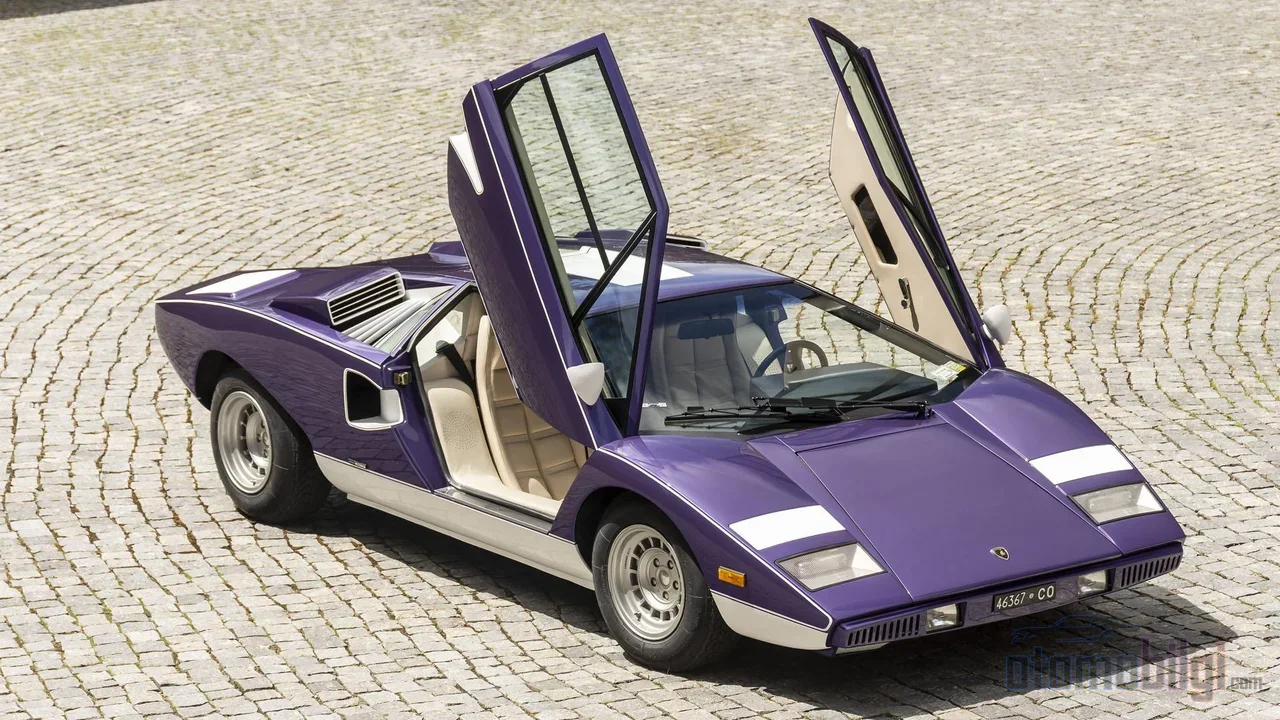
Mercedes' story was one of necessity; Lamborghini's was a pure signature move. The Countach, which arrived in 1974, was the first series-production car with vertically opening scissor doors. Its design was drawn by the legendary Marcello Gandini, who was working for Bertone. The door rotates vertically around a fixed hinge on its front edge; it doesn't open outward like a standard door. Considering the Countach's extremely wide body, it's hard to say a conventional door would be practical - but the real gain was on the emotional side: the moment the door lifted up, the car almost seemed to smile at you.
The rest is history. The same doors appeared on the Diablo, and fans began calling this opening style "Lambo doors." Today, scissor doors are Lamborghini's signature; an integral part of the brand's design language. What was a necessity for Mercedes became a deliberate identity choice for Lamborghini. The difference between these two stories shows that door design actually speaks two different languages: one of engineering, one of branding.
McLaren's Dihedral Doors: Between Butterfly and Scissor
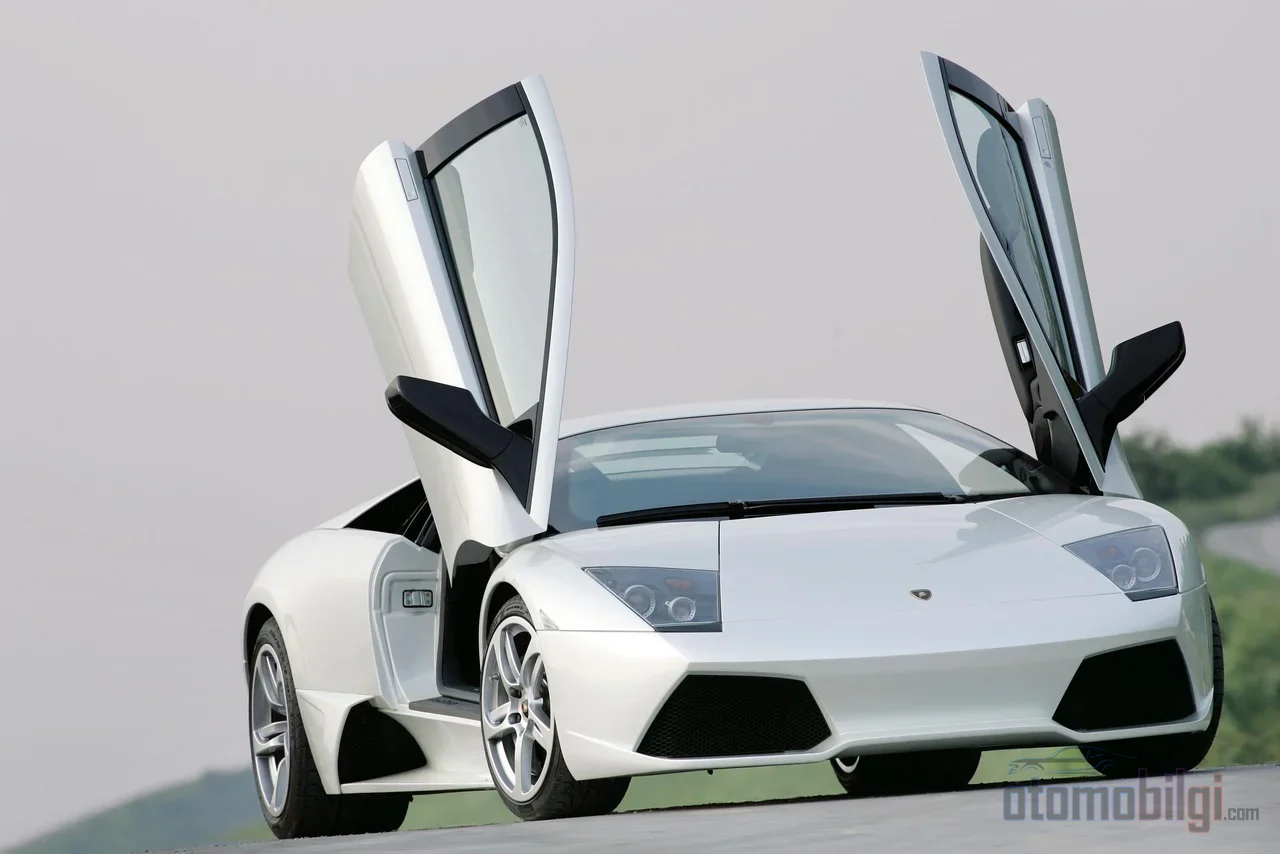
Let me clarify the point most people get confused about, because scissor doors and butterfly doors are not the same thing. A scissor door only rotates vertically. The butterfly door, on the other hand, moves both outward and upward - the door opens as if gliding through the air. The dihedral mechanism used by McLaren also belongs to this family: the door can rotate outward-upward around the hinge point by 90 degrees.
Why does McLaren take this so seriously? Because the brand's vehicles are low and lie flat; even on the centrally seated F1, butterfly doors made entry and exit significantly easier. On the 12C there is no A-pillar or overhead hinge on the roof - this makes a frameless, glass-free design possible. The element on the 570S's door called the "floating tendon" feeds the side air intakes and channels the air; in other words, the door doesn't just open, it also contributes to aerodynamics. On the Artura, the monocell body's high torsional rigidity reduces the compromises the door design would entail. As you can see, behind the showmanship there is always an engineering calculation.
Tesla Model X: The Falcon Wing Experiment in a Family Car
Did anyone think, "What if we put it on a normal family car?" Someone did, and the result was the Tesla Model X. The two rear doors are giant wings that fold upward, known as falcon wings. At its launch, it was shown that they could open in a narrow parking spot despite vehicles parked very close beside it; the driver can also adjust the door height from the touchscreen. According to Tesla, this is a way to overcome the advantage of standard doors in tight parking spots.
But the development process was anything but smooth; even Tesla released a video explaining that the doors went through a process full of problems and only worked as planned at the end. Early Model X units showed general quality issues, and the most frequently repeated complaint from users was the doors' tendency to jam. So spreading wings on a family car is possible, but the price is enduring a serious engineering nightmare. If you like, let's compare them:
| Door Type | Movement | Example Vehicle | Reason for Birth |
|---|---|---|---|
| Gullwing | Hinged on the roof, opens upward | Mercedes 300SL | The obstacle of the tubular chassis |
| Scissor | Rotates vertically around the front hinge | Lamborghini Countach | Brand signature |
| Butterfly / dihedral | Sweeps both outward and upward | McLaren 12C, 570S, Artura | Practicality in a low cabin and aerodynamics |
| Falcon wing | Double-jointed door folding upward | Tesla Model X | Access in a tight parking spot |
So Why Don't Normal Cars Have Butterfly Doors?
Now let's return to the real question, because the answer has multiple layers:
- Price: Non-standard door mechanisms are complex and expensive. In a budget-focused vehicle, spending this money on the doors would be the least meaningful expense in the buyer's eyes.
- Safety and body rigidity: The door opening cuts into the body's load-bearing structure. The standard door compensates for this with solutions optimized over the years; a different opening mechanism requires careful and costly engineering to preserve body rigidity. Remember the Roadster version of the 300SL requiring a full chassis revision.
- Weight: These doors are generally heavier than standard doors and may need power-assisted systems to operate. Weight is the enemy, especially in performance cars.
- The parking reality: In Türkiye, vehicle parking spaces in enclosed garages are planned with dimensions of about 2.5 x 5.50 m, leaving a narrow margin for opening doors between vehicles. The standard door was designed for this world; the upward-opening door promises parking convenience, but it does so at a serious cost.
And there is an interesting entry: since the underbody of electric vehicles is more rigid due to the batteries, a bit more design flexibility can emerge in the upper structure. That's why we may see non-standard door experiments more often on the EV side. Still, the summary is this: butterfly, scissor, or gullwing doors belong to the privileged world of a sports car - because in that world, emotional impact is the currency that counts, rather than calculations of cost, weight, and practicality. Let's also add that the gullwing doors of the DeLorean DMC-12 provided practicality in narrow garages rather than showiness; but exceptions don't break the rule.
Closing: Door Choice: A Design Decision, A Love Affair
What this story taught me is this: almost no iconic detail in car design is born in vain. The 300SL's doors came from desperation, the Countach's from boldness, the McLaren's from engineering elegance, and the Model X's from a bold but painful experiment. At the next level, seeing the doors of the Mercedes-AMG SLS AMG as a completely deliberate style move designed for impact shows just how cyclical the story is: a solution born of necessity became a signature years later. Now it's your turn: if you had one, which door would you enter the garage with?
Sources
- The Mercedes 300SL Gullwing Doors Were Never Meant to Look Cool – Cars N' Code
- Mercedes-Benz 300 SL – Wikipedia
- Scissor doors – Wikipedia
- Butterfly doors – Wikipedia
- Eccentric Doors – Your Guide to the Difference Between Butterfly and Dihedral – Autoevolution
- Cars With Scissor Doors – Lamborghini Models – Lambocars
- McLaren Dihedral Doors: Function Meets Theater – Exotic Motorcars of Michigan
- Tesla's Falcon Wing Doors Were Riddled With Issues – InsideEVs
- Tesla Model X Doors – Tesla Owner's Manual
- Butterfly vs Scissor Doors – HotCars
- Parking Regulation – ÇSB