Why Do Concept Cars Get Lost on the Road?
Share This Page
Concept cars often get lost on the road, because they are not built to be sold but to show a dream: Material costs, safety rules and manufacturing feasibility are far beyond what a standard vehicle can achieve. Still, every rule has an exception; some concepts do actually end up on the street, and it is precisely those models that tell the story of design's journey from showroom to the road.
Highlights
- Widely accepted as the first concept car, the Buick Y-Job, 1938 dated
- Mercedes-Benz Concept CLA Class, went into production keeping nearly all of its striking elements
- The production CLA's 800-volt electric architecture came directly from the VISION EQXX concept
- BMW Vision Neue Klasse, was unveiled in September 2023 with a "close to production" label
- Giants with V16 engines, like the Cadillac Sixteen, are still waiting in the showroom
What is a concept car, and why does it never reach production?
Just think of it this way: In a kitchen, a chef presents a dish that will never appear on the menu but is prepared to captivate the guests. A concept car is that dish of the automotive world. It is an experimental prototype developed not for mass production but to showcase new technology and design language; moreover, it is also a highly effective marketing tool. If there is no crowd left that isn't taking photos in front of the fair stand, that car has already done its job.
As the first example in history, the Buick Y-Job is cited: This vehicle, which hit the road in 1938, proved that a dream could turn into metal. It was followed in 1953, 1956 and 1959 by General Motors' Firebird series signed by Harley Earl. Firebird This trio was so serious that it was directly inspired by jet fighter aircraft. Doors like wings, lines like rockets... Of course, none of them were sold at dealerships; the goal was not the road, but the imagination.
So why can't these vehicles make it to the street? The answer is cruel but simple: feasibility and cost. The materials a concept uses, the hand craftsmanship and the safety shortcuts cannot survive on a mass production line. The cost of a single concept sometimes approaches the budget of a small factory. Pay attention to this: Concepts stay in the showroom when they are "too extreme, too expensive, or lacking buyer support." So the culprit is usually not the design, but the ruler and the calculator.
There is also a psychological side. The concept's task is to trigger emotions, leave a mark, and ignite people's imagination. It is not produced to be sold; there are of course exceptions, but that is the rule. That is why, after the media's attention fades, most concepts are quietly moved to museums or warehouses.
Mercedes CLA: Is a production model based on a concept really possible?
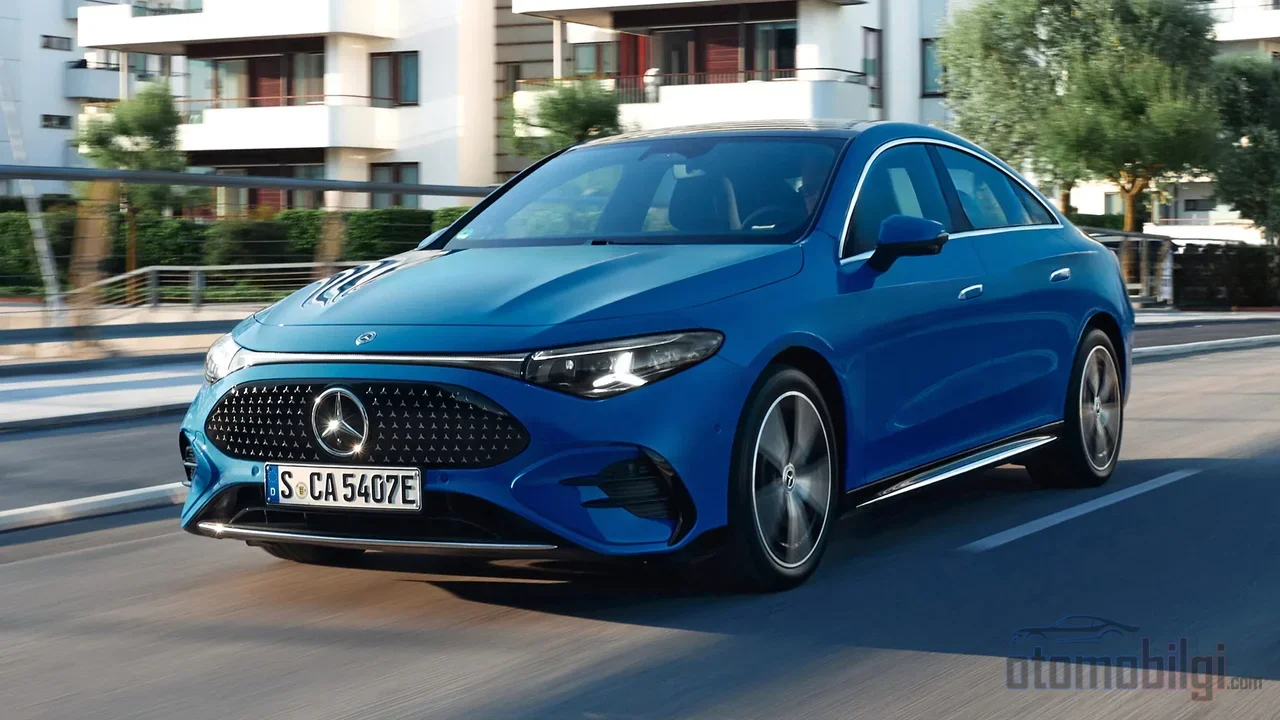
One of the most beautiful answers to this question is currently on the roads. When Mercedes-Benz unveiled the Concept CLA Class, it had highlighted elements such as the strong wheel arches and 21-inch wheels with a star pattern. During the days of the concept's unveiling, a video was shared with the following note: "Aside from the usual concept-car exaggerations, you are probably looking at the electric version of the 2025 CLA sedan." In other words, from day one the brand was trying to say "this is not a showroom toy."
And it truly turned out that way. The third-generation CLA retains almost everything that made the concept so impressive. Moreover, it wasn't just the design that carried over from concept to production, but the technology as well: the car's 800-volt electrical architecture is derived directly from Mercedes' VISION EQXX concept. This is the most tangible proof of the difference between a "show car" and a "production intent" vehicle.
| Specification | CLA 250+ | CLA 350 4MATIC |
|---|---|---|
| Drivetrain | Rear-wheel drive | 4MATIC |
| Power | 268 hp | 349 hp |
| Torque | 247 lb-ft | 380 lb-ft |
| Battery | 85 kWh | 85 kWh |
| Range | Around 350 miles; the manufacturer's US page reports a range of up to 400+ miles and a 186-mile charge in 10 minutes | |
The details are also interesting. In the hybrid version, alongside the 1.5-liter turbo gasoline engine, there is a 27 hp electric motor supported by 48 volts, embedded in an eight-speed dual-clutch transmission. The flexibility of the MMA platform makes this possible. For the first time in the brand's history, a model has a "frunk," that is, a front trunk - a first in 90 years! Illuminated stars shine on the grille, the MB.OS operating system and fourth-generation MBUX are at work; this infotainment system is introduced as the first in-car system to integrate artificial intelligence from Microsoft and Google. Those who get into the car find a body that is longer, taller, and wider than the previous generation; even the chassis is 2 inches longer.
BMW Vision Neue Klasse: The concept that says "You'll see it soon"
A similar story unfolded on the BMW side. Unveiled in September 2023, the Vision Neue Klasse heralded the brand's entry into the fully electric era, and BMW announced it as "a new era." The key statement was this: the concept was presented as "close to production." In other words, BMW was clearly saying what it was showing in its showroom and why. In fact, it was explicitly stated that the concept would turn into a real production vehicle in 2025, and this transition was described as the company's biggest investment for the Neue Klasse.
The concept's signals were also strong: It was said to preview the future 3 Series sedan and pay homage to the iconic BMW 2002. The circular economy approach was seriously addressed even at the concept stage, from production to use and recycling. Then the second concept, Vision Neue Klasse X was unveiled; it too was 100% electric. Thus BMW proved that the shortest way to understand whether a concept will be serialized is to look at the words coming out of the manufacturer's mouth: expressions like "close to production" and "production in 2025" are not said in vain.
Comparing these two examples makes the typical picture clearer: The main reason for that famous "design gap" between a concept and a production model is practicality. The goal is not to replicate the concept exactly, but to carry its spirit through cost and safety filters and keep it on the road. The CLA almost achieved this one-to-one; most concepts, however, are eliminated at the very first filter.
Concepts that never made it to production: The dream is beautiful, the math is bad
Now let's move on to the painful part. Automotive history is full of concepts we lament with "if only they had been produced." I've listed some famous examples for you:
- Cadillac Sixteen: A luxury giant with a V16 engine; among car enthusiasts, one of the strongest candidates for the title of "most beautiful unproduced concept."
- Dodge Copperhead and Ford Indigo: From the American school of cars that shone in the showroom but never made it to the road.
- Audi Avus and Audi PB18 e-Tron: Two different generations of German design courage.
- Lamborghini Miura Concept (2006), Audi Quattro Concept (2010), Bugatti 16C Galibier (2009), Infiniti Q50 Eau Rouge (2014) and BMW M1 Homage (2008): Each was the talked-about design of its era.
- Jaguar C-X75 and Ford GT90: The crown jewels of the legendary supercar category; they never made it beyond the prototype stage.
- Mazda Vision Coupe: It collected design awards yet still remained in the showroom.
So why couldn't these vehicles make it to production? From a designer's perspective, the picture becomes clearer. Those whose careers are intertwined with car design say this: To make a concept roadworthy, three difficult conditions must be met at the same time - a feasible business plan, producible engineering, and a solid business rationale. Catching all three of these at once is harder than you might think. For most concepts, rather than passing this filter, building a multi-million-dollar work of art and capturing the world's attention is a more sensible investment; because in the end, the concept's real job is not sales, but getting people talking.
What do concept cars contribute to brand image?
A concept staying in the showroom doesn't mean it's useless. Quite the opposite: These vehicles are like billboards announcing the brand's future. A car's design must be easily identified with the brand it belongs to and must communicate with unquestionable clarity. Signature elements like Mercedes' star emblem or BMW's kidney grille are the very essence of this story where the front face tells the brand's identity. Concepts are also the testing ground for this signature language; ideas like star-patterned wheels or illuminated louvers are first tested in the showroom, then filtered into production.
There's an economic side too: A strong and consistent brand image increases customer loyalty, market share, and pricing power, while a weak or inconsistent image erodes competitiveness. So a brand that invests in a concept is actually investing in its own future reputation. Since purchase decisions in a mature technology product like the automobile are determined by factors such as aesthetics and ergonomics, this "visual investment" is taken seriously.
A note from Türkiye as well: Turkish automotive sources frequently emphasize the distinction between a "show car" and a vehicle intended for production; it is stated that concepts are shaped with realistic proportions and equipment that is feasible in series production. Let's also remember that developments related to the domestic car are accelerating, with an agenda ranging from Togg's new models to Renault's new SUV, and from Hyundai's new EV to Ford Otosan projects. Concrete examples of a specific concept car designed in Türkiye are still few; perhaps we will need to update this list in the near future, who knows?
Is it possible to know in advance whether a concept will make it to production?
Partly yes! Once you learn to read concepts, you start seeing clues about which one will make it to the street even while waiting at the show stand. My three favorite signals are:
- The phrase "production intent." If the brand presents the concept as "production intent," that is a strong signal; this is exactly the kind of language BMW used for the Vision Neue Klasse.
- The CEO giving a date. If executives state a production date explicitly, the concept is on its way beyond the showcase; in BMW's case, this date was clearly talked about.
- The concept being marketed as a "preview of a future model." In Mercedes' case, even during the presentation it was possible to comment that the car was an electric version of a 2025 CLA; this shows the signal was read early on.
The reverse also holds: if a concept was designed only to tour the show circuit and gain media coverage, you can often tell even at a glance. Lines so wild that the body will never be seen up close, doors that don't open, interiors far removed from realism... These are usually the harbingers of the "fantasy" label. Let me add a small warning: some concepts go quiet and are shelved after a long period of buzz; no matter how beautiful the design, the engineering and regulatory filters are the final jury.
One last question for you: which concept would you like to see out on the roads?
The best thing about concept cars, in my opinion, is this: they are the metal versions of the questions the automotive world asks itself - "what if it were like this?" Even if most of them never make it to the streets, their ideas seep into future models; like the CLA's 800-volt architecture or the Neue Klasse's circular economy thinking. So the vehicle in the showroom isn't produced in vain. Now it's your turn: would you rather bring the Cadillac Sixteen's V16 sound or the Jaguar C-X75's lines to the roads? I'm curious about your answer too!
Sources
- Concept CLA Class | Mercedes-Benz
- 2026 Mercedes-Benz CLA Sedan | Future Vehicles
- 2026 Mercedes-Benz Cars Lineup: All the Changes and Updates - MotorTrend
- 2026 Mercedes-Benz CLA-Class Pricing, Photos & Specs - CarBuzz
- Mercedes-Benz CLA (2026) - NetCarShow
- The Neue Klasse: The BMW Group enters a new era
- This BMW Vision Neue Klasse will be a proper production car in 2025 - Top Gear
- BMW Vision Neue Klasse Is a Glimpse of the EV 3-Series - Car and Driver
- BMW Vision Neue Klasse EV Concept Debuts September 2 - InsideEVs
- BMW Vision Neue Klasse
- THE NEW EXPERIENCE - BMW Vision Neue Klasse X
- Why Are Concept Cars Never Actually Manufactured? - ScienceABC
- What keeps concept cars from making it to market? - HowStuffWorks
- The Importance of Concept Cars - Polestar
- Why Do Concept Cars (almost) Never Make It? - Car Throttle
- Concept Cars That Should've Made it to Production - Road & Track
- 25 of the coolest mid-engined concept cars that never made production - Top Gear
- Concept cars: Top 10 Forgotten designs - Petrolicious
- Concept car - Wikipedia
- What is a concept car? - Yeni Şafak
- Concept Cars That Make You Say "If Only" - Arabam.com Blog
- Domestic Cars Produced in Türkiye - Oggusto