How Did Bill Mitchell Create the Jet Age Cars?
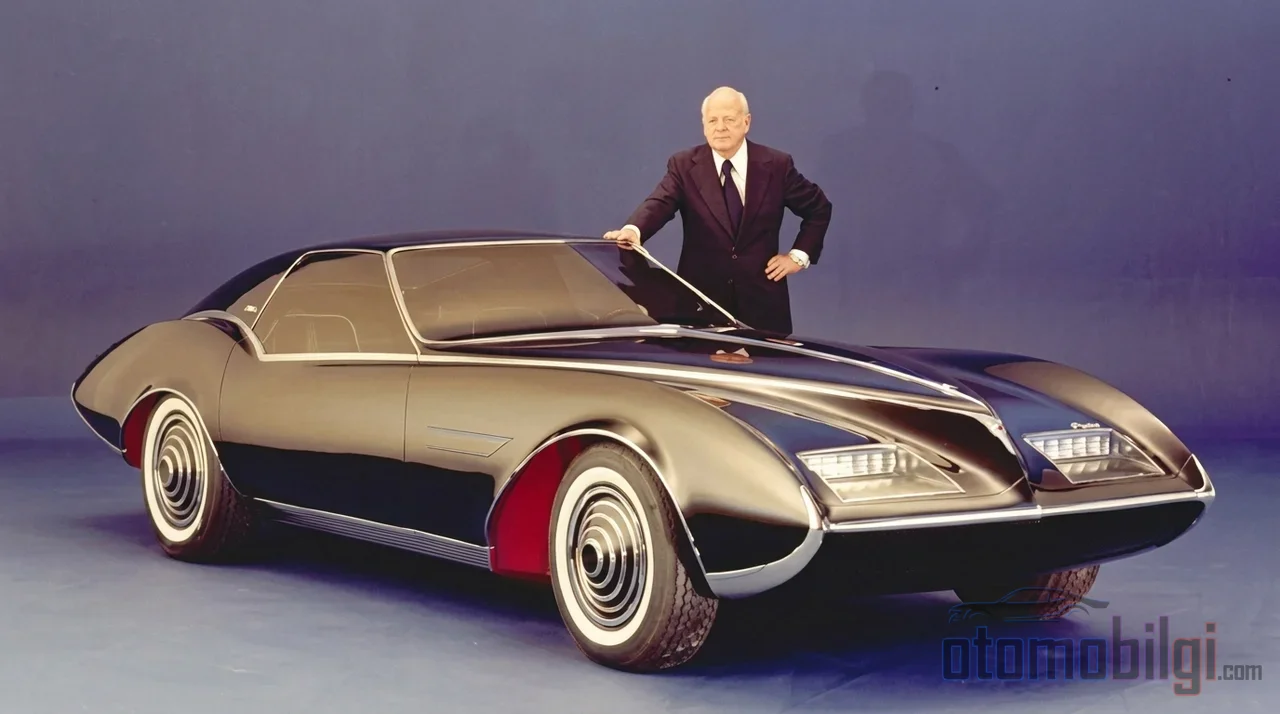
December 1958. Harley Earl leaves GM at the age limit of 65, and the keys to the era's largest design studio pass to another name at the drawing board: Bill Mitchell. The world Earl left behind was filled with heavy chrome, bulging fins, and eye-catching ornamentation. Mitchell, however, looks in the exact opposite direction. To him, a car should stand like a freshly ironed shirt: taut, clean, wrinkle-free. And this idea would change not just a handful of cars, but the taste of an entire era in the years ahead.
So who was this man, and how did he craft the line that runs from the flying wings of the 1959 Impala to the split rear window of the 1963 Sting Ray? If you're ready, we're diving into the story of the man who drew the jet age on paper.
Who Is Bill Mitchell: From the Son of a Buick Dealership to the Pinnacle of GM Design
William L. Mitchell was born on July 2, 1912, in Cleveland, Ohio. His father was a Buick dealer; so little Bill grew up surrounded by cars and showed a talent for drawing automobiles at an early age. He was educated at Carnegie Institute of Technology (today's Carnegie Mellon) and at the Art Students' League in New York. He started out in advertising: While working at Barron Collier Advertising, he prepared MG's North American advertisements and became the official illustrator of the Automobile Racing Club of America, founded by the Collier brothers.
Those racing illustrations caught Harley Earl's attention. Mitchell joined GM's Art & Colour Section in 1935, and in 1936 Earl appointed him chief designer of the newly established Cadillac design studio. On May 1, 1954, he became GM Director of Styling, and with Earl's retirement, he served as Vice President of General Motors and head of the Styling Section from December 1958 until his forced retirement in 1977. Over his 42-year GM career in total, the number of automobiles he created or influenced exceeded 72.5 million. On September 12, 1988, he passed away at the age of 76 in Royal Oak, Michigan, from heart failure.
Highlights
- Bill Mitchell worked at GM for a total of 42 years between 1935-1977; the number of cars he influenced exceeded 72.5 million.
- He replaced Harley Earl in December 1958 and carried GM design from excessive chrome to sharp, well-proportioned forms.
- His signature works: the 1959 Impala, the 1963 Corvette Sting Ray, the 1963-65 Riviera, and the second-generation Camaro.
- He founded the secret Studio X; names like Larry Shinoda and Peter Brock were trained at his drawing board.
From Earl's Chrome to Mitchell's Sheer Look: A Change of Philosophy
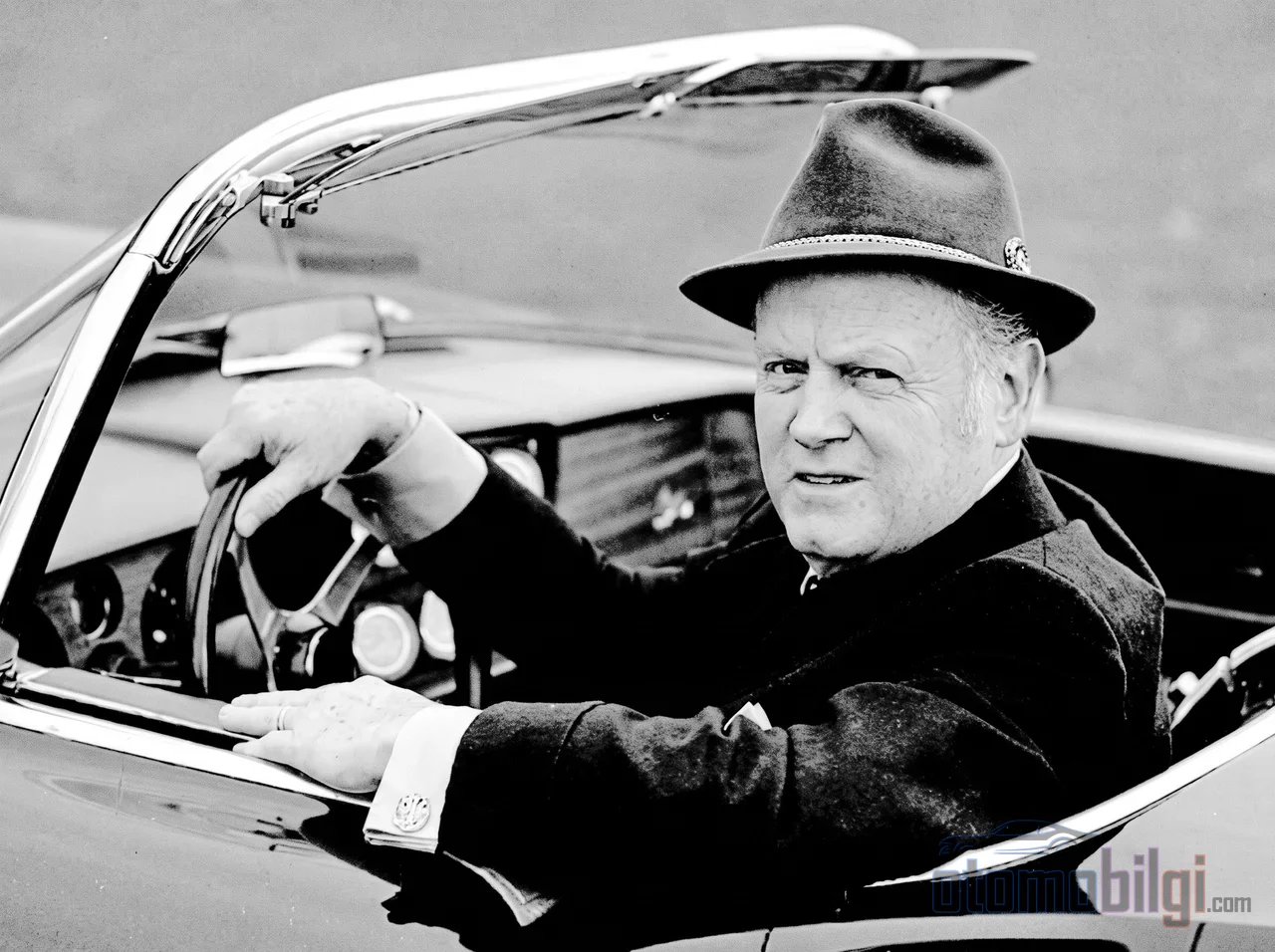
The signature of Earl-era GM was unmistakable: abundant chrome, ample fins, exaggerated ornamentation. As soon as Mitchell took the chair, he eliminated these signature elements one by one. What he sought was fluidity, sharpness, and proportion. In the 1960s he gave it a name: the sheer look. That is, a body line that descends with a sharp aerodynamic drop, without an shoulder transitioning onto the glass side surface. Just imagine: Earl's cars were like ball gowns, while Mitchell's were like a sharp tailored suit. Both are stylish, but one wins with ruffles and the other with tailoring.
What Mitchell said about his design philosophy sums up this approach. He would say a car should look like a freshly pressed shirt. He was against committee design; he believed you had to go in and state clearly what you wanted to do. He was also famous, and somewhat witty, on the subject of small cars: he compared making small cars to tailoring for dwarfs. In other words, capturing the right proportions at a small scale was harder than in a big car. There is, of course, a result that surprises those who did not think like him: the Sting Ray, one of his favorite works, was itself entirely a small-car project.
The mako shark hung on the wall
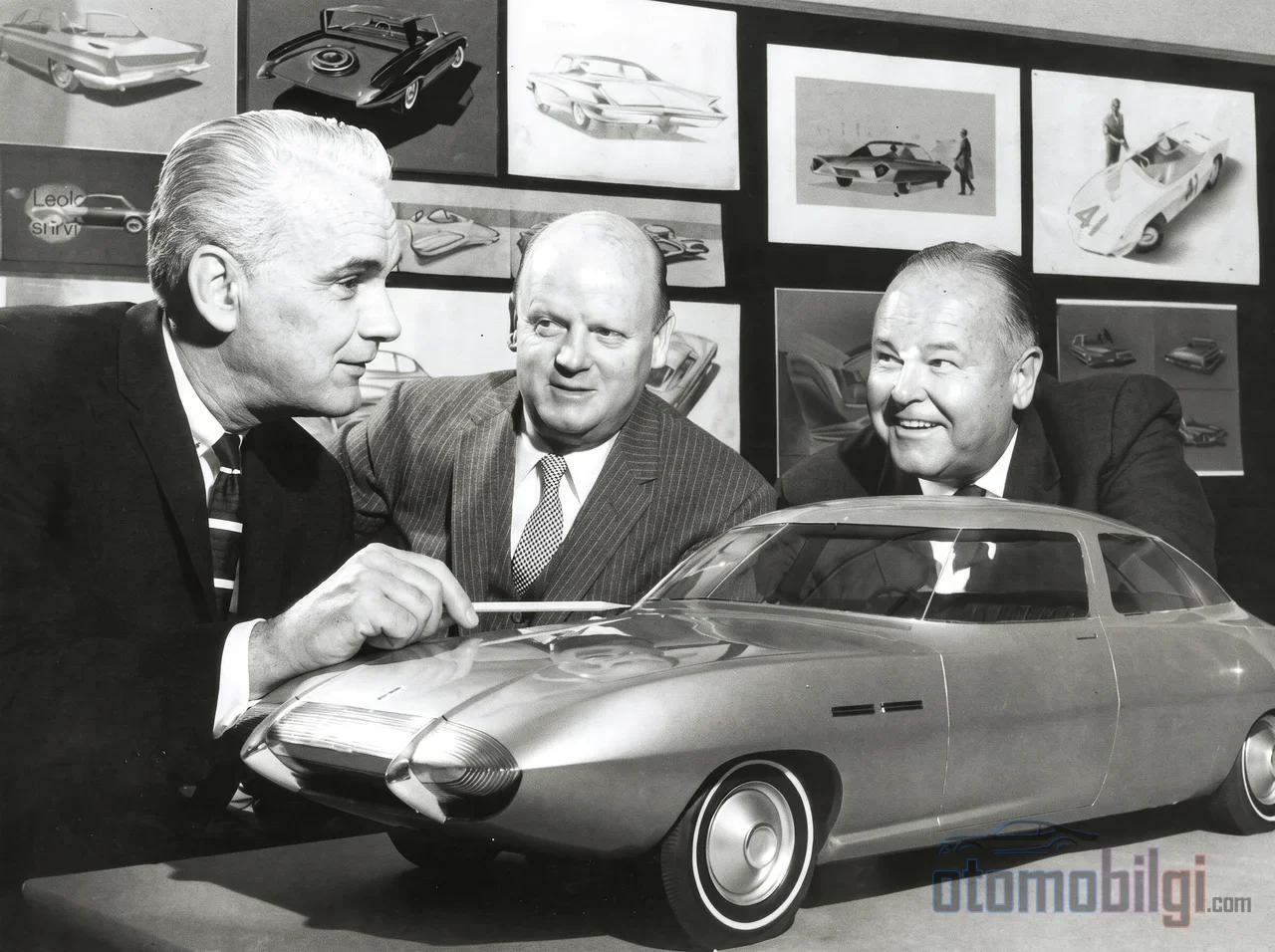
Mitchell usually did not draw himself. He worked like an orchestra conductor: he picked the right people who could carry his vision and fed them loose but clear directions. One of his most famous directives took place in his office: he wanted a silhouette inspired by the short-finned mako shark, and it is said that a miniature mako hung in the office. He called fake vents and decorative grilles "surface entertainment": details that served no function but added character.
1959 Chevrolet Impala: Batwing Fins and the Peak of the Jet Age
The boldest example of jet age aesthetics is without a doubt the 1959 Chevrolet Impala. Those famous horizontally extending fins known as batwing are a design without equal in automotive history: instead of rising vertically, they spread outward to the sides, like the wings of an airplane ready for takeoff. Add the cat-eye headlights and you get a car that seems impossible to have come from a mid-tier brand.
There is an interesting detail here: the Impala was produced right after Earl's retirement, during the period Mitchell took over. Mitchell's attitude during this process is one of the most telling aspects of the story: he rejected the compromise design that came before him at a single glance on aesthetic grounds, calling it the design of a frightened committee. So those fins were not something hastily compromised; quite the opposite, they were the product of an uncompromising decision. And of course boldness had its price: such an extreme design could only be short-lived, and the following year the lines calmed down. But that is exactly why the 1959 Impala is considered a milestone today.
1963 Corvette Sting Ray: The Short and Stormy Story of the Split Window
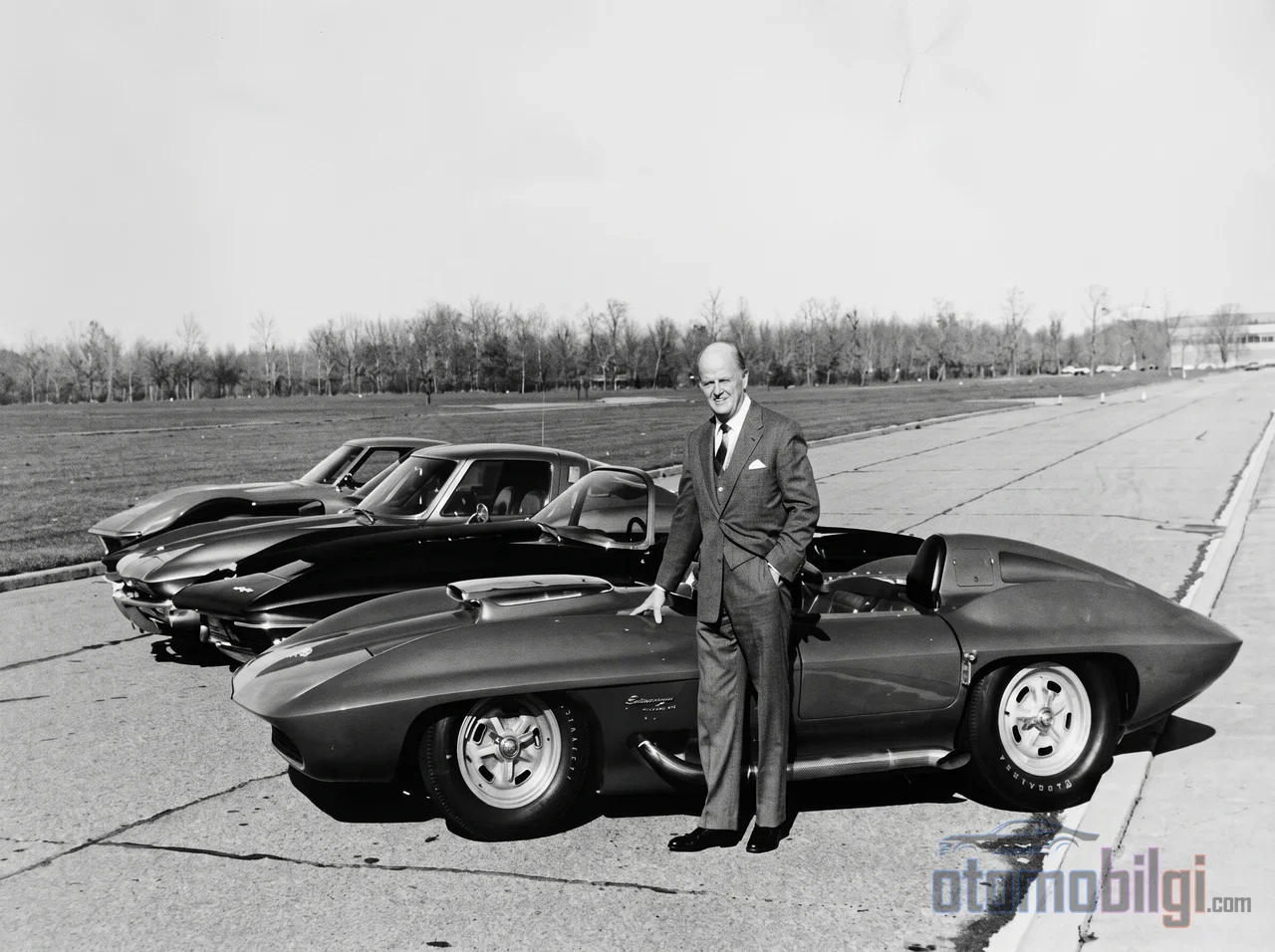
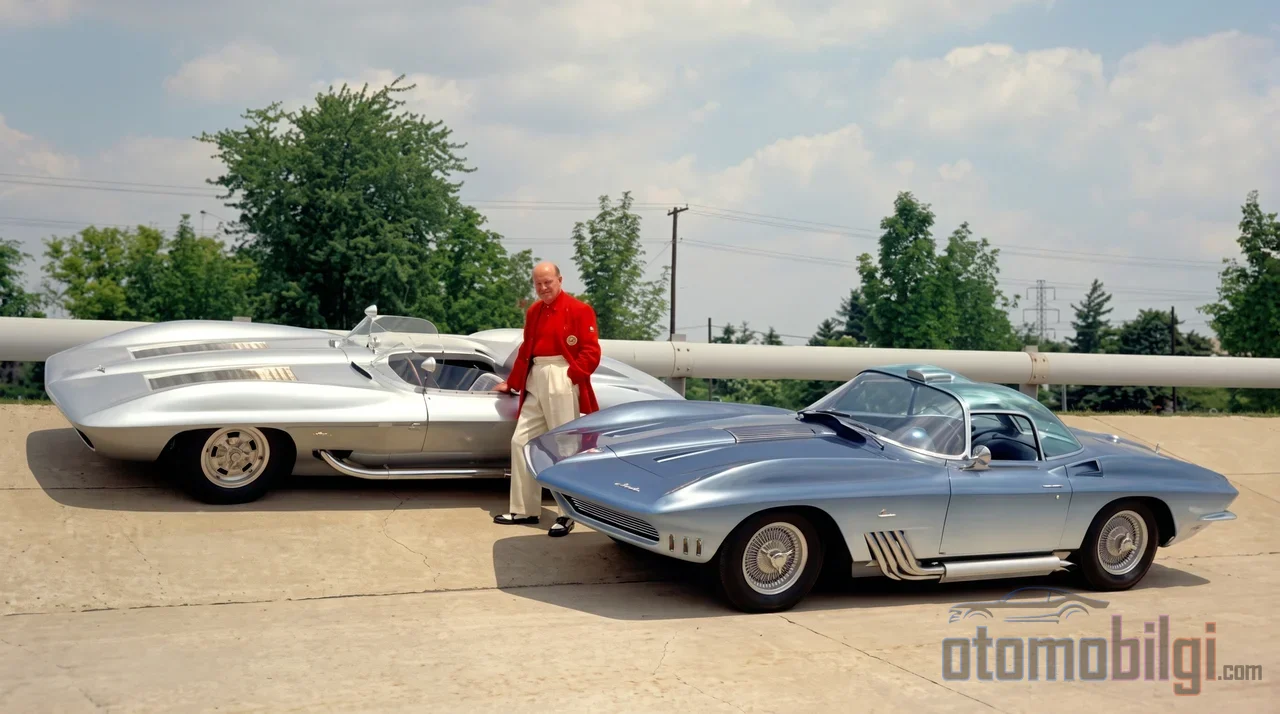
Now we come to what may be Mitchell's most personal work. The second-generation Corvette Sting Ray became legendary with its split-window coupe, with the split rear window produced only for the 1963 model year. That steep glass divider in the middle split the rear in two, giving the car a silhouette found in no other Corvette. Add the hidden headlights and muscular body lines, and the result was not an ordinary mid-tier sports car but the land equivalent of a short-finned predator.
A young intern's drawing, a master's vision
The story of the Sting Ray's basic drawing is also a summary of GM's culture of nurturing young talent. In 1957, young designer Peter Brock, who had just turned 20, laid down the basic lines under Mitchell's loose direction. Then Larry Shinoda matured the form with refinements coming from the Mako Shark concept. So there was not a single genius at the drawing board, but a team conducted by Mitchell like an orchestra, with Mitchell placing the right sounds in the right places. Indeed, when Brock once came to Mitchell with a proposal about the Corvettes, he received a stern answer in the style of "Corvettes are my call": that is how strong the sense of ownership was.
The split window, on the other hand, showed that not everyone agreed. Legendary engineer Zora Arkus-Duntov fiercely rejected that window because it obstructed visibility, and public reaction was mixed. The result: the feature was removed in later years. But design history walks on strange paths; today that split window is one of the most sought-after Corvette signatures. Even whether the Sting Ray spelling should be Stingray or Sting Ray is still debated among historians. These details deserve an article of their own, don't worry.
Riviera, Camaro and the Years the Wedge Forms Spread
Mitchell's signature was not limited to a single model. For the 1963-65 and 1966-67 Buick Riviera, he shared with his team the inspiration he had captured in Paris, tasking his designers with blending Rolls-Royce and Ferrari lines. The design drawn by Ned Nickles and refined by Mitchell was first presented to Cadillac; after being rejected it went to Buick and was considered one of the masterpieces of its era with its hidden headlamps. The second-generation Chevrolet Camaro of 1970-81, with its aggressive, taut lines, was the muscular interpretation of the Mitchell aesthetic.
From the 1955-57 Bel Air to the 1938 Cadillac Sixty Special, and even to the tail fins added to the 1949 Cadillac in the Earl era, this list shows that Mitchell was someone who believed in the power of design years in advance. Toward the end of his career he also pioneered the theme of shrinking, that is downsizing, with the 1975-79 Cadillac Seville; the 1977 full-size and 1978 mid-size downsized GM models were the last major moves of the Mitchell era. His final design was the 1977 Pontiac Phantom concept: GM refused to show it to the public. A harsh finale, but a finale very fitting for Mitchell.
Studio X and the School That Grew Out of the Drawing Board
Mitchell's legacy, no less important than his cars, was the people he trained. He himself established a studio called Studio X that produced independent, secret ideas. Larry Shinoda became Mitchell's personal designer here and designed the Mako Shark II show car. While GM had officially withdrawn from racing, Mitchell rented a garage near Warren and continued secret racing work; the Corvette was his baby, and books also tell of its connection to Jim Hall's Chaparral race cars.
The measure of this school is this: the Mitchell era produced GM's next four Vice Presidents of Design. The names Welburn, Cherry, Jordan and Rybicki all passed through this culture. So Mitchell didn't just draw cars; he raised a generation of designers. He was also bold and playful enough to surprise Earl with the XP-700 concept he had built with his own money: Earl liked the car and it was turned into a GM show car.
A Controversial Legacy and Why Mitchell's Signature Endures
Let's be honest: Mitchell was no angel. Known by the nickname Mr. Glamour, his hard-living lifestyle, alcoholism and sexist views were well documented. In the 1970s he is said to have lost touch with the market and management support; compared to the brilliance of the 1960s, his final years were painful. Neither his studio colleagues nor buyers embraced his love of the split rear window. Even at the William L. Mitchell Design consultancy he founded in retirement, the fire of criticism never died out: he openly said he found the styling of the fourth-generation Corvette mediocre.
So in summary, how did Bill Mitchell create the jet-age cars? The answer in a single sentence: By tearing down the heavy chrome and bloated fin aesthetic Harley Earl left behind and replacing it with forms that were taut like a pressed shirt, proportioned and flowing; bold silhouettes inspired by jet aircraft and marine life, brought to paper by the hands of teams built from the right people. The proof of this transformation is plain to see: The fins of the 1959 Impala, the split window of the 1963 Sting Ray and the Riviera's hidden headlamps still shape the language of automotive styling today. If one man's taste touched more than 72.5 million cars, calling that a coincidence would be the greatest naivety of all.
Sources
- The Designer's Story: Bill Mitchell
- 1963 Chevy Corvette Sting Ray
- Origins of the iconic 1963 Corvette Sting Ray split-window design
- Studio X: The Story of Bill Mitchell's Secret Styling Studio at General Motors
- Bill Mitchell - National Corvette Museum
- Bill Mitchell - This Day In Automotive History
- Vision Thing: Passing the Torch
- Founding Fathers Part 3: Bill Mitchell, Creator of the Corvette Look