How Did Giugiaro Create a Hatchback Design Revolution?
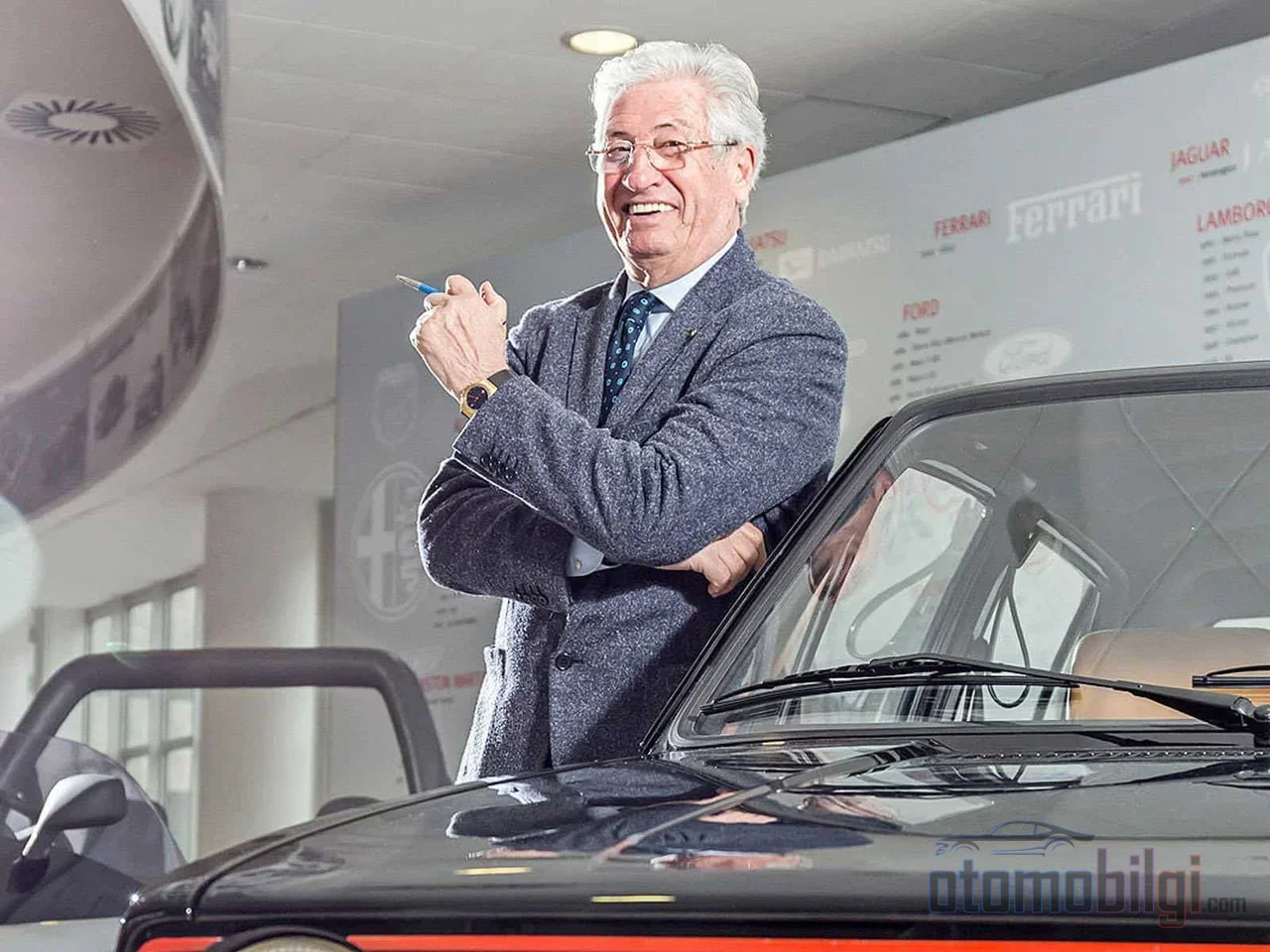
Imagine someone hands you a sheet of A4 paper and says: fold it, sharpen its edges, and there's your new car. Sounds crazy, doesn't it? But in the early 1970s, a man in Italy did exactly that, and the result was one of the best-selling cars in the world. The story of Giorgetto Giugiaro is not the story of a child playing with paper, but of a designer who single-handedly redefined the hatchback form. So who was this man, and how did his sharp lines manage to change global car design?
On this page, we tell the story of Giugiaro's journey from his early days in Turin to the Volkswagen Golf, and from there to his legacy today. If you're ready, buckle up; because this journey has plenty of twists and turns.
The Fresco Painter's Son Goes to Turin
Giorgetto Giugiaro was born on August 7, 1938, in the town of Garessio in Italy's Piedmont region. His father was a fresco painter; meaning art had seeped into the very walls of the house. At the age of 14, in 1952, he moved to Turin, where he attended high school art classes during the day and began sharpening his drawing pencil at a technical drawing course in the evenings. This blend of two worlds, the meeting of art and engineering, would later become his signature.
His talent was quickly noticed. In 1955, at just 17 years old, he joined Fiat's Centro Stile unit; one of his first tasks was the color work for the Autobianchi Bianchina. Yes, the career of a veteran designer can begin with choosing a color for a vehicle. In 1959, Nuccio Bertone put him in charge of the Bertone styling center, and Giugiaro, still in his twenties, had already landed at the heart of the Italian design world.
The Bertone and Ghia Years: Master of Exotic Coupes
The Bertone era was the period when Giugiaro made his name with elegant, flowing lines. For Alfa Romeo, he drew the 2000 Sprint, the 2600 Sprint, and the legendary Giulia Sprint GT; he designed the Giulia GT in the year he did his military service, 1960, and this model sold more than 192,000 units in 14 years. In addition, cars such as the one-off 1960 Ferrari 250GT Bertone and the BMW 3200CS, which adorn collectors' dreams today, came from his hand.
Maserati Ghibli: The First Big Explosion
The Maserati Ghibli, introduced at the 1966 Turin Show, was the peak of Giugiaro's Ghia era. Its 4.7-liter naturally aspirated V8 engine produced 330 horsepower, and a total of 1,149 units were built. The interesting part: The Ghibli outsold both the Ferrari Daytona and the Lamborghini Miura. Giugiaro's innovation in this model was integrating the body and cabin volumes; in other words, he made the car perceived as a single piece, like a sculpture. The French sports press of the time was so impressed that it wrote one of the two heroes of that year's show was the Fiat 124, and the other was Giugiaro himself.
Mangusta and the Personal Favorite
The De Tomaso Mangusta, which he drew the same year, holds a special place in Giugiaro's heart. He himself admits that while the Ghibli remained more conventional, the Mangusta was a step ahead; in the later years of his career he would name it as his personal favorite. After the dispute he experienced over the sale of Ghia to De Tomaso, he completed his final year as an external consultant and on February 13, 1968, founded his own company, Italdesign, together with Aldo Mantovani. This is where the real revolution begins.
Highlights
- More than 200 models were designed with Giugiaro's signature; the total production of these vehicles is around 50-60 million.
- The Volkswagen Golf Mk1 was introduced in 1974; Golf/Rabbit sales approached 21 million.
- In 1999, an international automotive press jury selected him as the Car Designer of the Century.
- The Golf Mk1, which set the standard for the compact class, is the most famous application of the folded paper aesthetic.
What Is Folded Paper? Origami-Like Car Design
Now, let's get to the heart of this page. Giugiaro's aesthetic from the 1970s and early 1980s is known in the industry as folded paper. What does that mean? When you fold a piece of paper, flat surfaces and sharp edges are formed; and Giugiaro's cars are exactly like that: flat panel instead of curvature, crisp broken line instead of soft transitions. Drawing cars as if doing origami.
This approach was also an important leg of the wedge-form movement of the same era. Angular, low, and future-oriented forms dominated car design in the 70s and early 80s. Giugiaro's difference was that he combined this harsh aesthetic not just to look beautiful, but with functionality: he wanted the exterior design to reflect the interior comfort, visibility, and usable space. In other words, folded paper was not a stylistic game, but the result of thinking of the car as a whole. His philosophy can be summarized as honesty of form, elimination of the unnecessary, and harmonious lines.
Volkswagen Golf Mk1: Reinventing the Hatchback
So how did this aesthetic conquer the world? The answer lies in one word: Golf. In the early 1970s, Volkswagen was in serious financial difficulty as sales of the legendary Beetle (which had sold more than 20 million units) declined. A new model was sought to turn the company around, and in 1969 the project was given to Giugiaro, known for his mastery of all production and manufacturing details. What the German manufacturer wanted was not just someone who made drawings, but a partner who also understood the production process; and Giugiaro was exactly that.
Introduced in 1974, the Golf Mk1 set the standard for the compact class with its clean and angular hatchback form. Golf/Rabbit sales eventually approached 21 million; meaning it not only took over the Beetle's throne, but became a series that surpassed it. Giugiaro wanted the 5-door version of the car both for ease of use and for its looks. In the same period, he also shaped the design language of the 70s Volkswagen family with the Scirocco and Passat.
Here is the sweet part: According to Giugiaro's own statement, what made him rich was small, mass-produced cars like the Golf. These cars both kept the company afloat and provided the means to produce dream cars like the Ghibli. In other words, the engine of the revolution was not exotic coupes, but the compact hatchbacks we see on the street.
How Sharp Lines Conquered the World?
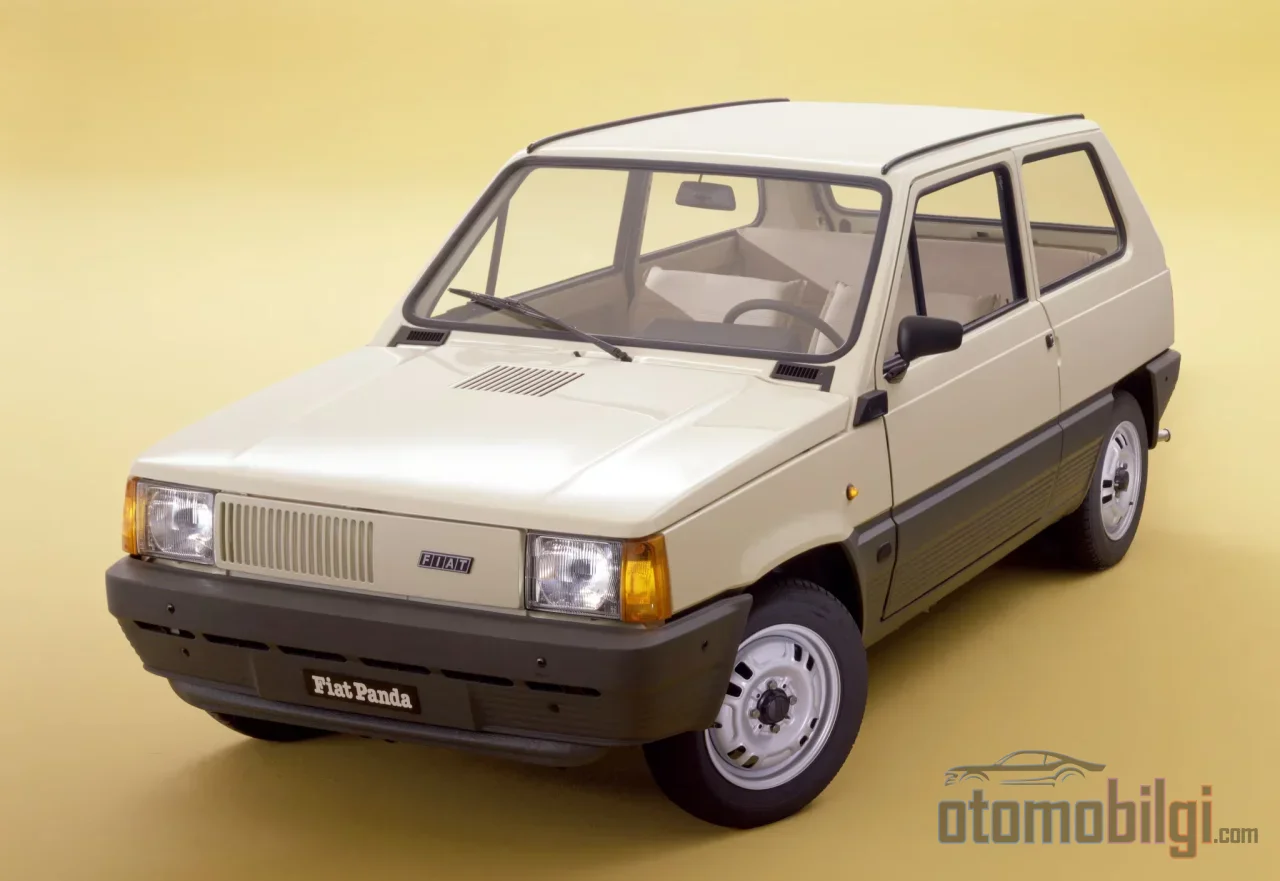
The Golf was a beginning, not the only point. The Giugiaro signature quickly expanded: Alfa Romeo Alfasud (1972), the Maserati Boomerang concept introduced with space-age aesthetics at the 1971 Turin Show, the Lotus Esprit - considered a tamed version of the Boomerang, with 10,675 units produced between 1975-2004 - the 1978 BMW M1, the 1979 Lancia Delta, the 1980 Fiat Panda and the 1981 DeLorean DMC-12... They all carry the same design DNA.
Having worked for more than 25 brands, Giugiaro designed over 200 models under the Italdesign signature, and the total production of these cars reached around 50-60 million automobiles. Ferrari, Bugatti, BMW, Maserati, Alfa Romeo, Lotus, DeLorean... This list is proof of how much a single designer touched global automotive culture. In the early 1990s, he adapted to the spirit of the times and turned to more curvaceous forms such as the Lamborghini Calà, the Maserati Spyder and the Ferrari GG50; in other words, folded paper was not his only word - he spoke the right language at the right time.
Who Carries Giugiaro's Legacy Today?
And what about the medals? In 1999, a jury of international journalists and experts in Las Vegas chose him as Car Designer of the Century; in 2002 he was inducted into the Automotive Hall of Fame and won Italy's prestigious Compasso d'Oro award no fewer than 5 times. In 1999 he was deemed worthy of the Cavaliere del lavoro title by President Ciampi and received 7 honorary doctorates; one of them was from the Royal College of Art in 1984.
The industry changed too. According to Giugiaro's observation, with manufacturers establishing their own in-house styling centers, Turin's legendary design houses (Bertone, Ghia, Stola) lost their competitiveness. In 2010, Italdesign Giugiaro passed to the Volkswagen Group; Giugiaro sold his remaining shares in 2015 and that same year founded GFG Style with his son Fabrizio. Honored as guest of honor at the 2026 Milan Design Week and regarded as the greatest living automotive designer, Giugiaro still talks about the future today: according to him, the form to come will be the one that makes the most sense for an evolving society; laws and health concerns are accelerating the transition to electric, but the automobile, as a field where emotions weigh heavy, will continue to exist.
Key Stops in Giugiaro's Career
| Year | Event |
|---|---|
| 1955 | Joined Fiat Centro Stile (at age 17) |
| 1959 | Head of the Bertone style center |
| 1966 | Introduction of the Maserati Ghibli |
| 1968 | Founding of Italdesign |
| 1974 | Introduction of the Volkswagen Golf Mk1 |
| 1999 | Named Car Designer of the Century |
| 2015 | Founding of GFG Style |
In short: How Did the Revolution Happen?
Now let us give a clear answer to the question: Giugiaro created the hatchback design revolution by carrying the sharp-edged, flat-surfaced folded paper aesthetics to compact bodies. With the Golf Mk1 in 1974, this language instantly became a formula that was both practical and timeless; the standard of the compact class was set that day, and most of the hatchbacks we see on the street today are still drawn with that same grammar. The revolution in summary: a paper-folding logic turned into a sales figure approaching 21 million.
The next time you see a hatchback, take a look at that clean break on the door panel, that honest line. With any luck, you will find there the trace of a pencil that came out of Turin.