Marcello Gandini's Lines: From Miura to Countach
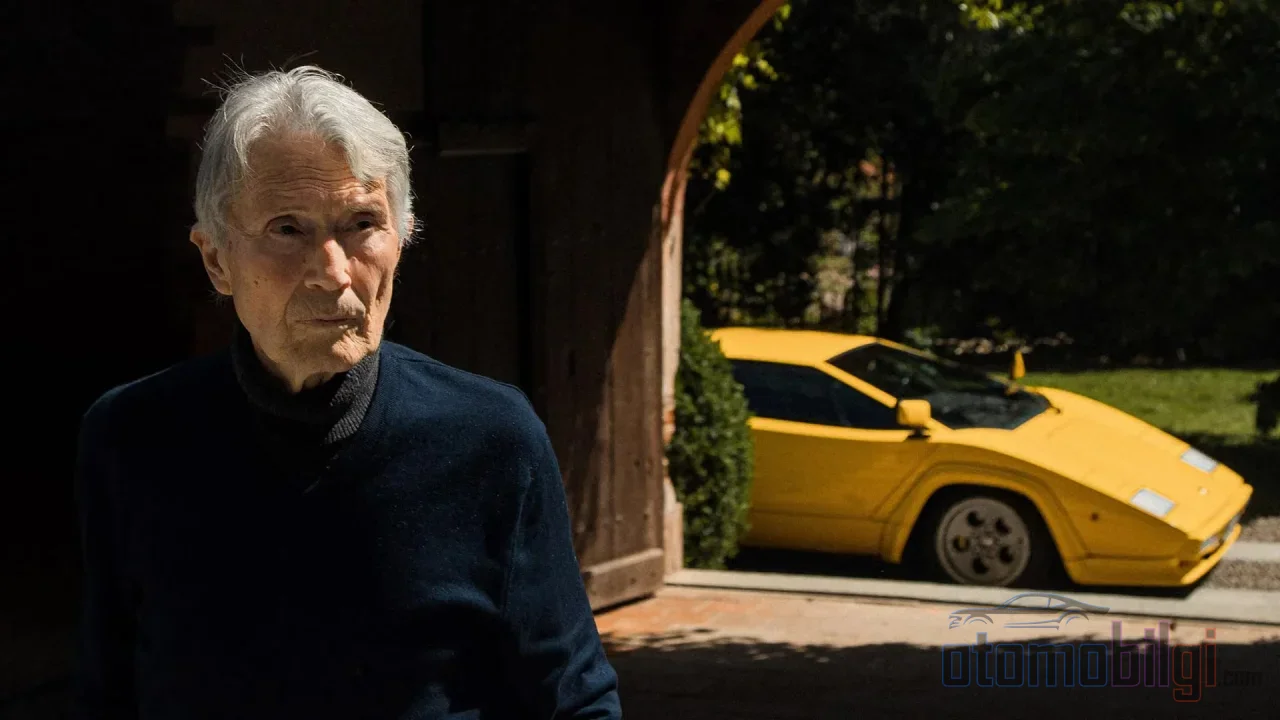
Imagine you have a pen, and with it you first draw the world's first supercar, then a spaceship that became a wall poster, and then the continuation of a legend. Sounds fascinating, doesn't it? That is exactly the story of Marcello Gandini. A man born in Turin as the son of an orchestra conductor, expected to become a pianist, but who dropped out of school at 18 and turned to cars; a mind that brought forth the Lamborghinis of three distinct eras from the same drawing world - including the Miura, the Countach and the first design proposal of the Diablo. He left us in 2024 at the age of 85, but the silhouettes he created still run through the DNA of every supercar. So the question is clear: How could a single man rewrite the rules of car design three times?
Who Was Bertone's Young Chief Designer?
Gandini's path was by no means a straight highway. When he knocked on the door of Turin's legendary design studio Bertone in 1963, a star was already sitting inside: Giorgetto Giugiaro. Gandini turned back. But two years later, when Giugiaro left in 1965, Nuccio Bertone picked up the phone and seated the 27-year-old Gandini in the chief designer's chair. Just imagine; the man who had been turned away from the door only yesterday is now taking up the pen of Italy's most important design studio. And he would stay in that chair for a full 14 years.
The interesting part is this: Gandini did not see himself as a "style man." In his view, what mattered was vehicle architecture, construction, assembly and mechanisms. In other words, he would first think about how a car stood on its feet, where its engine was hidden, how its doors opened - and beauty came as a by-product of that intelligence anyway. It is no coincidence that Ferrari's design director Flavio Manzoni described him as "probably the greatest car designer of all time." In 2012, he received one of the first Lifetime Achievement Awards in the world of car design; and in the final year of his life, in January 2024, he was honored with an honorary mechanical engineering degree from the Polytechnic University of Turin.
Miura: The Revolution That Hid the Engine Behind the Driver
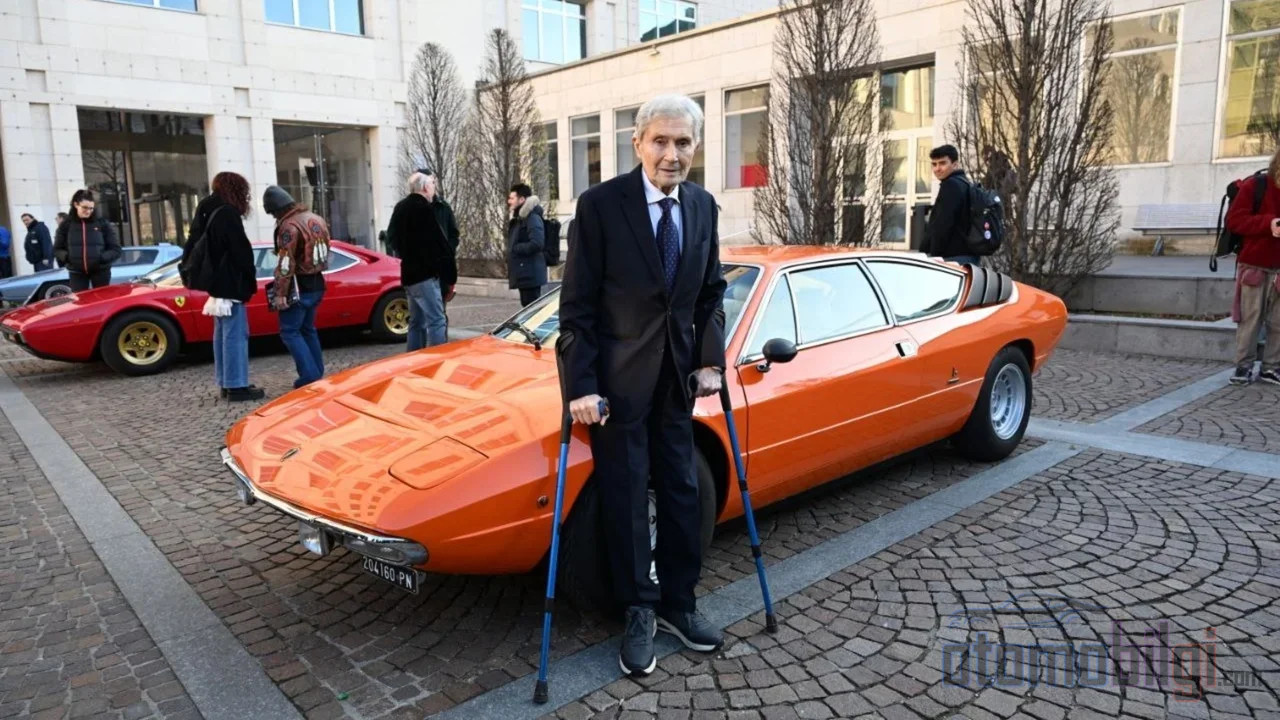
Now let's go back to 1965. At the Turin Motor Show, Lamborghini was displaying, in bare form, a chassis it called the TP400, meaning "transversal posteriore," that is, a transversely mounted rear engine. This layout, developed by engineer Gian Paolo Dallara, consisted of a V12 placed horizontally behind the driver. The most curious detail? The source of inspiration came from a place no one expected: the Mini Cooper's engine-transmission layout. Yes, the idea behind one of the most exuberant supercars in world history had come from a tiny English car built for the city. The mid-engine layout, long used on racing circuits, hit the road for the first time with this car.
The bodywork, meanwhile, landed on the desk of Ferruccio Lamborghini, who did not like Touring's four proposals. Nuccio Bertone's answer is famous: he said that for such a beautiful foot, he himself would draw the perfect shoe. Because of the tight schedule, Gandini worked by drawing the profile directly over the engineering package drawings and completed the process from sketch to finished prototype in about three months. The result was the Miura, which shook the exhibition floor of the 1966 Geneva Motor Show.
What Are the Signature Details of the Miura?
What sets the Miura apart is genuinely hidden in the details. Headlights that retract flush with the body to reduce drag, the thin body creases wrapping around them known as "eyelashes," and the hexagon-patterned engine air intake... Don't look for a door handle, because there isn't one; the lower slats of the air intakes just inside the door serve as the handle. This is the audacity to turn a car into a sculpture. Let's be honest, 2026 marks the Miura's 60th anniversary, and even after sixty years that silhouette doesn't look foreign at all. Gandini himself saw it somewhat differently when he was alive, of course; in an interview he gave in 2021, he admitted that when they designed the Miura the goal was to make something new that everyone could accept, and that the car's aggressive stance bothered him a little. A fine example of an artist being the harshest critic of their own work.
Highlights
- Marcello Gandini (1938–2024) became Bertone's chief designer at just 27 years old and stayed at the studio for 14 years.
- Introduced in 1966, the Miura is considered the first supercar to bring the mid-engine layout to series production.
- He drew the Miura from sketch to prototype in about three months.
- The Countach was produced from 1974 to 1990 and was the first car with scissor doors in series production.
- The Diablo was Lamborghini's most successful model until the Murciélago; more than 2,900 units were produced.
The Countach: Scissor Doors and the Italian Wedge
If you're looking at the wall of a kid's room in the 80s, there's a 99% chance you're seeing a Countach poster. Introduced as a concept in 1971, refined for production in 1973, and series-produced from 1974 to 1990, the Countach is Gandini's most radical signature. With its sharp angles, angular surfaces, and low stance, it popularized the form known as the "Italian wedge." The leap from the soft, flowing lines of the 60s to the wedge form was one of the sharpest turns in design history.
So were those legendary scissor doors an aesthetic show? Let me tell you a secret: no. The geometry of the opening was such that the upward-opening scissor design was a necessity; Gandini drew it not for show, but for a solution. Who could have known at that moment that the result would become the signature of supercars for years to come? The Countach was the first production car to use scissor doors, and this detail became so ingrained in Lamborghini's identity that even today it's considered a symbol of the brand.
Where Did the Wedge Form Come From?
The Countach wasn't an idea floating in the air. Gandini's conceptual line included even wilder experiments: The Lancia Stratos Zero, considered by some circles to be the most radical concept car in history, was practically a science fiction wedge laid flat on the ground. The influence of these bold line studies can also be seen in the production Stratos HF. During the same period, Gandini also refined the wedge language with concepts like the Alfa Romeo Carabo, and with the Countach he brought this language to its mature expression in series production. From that day on, every Lamborghini was influenced by it; not excepting Bugatti, and design elements flowing from the Countach can be seen all the way up to Lamborghini's SUV today, the Urus. This lasting legacy was also officially celebrated in 2022 with the Countach LPI 800-4 commemorative version, of which only 112 units were produced.
Diablo and the Journey After Bertone
The third act of the story is a bit more complicated. In 1979, Gandini left Bertone and founded his own design house; he spent his first five years working exclusively for Renault, then continued his path with brands such as Maserati, Nissan, Toyota and Subaru. In the 90s, however, he returned through Lamborghini's door: the initial design proposal for the Diablo came from his pen. But beware, there is a subtle point here. During the development process in the Chrysler era, the prototypes blended Gandini's drawings with Chrysler's ideas; in other words, the series-production Diablo was a revised version of his initial proposal. Knowing this detail is important for honestly telling Gandini's legacy.
Still, the Diablo is not a work to be taken lightly: it was Lamborghini's most successful model until the Murciélago arrived, and more than 2,900 units were produced along with numerous versions. Gandini's influence was not limited to Lamborghini either; the Alfa Romeo Montreal, Lancia Stratos, Fiat X1/9, Dino 308 GT4, Maserati Khamsin, Citroën BX, the first-generation VW Polo, the second generation of the Renault 5 and even a Renault truck... Every item on this list is a lesson in its own right. But the three Lamborghinis we focused on are the backbone of his career.
Three Eras from a Single Pen: Why Is Gandini Still Important?
Now let's return to the initial question: when the initial design proposals for the Miura, Countach and Diablo all belong to the same person, what kind of mark of genius is this? The essence of the answer is this: Gandini did the same thing three times, translating the engine architecture into the aesthetics of the body. In the Miura, the transverse V12 hidden behind the driver became that long, low and emotional silhouette. In the Countach, the narrow-aperture geometry and wedge form turned into an entirely new visual language, including the scissor doors. In the Diablo, the language of the previous era was adapted to the supercar of a new decade. In all three, the template was the same: first the engineering reality, then the line that turned that reality into sculpture.
Today, when you look at a supercar, the low nose, the sharp line sweeping upward toward the rear, the dramatic door solution and the engine layout compressed at the back are all built upon the foundations this man laid in the 60s and 70s. The Miura established the template of the modern supercar; the Countach wrote the visual vocabulary of that template; the Diablo carried the vocabulary into the 90s. Gandini passed away on March 13, 2024, in Turin, the city where he was born, at the age of 85; but the posters, collectors, and young designers it lives on as a point of reference.
The next time you stand in front of a Lamborghini and see the doors open upward like scissors, remember this: those doors were born not as an aesthetic choice, but as an elegant solution to an engineering problem. That is Gandini's entire legacy; beauty as a by-product of intelligence. And to be honest, the idea is still fresh after sixty years.
Frequently Asked Questions
Who Designed the Miura?
Marcello Gandini. This question gets confused so often that even Giugiaro's name is mistakenly mentioned; yet the Miura is entirely a Gandini-Bertone affair. Gandini drew this car at the age of 27 as Bertone's chief designer.
Why Do Scissor Doors Exist?
Not for show. The scissor design, which opens upward due to the shape of the opening, was a necessity; the Countach was the first car to use it in series production, and the door gradually became Lamborghini's signature.
Did Gandini Design the Diablo?
The initial design proposal belongs to him; however, the production version was shaped by ideas refined during the Chrysler era. In other words, the Diablo bears Gandini's signature, but it is not the only one.
Sources
- Marcello Gandini
- Marcello Gandini: Father of the Lamborghini Miura
- Marcello Gandini in 2021
- History of the Lamborghini Miura
- Lamborghini Countach LPI 800-4
- The Designer's Story: Marcello Gandini
- Marcello Gandini's radical automotive designs
- How Three Italians Born In 1938 Changed Car Design
- Lamborghini Miura: the world's first supercar