Harley Earl: The Man Who Turned the Automobile Into Art
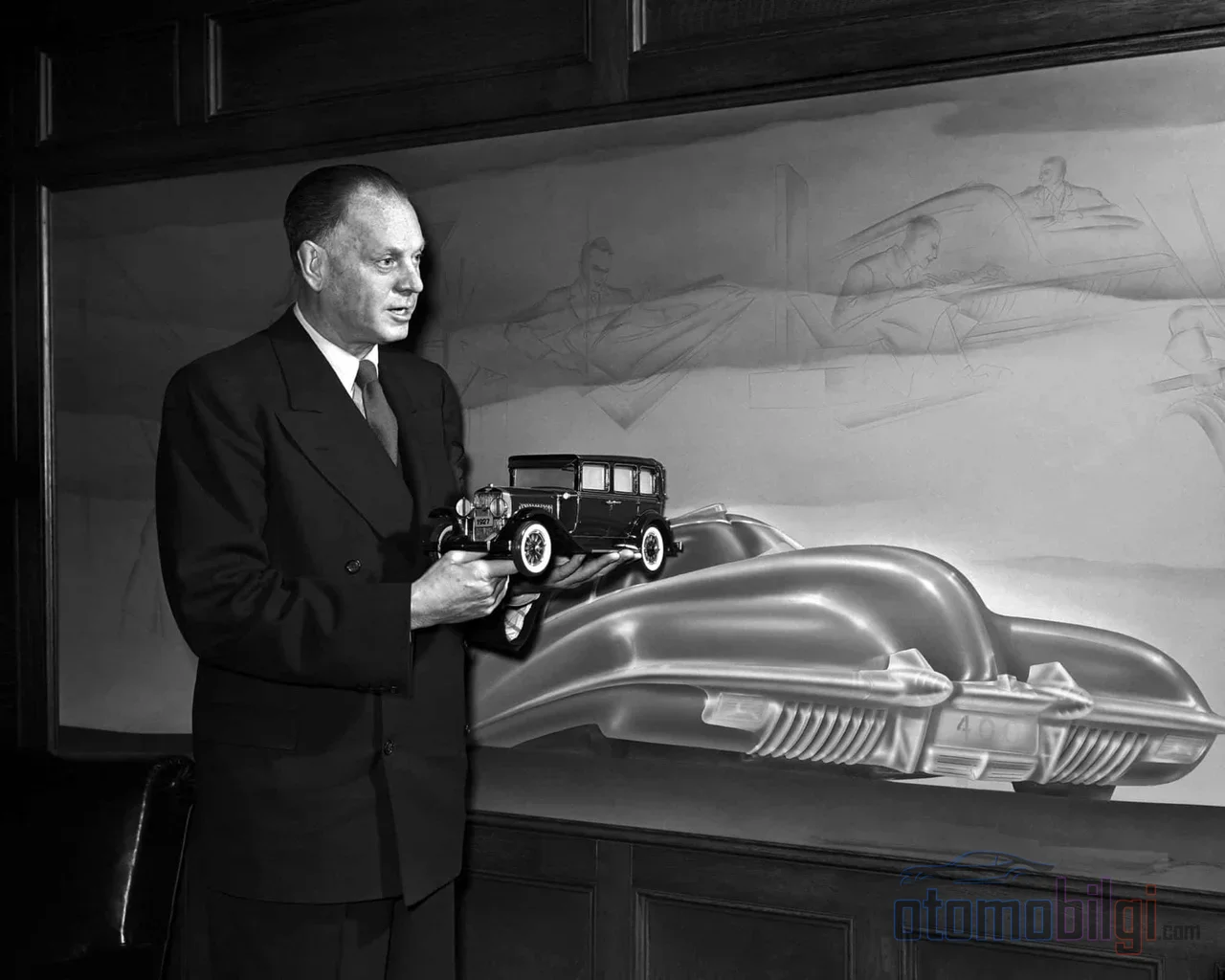
In the mid-1920s, deciding what an automobile should look like in Detroit was not the engineers' job; the car was a means of transportation, it was like a box, and no one looked at it through the eyes of an artist. Then a name from Hollywood, from a workshop that built custom vehicles for movie stars, walked through the door of General Motors: Harley Earl. The lines of every car you love today, the very existence of design studios, and even concept car shows themselves all bear this man's fingerprints. So how did Harley Earl transform the automobile from an engineering product into a styling product? If you're ready, the story begins with toy cars carved out of clay beds.
From Hollywood to Detroit: Who Is Harley Earl?
Harley Jarvis Earl was born on November 22, 1893, in Hollywood, California. His father, J.W. Earl, had opened a small carriage and blacksmith shop in Los Angeles in 1889; the business took the name Earl Automobile Works in 1906. Young Harley, meanwhile, began making toy-sized clay car models in the clay bed at Bailey's Ranch in 1909. It sounds like an innocent childhood hobby, doesn't it? But those clay models were the first step of a method that would later shape full-scale automobiles in clay and change the industry.
In 1918, Earl was designing custom cars for the mega stars of the era, Tom Mix and Roscoe "Fatty" Arbuckle. The luxury custom vehicle Arbuckle ordered had cost $28,000, making it the record-priced automobile of its time. When the company was bought by Don Lee, Earl stayed at the head of the workshop, and over the next five years more than 1,000 custom vehicles were produced for the Hollywood elite. The business, which produced 200-300 custom bodies a year, was extremely profitable; and it was here that Earl learned to give cars a sporty character with touches like raked windshields, side-mounted cowl lamps, and beltline elements wrapping around the body.
LaSalle: The First Designer's Signature in Mass Production
The fateful moment came during a dealership visit. Cadillac General Manager Lawrence P. Fisher was touring Don Lee's Cadillac dealership when he saw Earl's work, was deeply impressed by his techniques, and called him to Detroit. The mission: to design Cadillac's new companion marque, LaSalle.
Introduced on March 5, 1927, the LaSalle Series 303 is considered the first mass-produced American automobile to come entirely from a designer's hand. Built to Cadillac quality standards, the car featured an L-head V8 engine with 303.4 cubic inches of displacement and 75 horsepower. What's more, LaSalle was one of the first automobiles to offer multiple color options; today you cannot say "who cares what color the car is," but in those days mass-produced cars were black. Details like the pointed radiator Earl drew and the badge nestled between the bullet-shaped headlights carried a "European-American" design language and started a movement that pushed automobiles toward broader, more flowing lines.
Highlights
- The 1927 LaSalle was the first mass-produced American automobile designed by a designer; 303 ci V8, 75 Hp
- GM's Art and Colour Section unit was established on June 23, 1927
- The 1938 Buick Y-Job, the first concept car in history
- February 3, 1948: Cadillac produced its first car with tailfins
- Earl led GM's design division from 1927 to 1958
Art and Colour Section: The Birth of a Department
The commercial success of the LaSalle was enough to convince GM President Alfred P. Sloan Jr. On June 23, 1927, the Art and Colour Section was established within GM, and the 34-year-old Earl became its first director. It is even said that the spelling "Colour" in the name was deliberately chosen with British spelling; it was a signature move. Thus was born the world's first major corporate automotive design department.
Earl's greatest weapon here was a method he had been using since childhood: clay. Instead of traditional wood and metal models, Earl worked with plasticine, making free-form drawing and hand-built clay sculpting the signature of his career. Car design was now turning from a technical drawing on paper into a three-dimensional sculpture shaped by hand. Just imagine: while the engineers worked with rulers, one man beside them was kneading the car on clay like composing Mozart.
Competing with Engineers and "Forward Design" Secrecy
This path was not easy. While advocating a new ideology in which appearance was as important as function, Earl entered into serious competition with Detroit's traditional engineers and finance men; those who dismissed his team even attached labels like "Harley Earlites." Earl responded with a culture of secrecy he called "Forward Design": at a time when rivals were trying to photograph GM's advanced design work, the studio housed the company's most valuable trade secrets.
From the Y-Job to the Corvette: The Invention of the Concept Car
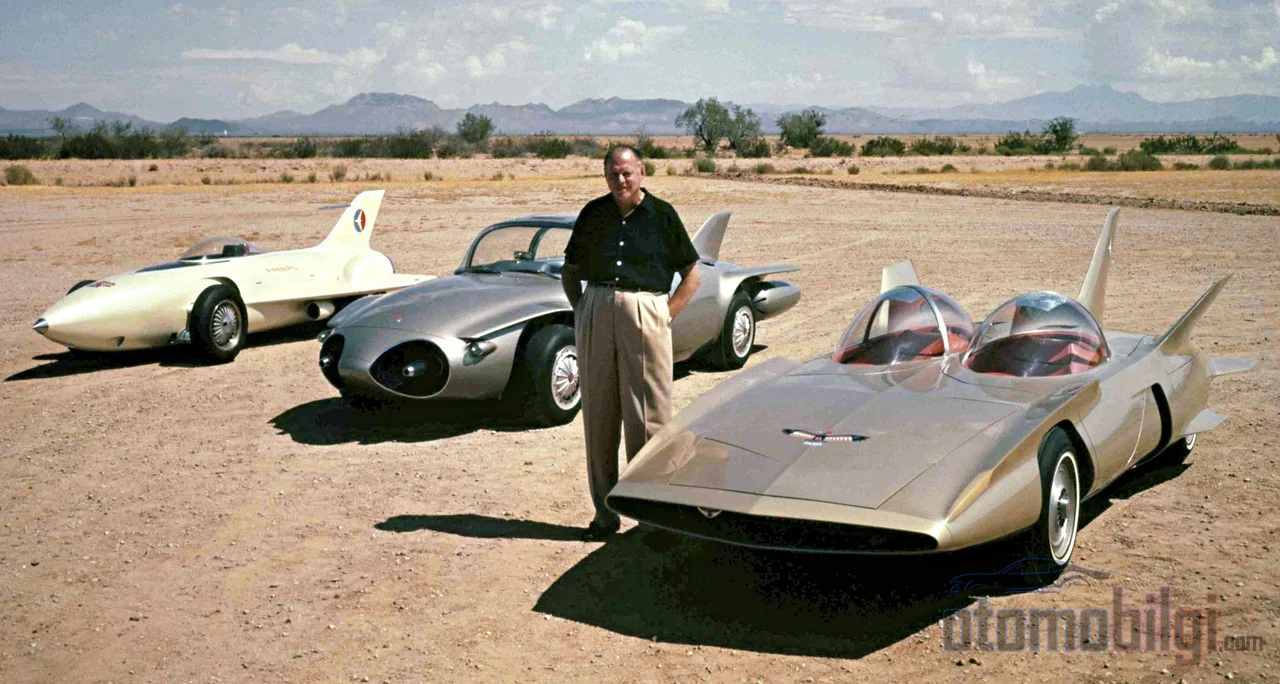
In 1938, Earl developed the Buick Y-Job to showcase both engineering and style innovations under one roof: the first known concept car in history. The clever move here was this: the Y-Job was not merely a design tool, it was also a marketing device. Show the public "the car of the future," spark curiosity, then carry those ideas into mass production. Every concept car that stands at the center of auto shows today descends from this logic. Also in 1938, Buick offered Earl's turn signal innovation to customers for the first time. Having previously worked with Larry Fisher on the 1930 Cadillac V-16 project, and said to hold the only existing design patent in the US for that vehicle, Earl became GM's first Vice President of Style in 1940; he was the first design-origin executive to reach that level at a major company.
In 1953, Earl's "dream car," the fiberglass-bodied Corvette, was introduced at the Motorama. 300 units were produced in the first year, with a base price of $3,498, and today 255 survive. Perhaps the most iconic sports car in American automotive history was the natural result of a style revolution.
Tailfins: A Signature Inspired by a Warplane
If you asked about Earl's best-known signature, the answer is usually just one: tailfins. The inspiration was the twin-boom Lockheed P-38 fighter aircraft. On February 3, 1948, Cadillac produced its first car with tailfins; the fins that appeared on the 1948 Cadillac Series 62 were small at first, but as the 1950s progressed they grew, and with the giant fins of the 1959 Cadillac they became a symbol of American design. Although the invention of the fin is widely credited to Earl, it should be noted that there are differing views on this matter. Earl is also known as the designer of the wraparound windshield, the person who first drew a car without a pillar.
The Man Who Brought the Designer Out of Engineering's Shadow
So what was the real revolution of this story? Neither the Y-Job, nor even the fins. Earl's true legacy was turning automotive design into a profession: a studio organization, a design system, and bringing the GM Technical Center, completed in 1956, to life. In 1941, GM Styling, the world's largest design department, occupied three floors of the Argonaut Building. In the 1950s, Earl introduced the "Damsels of Design" team, made up entirely of female designers, to the national media, creating serious tension in Detroit's all-male engineering world and making women visible in the industry.
Designers who worked with him recount that Earl did not draw, but that his mind boiled over with creativity, that he knew what he would create and what looked right. In other words, he was also outside the mold of "a designer must draw well"; with his vision and management, he founded a school of thought. He retired from GM in 1958 and passed away on April 10, 1969; at his death, the press remembered him as the inventor of the modern automobile and a pioneer of design. The model he established, the "design department and Vice President of Design," is a world standard copied today by every automaker in the world. It is estimated that the number of cars thought to bear his signature over his 40-year career exceeds 50 million; and although it is an estimated figure, its scale startles us all.
The short answer is this: Harley Earl turned the automobile into a style product, turned the car into a desire that could be sold as a product in its own right. This journey, which began in Hollywood's custom body shop, reached mass production with the LaSalle, concept culture with the Y-Job, and a social visual language with tailfins, brought the designer out of engineering's shadow and placed him at the heart of the automobile. And next June, as of June 23, 2027, we will celebrate the 100th anniversary of the department Earl founded. If you are wondering which car the celebration belongs to, just look in the mirror: they are all a little bit Harley Earl.
Sources
- Timeline - Harley Earl
- Harley Earl - Wikipedia
- A look at Earl's legacy from the inside - Old Cars Weekly
- Don Lee Coachworks: The Legacy of Earl Automobile Works - Hemmings
- The Early Years of the Great Harley J. Earl - MotorCities
- February 3, 1948 - The first automotive tail fins - Automotive History
- 1927-1928 LaSalle Series 303 - MotoGallery
- Harley Earl, father of the concept car - Corvette Museum
- Harley Earl Designs from GM Heritage Collection - Hagerty Newsroom