Why Did American Cars' Tailfin Craze Come to an End?
Share This Page
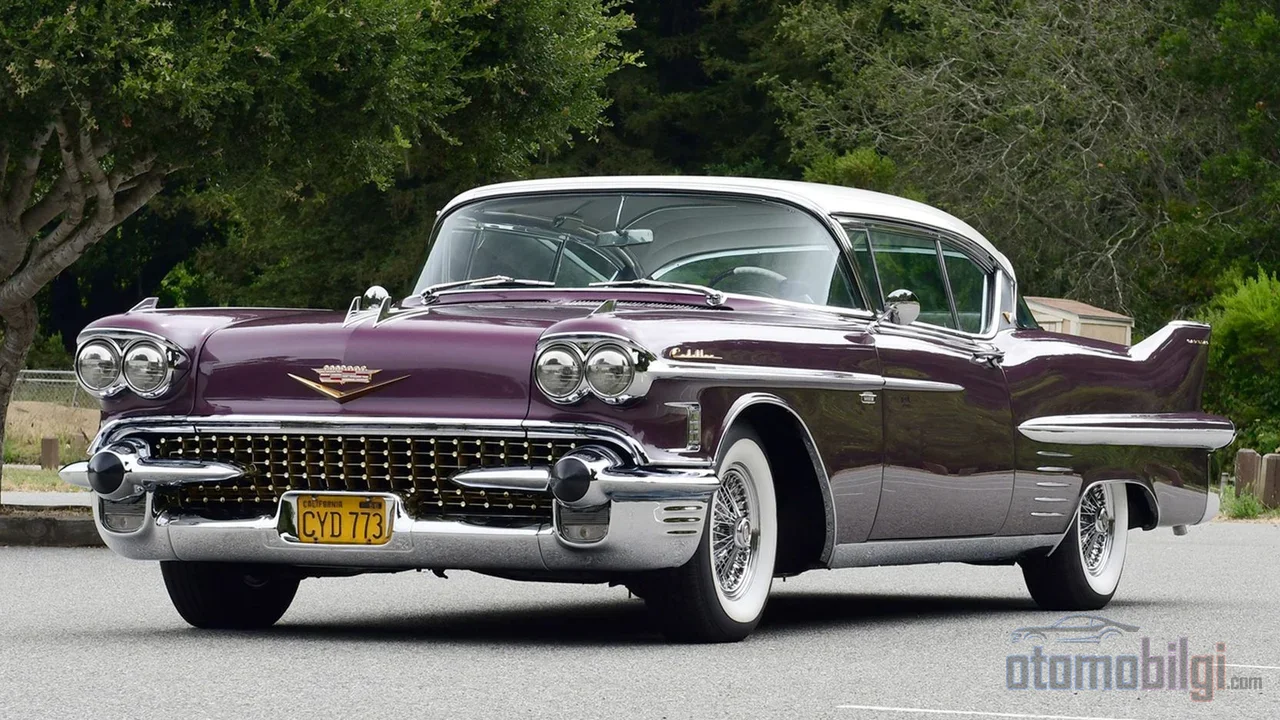
Those giant fins that sprouted on the rear of American cars in the late 1950s, in other words tailfins, were born with the 1948 Cadillac, peaked in 1959, and almost completely vanished within a few years. So how did a design detail rise so high and die out so quickly? On this page I tell the whole story of the fin craze.
Highlights
- The first mass-produced car with tailfins, the 1948 Cadillac, rolled out its first example from the factory on February 3, 1948.
- The source of inspiration was the twin-boom Lockheed P-38 Lightning fighter aircraft.
- The fin craze reached its peak in 1959; the 1959 Cadillac is considered the symbol of that peak.
- The fins shrank and disappeared in the early 1960s due to safety concerns and changing fashion.
- 1955-1961 is considered the brightest period of the tailfin era.
How Did a Warplane Inspire a Car?
The main hero of the story is General Motors' design chief Harley Earl. It is told that Earl's team went to Selfridge Field airbase near Detroit to examine the P-38 Lightning fighter planes up close. When Earl looked at that twin-boom, sharply pointed fuselage, something must have stirred in his eyes, because a few years later that silhouette was carried over to the rear fender of the car. Accounts place the visit around 1939 or the spring of 1941; whichever is true, the idea had been planted once and for all.
But the real architect was actually someone else: Franklin Quick Hershey. Hershey drew the fin sketches, and Earl approved the design. There is another interesting detail: because of the post-war workers' strike, the Cadillac design studio had to work for a while in the basement of Hershey's farmhouse. So one of the most iconic design movements in automotive history began to be sketched in the basement of a farmhouse. I love seeing details like this!
1948 Cadillac: How Did the Fins Survive?
Now for the funny part: Earl himself was not very fond of the fins at first. According to the story, he wanted the fins removed at the clay model stage. But the Cadillac general manager, Nick Dreystadt , fell in love when he saw those sharp tips and wanted the feature to stay; Earl was persuaded. In one version of the tale, two clay models were secretly shown to Dreystadt, one the original and the other 33% larger, and Dreystadt, unaware that one had been enlarged, chose the original. Let's note this part as reader anecdote, but how fun is it, right?
Management, on the other hand, was worried about something else: Cadillac's customers were conservative doctors and bankers, and they thought these flashy fins would not appeal to them. The result was quite the opposite. Customers fell in love with the fins, and Cadillac had its best year to date in 1949 . The fins quickly became a symbol of wealth and success. The picture at dealerships was this: if your neighbor's car has them, yours must have them too.
Harley Earl and the Commercial Logic of Annual Model Changes
Beautiful looks weren't enough for the fins; behind them lay a massive commercial system. Earl and GM president Alfred P. Sloan put into practice the idea of "Dynamic Obsolescence," that is, planned obsolescence: Every year cars would be given a new model identity, the old model would look somewhat outdated, and people would move on to the new one. Just like phone models, but in the 1950s and on a far bolder scale.
Earl was the master of this game. He became the first director of GM's design department, established after the 1927 LaSalle; it was he who introduced clay modeling and the concept car to the industry. The 1938/1939 Buick Y-Job was the industry's first concept car, and Earl used it as his own daily driver - just think of the man's swagger! The 1951 GM Le Sabre concept, meanwhile, was inspired by the F86 Sabre swept-wing jet: a rotating oval grille, wraparound windshield, prominent fins, even fuel tanks housed inside the wings in aircraft style. The Space Age aesthetic leaped onto the fins from exactly here.
My primary purpose for twenty-eight years has been to lengthen and lower the American automobile - at times in fact, always at least in appearance.
Peak Year 1959: The Fin Wars and Giant Tails
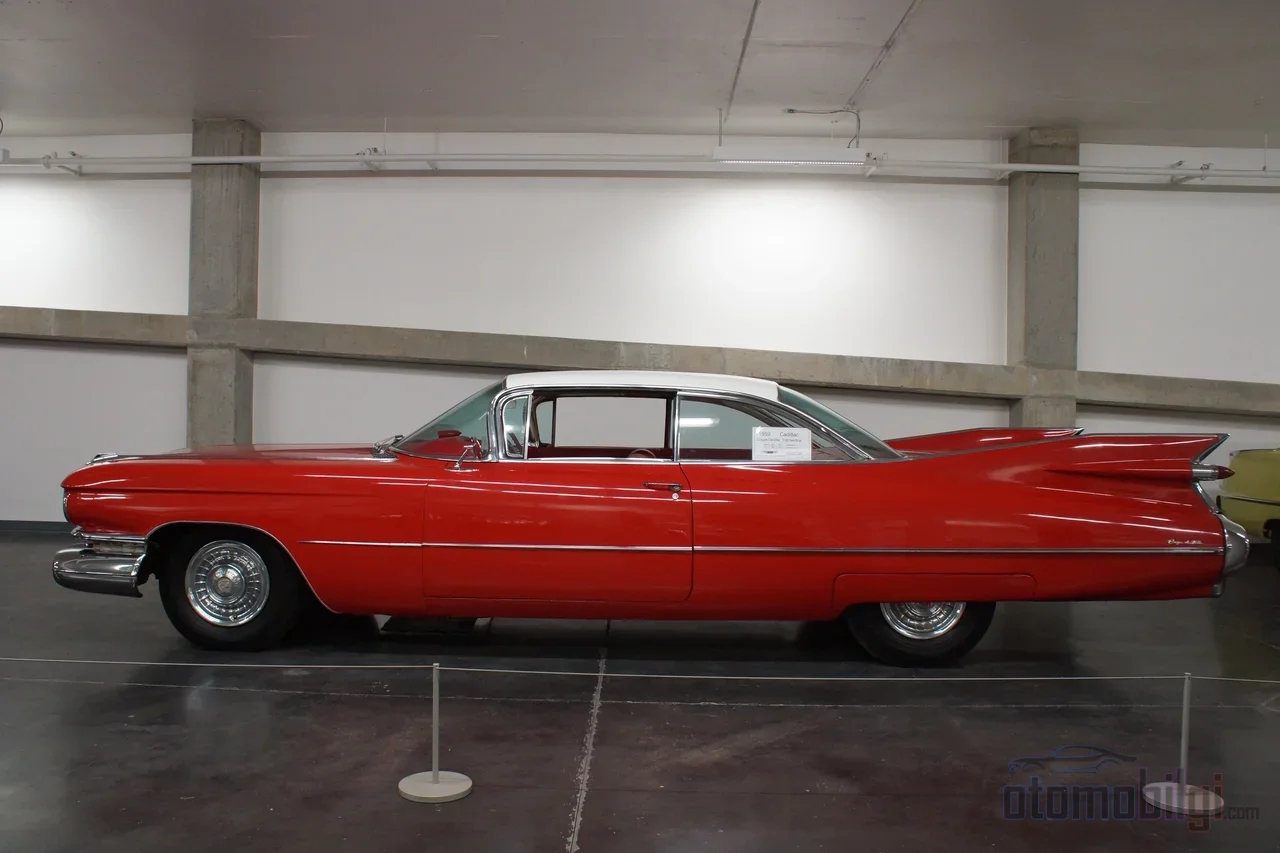
By the mid-1950s, fins were no longer just Cadillac's signature but the common language of all of Detroit. In particular, Chrysler's design chief Virgil Exner and his "Forward Look" theme played a pioneering role in the fins' interstate spread. An almost literal fin-size race began between Earl and Exner: Whose tail was higher, sharper, cooler? This race 1959 reached its peak with the model year, and Cadillac stole the show once again. The 1959 Cadillac's fins were so audacious that it was that year the fin's 12th year at Cadillac - yes, this madness had been going on for more than a decade.
The dimensions were truly indefensible: the 1959 Cadillac Eldorado Biarritz, with its giant fins and Jet Age styling, carried a 345-horsepower V8. To understand just how far the madness went: bolt-on fin kits were being sold on the market even for people whose cars had no fins. Can you imagine someone adding fins to their car afterward? In that era's America, you could.
| Period | What Happened? |
|---|---|
| 1948 | The first mass-produced fins appeared on the 1948 Cadillac; the inspiration came from the P-38 Lightning. |
| 1949 | Cadillac had its best year yet; customers warmed up to the fins. |
| 1951 | The GM Le Sabre concept showcased the jet-inspired design. |
| Mid-1950s | With the Forward Look theme, fins spread across all American brands. |
| 1959 | Fins reached their peak; the 1959 Cadillac became the icon of the era. |
| Early 1960s | Fins shrank, chrome decreased, and the trend almost completely faded. |
Did Fins Actually Serve Any Purpose?
Short answer: No, mostly not. The fins were not an aerodynamic miracle, they were aesthetic showing off. Of course the marketing departments didn't see it that way: in the 1950s fins were even sold as a "safety feature" by some advertisers! Chrysler claimed the fins on its 1957 models reduced steering corrections by up to 20%, but I don't think anyone took that seriously. Today's spoilers press the car onto the road on a hill; the fins of 1959 simply announced to the world that you wanted to be noticed. To make a comparison: a useful fin works like a ski tail, while the fins of 1959 were like a giant billboard with nothing written on it.
By the way, a small consistency note: Ford was the exception when it came to long fins; the brand never adopted giant fins. But as an interesting detail, it is said that the record for the longest fin line extending from front to rear may belong to Ford models such as the 1960 Galaxie or the 1961-63 Thunderbird.
Why Did Fins Disappear So Quickly?
Every fashion has a saturation point, and fins had far passed it by 1959. After the 1959 Cadillac was proclaimed the "King Fin Caddie," that is, the king of fins, its fate was clear: only one direction remained, and that was down. Within a few years the fins shrank, the chrome decreased, and by the early 1960s the trend had almost completely vanished. The era largely closed at the end of the 1960s. Among the Big Three American manufacturers the fin trend lasted until 1960 and quickly died out afterward.
Three reasons stand out behind the disappearance. The first is safety: the sharp edges of the giant tails were a real hazard on sidewalks and the public was bothered by them. The second is aerodynamics: when cars had to get smaller and more efficient, heavy chrome and giant fins were removed from the designs. The third is fashion: Earl left GM in 1958 due to mandatory retirement at age 65, and his successor Bill Mitchell steered the design toward being less ornamental, that is, simpler. Mitchell's era of "trimming" the fins reads, in my opinion, like the trend's funeral ceremony.
Fins in Türkiye
This trend also has an extension reaching Türkiye. In the 1950s-60s, the traffic of personnel working at American bases in the country helped American cars become widespread in Türkiye; some of those giant-finned classics also ended up on the streets of Istanbul and Ankara. Moreover, on the domestic production side, "small-tailed" models are also mentioned, with lines reminiscent of American silhouettes but much more modest. Although the giant fins never fully reached us, a reflection of that aesthetic was felt here too. Once you read these details, you are guaranteed to stop and start searching for street photos of that era.
The 1959 Cadillac: A Masterpiece or the Peak of Excess?
This is one of the most debated questions in design history. One side says the 1959 Cadillac's tailfin was the ultimate expression, the pinnacle masterpiece of its era. The other side sees this car as a symbol summarizing all the exaggerations of the period and the problems of the US automotive industry in a single body. Considering that even the names referred to as fin historians noted that the 1959 redesign "took the fins literally to the peak," it can be said that even they did not quite know where the exaggeration ended.
My interpretation is this: Both are right. Looking at the 1959 Cadillac today, it gathers the energy of an era, post-war American optimism, and the excitement of the space race in a single silhouette - in this respect, it is a masterpiece. But the same silhouette is also a milestone of where planned obsolescence and the fin race could lead. I think those who complain that today's cars all look alike should take a look at 1959 and smile. No one dares to enlarge anyone's fins anymore.
Will Fins Come Back?
This question is still being discussed in the automotive community. Fully fledged fins are not coming back, but there are fin-inspired touches in the corners of silhouettes: you can see pointed tips in the rear lines of some modern classics and concepts that salute the story of the '50s. Nostalgia never dies in the design world; only the dosage changes. Don't be surprised if one day a brand sticks a giant fin on the back of its electric car and explains it as "for aerodynamic reasons" - it would be repeating one of the best marketing moves in history.
In short, the fin frenzy is the finest lesson in what a single design detail can achieve: It was born inspired by a fighter jet, fed by optimism and competition, reached its peak within 11 years, and was extinguished by the wave of safety and simplification. Which modern design detail do you think will be remembered the same way a few decades from now? I think there are already candidates.
Sources
- February 3, 1948 - The first automotive tail fins hit the road
- 1948: How the Cadillac Tailfin Was Born
- Harley Earl
- Car tailfin
- When tail fins made waves
- The Rise and Fall of 1950s Car Tailfins
- The Year of the Tailfin: Cadillac for 1959
- 1959 Cadillac Eldorado: An Icon of American Tailfin Design
- Bill Vance: The rise and fall of the Cadillac tailfin
- Why classic cars had tailfins
- 1961 Chevrolet
- Cars and Their Owners