How Was Türkiye's First Car Born with the Devrim Design?
Share This Page
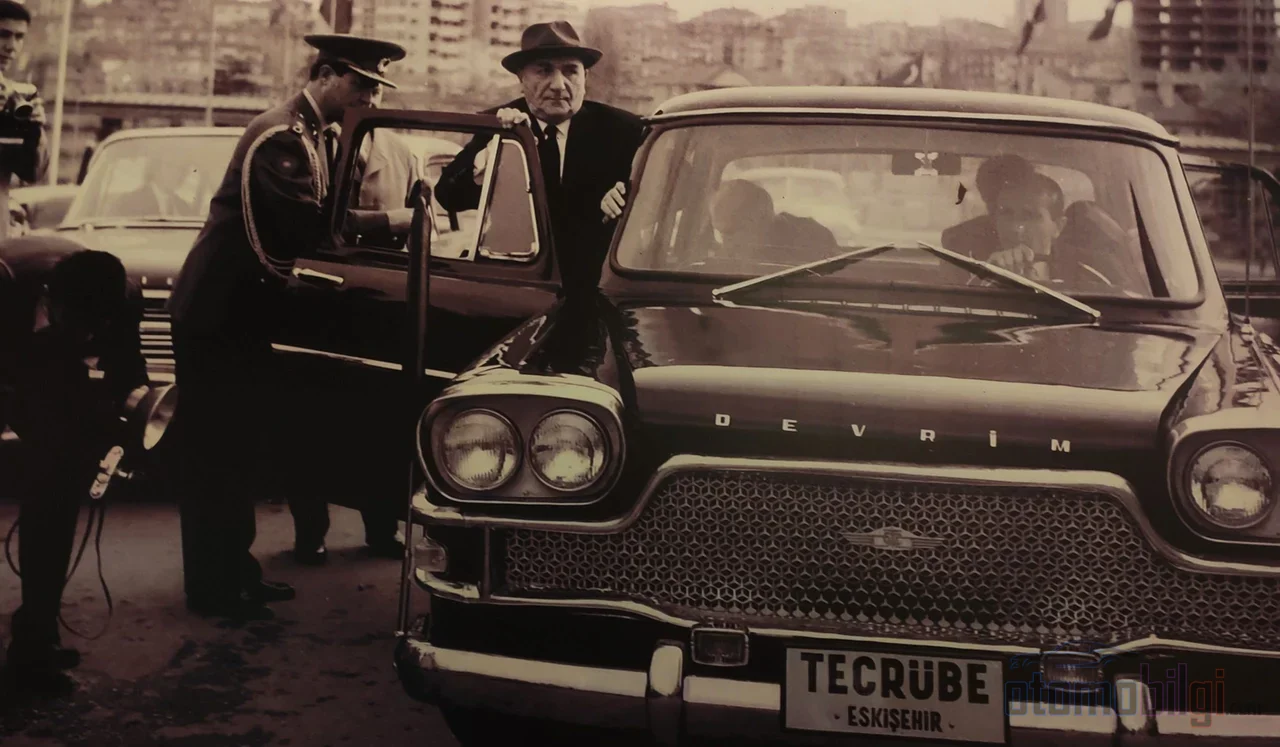
Türkiye's first car Devrim, is a prototype designed and produced in about 129 days at the Eskişehir Railway Factory, entirely by the hands of Turkish engineers and craftsmen, on the instruction of President Cemal Gürsel. So how was this car born, why did it never reach series production, and how did it pave the way for the design journey of the Anadol and Murat 124 that followed it? Here is the story of the first chapter of Turkish automotive design.
Highlights
- Devrim, in 1961, was produced in 129 days at the Eskişehir Railway Factory.
- In total, 4 prototypes were built; the only surviving example, the beige Devrim, is still in working condition.
- Türkiye's first series-production car was the 1966 Anadol A1 ; its design came from Britain's Ogle Design.
- Murat 124 between 1971 and 1976, approximately 135,000 units were produced, opening the door of the Tofaş line.
How Was Devrim Born? A Dream Fitted Into 129 Days
Just imagine: there is no complete technical drawing, no computer, and no robotic production line. But there is a goal, and for this goal a country's railway factories mobilize. On May 15, 1961, while opening the Automotive Industry Congress held in Ankara, Cemal Gürsel sends a very clear message: a modern country must produce its own means of transportation. And as soon as the congress ends, the instruction comes - an engine and an automobile will be produced.
On June 16, 1961, about 20 managers and engineers from the TCDD Factories and Locomotive Departments gather in Ankara. The meeting is chaired by TCDD Deputy General Manager, Senior Engineer Emin Bozoğlu, and the task definition is exactly this: the development of a car type that will meet the army's street sedan needs. The budget is 1,400,000 TL, and the deadline is at least as dramatic as the prototype story: October 29, 1961. In other words, Republic Day. In other words, there are no idle hands on the team; the clock is running.
If you ask how many people worked, things get a bit murky here. Some accounts mention production orders given to 24 engineers ; according to the official factory account, the team consisted of 30 engineers and 200 workers . The common point is this: people worked at least 12 hours a day, including weekends, and a sign showing the days remaining was hung on the workshop door. Even the name of the mission was purposeful: "Devrim".
More Than a Factory: Three Corners of a Country Working for a Single Car
What excites me most about this is: Devrim was not born in a single factory, but as a shared endeavor of a whole country. The engine block and head were cast at the Sivas Railway Factory, then machined and assembled at the Ankara Railway Factory. The pistons, piston rings and rods came from Eskişehir; all of the transmissions were produced in Ankara. Think of a car factory with multiple facilities in different cities today - go ahead: is synchronized work easy? Achieving it with 60-year-old telex machines is a whole different thing.
The work was also distributed: management, design, engine-transmission, bodywork, suspension-brakes, electrical equipment, casting, purchasing and cost calculations. The agreed basic formula was as follows: a 4-stroke, 4-cylinder engine, 50-60 HP of power, 1000-1100 kg weight and a mid-size body for five people. In other words, the team wasn't dreaming of luxury; they were chasing a reasonable and producible car.
Devrim's Design Line: The Fashion of That Day, Shaped by Turkish Hands
If you notice something when looking at the Devrim's appearance, don't fool yourself: the traces of 1960s American automotive aesthetics are clearly visible. A wide, straight-lined body, a long hood, a simple and serious front face... That was what a "modern car" looked like in the world at that time, and that was exactly the reference in the minds of the Turkish designers. But here's the key point: This line took shape not on paper but in the hands of railway craftsmen, on simple workbenches. The biggest problems in assembly emerged exactly there - the harmony between the body and the engine, the placement of the clutch, throttle and brake control mechanisms, the steering position. In other words, the vehicle was not a sculpture but a machine that had to work, and every part found its place through trial and error.
| Technical Specification | Value |
|---|---|
| Engine displacement | 2070 cm³ |
| Cylinder bore / stroke | 81 mm / 100 mm |
| Power | 50 HP (A4L), 60 HP (A4T), 70 HP (B3T) |
| Top speed | 135 km/h |
| Dimensions (L x W x H) | 4500 x 1800 x 1550 mm |
| Curb weight | 1250 kg |
| Number of engines produced | 10 (4 A4L, 3 A4T, 3 B3T) |
Four Siblings: Gecekondu, Mavi Boncuk, Siyah and Bej
Devrim was not born alone; 4 prototypes were produced and even their names are each a story of their own. The first completed car was named Gecekondu - because it still had its shortcomings, and it got its name from the team members who joked about it themselves. Mavi Boncuk was a model with 56 HP whose light blue color was chosen by the craftsmen Mustafa Ersoy and Hamit İşeri. The Siyah Devrim was a 60 HP vehicle completed with the support of the Ankara Motor Factory, prepared to become an official state car. And the only example that has survived to this day: the Bej Devrim, with 65 HP
of power, still in working condition even today, waiting for its visitors at the Devrim Arabaları Museum in Eskişehir.
The 100-Meter Stall: Why Was Devrim Considered a Fiasco?
Now we come to that famous scene of the story. On the evening of October 28, the final coat of paint on the Siyah Devrim could barely be applied; even its polish was done during the train journey to Ankara. In fact, due to the spark risk from the steam locomotive, the tanks were emptied, and only enough gasoline for maneuvering was put into the vehicles. High-octane gasoline, too, was available only in Ankara at that time. Guess what this detail was a sign of? On the morning of October 29, the escort was unaware that refueling would take place at a Mobil gas station. As gasoline was being added to the car in front of the Parliament, Cemal Gürsel arrives, sets off with the black car, and after about 100 meters
You made a car with a Western mindset but forgot fuel supply with an Eastern mindset.
The real tragedy was not the standstill itself, but what came after. Although the prototypes were produced, the process was not sufficiently documented; only a few technical drawings remained. There was also the other side of the coin: in 1961, demand for automobiles in Türkiye was limited, and series production would have strained the dealership, maintenance and spare parts network. And there was one more calculation: the vehicles were built in one-tenth of normal production time, at roughly one percent of their cost. It was estimated that if annual output had exceeded 10,000 units, the sale price would not have surpassed 30,000 TL, whereas foreign cars started at 50,000 TL. In other words, Devrim was not a failure, but an idea ahead of its time.
Anadol A1: The First Series-Produced Car with British Styling, Made in Türkiye
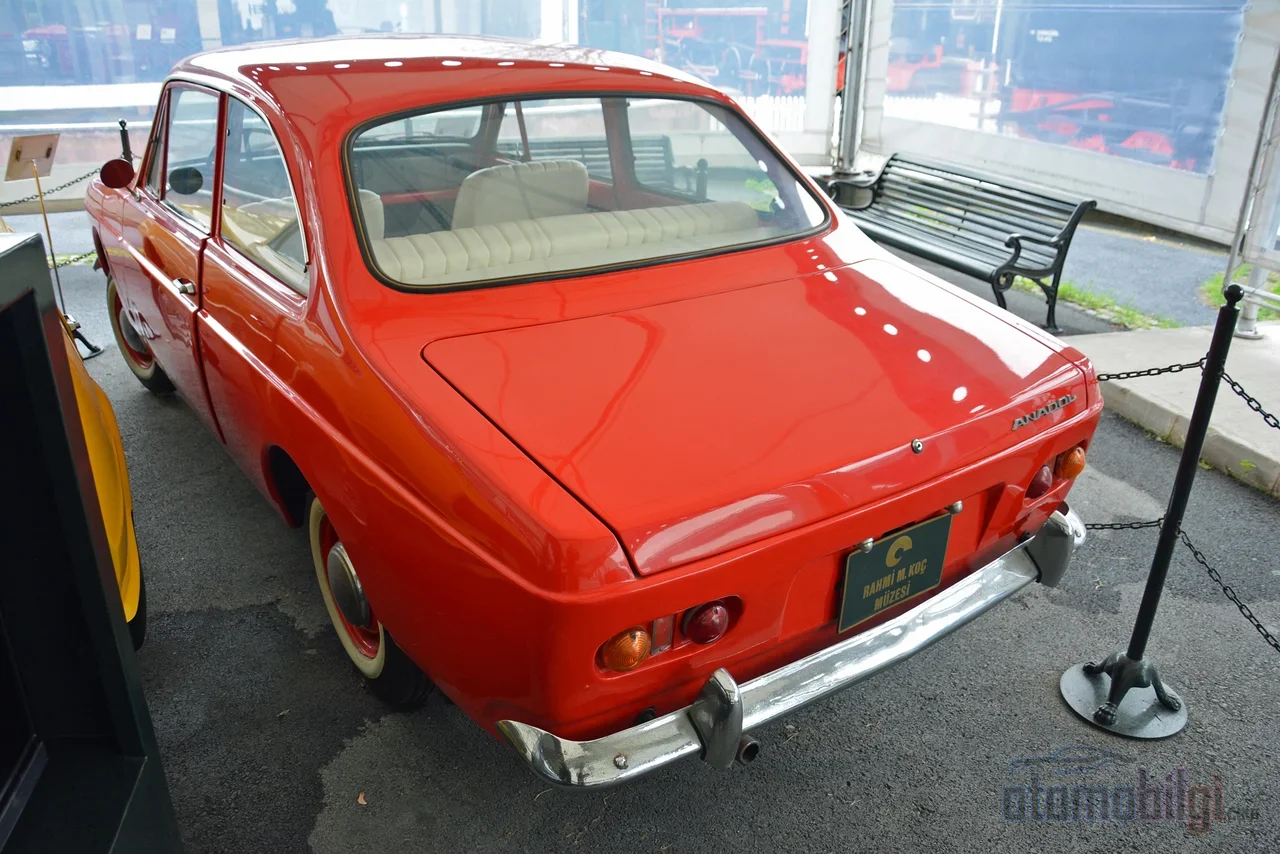
Devrim knocked on the door, but it was Anadol that entered. The Otosan factory in Istanbul was founded in 1959 as a joint venture between Ford Motor Company and Koç Holding, and the Anadol A1, whose production began in 1966, went down in history as Türkiye's first series-produced automobile. Unlike Devrim, the goal here was not a prototype but a real car that would go to dealers, customers and onto the roads.
On the design side, things get interesting: the first Anadol models were drawn by the British firms Reliant and Ogle Design . It is said that Tom Karen of Ogle played a role in the A1's form, drawing inspiration from British Ford Cortina sketches and the Scimitar Coupe model that Ogle designed for Reliant. So the aesthetics of Türkiye's first mass-market car had a British flavor, but body production was in Türkiye - moreover, it was the first Turkish car brand produced with a fiberglass body. Under the hood was the proven 1.2-liter Ford Kent engine from the Cortina and Anglia. In short, Anadol was a pragmatic bridge standing between Devrim's dream of independence and the reality of series production. In 1972, it refreshed itself with a facelifted model featuring more contemporary styling.
From Murat 124 to Şahin: The Birth of the Tofaş Line
In 1971, another major player took the stage: Tofaş's first car, the Murat 124. Known in Türkiye as the Fiat 124, this vehicle was produced between 1971 and 1976; 7,835 units in the first year and approximately 135,000 units in total. The first customer being Ajda Pekkan, and the first export being 75 cars to Egypt , are in my view the sweetest details of this story. Its name was also chosen through a selection process: "Murat" was accepted from among the candidate names.
But the real peak came in the 1980s. The process that began with the Murat 124 Şahin, Doğan and Kartal models reached its zenith; one member of this family was produced as the "big family car" between 1986 and 1995. The way automobiles in Türkiye evolved across generations like members of the same family is the work of this very line.
From Devrim to Today: A Brief Detour in the Turkish Design Tradition
Türkiye's acquaintance with the automobile did not actually begin with the Devrim. In 1929, Ford had an assembly line experiment in a free zone in Istanbul, which ended due to economic conditions. In 1954, Turkish Willys Overland produced jeeps and pickup trucks for the army's needs; after 1955, serious investments began. But these are assembly and production stories; when the first major step regarding design was taken, the 1961 Devrim appeared before us. After that, the design legacy grew: examples such as the Çağdaş, a design award winner that followed the Devrim, academic studies combining Anatolia's design tradition with the automotive industry, and of course the Anadol and Tofaş line, whose path was opened by the Devrim.
What I want to say is this: the Devrim never went into mass production, but it paved the way for the industry. The Anadol had British styling, but it was born in Türkiye. The Murat 124 was a Fiat, but it found its own name, its customers, and its exports. Turkish automobile design, from the very beginning, is a story of combining global design with one's own handiwork. In the next section, we will continue this journey with other vehicles - who do you think should be next?
Sources
- A Success Story | The Revolutionary Car | TÜRASAŞ
- Devrim (automobile) - Wikipedia
- When was the Devrim car made, what is its story? - Hürriyet
- The Devrim Car - Eskişehir Governorship
- Anadol - Wikipedia
- Fibreglass and Ford: The Birth of Anadol - Hagerty
- The first mass-produced domestic car: Anadol - Moment Expo
- Tofaş Murat 124/Serçe - Wikipedia
- The Interesting Story of the Murat 124 - Writings from History
- Turkish automotive industry - Wikipedia