The Forgotten Domestic Car Attempts: Devrim and Togg
Share This Page
Between Devrim and Togg, Türkiye went through a series of domestic car projects over decades that it tried one by one but usually could not finish; the four prototypes born in 129 days in 1961, the Anadol that entered series production in 1966, and the Etox Zafer, which received type approval in the 2000s but only two units were ever made, are the best-known stops of this broken line. So where exactly did this line break? The answer is not a single culprit; it lies hidden in that expensive, exhausting and patience-demanding distance between prototype and series production.
Highlights
- Devrim, in 129 days, consisted of 4 prototypes produced at the Eskişehir Railway Factory. was formed.
- Anadol, in 1966, with production that began, became Türkiye's first mass-produced car and remained on the roads until 1991.
- Although the Etox Zafer received type approval, only 2 units could be produced.
- Türkiye's first car manufacturing attempt was at a most unexpected date: 1929.
- The design, production and branding cost of a domestic car in 2018 was estimated at 2.5 billion euros. was projected.
Devrim, Born in 129 Days: How Domestic Was It?
Let me ask you something: how much time is enough to design and produce four cars from scratch? Türkiye gave an incredible answer to this question in 1961: 129 days. Under the instruction of President Cemal Gürsel, 24 engineers assigned at the Eskişehir Railway Factory completed the four prototypes called Devrim. It may seem odd at first for railway workers to build cars, but at the time there was hardly any other institution in the country capable of machining metal at that scale with industrial craftsmanship; that is precisely why the railway factories were chosen.
Technically, Devrim was an engineering product far more serious than expected. With its four-cylinder engine of 2,070 cm³ displacement, three different power options were offered: 50, 60 and 70 horsepower. Its top speed was 135 km/h, curb weight 1,250 kg, and length 4,500 mm. The truly impressive part is the localization rate: all parts were domestic except the electrical equipment, differential gears, cardan cross joints, engine bearings, glass and tires. In other words, it was not a handmade showcase piece but a car designed for production.
But on October 29, 1961, that scene everyone knows took place. For the safety of the train journey to the Republic Day ceremony, the cars had been given only enough fuel to maneuver; high-octane gasoline was available only in Ankara in those days. Gürsel got into car number 2, which had not been refueled, and the car stopped after about 100 meters. Engineer Rifat Serdaroğlu's words "Pasha, we're out of gas" went down in history; Gürsel continued on his way with car number 1. The next day, newspapers came out with headlines like "Devrim went 100 meters and stopped," and the car became the subject of mockery for many years. Yet the story was distorted and exaggerated over the years; for example, accounts that Gürsel got out of the car in Eskişehir, or that Assoc. Prof. Necmettin Erbakan, the pioneer of the project, was at the head of the team, do not match the documents. Erbakan is credited as the originator of the idea but took no part in manufacturing; the job was given to TCDD.
Why Couldn't Devrim Enter Series Production?
This question is the heart of this article. Devrim's fate cannot be explained by gasoline alone; the real fate lay on the road from prototype to serial production. There are a few concrete reasons:
- The vehicles were prototypes and the production process was not sufficiently documented; only a few technical drawings remained. In other words, there were no plans on hand to set up a factory.
- In 1961, car demand in Türkiye was very limited. In those years there was one car per 725 people in the country; by comparison, one per 2 people in the USA. Serial production needed to be made economical, which required buyers, a dealer network, a maintenance network, and a spare parts supply chain; none of these existed.
- Raising the initial 58% localization rate to 64% within a few years was foreseen, but this meant a serious parts industry infrastructure, and that infrastructure did not yet exist.
- The project being undertaken by a non-automotive institution created a gap in experience and expertise during the process; the rushed timeline amplified this.
There is also a controversial side: Some narratives claim that Devrim was deliberately smeared because of the interests of importers and the capital circles of that era, and that the project fell victim to political opposition. The opposing view looks at technical-commercial realities rather than looking for a culprit: undocumented prototypes, a narrow market, incomplete infrastructure. To be honest, both could be true at once; but giving an accusatory answer in a single article would be unfair. What is certain is this: It is said that three of the four prototypes, along with ten engines, were scrapped, and that says enough about how the project was "shut down."
Anadol: Not Where It Broke Off, But the Step It Leapt From
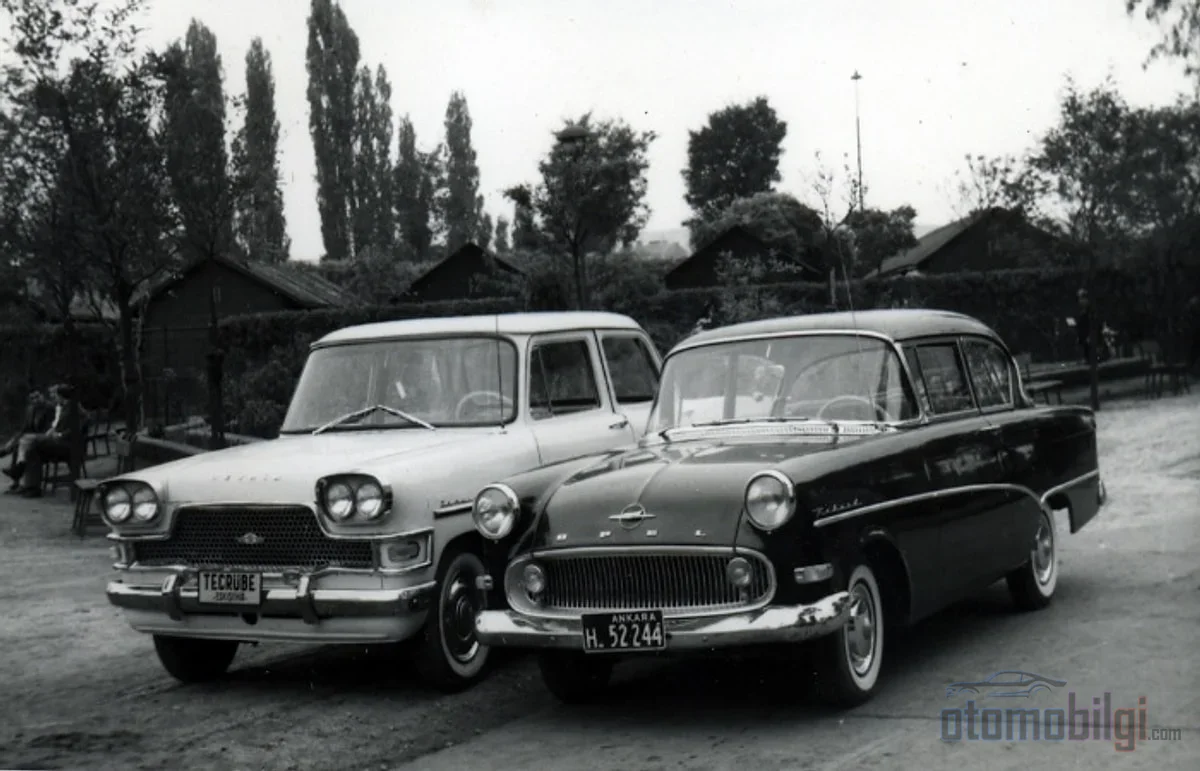
Five years after Devrim's sorrowful finale, on December 19, 1966, Anadol was born under the leadership of Vehbi Koç and became Türkiye's first serially produced car. What was different? This time it was not inventing from scratch; there was a partnership structure that knew the commercial side of the business: Ford Otosan had been founded in 1959 as a joint venture between Ford Motor Company and Koç Holding, and serial production of the Anadol A1 began in 1966 at the Otosan factory in Istanbul; the first sale was made on February 28, 1967.
Anadol's transmission came from Ford, and this was one of the smartest aspects of the project. Sourcing critical and expensive components from a proven supplier and manufacturing the rest yourself is still a standard approach in the automotive world today. Thanks to its durability, affordable price, and simple technical construction, Anadol was produced for a full 25 years, from 1966 to 1991. It demonstrated what Devrim could not: a domestic car can survive in Türkiye.
Etox Zafer: The Forgotten Initiative of the 2000s
Let's take a quick journey through time. In 1929, Ford established Türkiye's first automobile assembly line in the Istanbul free zone, but the economic conditions of the 1930s ended this venture. Starting in the 1960s with assembly of roughly 11 thousand units per year, the industry over time reached 1.2 million units per year and 18.5 billion dollars in exports; from the 2000s onward, light commercial vehicle exports surpassed imports. So the parts industry, assembly know-how, and workforce were all in place. It was precisely in this environment that Ankara-based Etox produced the prototype of a domestic sports car with its team in just 14 months.
Etox Zafer a two-door, front-wheel-drive sports car with 110 horsepower. It went through road tests, even received type approval, and it was announced that orders were being collected. Sounds great, right? Then came the wall: engine supply agreements made with brands never materialized. That's why series production could never begin, and only 2 units were produced in total. In fact, in 2012 Etox even acquired the naming rights to the Devrim automobile; without ever reaching series production under that name, the project quietly faded away.
Etox's story is, in my opinion, more instructive than Devrim's, because by then the country already had factories, an experienced workforce, and a parts industry. What was missing was an engine and a brand partnership to provide it. With Devrim, you wanted to do everything yourself and the infrastructure fell short; with Etox, you asked someone else for the critical part and that door closed. There was an equation that had not yet fully come together.
Where Was the Real Breaking Point?
After Devrim, it would be unfair to throw all automobile ventures into a single bag labeled "failures"; Anadol was produced for a full 25 years and proved itself. The real rupture came after Anadol: between Devrim's dream and today's electric car, there are decades of gap in which no venture could carry its own brand and model all the way to series production. The reason for that gap is also transparent: One report projected that the design, production, and branding costs for a fully domestic car would amount to 2.5 billion euros, and this figure was presented as a massive obstacle. Building a sports prototype is an act of courage; but establishing a brand, factory, dealer network, and after-sales service chain worth billions of euros is a weight that private ventures could not shoulder alone.
In short, the line did not break at Devrim; it broke in the decades between Devrim and Togg. The prototype could be finished; the billion-euro industrial leap that followed the prototype could not be. Anadol managed that leap within a partnership framework and on a limited scale; Etox ran out of steam right at the foot of that very leap.
Togg: Has the Broken Line Finally Been Completed?
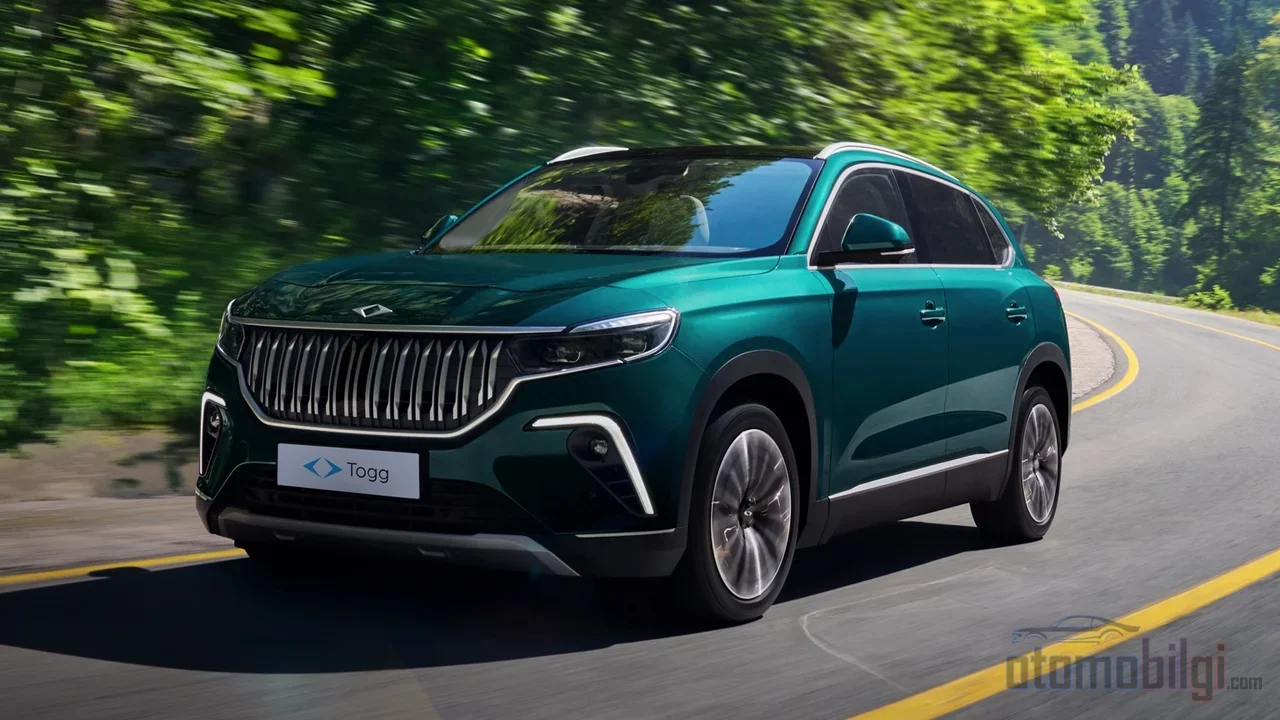
Togg (Türkiye's Automobile Initiative Group) is an active manufacturer with the intellectual property rights to its vehicles, and it is doing what had not been attempted since Devrim: design, production, and brand under one roof. The numbers are ambitious too; in the first half of 2026, Togg made 21,248 deliveries and reached a 26.3% market share, total cumulative sales have surpassed 100 thousand, and the 2026 production target was raised above 60 thousand units with plans for expansion into Europe. The new model T10F went into delivery in the first quarter of the year and entered the ranks of the best-selling electric vehicles in Türkiye. Of course, a note for a curious reader like you: Sales figures vary depending on the cutoff date from which they are counted, so the healthiest approach is to follow the official monthly market data.
Togg's existence does not invalidate the "defeat" of the Devrim; it puts it into context. In 1961, in a country where a car was afforded by only 725 people, mass production was not economically viable. Today, there is a market of millions, a mature parts industry, and electric vehicles reopening the table. In other words, what the Devrim's engineers achieved in 129 days can, when the right conditions come together, turn into a real industry years later.
Final Word: The Road from Prototype to Factory
Every attempt from the Devrim to Etox hit the same wall from different directions: Building a prototype takes courage and engineering; mass production requires a market, capital, partnerships, and patience. That is why Türkiye's domestic car story is not a straight line, but a continuing dotted line. Now I am curious: In your opinion, will it be Togg that completes the next dotted line, or a new team still sketching in a garage?
Sources
- Devrim (automobile)
- A Success Story | Devrim Car | TÜRASAŞ
- The truth behind the Devrim legend
- Why didn't the Devrim car continue?
- Anadol
- Anadol's story on the roads continues for 55 years
- Türkiye's Domestic Sports Car Project "Etox"
- What Happened to the Etox Project?
- The naming rights of the Devrim automobile belong to Etox!
- The Turkish automotive industry
- Türkiye's automobile journey from Devrim to Togg
- From an annual production of 11 thousand to 1.2 million
- Türkiye's pioneering and rising manufacturing sector: automotive
- We are approaching the end of a half-century-long domestic car dream
- Togg
- Togg First Half 2026 Sales Figures
- Togg Expands to Europe, Production Capacity Increasing