Why Couldn't a Country Producing Millions of Vehicles a Year Establish Its Own Brand for Decades?
Share This Page
Türkiye has been producing millions of automobiles for years, but it was only able to establish its own global brand in 2022 with Togg. The reason is not a lack of production knowledge or engineering; it was the licensed manufacturing model that persisted for decades: while foreign partners brought the factory, the technology, and the brand, Türkiye was left with the assembly line and a share of the labor. Brand ownership, however, never came up in any partnership.
Highlights
- Devrim, on October 29, 1961 at the Eskişehir Railway Factory in 129 days was produced; only 4 prototypes could be built.
- Anadol A1 production began on December 19, 1966; it became Türkiye's first mass-produced automobile.
- Murat 124 approximately 134,867 units were produced between 1971 and 1976.
- In Türkiye's automotive sector today 7,049 enterprises are active, and the OEM export share is 59.6%.
- Togg readied its first car for mass production on October 29, 2022.
How Does a Country Become a Factory but Never a Brand?
Think of it this way: There is a bakery in a neighborhood that has been baking pizza for years. It knows perfectly well how to roll out the dough, heat the oven, and fulfill orders. But the pizza's name has always been another city's brand, the recipe always someone else's, and most of the profit belongs to the brand's owner. Türkiye's automotive story is exactly such a story. Factories were built, hundreds of thousands of vehicles were produced, the supplier industry developed; but the emblem on the car was almost always the name of a foreign brand.
The interesting thing is that this gap did not arise from a lack of capability. Even in the early 1960s, when automobiles were still produced in small numbers, a prototype was able to be built. In the following decades, production grew so much that Türkiye became one of the global production and export centers in the 2000s, with total production increasing by 45% to 1.7 million between 2014 and 2017. So why did all this accumulation never turn into a brand? The answer lies in the very first day the production line was established.
Devrim: The Automobile Built in 129 Days and Misunderstood for Decades
The story begins in 1961. By order of President Cemal Gürsel, 24 engineers, at the Eskişehir Railway Factory, in 129 days produced the first automobile designed and built in Türkiye: Devrim. Technically it was a serious undertaking; it had an engine with a displacement of 2,071 cm³ , 50-70 HP power variants and a top speed of 135 km/h . On October 29, 1961
, four prototypes, two black and two cream, were presented at the Republic Day ceremony. Then came the scene everyone knows: on the day of the ceremony, the black car was used before being refueled and stopped after about After the fuel issue, the vehicle was refueled and completed the ceremony route. The next day's newspaper headlines...
Why couldn't Devrim proceed to mass production?
Beyond being just a prototype, there were structural reasons. All that remained in hand was a few technical drawings; documentation was lacking. More importantly, automobile demand in 1961 Türkiye was extremely limited. Series production does not merely mean manufacturing the car; it means establishing a distribution network, a dealership system, and a maintenance and spare parts infrastructure. None of these were sustainable in the market of that day. The cost of the prototype work was announced as over 900 thousand lira and a serious accountability campaign against the project was run in the press. In the politics of the era there were also criticisms of Devrim; voices were raised claiming the matter had been rushed without consulting technical experts and that the real issue was not a prototype but series manufacturing.
In other words, the story of Devrim is not simply a story of failure on its own; it is a mirror showing exactly where the country got stuck from the very beginning. Excitement is not enough to found a car brand; mutual demand and a sustainable economic model are required. The next 60 years of Türkiye would be precisely the story of the absence of that model.
The Licensed Production Era: Born with a Foreign Brand, Growing with a Foreign Brand
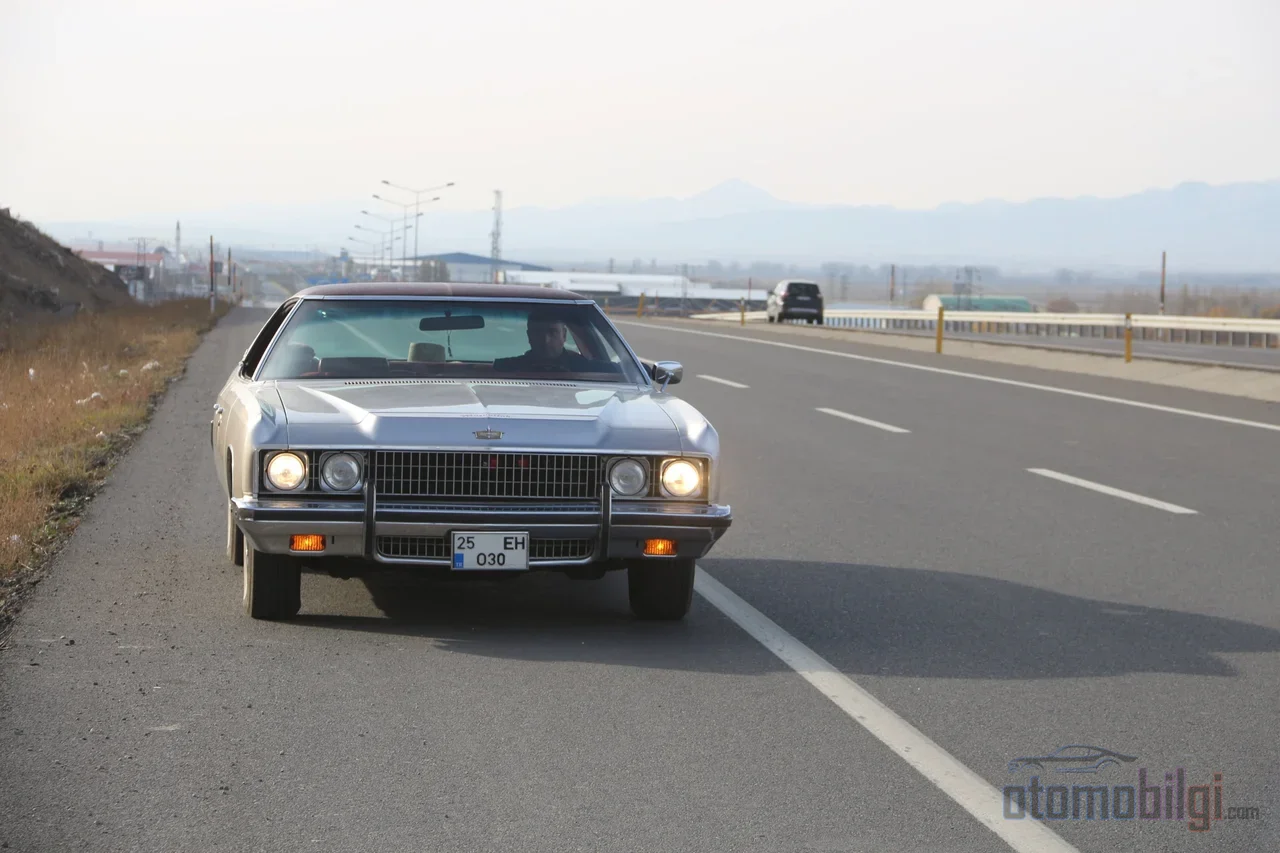
The first attempt goes much further back: in 1929, Ford had set up an assembly line in the Istanbul free zone, but the economic conditions of the 1930s made this venture short-lived. In 1958, Turkish entrepreneurs in Şişli produced the three-wheeled Nobel 200 but that venture remained limited. The real turning point came in 1959: established as a joint venture between Ford Motor Company and Koç Holding, Otosan was founded, and in 1960 the Ford F-600 entered production.
Then the chain accelerated. The Anadol A1, with its two-door body and 1.2 engine, rolled off the production line on December 19, 1966 as Türkiye's first series-produced passenger car. In 1971, the Murat 124 took to the roads, and between 1971 and 1976 approximately 134,867 units were produced; in the 1980s, the same line continued operating with the Şahin, Doğan and Kartal models. From 1967 onward, partnerships were formed with the world's leading brands, the parts industry developed, and production grew every year.
But now return to that question: All of these vehicles were produced in Türkiye, so why was the brand not Türkiye's? Because the rule of these partnerships was clear from the start: the foreign partner brought the technology, the license and, most importantly, the brand. The Turkish side offered capital, labor and a market. Every vehicle produced, no matter which factory it came from, grew the global value of that foreign brand. While Türkiye learned the craft behind the scenes, the name on stage was always someone else's. That is why interim projects also kept faltering: the domestic car project planned under OYAK under the name Zafer was abandoned entirely.
So Why Couldn't It Establish Its Own Brand? A Breakdown of the Structural Reasons
So far I have listed several intertwined reasons; now let me lay them out clearly, because the answer to the question does not fit into a single sentence:
- The licensed production model: Production with foreign partnerships brought factories and jobs in the short term, but brand and technology ownership always remained with the partner. Domestic car production like Devrim never fit into this model even once.
- Small domestic market: In the debates of the time, there was a calculation along these lines: For a domestic car to be economical, annual production needed to be around 20 thousand units, and Türkiye's domestic demand could not sustain that. The counter-criticism is at least worth noting: exports were never seriously taken into account in any project.
- Lack of political continuity: The accountability campaigns after Devrim, the abandonment of the Zafer project... The idea of a domestic brand faced political and economic pressures at every attempt.
- The long-term nature of brand culture: A brand is not built overnight; it requires decades of trust, a service network, and model variety. In licensed production, the owner of this investment was never the Turkish side.
Meanwhile, a distinction should also be mentioned: Saying that Anadol was the "first Turkish car" must be distinguished from the fact that Devrim was a hundred percent domestic prototype. Anadol was series production, but licensed production with foreign partnership; Devrim, on the other hand, was the prototype of an entirely domestic design. Even this debate in the country shows how deep the problem was: the difference between production and brand ownership was not even discussed for decades.
Becoming a Production Giant: How Did the Parts Industry Grow?
Even though a brand could not be established, the sector possessed an enormous accumulated energy behind it. The foundations of Türkiye's automotive industry extend back to the early 1960s, and today there are approximately 1,100 parts suppliers supporting OEM production. According to 2024 sector data, the number of enterprises in the sector is 7,049; in exports, the share of main industry is 59.6%, and that of the parts industry is 40.4%. In other words, not just assembly, but a serious value-added production capacity has accumulated.
I can summarize it like this: The country learned to make almost every part of a car; but for decades it could not take that final, bravest step of assembling the parts and putting its own name on it. This is the difference between becoming a master in the factory and hanging your own sign on your own shop. Türkiye became skilled, but waited a very long time for the sign.
Togg: Is the 61-Year Gap Finally Closing?
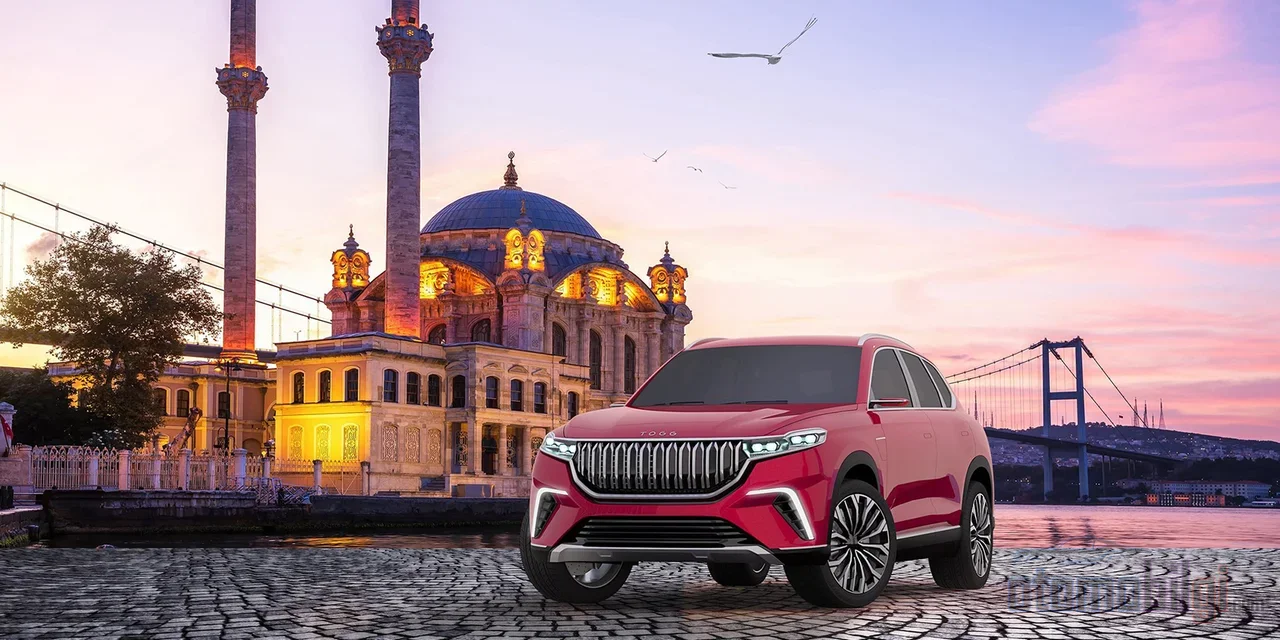
And here we are at where we have arrived. The process began with the first call in 2011; in 2015, the intellectual property rights of a model were purchased under the leadership of TÜBİTAK - the critical side of this medal was that, for the first time, brand and design rights were held by the Turkish side. In 2017, the consortium protocol consisting of Anadolu Group, BMC, Kıraça, Turkcell and Zorlu was signed, with TOBB joining as a partner. In 2018, the company was founded, and operations moved to Gebze Information Valley. And on October 29, 2022- exactly 61 years after the date Devrim was unveiled - Togg readied for series production its first car for which it holds the intellectual property rights.
As of 2026, the picture looks promising: Togg, T10X and T10F stands out in sales and in August 2026 the T10X became Türkiye's best-selling car. It is natural for the figures to vary slightly across different reports - there are different measurement and period definitions - but the direction is clear: In the first half, 21,248 deliveries and a 26.3% electric market share such figures show that the domestic brand is now a real market player. On the other hand, the picture is not entirely rosy; despite record domestic demand, the industry still looks challenging in terms of profitability, and debates over Togg's losses have not left the agenda. Moreover, the electric vehicle side is not Togg's story alone: Hyundai has decided to produce the 100% electric Inster model in Türkiye from 2026 onwards. So competition is increasing too.
Let us also honestly note a debate: whether Togg is a "domestic car" or a "domestic brand" is being discussed. In fact, the very existence of this debate shows that the Quartet has changed - we are no longer discussing whether we produce a vehicle, but what the brand means. Only 20 years ago, the question being discussed was "can we actually do it?" - a question that made us doubt even ourselves.
Conclusion: Manufacturing and Owning a Brand Are Not the Same Thing
Türkiye's automobile story is one of the rare examples that shows why a manufacturing power has struggled so much to find a name for itself. Devrim showed courage, Anadol and Murat taught series production, the parts industry built depth - but none of these could replace brand ownership. The final step taken with Togg is precisely an attempt to fill that missing link, and the first results show it is not an empty dream. Do you think the sign will be permanent this time? I believe a country that has waited 61 years will not give up so easily.
Sources
- Devrim (automobile) - Wikipedia
- From Devrim to Anadol: Türkiye's domestic automobile journey
- Tofaş Murat 124/Serçe - Wikipedia
- Turkish automotive industry - Wikipedia
- Automotive - Investment Office
- Automotive Industry Working Group Report - SBB
- Automotive Sector Report 2024 - Ministry of Industry and Technology
- Togg - Wikipedia
- The 61-year dream from "Devrim" to Togg - Anadolu Agency
- Automotive sector: Profitability erosion despite record domestic demand - Allianz Trade
- Electric car production in Türkiye - Yeni Şafak
- August 2026 sales figures