The Ford Factory at Tophane Dock: The Unknown Story of the Domestic Automobile
Share This Page
When it comes to automobile production in Türkiye, everyone thinks of Devrim or Anadol; yet the real beginning of this story reaches much further back, to Istanbul in the 1920s. The Ford assembly plant on the Tophane Quay assembled tens of thousands of motor vehicles on site between 1929 and 1933, and it became our country's first automobile factory, first moving assembly line, and first free zone experience. So why was this facility shut down so quickly, and what did it teach us on the road to today's automotive industry?
Highlights
- The assembly plant in Tophane began production in 1929; in its first month, 45 vehicles were assembled per day.
- Between 1930 and 1933, a total of more than ten thousand motor vehicles were assembled.
- At full capacity, the target was 150 cars per day, or 80 cars on an eight-hour shift.
- Assembly was halted in April 1933; the plant was officially liquidated in 1944.
- Otosan, founded in 1959, opened the door to renewed strengthening of the Ford connection after the 1950s.
The Truth Behind the "Ford Ankara" Rumor: A Dealership or a Factory?
Let's first clear up a confusion, because this topic circulates frequently on the internet. We have no direct record of a Ford assembly plant in Ankara in the 1920s. Ford's Ankara connection opened through another door: In 1928, Vehbi Koç, then known as Koçzade Vehbi, took over Ford's Ankara dealership. In the same year, the Anatolian merchant Katipzade Sabri had also acquired an agency; in 1929, the network stretching from Erzurum to Izmir counted 23 agencies. Naci and Haci in Gaziantep, Bastacizade in Diyarbakir, Yedekcizade in Kayseri, and Balladur in Izmir were some of the links in this network.
So the "Ford Ankara" story is really a sales and distribution story; the assembly itself took place in Istanbul, on the Tophane Quay. The two must not be confused with each other, otherwise we would be layering them on top of one another by trying to make history look alike. The story of the actual factory is already like a novel in itself.
Why Did Henry Ford Choose Istanbul?
In the early 1920s, Ford Motor Company was the world's largest motor vehicle manufacturer and was looking for new assembly points to internationalize its production. The list of candidates was ambitious: Trieste, Alexandria, Piraeus, Constanta, and Gorki. Istanbul became the junction point in this ranking; it offered an excellent quay for sea transport and was also in a position suitable for shipping to a range of countries by land and sea.
A date shows the seriousness of the plan: A news agency report dated August 1, 1925 reports that Henry Ford himself applied to the Ministry of Finance. In the summer of the same year, Ford inspector James J. Harrington had toured Trieste, Piraeus, and Istanbul and reported that an annual shipment of 14,000 vehicles was expected from Istanbul. So this was not a dream; it was a project on paper, with figures ready.
The "Ford Law": Türkiye's First Free Zone Experience
The Republic's first Free Zone Law was enacted in 1927 and laid exactly the groundwork Ford was asking for. Then, the agreement signed on February 2, 1929 and enacted into law as No. 1391, known among the public as the "Ford Law," granted Ford Motor Company Exports Inc. customs and tax exemptions for the assembly of automobiles, trucks, tractors, and aircraft in the free zone for a period of 25 years. In today's terms, a giant incentive package had been opened up to the world's largest automobile manufacturer.
So what did Türkiye want from this package? The labor conditions were very clear: it was required that 60% of the workers in the first two years, and 75% by the end of the sixth year, be Turkish subjects. Moreover, local labor production exported to Türkiye was rewarded with a $30 premium per vehicle, and this premium was considered a kind of know-how transfer. In other words, it wasn't just saying "come assemble cars here"; it was saying "teach the craftsmanship to our people too." This logic posed the very question that would later form the core of licensed assembly debates: How do you move from assembly to production?
A Day Inside the Factory: How Did the Assembly Line Work?
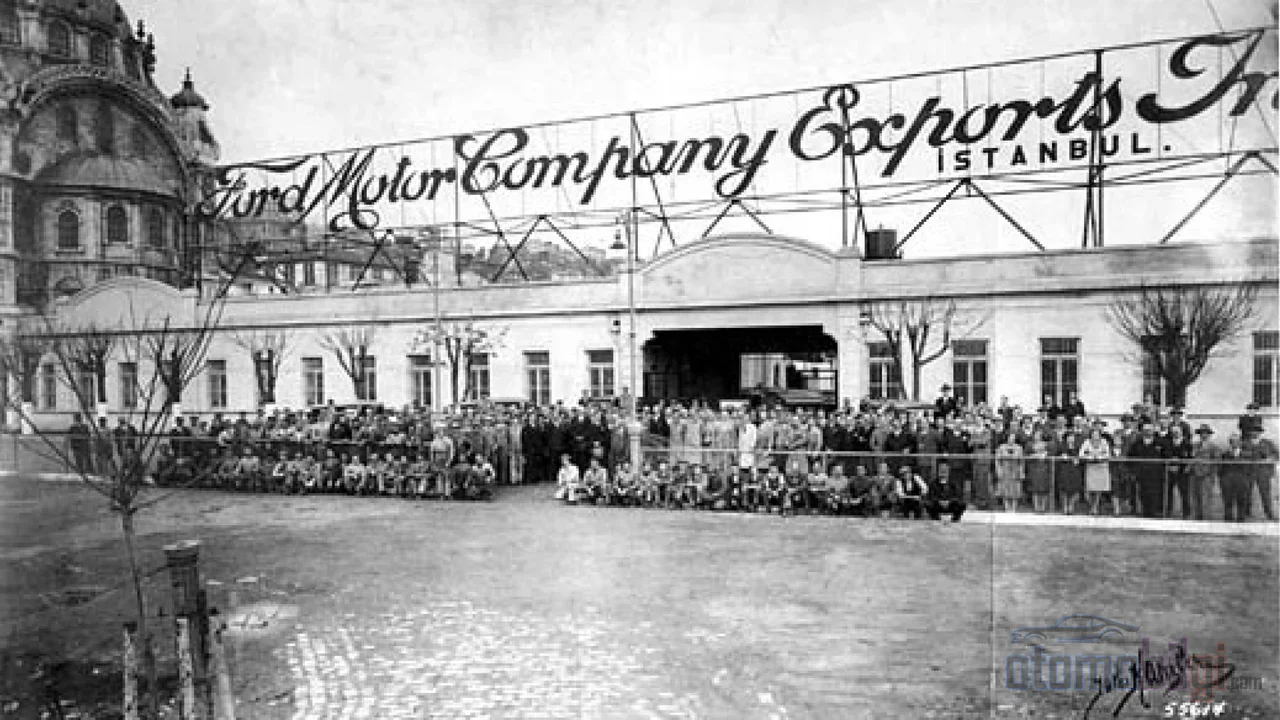
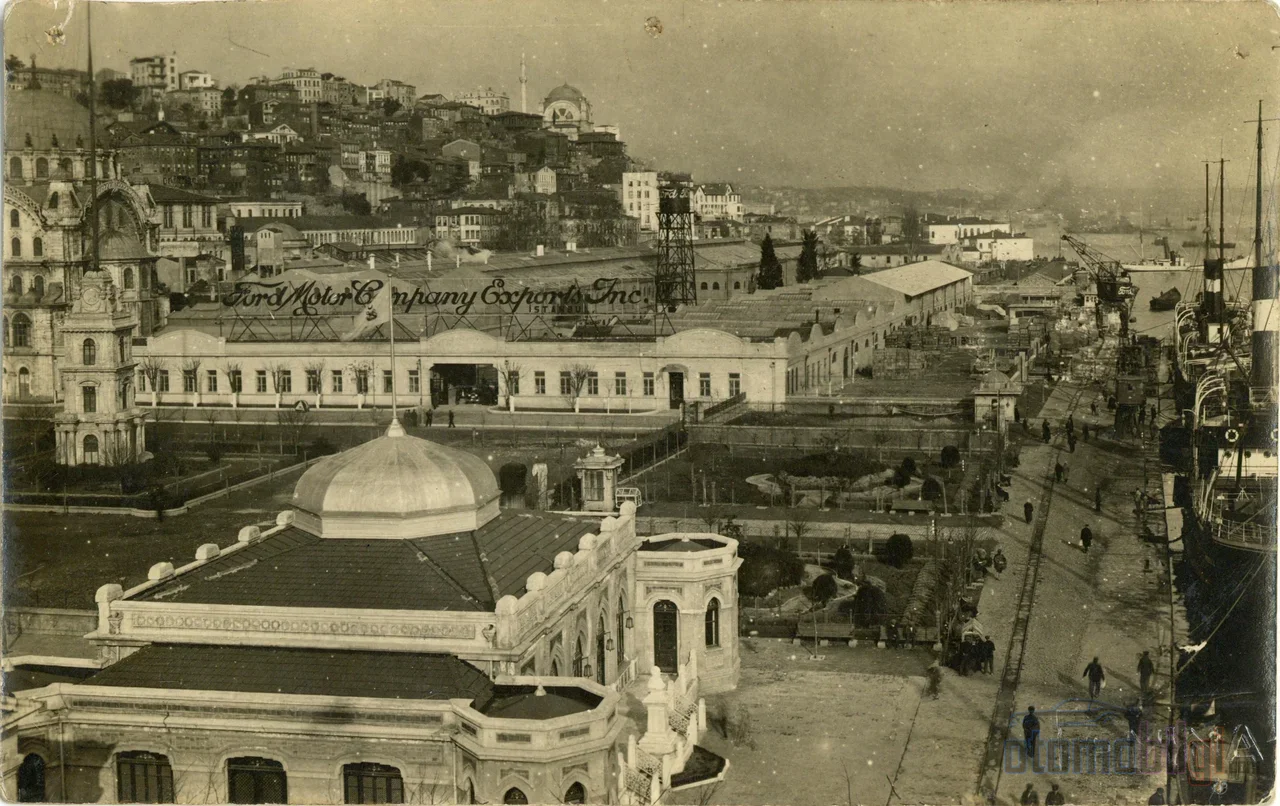
The facility itself was a marvel of adaptation. Buildings dating from the Ottoman era, belonging to the Tüfenkhane-i Amire and later serving as the Seyr-i Sefain transit warehouse, were arranged to suit a series production line with a total usable area of 13,433 m² between May 22 – December 15, 1929. Ford ships could dock directly at the pier where the 4-ton crane stood; crates unloaded from the ships were opened, and the parts went to the start of the line. The plan and capacity were identical to Ford's Yokohama factory in Japan. In other words, a facility of world-class standard was being established in Istanbul.
The first production came in December 1929: 8 automobiles were assembled that month; according to some sources, the first vehicle was a Ford Model A. The targets were lofty: 150 per day at full capacity day and night, or 80 automobiles per eight-hour shift. Planning sources also mention a capacity of 8 trucks + 4 passenger cars per day. Just imagine: in a country where motor vehicles were only just beginning to spread, dozens of vehicles were rolling out of Tophane every day!
Assembly on the Line, Not Piece by Piece Like Retail
A newspaper advertisement from the period describing the operation gives a wonderful clue: a mobile assembly line driven by an electric motor, each worker with a single defined task, and at the end of the line, horn, headlight, and mechanism tests. The advertisement specifically emphasized that every Ford vehicle sold was "the work of Turkish workers." So even back then, the message "this vehicle is ours, it was produced here" was at the center of marketing. Much like a phone today carrying an "assembled here" badge.
The working conditions were also advanced for the era: clock-in hours, a commitment to bans on alcohol and tobacco, practical and theoretical courses before starting work, a dining hall, changing rooms, and an infirmary. Daily wages started at 4 TL; this was higher than other businesses of the period. About 400 people worked at the factory. A month after the opening, a foreign correspondent described a month-long "Ford School" repair course attended by Egyptian, Afghan, Romanian and Greek master craftsmen; in other words, Tophane was for a while transformed into a kind of international technical school.
Let us not forget one detail: the assembly period was not limited to a single company. In the 1920s, other firms in Salipazari were also assembling vehicles they had imported in parts at the customs wharf and dispatching them to Anatolia. For a short period, the shoreline really functioned like a small automotive base.
Why Did It Stop When Everything Else Kept Going? The Story of the Factory's Closure
Here comes the bitter side of the story. Tophane was designed to sell vehicles to the world; but the Great Depression, which began in 1929, changed that liberal world from top to bottom. Protectionist-era regulations - currency controls, clearing and barter agreements, import controls and quotas - paralyzed the project, which had been built on free trade. The currency squeeze and falling demand gradually withered the shipping territory.
The numbers summarize the situation brutally. In the first month, 45 vehicles were being assembled per day; six months later this number fell to 35, and by 1933 to 6. In the final year, only 403 vehicles could be assembled in total. In early 1932, production was possible for only 10 days per month, and over the first seven years an operating loss exceeding 1 million dollars had accumulated. The shipping territory also melted away: Between December 1930 and December 1932, Egypt, Romania, Cyprus, Rhodes, Arabia, Palestine, Afghanistan, Abyssinia, Eritrea, Sudan and Somaliland were removed; by 1937, the territory covered no country outside Türkiye. In this picture, the factory was like a ship that had sailed for distant markets but whose ports were closing one by one.
To avoid losses, Ford halted assembly in April 1933. The machines and the mass-production line were sent in 1934 to the Ford Romana factory in Bucharest or to the Ford service company in Alexandria. After a long customs smuggling case that ran through the second half of the 1930s, the factory was officially closed and liquidated in 1944. In short, there was no single culprit in the closure: the crisis, currency shortage, falling demand, shrinking shipping territory and the customs case all went hand in hand.
From Assembly to Production: The Line Running from Tophane to Devrim and Anadol
Although Tophane closed, an idea did not: "Assembly first, then production." The foundations of the Turkish automotive industry, laid in the 1950s, also began with an assembly industry phase. In 1954, Turkish Willys Overland Ltd. began producing jeeps and pickup trucks for the army; truck assembly followed in 1955, and bus assembly in 1963. Then in 1959, Otosan A.S. was founded and the foundations of the first Ford Otosan factory were laid; in 1960, production of the Ford Consul and Ford Thames began. Ford's bond with Türkiye was taken to a whole new level here - another chapter was added on top of the Tophane adventure.
Then came the big steps we all know. The project, launched on June 16, 1961 by order of Cemal Gürsel, gave birth to the first automobile designed and produced in Türkiye at the Eskişehir Railway Factory: the Devrim. And in 1966, production began on the Anadol, Türkiye's first mass-produced automobile; it was a vehicle built through a partnership between Otosan and the British Reliant, with a fiberglass body and mechanical parts sourced from Ford. The 1971 Tofaş production under the Koç-Fiat partnership and the first diesel engine production in İnönü in 1986 extended this line. Today, at every stage of the road leading to Togg, the same question was asked over and over: is it about assembling and stopping there, or about designing and producing? Tophane's short life is the first and most striking early example of this question.
What Is There on That Shore Today? A Note on Tophane's Legacy
The Tophane and Salıpazarı shoreline where the factory stood is now home to the Galataport project. The dock was closed to cargo ships in 1986 and declared a Tourism Area in 1995; the project was annulled on procedural grounds by the Council of State in 2006, then came back onto the agenda. Today the area presents itself as a $1.7 billion investment, a 1.2 km shoreline, and the world's first underground cruise terminal. So on the dock where cars were once assembled, passenger ships now dock. A story ends, but life on the shore goes on.
The lesson of Tophane, in my view, is this: setting up assembly lines is not hard; what is hard is building the economy and know-how that will keep them alive. While reading the heroic story of Devrim or the mass-production phase of Anadol, let us keep in the back of our minds the roughly 400 people who, forty years before all this, commuted to Tophane with time cards and worked on the assembly line. The unknown prehistory of the domestic automobile begins exactly there.
Sources
- Ford Motor Company's assembly factory in Tophane-Istanbul, 1923-1944 (Emine Aslı Odman Pérouse, Boğaziçi University ATA)
- Galataport Automotive Factory - İlyas Temel Şafak
- Türkiye's first automotive assembly factory (Istanbul Research Institute)
- Türkiye's first automobile factory and free zone
- Ford Otosan - Wikipedia
- Devrim (automobile) - Wikipedia
- The Devrim Automobile - Eskişehir Metropolitan Municipality
- Koç Holding History
- Vehbi Koç - The Signature Behind the Firsts
- History of the Turkish Automotive Industry and TAYSAD
- Türkiye's leading and rising manufacturing sector: Automotive
- Development Perspective of the Automotive Industry in Türkiye
- Developments in the Automotive and Supplier Industry - MMO
- From Devrim to Togg: Türkiye's Automobile Journey